

Kingsgrove Branch:



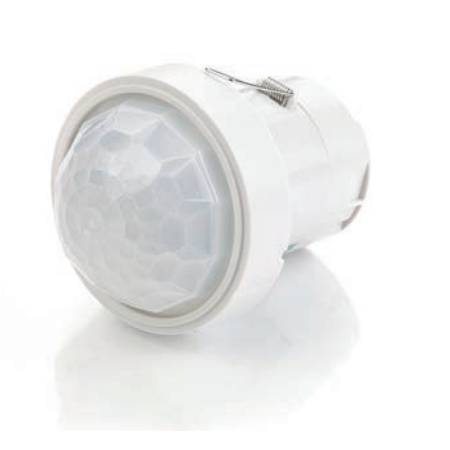
An integrator wrapping up a Sydney office fitout gets a call a week after practical completion -- the meeting room lights are staying on well after everyone's left for lunch. Turns out the DALI occupancy sensor spec'd for that zone was rated for standard indoor office use, but it ended up mounted near a plant room doorway with a fair bit of dust drift through it, and it's already misreading. Getting the IP rating right at spec stage is the difference between a system that just works and a callback six months in.
On a DALI-DSI job, it's easy to treat occupancy sensors as a line item you tick off once and move on -- pick a PIR, pick a microwave, done. In practice, the environment does most of the deciding. A standard open-plan office with clean, dry, climate-controlled air is a completely different install to a loading dock, a wash-down kitchen area, or an exposed high-bay warehouse ceiling. Specifying by environment first, then by detection type, avoids the retrofit-a-sensor-in-six-months problem entirely.
For standard indoor commercial space -- open-plan offices, corridors, meeting rooms with normal HVAC and no dust or moisture exposure -- an IP40 sensor is the usual fit. Step up to IP54 for areas with intermittent dust, light moisture, or wash-down proximity, like commercial kitchens or plant rooms adjacent to wet areas. For genuinely exposed conditions -- high-bay warehouse ceilings, loading docks, or anywhere temperature swings and airborne particulate are a daily reality -- IP65 is the baseline, not the upgrade.
| Environment | IP Rating | Typical Use Case |
|---|---|---|
| Standard office / corridor | IP40 | Open-plan office, meeting rooms, standard ceiling grids |
| Wet or dusty areas | IP54 | Commercial kitchens, plant rooms, wash-down adjacent zones |
| High-bay / exposed | IP65 | Warehouse high-bay, loading docks, exposed industrial ceilings |
Once the environment sets the IP rating, detection technology is the next decision, and it's not just a preference call. PIR sensors read infrared heat signatures and work well in line-of-sight spaces like open offices and meeting rooms, but they can struggle with occupants seated still behind partitions or desks. Microwave sensors detect motion through a wider field and can pick up movement behind partial obstructions, which makes them a better fit for broken-up floor plans, storage areas, or spaces with irregular furniture layouts.
For a straightforward open office, a PIR unit like the IP40 EBD-HS sensor covers most scenarios without over-specifying. Where the floor plan has partitions, joinery, or storage racking breaking up sightlines, a microwave option -- the IP40 MWS6 or the low-mount MWS5 slave unit for tighter ceiling voids -- reads occupancy more reliably. High-bay applications lean the same way: the IP65 mid-bay microwave sensor is built for exactly the kind of open, obstruction-heavy warehouse floor where PIR line-of-sight starts to fall short.
A lot of occupancy sensor jobs aren't new-build -- they're retrofits into an existing DALI-DSI ceiling grid where the panels and drivers are already in place and the sensor is the missing piece to get proper daylight harvesting or occupancy-based dimming working. In that scenario, the ceiling grid dimensions and driver compatibility matter as much as the sensor spec itself -- it's worth working through our LED panel retrofit guide alongside this one if the ceiling grid itself hasn't been finalised yet, since panel size and sensor placement both feed off the same grid layout.
Where an existing fitout has non-DALI luminaires that still need to sit on the same lighting control network, a DALI single-channel interface bridges that gap -- it lets a conventional 0-10V or switched circuit respond to the same DALI-DSI bus as the rest of the ceiling, rather than running a separate control system just for those fittings. It's a common enough situation in staged office fitouts where not every floor gets upgraded at once.
[!] Compliance note: DALI-DSI commissioning and integration into an existing building lighting control network typically falls within the scope of a licensed electrician's work under AS/NZS 3000 -- in practice, the sensor and driver programming side is usually where the extra care sits, since incorrect addressing can affect other zones on the same DALI loop.
Related Reading
Matching IP rating to the room name, not the actual conditions. A "kitchen" on the drawing might mean a full commercial wash-down kitchen or just a small staff kitchenette with a kettle and a fridge -- the IP54 jump only matters for the former, and over-specifying on every space with "kitchen" in the name adds cost without adding value.
Using PIR in partitioned or storage-heavy floor plans. This is the exact flicker-adjacent complaint that shows up as "the lights keep turning off while I'm still at my desk" -- usually it's a PIR unit losing line-of-sight behind a partition or filing cabinet, not a dimmer fault.
Forgetting the PSU/relay unit on programmable zones. Some sensor configurations, particularly ones with custom time-out or daylight harvesting logic, need the separate PSU relay unit to handle switching load correctly rather than relying on the sensor's onboard relay alone.
Assuming every luminaire on the floor is DALI-native. Mixed fitouts with legacy or non-DALI fittings need a single-channel interface bridging into the loop -- skip this and those fittings simply won't respond to the sensor at all.
Under-speccing high-bay sensors for cold storage or exposed roof spaces. Standard IP65 units aren't always rated for sustained low temperatures -- the low-temp -30°C variant exists specifically for cold storage and exposed high-bay applications where a standard unit's response time or lifespan can degrade.
what IP rating do I need for a DALI sensor in an open-plan office?
For a standard climate-controlled open-plan office with no dust or moisture exposure, an IP40 sensor is typically sufficient -- see the IP40 EBD-HS PIR sensor for a common option in this category.
can I use a PIR sensor behind partitions or joinery?
In practice, PIR sensors rely on line-of-sight infrared detection, so partitions and tall joinery can create blind spots. A microwave sensor generally handles broken-up floor plans more reliably.
do I need a licence to commission DALI occupancy sensors on an existing lighting network?
Yes -- DALI-DSI commissioning and integration typically needs to be carried out by a licensed electrician under AS/NZS 3000, particularly when the new sensor is joining an existing zone or loop.
what's the mounting height limit for a standard IP40 sensor?
Mounting height varies by model and detection pattern -- as a general rule, standard office-rated sensors are designed for typical suspended-ceiling heights, while high-bay applications need a purpose-built high-bay unit rather than a standard sensor mounted higher than intended.
can I mix DALI and non-DALI luminaires on the same sensor zone?
Not directly -- non-DALI fittings need a bridge onto the loop, such as the DALI single-channel interface, to respond to the same DALI-DSI control signal as the rest of the zone.
why would I need a separate PSU relay unit instead of the sensor's built-in relay?
For programmable zones with custom time-out or daylight harvesting logic, a dedicated unit like the EBD-HS PSU relay with UHS5 programmable controller typically handles the switching load more reliably than relying on the sensor's onboard relay alone.
Related Reading
Trade pricing and same-day dispatch from Kingsgrove NSW across the full IP40, IP54 and IP65 range below.
See the full DALI occupancy sensor range at Schnap and get same-day dispatch from Kingsgrove NSW.

SCHNAP Electrical Wholesaler - clear, upfront pricing that professional electricians trust

Get what you need in seconds. SCHNAP electrical wholesaler makes ordering quick and simple

Fast delivery anywhere - that's guaranteed. SCHNAP electrical wholesalers ship nationwide with same-day dispatch

Track your order every step of the way. SCHNAP electrical wholesale keeps you updated from click to delivery

SCHNAP is Australia's premier electrical wholesaler and electrical supplies, marketing thousands of quality products from leading brands. Trusted for nearly two decades by licensed electricians, contractors, and engineers, our range covers everything from basic electrical components to complex industrial electrical equipment
Our key categories include: LED lighting, designer switches, commercial switchboards, circuit protection, security systems & CCTV, and smart home automation
All products are certified to Australian standards (AS/NZS), backed by our 30-day, no-questions-asked return policy. Our expert technical team helps you quickly source the right solution for any residential, commercial, or industrial project, with daily dispatch from our Sydney electrical warehouse delivering Australia-wide
SCHNAP offers the most comprehensive electrical product range, with full technical specifications, application details, installation requirements, compliance standards, and warranties — giving professionals total confidence in every purchase


Kingsgrove Branch:
Opening hours:
Mon - Fri: 6:30 AM to 5 PM
Saturday: 8:00 AM to 2:00 PM
Sunday: 9:00 AM to 2:00 PM
Closed on public holidays
Jannali Branch:
Closed for Renovations
© 2004 - 2026 SCHNAP Electric Products