

Kingsgrove Branch:



The machine is running, the control panel is working, and then someone on the other side of the plant floor needs to know there is a warning condition. The problem is not whether an indicator exists; it is whether the visual signal is obvious from the place where it needs to be seen.
Choosing a flashing beacon LED comes down to a few practical decisions: what the light needs to communicate, which colour and operating mode fit the signalling scheme, what voltage is available, where the beacon will be mounted, and what the environment will throw at it. The bells sirens screamers category includes audible and combined devices as well, but this article stays focused on visual warning selection.
A beacon mounted inside a control enclosure may be perfectly visible to the electrician standing at the panel and almost useless to an operator several metres away. That is why the physical warning point should be decided before comparing beacon models.
Think about the actual sight line. Is the operator looking across a production area, along a plant aisle, towards a machine, or back at a control cabinet? Ambient lighting also matters. A signal that is clear in a dim room can be much harder to pick out in a brightly lit production space.
This is also where visual and audible selection start to separate. If the installation needs both, the warning sounder selection process needs to consider sound output and tones as well as the visual indication. For this article, the light remains the primary decision.
[!] Field check:
Before selecting the beacon, stand where the operator or affected person will actually be working. If the warning cannot be picked out from that position, changing the colour or flash mode may not solve the real problem if the mounting location itself is wrong.
Related Reading
The choice between flashing and steady indication should follow what the signal is meant to tell the operator. A flashing light can be useful where the visual signal needs to attract attention to an alarm or change of condition. A steady light can be easier to interpret when the purpose is to show an ongoing machine or system state.
Do not assume that flashing is automatically the better warning. A site may already have a defined signalling convention where different colours or operating modes correspond to particular conditions. In that situation, the beacon needs to match the existing logic rather than introducing a new signal simply because it is more noticeable.
The supplied range includes products specified for steady operation as well as products with steady/flashing capability. That gives the installer a choice between a fixed visual state and a more attention-grabbing signal where the application calls for one.
Colour should be treated as part of the control philosophy, not as a cosmetic choice. A beacon may be physically interchangeable with another colour, but the meaning attached to that colour can vary between machines, sites and applications.
The product options supplied for this article include amber, red, green, blue and orange LED configurations. That variety is useful where a project already assigns different colours to different conditions or stages of operation.
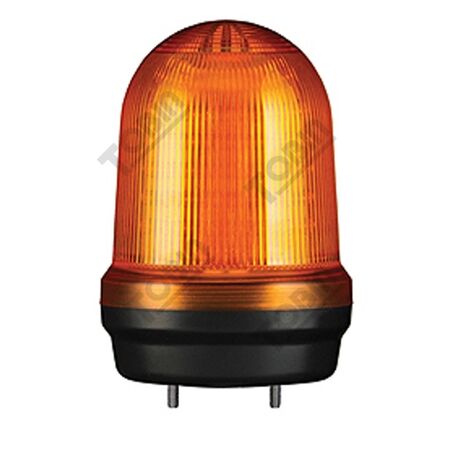
For a general warning scenario, amber is a practical example. The 80mm LED steady/flashing signal is specified with an amber LED, 110-240V AC supply and IP65 protection. Other supplied options provide red, green, blue or orange indication for different signalling requirements. Confirm the colour against the project's existing documentation before treating any colour as the default.
Voltage mismatch is one of the easiest mistakes to avoid and one of the easiest to make. Two beacons can have almost identical bodies and still require completely different supplies.
Start with the circuit that will actually power the beacon. Confirm the nominal voltage, whether the source is AC or DC, and the manufacturer's stated operating range. Do this before selecting the unit on colour or physical size.
| Supply scenario | What to confirm | Selection implication |
|---|---|---|
| 110-240V AC | Nominal AC supply and product input range | Select models whose published input range matches the supply. |
| 24V DC | DC input rating and operating range | Do not assume every 24V beacon has the same input requirements. |
| Wide-range DC | Minimum and maximum stated DC voltage | A broad input range can simplify selection across different control applications. |
The supplied range illustrates the spread. The 80mm Tobin beacon is specified for 110-240V AC, the Klaxon KL2496R is specified for 17-60V DC, and the KL980620 covers 10-60V DC. The Moflash LED Sounder Cap listed here is specified for 20-30V AC/DC. Those differences should be checked at the product level rather than inferred from physical appearance.
Once the electrical requirement is known, look at the mounting position. A wall-mounted beacon makes sense where the signal needs to sit on a vertical surface, while a surface-mounted unit may suit a machine or enclosure. The objective is the same: get the signal into the operator's line of sight without creating a difficult installation.
The 80mm wall-mount LED signal is a useful example of how mounting format changes the product choice. It retains the same basic warning-light concept but is specifically listed as a wall-mount version, which can make more sense where the warning point sits on a vertical surface rather than directly on a machine or enclosure.
Also consider how much of the beacon will remain visible after installation. Cable entries, brackets, nearby guards and machine structures can all reduce the practical viewing angle. A technically compliant mounting location can still be a poor warning location if the beacon is hidden from the people who need to see it.
IP rating matters when the beacon is exposed to dust, water or harsher industrial conditions. The correct question is not simply which model has the highest number, but what the installation environment actually requires.
Several supplied products are rated IP65, while the Klaxon KL980620 is rated IP66. Those ratings indicate different enclosure protection characteristics. If the beacon is mounted in an area exposed to more demanding conditions, use the product specification and site requirements to decide whether the available rating is adequate.
Temperature can also become relevant in outdoor or industrial locations. Where the manufacturer specifies an operating temperature range, compare it with the expected installation conditions. Do not assume that all beacons in the same physical size have the same environmental performance.
For a typical industrial warning installation, the shortest path to the right beacon is to work through the decisions in order. Define where the warning needs to be seen. Confirm what the visual signal is supposed to mean. Select the required colour and steady or flashing operation. Then match the supply voltage, mounting format and environmental protection.
That approach prevents the common problem of choosing a beacon because it looks right and only later discovering that it does not suit the circuit or physical installation. It also keeps the visual decision separate from audible-warning selection. Combination devices may cover both functions, but the visual requirement should still be defined independently.
Should I use a flashing or steady beacon for a machine warning?
Use the operating mode that matches the site's signalling strategy. Flashing can help attract attention to an alarm or change, while steady operation may be intended for an ongoing condition.
Can I use any beacon colour if the light is easy to see?
No. The colour should match the meaning assigned to the signal by the project or site. Visibility alone does not define what the signal is supposed to communicate.
Can I use a 24V DC LED beacon on any 24V control circuit?
Not automatically. Check the exact DC input specification and operating range of the beacon before connecting it. The circuit voltage also needs to match the device's published supply requirements.
Do I need a licensed electrician to install a fixed warning beacon?
Licensing and compliance requirements depend on the nature of the electrical work and the jurisdiction. Where the work is regulated electrical installation work, use an appropriately licensed electrician and follow the applicable requirements.
Is IP66 always better than IP65 for an LED warning beacon?
Not necessarily. The correct rating depends on the environment and the level of protection required. IP66 provides a different protection level from IP65, so select the rating that matches the actual exposure.
Is wall mounting better than surface mounting for a warning beacon?
Neither is universally better. The mounting format should place the beacon where the warning is visible and allow the product to be installed as intended for the location.
Do I need a beacon if the machine already has an audible alarm?
A visual warning can add another way to recognise a condition, particularly where the person affected may not clearly hear the audible signal. Whether both are required depends on the application and the site's warning strategy.
When is a combined sounder beacon better than a separate light?
A combined device can make sense where the installation needs both audible and visual warning from the same point. Consider the audible and visual requirements separately before selecting a combined unit.
Once the warning point, visual logic, supply and environment are defined, the product shortlist becomes much smaller. The options below can then be compared against the requirements of the actual installation rather than against one another on appearance alone.
The range includes LED warning and combination signalling products across mains and low-voltage supplies, multiple colours and different mounting or operating formats. Trade pricing is available, with same-day dispatch from Kingsgrove NSW.
See the full flashing beacon led range at Schnap.

SCHNAP Electrical Wholesaler - clear, upfront pricing that professional electricians trust

Get what you need in seconds. SCHNAP electrical wholesaler makes ordering quick and simple

Fast delivery anywhere - that's guaranteed. SCHNAP electrical wholesalers ship nationwide with same-day dispatch

Track your order every step of the way. SCHNAP electrical wholesale keeps you updated from click to delivery

SCHNAP is Australia's premier electrical wholesaler and electrical supplies, marketing thousands of quality products from leading brands. Trusted for nearly two decades by licensed electricians, contractors, and engineers, our range covers everything from basic electrical components to complex industrial electrical equipment
Our key categories include: LED lighting, designer switches, commercial switchboards, circuit protection, security systems & CCTV, and smart home automation
All products are certified to Australian standards (AS/NZS), backed by our 30-day, no-questions-asked return policy. Our expert technical team helps you quickly source the right solution for any residential, commercial, or industrial project, with daily dispatch from our Sydney electrical warehouse delivering Australia-wide
SCHNAP offers the most comprehensive electrical product range, with full technical specifications, application details, installation requirements, compliance standards, and warranties — giving professionals total confidence in every purchase


Kingsgrove Branch:
Opening hours:
Mon - Fri: 6:30 AM to 5 PM
Saturday: 8:00 AM to 2:00 PM
Sunday: 9:00 AM to 2:00 PM
Closed on public holidays
Jannali Branch:
Closed for Renovations
© 2004 - 2026 SCHNAP Electric Products