

Kingsgrove Branch:


Send us a photo and our team will help identify it.

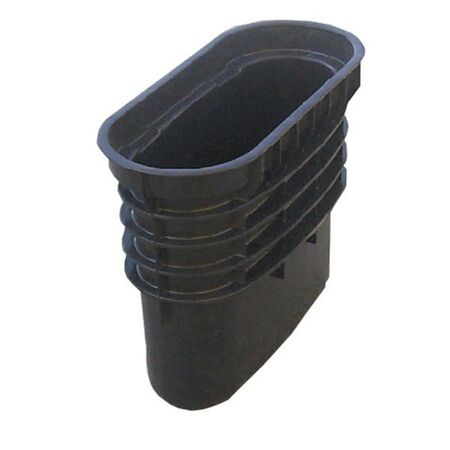
A sparky running 25 metres of active cable from the switchboard to a new pool pump doesn't think about depth until the trench is already half dug. Get the cover wrong and you're either re-digging before inspection or explaining to the certifier why the tape's not where AS/NZS 3000 says it should be. Depth decides more than compliance -- it decides whether you need a straight run or something to break it up along the way.
As a general rule, the required cover over a buried cable changes depending on what's above it. A run under a garden bed doesn't carry the same risk as one under a driveway that gets driven over daily, so the standard treats them differently -- shallower cover is generally acceptable where nothing heavy sits on top, and deeper cover (or added mechanical protection) is expected wherever vehicles or foot traffic are a factor.
| Location Type | Typical Cover Depth (trade rule of thumb) |
|---|---|
| Garden bed / lawn | Commonly around 450-600mm |
| Driveway / vehicle area | Typically deeper, often needing conduit or slab protection as well |
| Footpath / public access | Usually deepest, plus conduit per the local supply authority's rules |
These are common trade rules of thumb, not a substitute for checking the current AS/NZS 3000 clause and your local supply authority's requirements before you dig. Where the required cover genuinely can't be achieved -- rock close to the surface, existing services in the way -- the standard typically allows extra mechanical protection to make up the difference, which is usually where conduit earns its keep.
[!] Compliance note: Depth requirements are only part of the picture. Marking tape, mechanical protection, and warning signage requirements typically apply on top of cover depth -- confirm the full set of conditions with your certifier before backfilling.
Depth tells you how far down the cable sits. It doesn't tell you what happens at the point where the run changes direction, or where a future technician needs to get back into the trench without digging up the whole yard. That's a separate decision, and it's the one that trips up contractors who've only thought about cover so far.
If the run from switchboard to pump has to jog around an existing tree root or turn 90 degrees to reach the meter box, forcing that bend underground with nothing but conduit fittings gets harder to justify the tighter the angle gets. This is usually the point where sizing your underground cable pit becomes the more practical call -- a pit gives you a clean access point for the direction change instead of relying on the conduit alone to take the strain.
The same logic applies if you're speccing underground enclosures for a job with more than one service point along the run -- a junction pit at the branch point is usually easier to justify at design stage than trying to retrofit access later once the trench is backfilled and the lawn's grown back over it.
Related Reading
Measuring from the wrong reference point. Cover depth is usually measured from finished ground level, not from the bottom of the trench as originally dug -- if topsoil or pavers go back on top later, the cable needs to sit deep enough to still meet cover once that finished surface is in place.
Assuming garden-bed depth applies everywhere on the run. A single cable run often crosses more than one surface type -- lawn for most of its length, then a short stretch under a paved path. Treating the whole run at the shallower garden-bed depth misses the deeper requirement where it crosses the path.
Skipping the direction-change decision until the trench is dug. By the time the trench is already in the ground, adding a pit for a bend that should've been planned for means extra digging and a delay waiting on stock. This is a decision worth making at the planning stage, not on site with the trench already open.
Forgetting mechanical protection where depth is compromised. Rock, existing services, or root systems close to the surface sometimes make full cover depth impractical. Skipping the extra conduit or slab protection that's meant to compensate is a common shortcut that doesn't hold up at inspection.
Not accounting for future access. A run with no pit at all works fine until something needs fixing three years later, and the only way in is digging up the whole trench again. A single access point at a logical spot -- usually where the run bends or branches -- saves that headache.
Do I need a licensed electrician to bury mains cable under AS/NZS 3000?
As a general rule, yes -- underground work on active electrical cable is licensed work in every Australian state, and depth and cover requirements are inspected as part of that. Check with your local licensing body for the exact scope before starting.
Is there a minimum size underground cable pit I can use if I only need it for one bend?
For a single direction change on a smaller residential run, a compact pit is usually enough -- the 419 x 155 x 350mm underground cable pit covers most single-bend jobs without oversizing the excavation.
How do I know if a direction change needs a pit instead of a sweep bend underground?
In practice, a gentle sweep bend within conduit's rated radius usually doesn't need a pit. Tighter turns, or any point where you'd want future access, are where a pit typically makes more sense than relying on the bend alone.
What size pit do I need for a single 90-degree turn on a residential run?
It depends on cable size and how many runs pass through the same point -- our guide on picking the right pit size breaks down sizing by scenario.
Does the depth rule change if I'm running cable under a garden bed instead of a driveway?
Yes, typically -- garden beds generally allow shallower cover than areas that see vehicle traffic, since the risk of the cable being disturbed or damaged is lower.
What if the pit needs to handle a bigger cable bundle for a shed subboard?
For runs feeding a subboard with multiple cables converging, step up to something with more room -- the 582L x 393W x 580H underground cable pit handles bundled runs and junction points better than a single-cable pit.
Related Reading
Trade pricing and same-day dispatch from Kingsgrove NSW on the full underground enclosures range.
Find the full underground cable pit range at Schnap -- trade pricing and same-day dispatch from Kingsgrove NSW.

SCHNAP Electrical Wholesaler - clear, upfront pricing that professional electricians trust

Get what you need in seconds. SCHNAP electrical wholesaler makes ordering quick and simple

Fast delivery anywhere - that's guaranteed. SCHNAP electrical wholesalers ship nationwide with same-day dispatch

Track your order every step of the way. SCHNAP electrical wholesale keeps you updated from click to delivery

SCHNAP is Australia's premier electrical wholesaler and electrical supplies, marketing thousands of quality products from leading brands. Trusted for nearly two decades by licensed electricians, contractors, and engineers, our range covers everything from basic electrical components to complex industrial electrical equipment
Our key categories include: LED lighting, designer switches, commercial switchboards, circuit protection, security systems & CCTV, and smart home automation
All products are certified to Australian standards (AS/NZS), backed by our 30-day, no-questions-asked return policy. Our expert technical team helps you quickly source the right solution for any residential, commercial, or industrial project, with daily dispatch from our Sydney electrical warehouse delivering Australia-wide
SCHNAP offers the most comprehensive electrical product range, with full technical specifications, application details, installation requirements, compliance standards, and warranties — giving professionals total confidence in every purchase


Kingsgrove Branch:
Opening hours:
Mon - Fri: 6:30 AM to 5 PM
Saturday: 8:00 AM to 2:00 PM
Sunday: 9:00 AM to 2:00 PM
Closed on public holidays
Jannali Branch:
Closed for Renovations
© 2004 - 2026 SCHNAP Electric Products