




Kingsgrove Branch:
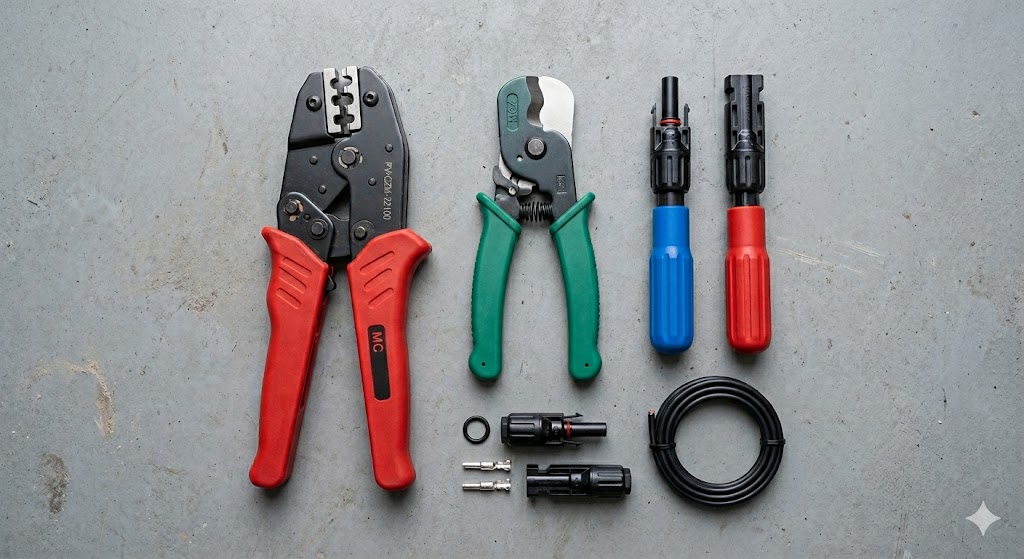
MC4 connectors are simple enough to install — but only if you do it right. Get it wrong, and you're looking at a high-resistance join that quietly heats up every time the sun's out. Do that long enough, and you've got a real fire risk on your hands.
This guide covers exactly how to crimp MC4 connectors correctly: what tools you need, the exact strip length, a step-by-step walkthrough, troubleshooting common problems, and the mistakes that show up most often on failed inspections. If you're doing any solar DC wiring in Australia — rooftop, ground-mount, or off-grid — this is worth reading before you pick up the crimper.
Already know the basics and just need gear? Schnap stocks MC4 crimping tools and MC4 connectors with same-day dispatch from Sydney.
A properly crimped MC4 connector is a gas-tight mechanical connection — the metal of the cable conductor and the contact pin are compressed together so tightly that there's no gap for oxidation or movement. Resistance is minimal. Heat doesn't build up. The connection stays stable for the 25-year life of the system.
A poorly crimped connector is the opposite. There's a tiny air gap. Resistance creeps up. On a DC string that's producing current all day in the Australian sun, that resistance becomes heat. Insulation softens. The connection loosens further. Eventually, arcing starts.
The Clean Energy Council has flagged poor crimping as one of the top causes of rooftop solar fires in Australia. This isn't a technicality — it's a safety issue. And it's entirely preventable with the right tool and the right technique.
Before touching any MC4 connector on a grid-connect system, it's worth knowing what compliance actually requires.
AS/NZS 5033:2021 — the governing standard for PV array installation in Australia — requires:
AS/NZS 3000:2018 (the Wiring Rules) covers all fixed electrical installations. Grid-connect solar falls under this, meaning all termination work must be done by a licensed electrician.
⚠️ Licence Requirement: All DC wiring work on grid-connected PV systems in Australia must be performed by a licensed electrician with CEC accreditation. The only exception is low-voltage off-grid systems (12V/24V) in caravans, 4WDs, and portable setups.
This is where most DIY crimps go wrong — using the wrong tool. Here's what you actually need:
| Tool | Why It Matters | What Happens Without It |
|---|---|---|
| MC4 ratchet crimping tool | Shaped specifically for MC4 contact pins — gives a gas-tight crimp every time | Generic crimper leaves gaps — high resistance, heat buildup, fire risk |
| Solar cable stripper | Strips to exactly the right depth without nicking conductor strands | Nicked strands = weak crimp. Wrong strip length = poor contact or exposed conductor |
| MC4 disconnect / assembly tool | Seats and releases connectors without damaging the locking collar | Screwdriver damage to locking collar = connector that won't stay seated or seal |
| Multimeter | Continuity and polarity check before connecting to the array | Polarity reversal on a live string damages panels and is dangerous to diagnose |
Schnap stocks MC4 crimping tools and MC4 crimper with guide — trade pricing, same specs used by licensed installers.
Not all MC4 connectors fit all cable sizes. Wrong combination = barrel too small to accept the conductor, or conductor too thin to fill the barrel and crimp properly.
| Cable Size | Typical Use | Max Current | Connector to Use |
|---|---|---|---|
| 2.5mm² | Small off-grid systems, short runs | 30A | MC4 rated for 2.5–4mm² |
| 4mm² | Standard residential rooftop — most common in Australia | 45A | MC4 rated for 4mm² (most common) |
| 6mm² | Long runs, commercial arrays, high-output panels | 57A | MC4 rated for 6mm² — confirm spec sheet |
Schnap stocks MC4 connector pairs and 1500V rated MC4 pairs for both residential and commercial installs.
Make sure your cable is the right spec. For any Australian rooftop or grid-connect system, you need dual-insulated, UV-resistant solar DC cable — typically 4mm² for residential, 6mm² for longer runs. Standard TPS building wire is not rated for PV use.
Also check you have enough of the same brand connector for the entire string. Mixing brands is a compliance issue under AS/NZS 5033. More in our full MC4 connector guide.
Remove exactly 7mm of outer insulation. Too short = conductor won't fill the barrel. Too long = bare conductor exposed past the pin, potential arc point. Check strands after stripping — tight and unbroken. Any nicked strands, cut back and re-strip.
Thread the end cap onto the cable before you crimp. Single most common mistake on the job. Once crimped, the end cap won't go over — you'll have to cut it off and start again.
Push the stripped conductor fully into the MC4 contact pin until flush with or just past the barrel end. All strands inside — none visible outside.
Polarity tip: Standard Australian convention is male MC4 on positive, female on negative. Always confirm against your panel's datasheet — not all manufacturers follow the same convention. A polarity reversal on a live string will damage panels.
Squeeze firmly until the ratchet releases fully — that's the crimp completing to the required force. Don't release early. A partial crimp is harder to detect than no crimp at all.
Tug test: grip the cable, pull firmly. Conductor should not move. If it pulls out, the crimp failed — cut back and start over.
Push the crimped pin into the housing until you feel and hear a distinct click. No click = not seated. The connector will pull apart under load.
Second tug test: pull the cable while holding the housing. Pin should not move.
Slide the rubber seal in place and tighten the end cap finger-tight plus a quarter turn. No more — overtightening splits the seal and kills your IP67 rating.
Click male to female. Before connecting to the array, check polarity with a multimeter. Polarity reversal on a live DC string won't trip a breaker — it damages panels and is dangerous to diagnose while energised.
⚠️ High Voltage Warning: Grid-connected rooftop solar systems operate at up to 1000V DC. All connection work in Australia must be performed by a licensed, CEC-accredited electrician. This guide is for educational purposes only.
| Problem | Likely Cause | Fix |
|---|---|---|
| Connector won't click together | Pin not fully seated, or wrong gender combination | Push pin deeper until it clicks; confirm male/female orientation |
| Conductor pulls out after crimping | Incomplete crimp or wrong tool | Cut off, re-strip to 7mm, re-crimp with correct MC4 tool |
| Connector feels loose after assembly | End cap not tightened, or cable OD too small for housing seal | Tighten end cap; if cable undersized for housing, use correct connector spec |
| Hot connector or discolouration | High-resistance crimp from bad tool or partial crimp | Isolate string, replace connector — do not re-use a heat-damaged pin |
| String output lower than expected | Polarity reversal, loose connection, or shading | Check polarity, inspect all crimps on affected string |
| Connector won't separate | Wrong tool or damaged locking collar | Use MC4 disconnect tool; damaged housing = replace entire connector |
| Water ingress into connector | Seal not seated, end cap loose, or cable OD mismatch | Disassemble, dry, inspect seal — replace if compressed or cracked |
Once MC4 connections are made and tested, cables need to be properly managed and secured. UV-rated solar cable ties are the right choice — standard nylon goes brittle within a season on a hot Australian roof.
Schnap stocks UV-resistant black cable ties for standard residential installs, stainless steel pawl cable ties for coastal or high-corrosion environments, and stainless steel solar cable clips for securing cables to racking.
For more: Solar Cable Ties for Australian Installs.
Q: Can I use a regular crimping tool for MC4 connectors?
MC4 contact pins need a specific jaw profile for a gas-tight crimp. Generic ratchet crimpers are designed for ferrules or ring terminals — wrong tool produces internal gaps that cause resistance buildup and eventual failure.
Q: How do I know if my crimp is good?
Tug test: grip the cable, pull firmly while holding the housing. Conductor should not move at all. The ratchet must also complete its full cycle — releasing mid-cycle means incomplete crimp.
Q: What tools do I need to disconnect MC4 connectors?
A dedicated MC4 disconnect tool. Using a screwdriver cracks the locking collar and compromises the IP67 seal. If a connector is stuck, confirm you're using the right tool for that connector brand.
Q: What's the correct strip length for MC4 connectors?
7mm is standard for most MC4 contact pins. Always confirm against your specific connector brand's spec sheet — some variants differ slightly.
Q: Which way is positive on an MC4 connector?
Standard convention: male MC4 on positive, female on negative. Always confirm with a multimeter before connecting to the array — not all panel manufacturers follow the same convention.
Q: Can I re-crimp a connector that failed the tug test?
No. The metal has deformed. Re-crimping changes the geometry and creates an unreliable connection. Cut off, trim past the stripped section, start fresh with a new pin.
Q: What happens if I get MC4 polarity wrong?
Polarity reversal on a grid-connect string won't trip a breaker. It causes reverse current through panels, damages bypass diodes, and permanently reduces output. Always check polarity with a multimeter before connecting to the array or inverter.
Q: Do I need a licence to crimp MC4 connectors in Australia?
For 12V off-grid (caravan, 4WD, portable) — no. For grid-connected or roof-mounted systems — yes. All DC wiring on grid-connect PV must be done by a licensed, CEC-accredited electrician.
Q: Can you connect MC4 connectors from different brands?
Under AS/NZS 5033, no — unless both manufacturers explicitly approve the combination. Connectors may physically click together but manufacturing tolerances differ, causing micro-arcing over time. Common reason for failed inspections.
Q: Do MC4 connectors need regular inspection?
Yes. Inspect for heat discolouration, housing cracks, UV degradation, and water ingress as part of routine solar maintenance. CEC-accredited installers typically recommend every 2–5 years — coastal and high-UV sites more frequently.
Q: Are MC4 connectors waterproof?
Yes — when correctly assembled. IP67 rating means dustproof and waterproof to 1 metre. The seal only works if the end cap is tightened correctly and cable OD matches the housing spec.
Q: What's the difference between MC4 and MC4-EVO connectors?
MC4-EVO2 is Stäubli's updated design with improved contact geometry and higher current ratings. Stäubli confirms MC4 and MC4-EVO2 are cross-compatible. All other third-party "MC4 compatible" brands should not be cross-mated without explicit manufacturer approval.
Q: How many times can you disconnect and reconnect MC4 connectors?
Typically 10–30 mating cycles depending on manufacturer. MC4s are designed for permanent connections, not repeated disconnection. If you're regularly disconnecting a circuit, a DC disconnect switch is more appropriate.
Schnap supplies licensed solar installers across Australia with MC4 crimping tools, MC4 connectors, UV solar cable ties, stainless steel cable ties, and stainless steel solar cable clips.
Trade pricing. Same-day dispatch from the Sydney warehouse.
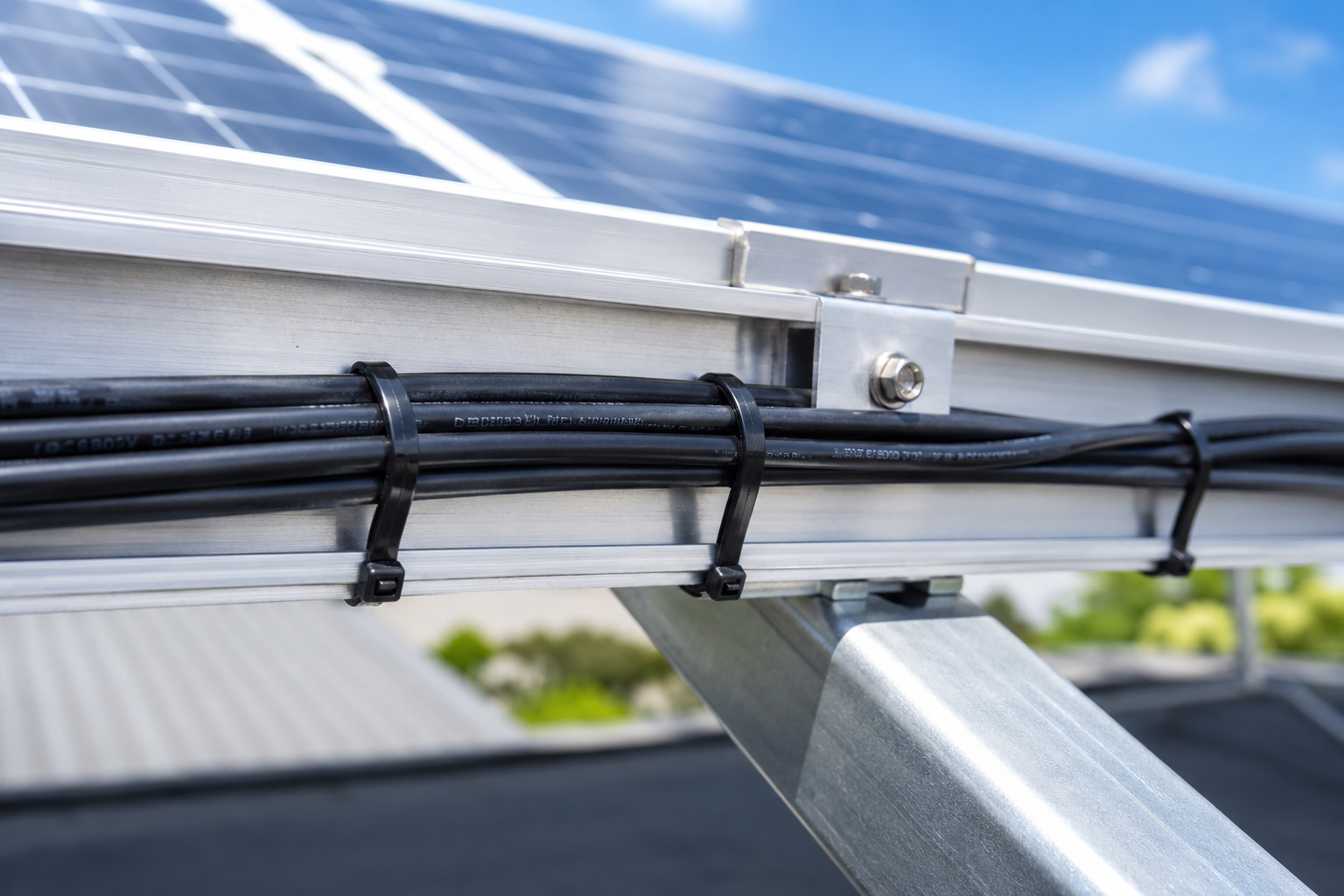
Cable ties are one of the smallest line items on a solar job — but they're also one of the most commonly get wrong. Pick the wrong type, and you're back on the roof 18 months later replacing failed ties and re-securing cables that have been chafing against racking rails the entire time.
Australia's climate is unforgiving. UV levels here are among the highest in the world. Rooftop temperatures regularly hit 70–80°C in summer. In coastal areas, salt air accelerates corrosion faster than most products are rated for. A cable tie that's perfectly fine in a European warehouse has no business being on an Australian solar install.
This guide covers everything you need to make the right call on solar cable ties — material selection, sizing, when to use stainless steel pawl vs plastic pawl, and what Australian Standards say about cable management in solar PV systems.
Most tradies have seen it: white or natural nylon cable ties that have gone brittle and snapped within a year or two of installation. Sometimes less. This isn't a batch issue — it's a material issue.
Standard nylon cable ties are made from PA66 (polyamide 66). PA66 is not UV-stabilised by default. Under prolonged UV exposure, the polymer chains break down — the tie becomes brittle, loses tensile strength, and eventually cracks under minimal load or thermal expansion.
The US Department of Energy flagged this specifically in their Solar PV cable management guidance: standard plastic cable ties used in solar PV arrays frequently fail prematurely due to heat and UV exposure, leading to safety hazards and performance issues including cable abrasion, electrical faults, and structural damage to the array.
In the Australian context, this is amplified. Our UV index is consistently higher than Europe or North America, and rooftop surface temperatures can exceed ambient air temperature by 20–30°C on hot days. A tie rated for "outdoor use" in a temperate climate may degrade in a fraction of the expected time here.
Rule of thumb: If a cable tie is white or natural-coloured nylon and doesn't specify UV stabilisation, it has no place on a solar installation. Full stop.
UV-stabilised black nylon is the baseline standard for solar cable management. The black colouration comes from carbon black additive, which acts as a UV absorber and significantly extends outdoor service life.
PA66 UV-stabilised ties — like the Bitek 200mm UV Resistant Cable Ties — are a cost-effective choice for standard residential rooftop installs where conditions are moderate. They're lighter, easier to handle in volume, and cut flush without leaving sharp edges.
PA11 (polyamide 11) is the premium nylon option. Compared to PA66, PA11 offers better UV resistance, wider operating temperature range, improved chemical resistance, and lower water absorption — which matters in humid coastal environments. If your install is in a high-UV or coastal zone, PA11 is worth the marginal extra cost.
This is where the Matelec SPCT range sits — and it's a product category that's often overlooked.
A stainless steel pawl cable tie combines a UV-stabilised nylon strap with a 304 stainless steel locking mechanism. The key advantage: the pawl is what takes the mechanical load when the tie is tensioned. A plastic pawl can creep under sustained tension — particularly at elevated temperatures. A stainless pawl doesn't.
This makes stainless pawl ties particularly well suited for:
The Matelec SPCT range available at SCHNAP covers four lengths — 100mm, 200mm, 300mm, and 370mm — all with stainless steel pawl and UV-stabilised black nylon strap, in 100-pack quantities suited to volume solar work.
For the harshest environments — coastal, industrial, high-salt-air, or any install where longevity over 20+ years is a hard requirement — full stainless steel is the answer.
Stainless steel cable clips (not traditional zip-tie style, but clip-mount style) are particularly useful for securing DC string cables along racking rails without the failure risk of nylon in high-heat conditions. The Matelec 4x4mm Stainless Steel Solar Cable Clips and the Right Angle variant are designed specifically for solar racking applications and won't corrode or degrade over the system's service life.
Full stainless is the go-to for:
Getting the size right matters. An undersized tie won't close properly over a bundle. An oversized tie wastes material and can be harder to tension correctly.
| Tie Length | Best For | Typical Cable Bundle Diameter |
|---|---|---|
| 100mm Matelec SPCT-100-30B |
Single DC cable securing to racking, small bundles, tight spaces near junction boxes | Up to ~18mm |
| 200mm Matelec SPCT-200-48B |
Standard DC string cable bundling, most common residential rooftop use | Up to ~50mm |
| 300mm Matelec SPCT-300-36B |
Larger cable bundles, securing multiple strings together, conduit bundling | Up to ~80mm |
| 370mm Matelec SPCT-370-48B / SPCT-370-70B |
Large bundle groups, securing cable looms, commercial installs with multiple string runs | Up to ~100mm+ |
AS/NZS 5033 is the Australian standard for installation and safety requirements for photovoltaic arrays. It sets requirements for DC cable management including support, securing, and protection from mechanical damage.
Key requirements relevant to cable tie selection:
Using non-UV-rated cable ties on a solar installation isn't just a quality issue — it's a compliance issue. If a tie fails and a cable abrades against racking, you have a potential DC arc fault. That's a safety and liability problem.
| Environment | Recommended Cable Tie | Reasoning |
|---|---|---|
| Standard suburban rooftop, inland | UV-stabilised black nylon or stainless pawl nylon | Good UV resistance is the primary requirement. Corrosion is lower risk. |
| Coastal (within 1–2km of ocean) | Stainless steel cable clips or coated stainless ties | Salt air accelerates corrosion in nylon pawl mechanisms over time. Full stainless is the safer long-term choice. |
| Metal deck rooftop (colorbond etc) | Stainless pawl nylon or full stainless clips | Rooftop temps can exceed 80°C. Stainless pawl resists creep at elevated temperatures better than plastic pawl. |
| Commercial ground mount | Stainless steel cable clips | Higher wind load, longer cable runs, 25+ year system life expectation. Stainless clips offer the most reliable long-term performance. |
| High UV zone (QLD, NT, WA outback) | PA11 nylon or stainless | PA11 outperforms PA66 under extreme UV. Worth the upgrade in high-UV regions. |
Using white nylon ties from the tradie van. These are PA66 without UV stabilisation. They'll look fine on install day and be brittle within 12–18 months. Don't do it.
Over-tightening. Cable ties should secure without compressing the cable insulation. Over-tightening can stress the insulation at the tie point and create a failure location. Tension to secure, not to compress.
Spacing too far apart. AS/NZS 5033 requires cables to be supported at intervals that prevent sagging. On racking rails, 300–400mm spacing is a common working guide. Too far apart and cables sag onto panel frames or racking edges — that's where abrasion damage starts.
Using the wrong size for the bundle. A 100mm tie around a 60mm bundle isn't going to close properly. Size up when in doubt — it's better to have a slightly long tail than a tie that won't seat correctly.
Not accounting for thermal expansion. DC cables move with temperature. A tie that's perfectly tensioned in the morning may be under stress by midday when the cable has expanded. Leave a small amount of play in larger bundles, particularly on long cable runs.
Q: Can I use standard black cable ties on a solar installation?
A: Only if they're specified as UV-stabilised. Standard black nylon ties may contain carbon black for colour but not for UV stabilisation — the spec sheet will confirm. If the product doesn't explicitly state UV-stabilised or UV-resistant with a rated service life, don't use it on a solar install.
Q: What's the difference between a stainless steel pawl and a plastic pawl cable tie?
A: The pawl is the locking mechanism inside the cable tie head. A stainless steel pawl maintains its locking strength under sustained tension and at elevated temperatures. A plastic pawl can creep — gradually loosening its grip — particularly in hot conditions. For solar work, stainless pawl is the more reliable choice for any tie that's under tension.
Q: Do I need to use stainless steel cable clips instead of cable ties?
A: Not always, but in coastal environments and on commercial installs with long expected service lives, stainless clips are worth it. They don't degrade from UV or corrosion, they don't loosen under thermal cycling, and they don't need to be replaced. For a system expected to run for 25 years, the small upfront cost difference is negligible.
Q: How far apart should cable ties be spaced on a solar installation?
A: There's no single mandated spacing in AS/NZS 5033, but the requirement is that cables must be supported to prevent sagging and contact with surfaces that could cause abrasion. A common working practice is every 300–400mm along racking rails. On longer unsupported cable runs, closer spacing reduces cable movement under wind load.
Q: Are the Matelec SPCT cable ties compliant for use on solar PV systems?
A: Yes. The Matelec SPCT range features UV-stabilised black nylon with stainless steel pawl — meeting the material requirements for outdoor solar cable management under AS/NZS 5033. They're a trade-grade product used by solar installers across Australia.
SCHNAP stocks a full range of solar-rated cable ties and clips for residential and commercial installations. All products available with trade pricing and fast Australia-wide dispatch from our Kingsgrove NSW warehouse.
Need more for your solar install? Browse the full solar installation accessories range including Dektite flashings, cable glands, and solar mounting hardware — or explore the complete cable ties and clips range for all jobsite applications.
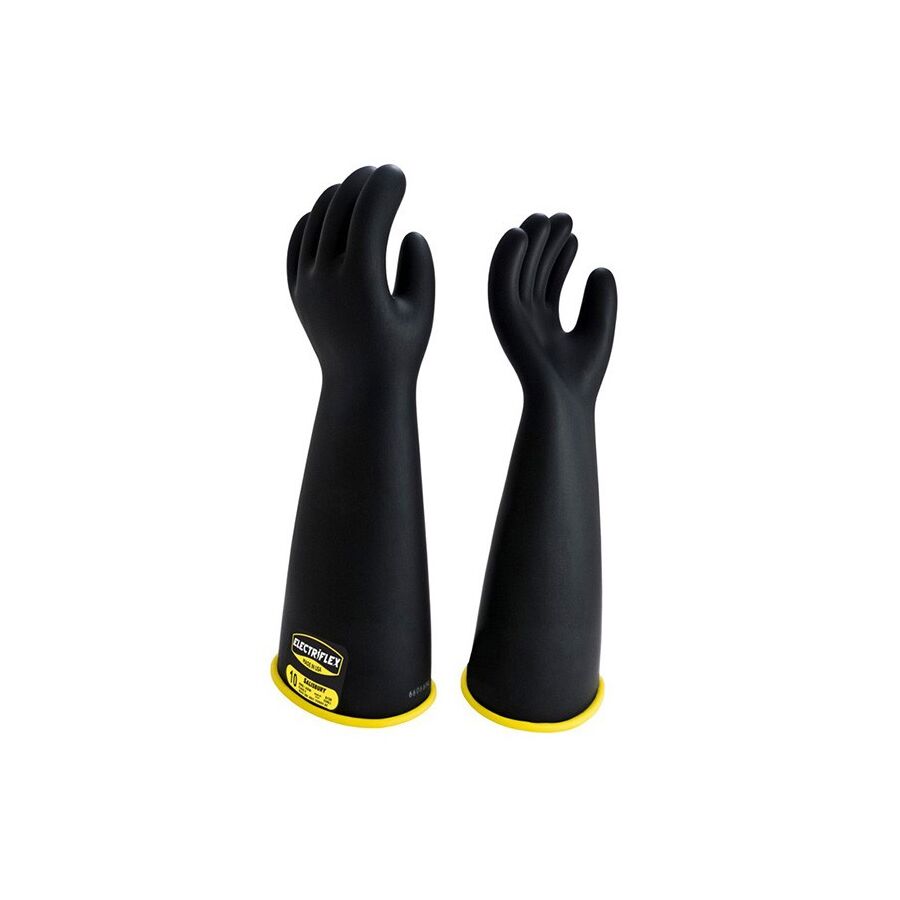
In Australian electrical maintenance and infrastructure environments, technicians may be required to work on or near energised equipment under strictly controlled conditions. Under Work Health and Safety (WHS) regulations and AS/NZS 4836 requirements for safe work on low-voltage installations, insulating hand protection forms a critical layer of personal safety.
Rubber Safety Gloves provide a certified dielectric barrier between the technician and electrical potential. They are engineered specifically to resist current flow while maintaining sufficient dexterity for controlled, technical tasks.
The core protective principle of insulating gloves is dielectric resistance. When contact occurs with an energised conductor, the glove introduces high electrical resistance, limiting or preventing current flow through the body.
Rubber Safety Gloves are classified under AS/NZS IEC 60903 according to maximum working voltage. Common classes include:
Each glove is manufactured to meet strict dielectric performance standards and is proof-tested at higher voltages to verify insulation integrity. Selection must always match the maximum prospective voltage of the task.
Most insulating gloves are manufactured from natural rubber (polyisoprene) or synthetic elastomers engineered for electrical insulation. While these materials offer excellent dielectric properties, they are vulnerable to mechanical damage.
Sharp edges, abrasive surfaces, and puncture hazards can compromise insulation integrity. For this reason, compliant systems require the use of leather protector gloves worn over the rubber insulating glove.
The layered system provides:
Without leather protectors, even minor damage may result in dielectric failure.
Under AS/NZS 4836, insulating gloves must be inspected before every use. This includes:
Any glove showing signs of damage must be removed from service immediately.
In addition to daily inspections, gloves must undergo laboratory dielectric testing and recertification at prescribed intervals, typically every six months. Each glove carries a stamped test date and must not be used beyond its certification period.
Rubber insulating gloves are sensitive to:
Improper storage can accelerate degradation and reduce dielectric performance. Gloves should be stored in protective canvas or fabric storage bags, kept away from direct sunlight and high temperatures.
When integrated into work vehicles or plant rooms, protective storage prevents premature ageing and maintains compliance validity.
Rubber Safety Gloves are most effective when used as part of a comprehensive safe work system including:
Technicians installing or maintaining switchgear, distribution boards, and heavy-duty hardware from Schnap Electric Products benefit from combining compliant insulating gloves with insulated tools and structured isolation protocols.
The glove protects the hands, while system-wide compliance protects the entire work environment.
Because insulating gloves carry strict test-date limitations, inventory rotation is critical. Procurement through specialised electrical wholesaler ensures:
Maintaining testing registers and tracking expiry dates supports regulatory compliance and reduces risk of unintentional non-compliance.
Rubber Safety Gloves are a life-critical component of electrical personal protective equipment in Australia. Engineered to meet AS/NZS IEC 60903 requirements, they provide essential dielectric isolation when working on or near energised systems.
When correctly selected, inspected, tested, and paired with leather protectors and insulated tools, they form a reliable barrier against electrical current. In high-voltage and low-voltage maintenance environments, verified insulation integrity remains the foundation of safe electrical practice.
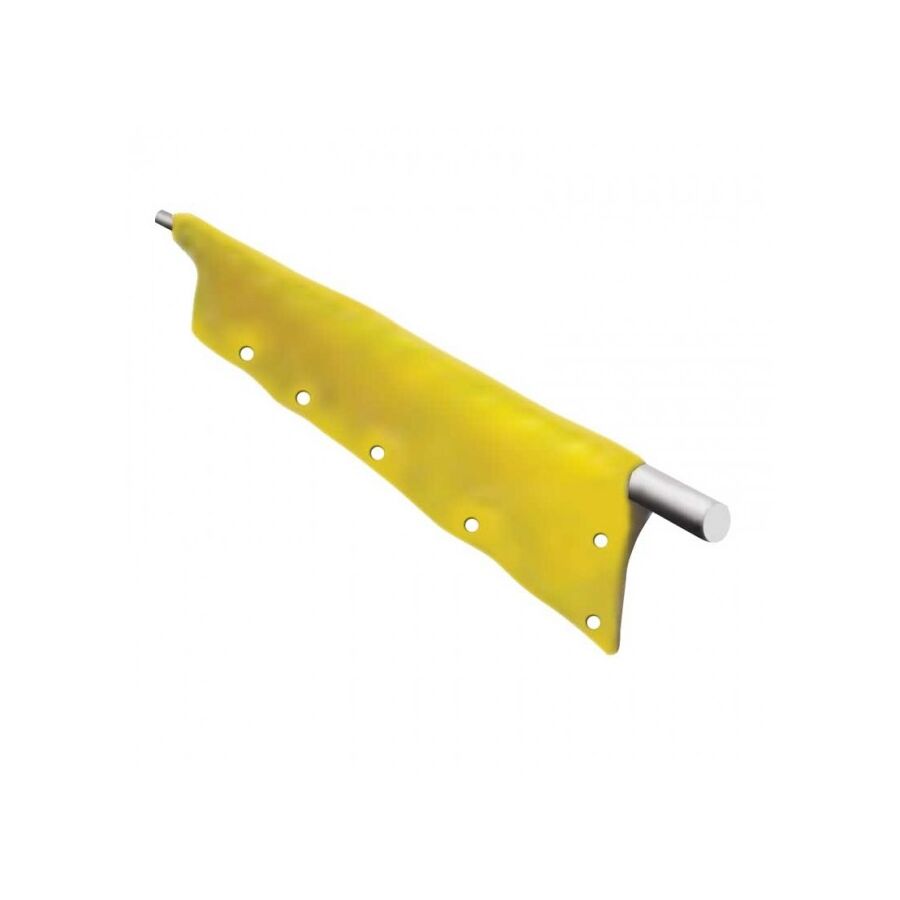
In Australian civil construction and utility maintenance environments, overhead powerlines present a persistent high-risk hazard. Whether operating cranes in metropolitan Sydney developments or elevating platforms near regional Queensland distribution networks, the proximity of plant equipment to energised conductors introduces severe electrocution and arc flash risk.
Under the Work Health and Safety (WHS) framework and utility authority clearance requirements, principal contractors must implement layered controls to prevent accidental contact. An Electrical Line Cover—commonly referred to as “tiger tails”—provides high-visibility hazard identification combined with secondary mechanical protection for overhead conductors within active work zones.
It is essential to clarify the operational purpose of an Electrical Line Cover. Standard line covers are primarily visual warning and mechanical deflection devices. They do not replace formal isolation procedures, nor do they convert a live conductor into a fully insulated working surface.
Their role is to:
These covers function as an administrative and visual engineering control, reinforcing safe approach distances rather than eliminating electrical hazard.
The distinctive yellow and black striping maximises contrast under varying light conditions. This colour combination is globally recognised as a hazard indicator and remains highly visible even in peripheral vision.
For crane operators, excavator drivers, and elevated work platform users, this visual enhancement significantly improves conductor awareness during lifting, positioning, or manoeuvring operations.
Clear visual identification reduces the risk of accidental encroachment into minimum safe approach distances required by supply authorities.
Australian environmental conditions expose overhead safety equipment to:
Electrical Line Covers are typically manufactured from high-density polyethylene (HDPE) or engineered thermoplastic polymers. These materials are selected for:
UV stabilisers and antioxidant additives are incorporated during extrusion to prevent polymer degradation. Without stabilisation, prolonged UV exposure would cause pigment fading and structural brittleness, reducing both visibility and mechanical integrity.
While not a substitute for insulation blankets used in live-line maintenance, the rigid cylindrical structure provides mechanical separation.
If scaffolding components, timber battens, or plant structures brush against the conductor, the cover acts as a physical buffer. This can help prevent direct contact between conductive materials and the bare conductor.
However, line covers must never be relied upon as primary electrical insulation. Safe approach distances and permit-to-work controls remain mandatory.
Professional-grade Electrical Line Covers feature longitudinal split profiles. These allow authorised personnel to install the cover using insulated hot sticks without requiring grid de-energisation.
The design typically includes:
By connecting multiple segments, crews can establish a visible protective corridor spanning the full width of a construction zone.
Electrical Line Covers function most effectively when integrated into a comprehensive site control strategy, including:
On sites utilising heavy-duty switchgear, cabling, and installation hardware from Schnap Electric Products, layered risk management ensures both overhead and ground-level hazards are controlled. Combining high-visibility conductor covers with compliant lockout stations and warning tags strengthens overall worksite safety governance.
Line covers must meet supply authority requirements and be suitable for the voltage class of the network. Contractors should confirm:
Procurement through specialised electrical wholesaler ensures access to compliant products, consistent sizing, and bulk availability for large infrastructure projects.
Regular inspection should verify colour visibility, structural integrity, and secure fit before and during use.
The Electrical Line Cover is a critical visual and mechanical safety control for Australian civil and utility worksites. By enhancing conductor visibility and providing secondary physical deflection, it supports safer machinery operation near energised assets.
When used in conjunction with regulated approach distances, permit-to-work systems, and compliant LOTO procedures, line covers strengthen overhead hazard mitigation strategies. In high-risk environments where plant and live conductors coexist, clear visual communication remains one of the most effective preventive safety mechanisms.
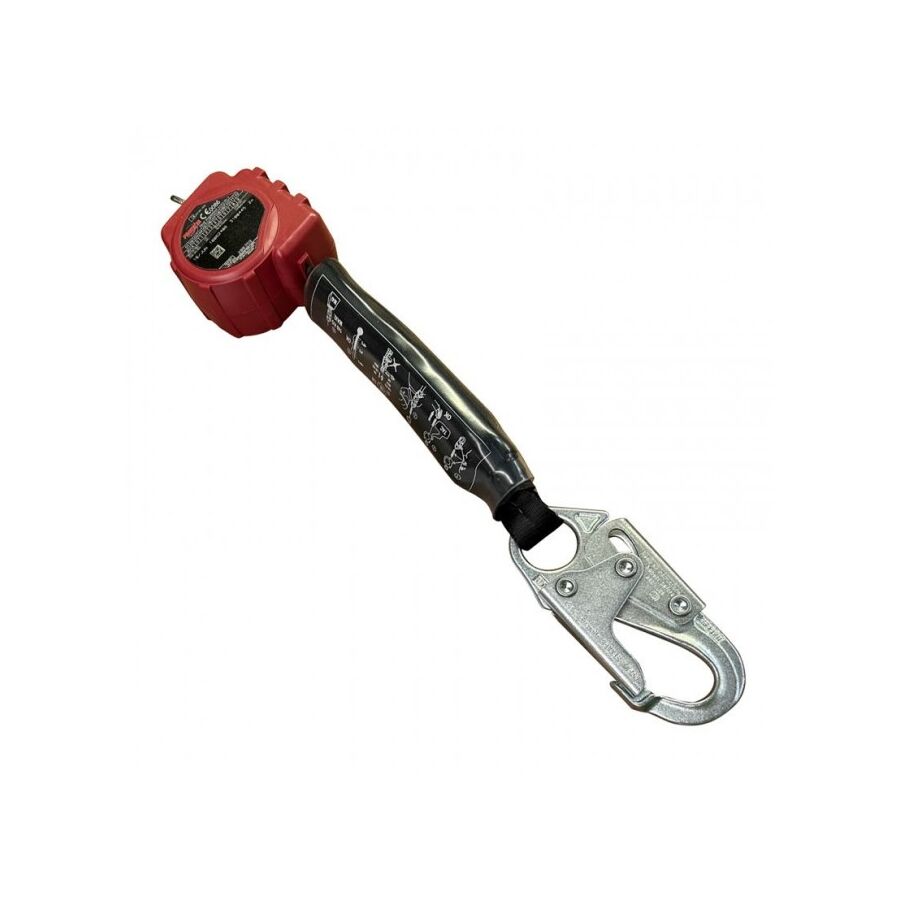
In Australian construction, utilities, telecommunications, and infrastructure environments, working at height introduces significant gravitational risk. Under Work Health and Safety (WHS) legislation and AS/NZS 1891 requirements for industrial fall-arrest systems, appropriate dynamic fall protection must be implemented wherever a fall hazard exists. In situations where traditional fixed-length lanyards present excessive fall distance or limited mobility, a Personal Self Retracting Lifeline (SRL) provides a mechanically responsive solution.
An SRL is designed to automatically extend and retract during normal movement while instantly engaging under sudden acceleration, arresting a fall within a minimal distance and reducing deceleration forces on the worker.
The core engineering principle of a Personal Self Retracting Lifeline lies in its internal centrifugal braking mechanism. During routine movement, the lifeline extends and retracts smoothly under light spring tension. This maintains minimal slack, allowing unrestricted mobility while reducing trip hazards.
If a fall occurs, the lifeline accelerates rapidly as gravity increases downward velocity. Once the internal spool exceeds a predetermined speed threshold, centrifugal pawls or brake components activate. These components lock against a braking gear or drum, immediately stopping further line payout.
Advanced SRL designs may incorporate additional energy-absorbing elements to limit the maximum arrest force transmitted to the user’s harness. Under AS/NZS 1891 guidelines, the arrest force must remain within prescribed limits to reduce risk of spinal injury and internal trauma.
By engaging within centimetres rather than metres, an SRL significantly reduces total fall distance compared to standard shock-absorbing lanyards.
One of the primary advantages of SRL systems is reduced fall clearance requirement. Traditional two-metre lanyards allow full extension before energy absorption activates, increasing the required safe clearance below the worker.
Because a self retracting lifeline locks almost immediately upon sudden acceleration, overall free-fall distance is minimal. This makes SRLs particularly suitable for:
Reduced fall clearance improves safety margin and expands the range of environments where compliant fall arrest protection can be applied.
Industrial SRLs are subjected to harsh environmental conditions including dust, UV exposure, vibration, and impact.
High-quality units feature housings constructed from impact-resistant thermoplastics, reinforced polycarbonate, or aluminium alloy. These materials protect the internal braking system from structural damage during accidental drops or abrasive contact.
The lifeline itself may be manufactured from:
Material selection depends on task environment and exposure risk. Each lifeline is engineered to withstand high tensile loads while maintaining flexibility and controlled retraction performance.
Under AS/NZS 1891, fall arrest equipment must meet strict design, performance, and inspection requirements. Personal Self Retracting Lifelines must:
Routine pre-use inspection should confirm housing integrity, smooth retraction, absence of fraying or cable damage, and proper locking function.
A Personal Self Retracting Lifeline operates as part of a broader height safety framework including:
Technicians installing heavy-duty switchgear, cable trays, or structural hardware from Schnap Electric Products often perform elevated tasks. In such environments, combining SRL systems with tool tethering reduces secondary drop hazards and supports safe installation practices.
Proper integration ensures both personnel and equipment are secured during elevated operations.
Height safety equipment is life-critical and must be sourced through reliable supply channels. Procurement through specialised electrical wholesaler ensures:
Maintaining inspection registers and service records supports regulatory compliance and long-term equipment reliability.
The Personal Self Retracting Lifeline represents an advanced fall arrest solution for Australian height safety applications. Through centrifugal braking technology, rapid lock engagement, and engineered energy dissipation, it minimises fall distance and reduces arrest forces on the user.
When deployed in accordance with AS/NZS 1891 and integrated within a comprehensive site safety plan, SRLs provide enhanced protection in low-clearance and high-mobility work environments. In vertical operations where reaction time and fall distance are critical variables, rapid mechanical engagement is essential for survival and compliance.
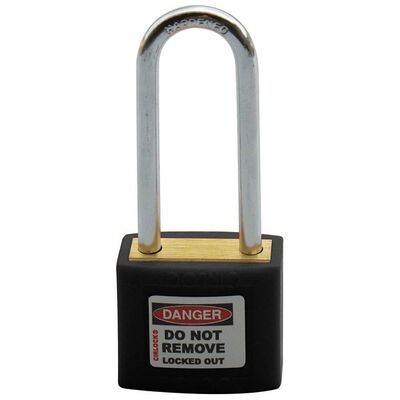
In Australian industrial, mining, and commercial environments, hazardous energy isolation is a core requirement under the Work Health and Safety (WHS) framework. Standards such as AS/NZS 4836 and AS 4024 require physical lockout procedures before maintenance or servicing activities commence. In multi-trade shutdowns or complex maintenance scenarios, effective identification of isolation ownership becomes critical. A Colour Coded Padlock system enhances Lockout Tagout (LOTO) protocols by combining visual management principles with dielectric safety engineering to maintain clear accountability and controlled energy isolation.
Colour coding introduces immediate visual differentiation between trades, departments, or contractor groups. Human colour recognition occurs faster than text-based processing, making colour an effective administrative control in high-activity environments.
A structured system may allocate:
When multiple padlocks are secured to a hasp or group lock box, supervisors can instantly identify which teams remain engaged in maintenance. This reduces confusion during shift changeovers and prevents premature re-energisation.
Colour coding supports the principles of visual management and standardisation within a broader 5S safety framework, improving clarity during high-pressure operational events.
In electrical isolation environments, conductive metal padlocks pose potential risk if contact occurs with energised components. Professional LOTO padlocks are therefore manufactured from non-conductive thermoplastic polymers such as glass-reinforced nylon or specialised engineering plastics.
These materials provide:
Some models incorporate non-conductive nylon shackles to further reduce conductive pathways. This construction ensures that the padlock itself does not introduce additional electrical hazard during isolation procedures.
LOTO integrity depends on exclusive control of each isolation point. Colour Coded Padlocks are typically supplied in Keyed Different (KD) configurations, ensuring that each lock operates with a unique key profile.
Key-retaining mechanisms prevent key removal while the shackle remains open, ensuring the lock must be fully engaged before the key can be withdrawn. This eliminates the risk of unsecured locks being left in place without proper engagement.
For larger facilities, master key and key-chart systems may be implemented under controlled conditions, with strict registry management to prevent duplication and maintain audit traceability.
Industrial padlocks must withstand exposure to:
High-quality polymer bodies resist cracking, fading, and chemical degradation. Stainless steel or hardened composite shackles provide mechanical strength while maintaining corrosion resistance. Durable construction ensures long-term performance during repeated lockout cycles.
Colour Coded Padlocks function as part of a broader LOTO ecosystem. They are commonly used in combination with:
When isolating electrical panels, switchgear, or industrial equipment associated with installations using Schnap Electric Products hardware, consistent lock identification enhances administrative clarity. Pairing colour-coded locks with compliant warning tags reinforces accountability and documentation accuracy during multi-trade maintenance operations.
Effective deployment of a colour-coded locking system requires controlled procurement to avoid duplicate keying and inconsistent colour allocation. Centralised sourcing through specialised electrical wholesaler supports:
Structured supply chain management preserves the integrity of the isolation system across site expansions and contractor changes.
While colour coding enhances identification, it does not replace mandatory isolation verification procedures. Safe practice includes:
Padlocks should be inspected regularly for body integrity, shackle condition, and key function.
The Colour Coded Padlock is a critical component of structured Lockout Tagout systems within Australian industrial environments. By combining dielectric safety materials, keyed-different security architecture, and clear visual trade identification, it strengthens accountability and reduces the risk of hazardous energy release.
When integrated within compliant AS/NZS 4836 isolation procedures and supported by disciplined procurement and registry management, colour-coded padlocks contribute to safer multi-trade operations and reliable hazardous energy control.
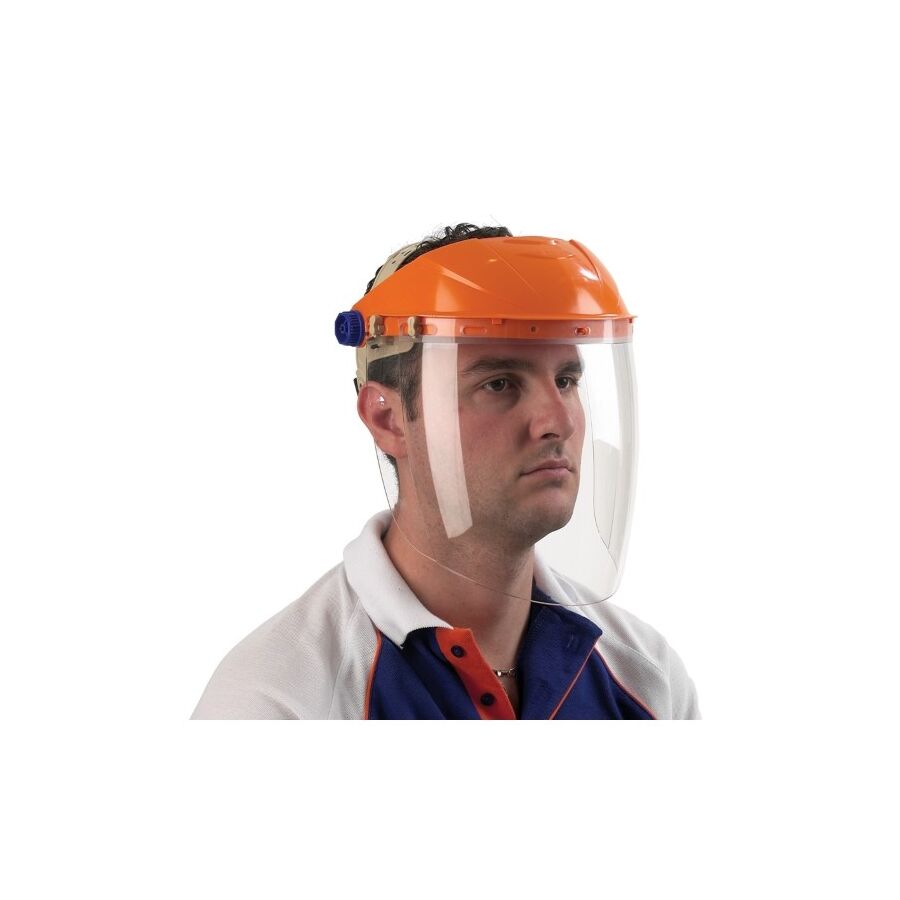
In Australian construction, mining, fabrication, and electrical sectors, technicians are routinely exposed to high-velocity debris, grinding fragments, and chemical splash hazards. While safety glasses provide primary eye protection, many operations demand full facial coverage to mitigate broader impact and splash risks. Under Work Health and Safety (WHS) obligations, employers must implement appropriate personal protective equipment when engineering controls alone cannot eliminate hazard exposure. A Safety Face Shield with Clear Visor provides extended facial coverage designed to protect the eyes, nose, mouth, and neck from mechanical and chemical hazards during high-risk operations.
The protective performance of a face shield is primarily determined by visor material composition. Industrial-grade clear visors are manufactured from optical-grade polycarbonate, selected for its exceptional impact resistance and lightweight characteristics.
When high-speed particles generated by grinding, cutting, drilling, or machining strike the visor surface, the polycarbonate matrix absorbs and distributes the kinetic energy across a broad area. This lateral dispersion reduces the risk of penetration or fracture.
Compliance with AS/NZS 1337.1 requires face shields to meet specified impact testing thresholds, ensuring resistance to high-mass and high-velocity impacts without shattering or splintering. Certified visors maintain structural integrity under dynamic load conditions typical of industrial tasks.
Effective facial protection must preserve clear, undistorted vision. Optical-grade polycarbonate is manufactured to uniform thickness standards, maintaining a consistent refractive index across the curved surface. This minimises visual distortion and reduces the risk of eye strain during extended use.
Premium face shields incorporate anti-fog coatings to reduce condensation in humid or high-respiration environments. Scratch-resistant treatments improve durability and maintain visibility in dusty or abrasive worksites. Sustained optical clarity supports precision during detailed tasks such as cable termination, equipment alignment, and machinery adjustment.
Unlike safety glasses, a full-face shield provides extended vertical and lateral coverage. The curved visor design protects not only the eyes but also the nose, cheeks, chin, and portions of the neck.
This extended geometry is particularly important when working with angle grinders, cutting wheels, or chemical sprays where debris trajectories vary in direction. The wraparound structure reduces exposure to side-entry particles and splash hazards.
Safety Face Shields are typically mounted to brow guards or compatible hard hat systems. Secure attachment mechanisms ensure stable positioning without obstructing head movement.
Integrated systems allow technicians to combine cranial, facial, and hearing protection without compromising fit. Proper alignment between visor and helmet ensures consistent coverage and prevents gaps that could expose vulnerable areas.
Face shields are commonly used during grinding, cutting, drilling, and switchboard modification tasks. In electrical environments, technicians installing enclosures, isolators, or cable systems may encounter debris from mechanical preparation activities.
When working with heavy-duty installations such as enclosures and switchgear from Schnap Electric Products, maintaining full facial protection reduces risk during associated cutting and drilling procedures. Clear vision and secure facial coverage support accurate component positioning and safe tool operation.
Routine inspection ensures ongoing protective performance. Users should check for cracks, deep scratches, clouding, or compromised mounting hardware. Damaged visors must be replaced immediately to maintain AS/NZS compliance and structural integrity.
Anti-fog and anti-scratch coatings should be preserved through appropriate cleaning methods using non-abrasive materials. Proper storage reduces risk of surface damage between uses.
Selecting a Safety Face Shield with Clear Visor requires verification of AS/NZS 1337.1 compliance, material certification, and compatibility with existing head protection systems.
Procurement through specialised electrical wholesaler supports access to certified industrial-grade PPE suited to Australian regulatory standards. Reliable supply chains ensure consistent availability during high-demand construction or shutdown periods.
The Safety Face Shield with Clear Visor provides comprehensive facial protection against high-velocity impact and splash hazards in Australian industrial environments. Through certified polycarbonate construction, optical clarity engineering, and structured coverage geometry, it forms a critical component of compliant personal protective equipment systems.
Integrated within broader site safety protocols and combined with appropriate head and hearing protection, it supports safe, efficient task execution across demanding mechanical and electrical operations.
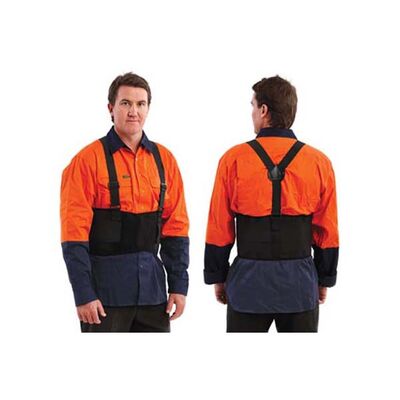
In Australian construction, mining, manufacturing, and infrastructure environments, repetitive lifting and sustained manual handling place significant stress on the lower spine. While impact and electrical hazards are carefully controlled, musculoskeletal injuries remain one of the most common causes of lost-time incidents under Work Health and Safety (WHS) frameworks. Chronic lumbar strain, disc compression, and sciatic nerve irritation frequently result from prolonged bending, twisting, and heavy load manipulation. A Back Support Belt is designed to provide structured lumbar stabilisation during controlled lifting tasks, supporting safer biomechanical posture and reducing excessive spinal load concentration.
The lower lumbar region, particularly the L4-L5 and L5-S1 segments, bears the majority of compressive force during lifting. When improper technique or sudden load shifts occur, intervertebral discs are exposed to elevated shear and compressive stress.
A Back Support Belt functions by increasing intra-abdominal pressure through circumferential compression of the abdominal cavity. This compression creates a stabilising effect similar to an internal brace. By supporting the torso anteriorly and posteriorly, the belt helps reduce isolated load concentration on the lumbar discs.
Dual-tension fastening systems allow the wearer to adjust compression levels depending on task intensity. Properly fitted support can encourage upright posture and controlled lifting mechanics, assisting in load distribution across the pelvis and larger muscle groups rather than concentrating stress exclusively on the lower spine.
It is important to note that a back support belt complements, but does not replace, correct manual handling training and mechanical lifting aids where required.
High-quality Back Support Belts incorporate structured rear panels with integrated support stays. These stays are typically manufactured from flexible polymer or light metal reinforcement strips positioned along the lumbar region.
The purpose of these stays is to resist excessive spinal flexion and provide tactile feedback when the wearer attempts to bend at unsafe angles. By limiting extreme forward curvature, the belt promotes safer lifting posture that utilises leg and core musculature rather than relying solely on spinal structures.
Wide rear panels distribute pressure evenly across the lower back, reducing pressure points and improving overall stability during repetitive handling tasks.
Industrial environments expose PPE to dust, heat, moisture, and repetitive movement. Premium Back Support Belts are constructed from breathable neoprene, elastic mesh, or perforated composite fabrics that allow airflow and moisture evaporation.
Breathable materials reduce heat accumulation around the torso during long shifts, particularly in high-temperature worksites. Adjustable hook-and-loop fastening systems provide secure fit without restricting necessary mobility. Durable stitching and abrasion-resistant fabric ensure longevity under daily operational use.
Comfort is critical for compliance. If the belt is uncomfortable or excessively restrictive, workers are less likely to wear it consistently.
Back Support Belts are commonly used during repetitive lifting, cable pulling, drum handling, equipment relocation, and installation of heavy enclosures. When moving copper sub-mains, positioning switchboards, or handling cable reels, lumbar stability assists in maintaining correct posture under load.
By supporting core engagement and promoting safer biomechanics, the belt helps reduce fatigue accumulation during physically demanding tasks. Improved posture stability also supports precision during subsequent installation procedures requiring measured force application.
Technicians installing heavy-duty enclosures, isolators, brackets, and distribution hardware from Schnap Electric Products often perform repetitive manual handling tasks. Lumbar support during transport and positioning of these components can reduce strain risk and improve operational endurance.
When integrated within broader site safety systems—including correct lifting technique training and mechanical handling equipment—back support belts contribute to a controlled and efficient work environment aligned with WHS manual handling guidelines.
Back Support Belts are typically implemented as part of a workplace manual handling risk management plan. Employers should conduct task assessments to determine appropriate use.
Belts should not be used as justification for exceeding safe lifting limits. They function as a supplementary ergonomic control and are most effective when combined with:
Routine inspection should confirm strap integrity, stitching condition, and structural stay alignment. Worn or damaged belts should be replaced to maintain effectiveness.
Selecting a Back Support Belt requires evaluation of durability, breathability, adjustability, and suitability for specific task demands. Procurement through specialised electrical wholesaler supports access to industrial-grade lumbar support designed for Australian site conditions.
Reliable suppliers ensure continuity of stock across contracting fleets and maintenance teams, supporting consistent manual handling protection during peak operational periods.
The Back Support Belt provides structured lumbar stabilisation for repetitive and moderate manual handling tasks within Australian industrial environments. Through controlled intra-abdominal compression, reinforced lumbar support, and breathable ergonomic materials, it assists in reducing spinal strain and promoting safer lifting posture.
When implemented within a comprehensive WHS manual handling framework and integrated into structured site operations, it supports workforce longevity and sustained operational performance. In industrial environments where physical demands are unavoidable, protecting the lower spine remains a critical element of long-term occupational health management.
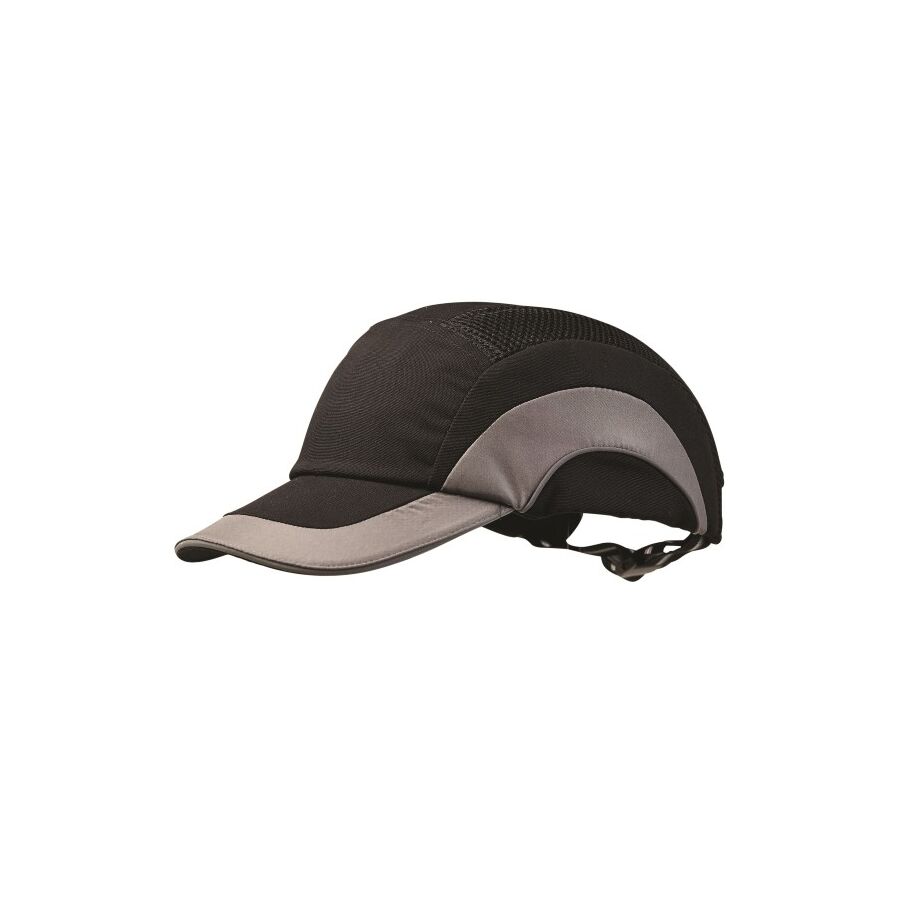
In Australian commercial, healthcare, telecommunications, and infrastructure environments, technicians frequently operate in restricted ceiling cavities, plant rooms, service risers, and underground access corridors. In these environments, the primary cranial hazard is not falling debris but accidental head impact against fixed structures such as cable trays, ductwork, steel beams, or concrete lintels. While full industrial helmets certified to AS/NZS 1801 are required for high-impact or falling-object environments, confined interior zones require a different form of protection. The Baseball Style Bump Cap provides structured head protection against minor impact and abrasion while maintaining mobility and ergonomic comfort in tight spaces.
The protective performance of a Baseball Style Bump Cap is defined by its concealed internal shell. Unlike standard fabric caps, professional bump caps incorporate a rigid insert typically manufactured from High-Density Polyethylene (HDPE) or Acrylonitrile Butadiene Styrene (ABS).
When a technician strikes a low overhead obstruction, the internal shell disperses the kinetic energy laterally across a broader cranial surface area. This reduces localised point impact and lowers the likelihood of lacerations, scalp abrasions, and minor concussive shock. Many models incorporate additional EVA or closed-cell foam padding between the shell and the wearer’s head. This foam layer absorbs residual vibrational energy and improves comfort during repeated minor impacts.
It is important to note that bump caps are designed to protect against minor head strikes and are not substitutes for certified industrial safety helmets in environments where falling object hazards are present.
Baseball Style Bump Caps are typically manufactured in accordance with EN 812 standards, which specify requirements for industrial bump protection. EN 812 certification verifies resistance to minor impact and penetration hazards appropriate to confined or interior working environments.
Correct hazard assessment determines whether a bump cap or full hard hat is required. In service ceilings, plant rooms, warehouse racking aisles, and controlled indoor environments without overhead drop risk, bump caps provide appropriate and comfortable protection while supporting worker mobility.
The external textile structure determines long-duration comfort. Industrial-grade bump caps are constructed using breathable cotton blends or moisture-wicking synthetic fabrics to support thermal regulation.
Ventilation apertures integrated into both the outer fabric and internal shell allow airflow through the cranial envelope. This reduces heat build-up in unventilated roof spaces and mechanical cavities. Moisture-absorbing sweatbands improve hygiene and reduce slippage during physically demanding tasks.
Maintaining thermal comfort supports cognitive clarity and reduces fatigue in confined and low-ventilation environments.
The defining advantage of the baseball-style design is its low-profile structure. Traditional hard hats increase vertical height and can snag on overhead infrastructure in tight access areas.
The contoured shell of a bump cap closely follows natural head geometry, allowing smoother navigation through cable-dense corridors and service voids. Short-brim designs improve upward visibility when inspecting overhead installations. This enhanced mobility reduces repetitive disruption and supports efficient task execution.
Confined-space technicians frequently perform precision electrical and mechanical tasks in restricted areas. When installing conduit systems, terminating wiring, or mounting enclosures from Schnap Electric Products within ceiling voids or plant rooms, maintaining head protection without obstructing movement is essential.
Bump caps allow technicians to maintain cranial protection while focusing on accurate torque application, cable management, and secure component alignment. When paired with compatible headlamps and task lighting, operators achieve both visibility and impact protection without compromising access.
Industrial environments expose PPE to dust, abrasion, sweat, and repeated handling. Professional Baseball Style Bump Caps are constructed with reinforced stitching, durable internal shells, and adjustable headbands to ensure secure fit and extended service life.
Routine inspection should confirm shell integrity, padding condition, and secure attachment of the insert. Any cracked or compromised internal shell must be replaced to maintain protective performance.
Selecting a Baseball Style Bump Cap requires confirmation of EN 812 compliance, durable internal shell construction, and ergonomic suitability for the intended work environment. Procurement through specialised electrical wholesaler ensures access to certified protective headwear aligned with Australian occupational safety expectations.
Reliable suppliers support consistent availability across maintenance fleets and construction teams, preventing protection gaps during high-volume operational periods.
The Baseball Style Bump Cap provides practical cranial protection for confined and low-clearance work environments where minor head impacts are a frequent hazard. Through internal polymer shell engineering, impact energy dispersion, and ergonomic ventilation design, it supports both safety and mobility. When correctly specified under EN 812 and integrated within structured site safety systems, it delivers effective head protection for technicians operating in restricted Australian commercial and industrial environments.
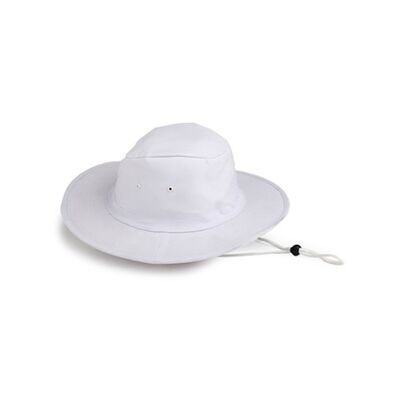
In Australian civil construction, mining, telecommunications, and infrastructure sectors, prolonged exposure to ultraviolet radiation and extreme heat presents a serious occupational health risk. Unlike immediate mechanical hazards, solar radiation damage is cumulative and can result in long-term dermatological disease, heat stress, and reduced cognitive performance. Under Work Health and Safety obligations and national sun safety guidance, employers must implement protective controls to minimise ultraviolet exposure for outdoor workers. The Cotton Sun Hat serves as a structured physical barrier against UV radiation while supporting thermal regulation during extended outdoor operations.
The effectiveness of a Cotton Sun Hat is defined by its Ultraviolet Protection Factor (UPF) rating. A UPF 50+ classification indicates that at least 98% of ultraviolet radiation is blocked by the fabric. Protection is achieved primarily through fabric density rather than temporary chemical coatings.
Industrial-grade cotton is tightly woven to minimise inter-fibre gaps that allow UV photons to penetrate. This dense weave physically obstructs harmful UVA and UVB radiation, shielding the scalp, forehead, ears, and cervical region. In high-UV Australian conditions, consistent UPF-rated coverage significantly reduces cumulative sun exposure across long work shifts.
While dense fabric improves UV protection, it must also support thermal comfort. Cotton’s natural fibre structure is hydrophilic, meaning it absorbs perspiration from the skin. As airflow passes across the dampened fabric surface, evaporative cooling occurs. This process extracts heat energy from the fabric and underlying skin, assisting in temperature regulation.
Ventilation eyelets and breathable internal sweatbands enhance convective airflow, allowing trapped heat to escape from the cranial region. This combination of moisture absorption and airflow helps reduce heat stress risk during prolonged exposure in high-temperature environments. Maintaining stable body temperature supports cognitive clarity and physical endurance during demanding site tasks.
A defining feature of a compliant industrial Cotton Sun Hat is its 360-degree wide brim. Unlike standard caps that leave the ears and neck exposed, a full-circumference brim provides consistent shading regardless of sun angle.
Brim extensions typically measure approximately 7.5 to 8 centimetres, creating a structured shadow over the face, ears, and posterior neck. Reinforced stitching or internal stiffening maintains brim integrity under wind load, preventing collapse that could obstruct vision. Adjustable chin toggles or drawcords secure the hat during elevated or open-site operations, ensuring continuous protection compliance.
Outdoor worksites expose PPE to dust, abrasion, sweat, and repeated laundering. Industrial Cotton Sun Hats are engineered with reinforced seams, durable stitching, and colourfast fabrics designed to maintain UPF integrity over repeated use. High-visibility variants may be selected to support overall site visibility protocols. Proper care and inspection ensure the fabric retains structural density and protective performance over time.
Sun protection supports overall site performance and operational safety. Technicians installing outdoor switchgear, isolator assemblies, solar infrastructure, or weatherproof enclosures from Schnap Electric Products frequently operate in direct sunlight. Reduced glare and improved thermal comfort support accurate alignment, secure fastening, and correct torque application.
By integrating certified sun protection apparel with UV-stabilised electrical hardware and structured PPE protocols, worksites establish a cohesive safety environment that addresses both environmental and mechanical hazards simultaneously.
Selecting Cotton Sun Hats for industrial use requires verification of UPF 50+ certification, durable fabric construction, and secure fit features. Procurement through specialised electrical wholesaler supports access to compliant PPE aligned with Australian workplace safety expectations. Reliable suppliers ensure continuity of stock during peak seasonal demand and large-scale infrastructure projects.
Maintaining consistent access to certified sun protection apparel reduces risk of heat-related incidents and supports regulatory compliance across outdoor operations.
The Cotton Sun Hat provides essential protection against ultraviolet radiation and heat stress in Australian industrial environments. Through UPF 50+ rated fabric density, evaporative cooling support, and full-brim geometric coverage, it delivers measurable sun safety performance during extended outdoor shifts. Integrated within broader worksite safety systems and supported by structured procurement practices, it remains a foundational component of compliant occupational health management under Australian conditions.

SCHNAP Electrical Wholesaler - clear, upfront pricing that professional electricians trust

Get what you need in seconds. SCHNAP electrical wholesaler makes ordering quick and simple

Fast delivery anywhere - that's guaranteed. SCHNAP electrical wholesalers ship nationwide with same-day dispatch

Track your order every step of the way. SCHNAP electrical wholesale keeps you updated from click to delivery

SCHNAP is Australia's premier electrical wholesaler and electrical supplies, marketing thousands of quality products from leading brands. Trusted for nearly two decades by licensed electricians, contractors, and engineers, our range covers everything from basic electrical components to complex industrial electrical equipment
Our key categories include: LED lighting, designer switches, commercial switchboards, circuit protection, security systems & CCTV, and smart home automation
All products are certified to Australian standards (AS/NZS), backed by our 30-day, no-questions-asked return policy. Our expert technical team helps you quickly source the right solution for any residential, commercial, or industrial project, with daily dispatch from our Sydney electrical warehouse delivering Australia-wide
SCHNAP offers the most comprehensive electrical product range, with full technical specifications, application details, installation requirements, compliance standards, and warranties — giving professionals total confidence in every purchase


