

Kingsgrove Branch:



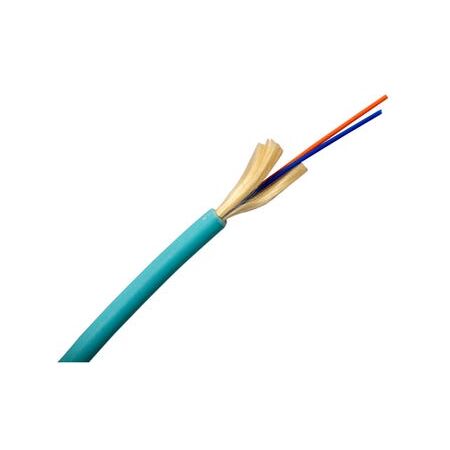
Third-floor comms room, switch room two levels down, 85 metres of cable tray and two floor penetrations between them — that was the run a data cabler was pricing out last month before locking in a fibre spec. Multimode felt like the safe, familiar pick. Singlemode felt like overkill for a building that size. Getting that call wrong doesn't just mean a rework — on a run with this much cable tray already closed in, it can mean pulling everything back out.
Most fibre cable decisions get framed around bandwidth first — 10G, 40G, "future-proofing" — but on a real job, distance is usually what actually forces the answer. Multimode fibre (OM3, OM4) runs light through a wider core, which makes it cheaper to terminate and more forgiving to work with, but it loses signal strength faster over distance. Singlemode fibre (OS2) uses a much narrower core and a laser source instead of an LED, which costs more upfront but holds a clean signal over far longer runs.
For that 85-metre run between comms room and switch room, OM4 multimode is well inside its comfortable working range for 10G, and even leaves headroom for a future 40G upgrade without needing a full re-cable. If that same run had been closer to 300–400 metres, or if it was ever likely to cross to a separate building on the same site, singlemode would typically be the safer call — not because of bandwidth, but because multimode signal loss over that kind of distance in practice starts eating into the link budget fast.
[!] Rule of thumb worth remembering: multimode is generally the more cost-effective option for intra-building runs where distance is measured in tens of metres. Once a run starts pushing toward inter-building or campus scale, singlemode is typically the more reliable long-term choice — even if the immediate bandwidth requirement doesn't demand it yet.
Once distance is settled, the next question is which multimode grade to run if that's the direction you're heading. Here's how the three most common options in a structured cabling fit-out typically compare:
| Fibre Type | Typical 10G Reach | Light Source | Best Suited For |
|---|---|---|---|
| OM3 Multimode | Around 300m (in practice, shorter with more connectors/bends) | LED/VCSEL | Data centre and comms room runs on a tighter budget |
| OM4 Multimode | Typically extends beyond OM3, with more headroom for 40G | LED/VCSEL | Runs where a future bandwidth upgrade is a real possibility |
| OS2 Singlemode | Multiple kilometres | Laser | Inter-building, campus and long-haul backbone runs |
One thing that trips up a lot of cablers coming from a copper background: every connector, splice and tight bend chips away at that reach figure. A spec sheet number is a lab condition, not a site condition — build in margin, especially on runs with more than a couple of patch points.
Related Reading
It's not just Ethernet runs that eventually hit this crossroad. Industrial sites running copper serial protocols like RS485 cable for long field-device runs will eventually bump into the same distance wall that pushes structured cabling toward fibre — copper serial has a hard distance ceiling long before OM4 or OS2 do, and once a site is expanding past that ceiling, converting the backbone segment to fibre is usually the more reliable fix than adding repeaters.
A few ways this decision goes sideways on real jobs:
Can I run OM4 multimode over 200 metres for a 10G link?
In practice this is often right at the edge of what's reliable, and connector count and bend radius will make the difference between a link that works and one that doesn't. For runs that long, it's generally worth checking against OM4 pre-terminated cable spec documentation for the exact run configuration before locking it in — or considering singlemode if there's any margin concern.
Do multimode and singlemode fibre use different connectors?
The connector housings themselves (LC, SC) are typically the same physical format across both, but the transceivers and the fibre core inside are not interchangeable. Mixing a singlemode transceiver with multimode fibre, or vice versa, is one of the most common reasons a freshly terminated link fails to establish.
Do I need a licence to install fibre optic cabling in Australia?
Cabling work that connects to a telecommunications carrier network typically requires an ACMA-registered cabling licence (Open or Restricted, depending on scope). Internal enterprise data cabling that doesn't touch carrier infrastructure generally sits under different registration rules — it's worth confirming current ACMA registration requirements against the specific scope of the job before starting any run that may touch carrier-connected infrastructure.
Does colour coding for multimode vs singlemode jacket actually matter on site?
Yes — aqua is the industry-standard jacket colour for OM3/OM4 multimode and yellow for OS2 singlemode. On a site with both types running through the same tray or riser, this colour distinction is often the fastest way to avoid a mismatched transceiver mistake at termination time.
Is singlemode worth the extra cost if I'm only running 10G right now?
If the physical run is short — well within multimode's comfortable range — the extra cost of singlemode usually isn't justified by bandwidth alone. Singlemode earns its premium on distance, not on speed; a short run rarely needs it even at higher bandwidths.
What's the practical difference between OM3 and OM4 for a comms room fit-out?
Both handle short intra-building runs comfortably. The real difference shows up on longer runs or higher future bandwidths — OM4 typically gives more headroom for a later upgrade to 40G without needing to re-cable, which is often worth the modest price difference on a job that's expected to be in service for years.
Once distance and bandwidth are settled, the next call is usually pre-terminated versus field-terminated assemblies — that's a separate decision with its own cost and timeline trade-offs worth working through before ordering.
Once you've locked in a spec, the full range is stocked at Kingsgrove NSW for trade pricing and same-day dispatch.
Find the full fiber cable range at Schnap — trade pricing and same-day dispatch from Kingsgrove NSW.

SCHNAP Electrical Wholesaler - clear, upfront pricing that professional electricians trust

Get what you need in seconds. SCHNAP electrical wholesaler makes ordering quick and simple

Fast delivery anywhere - that's guaranteed. SCHNAP electrical wholesalers ship nationwide with same-day dispatch

Track your order every step of the way. SCHNAP electrical wholesale keeps you updated from click to delivery

SCHNAP is Australia's premier electrical wholesaler and electrical supplies, marketing thousands of quality products from leading brands. Trusted for nearly two decades by licensed electricians, contractors, and engineers, our range covers everything from basic electrical components to complex industrial electrical equipment
Our key categories include: LED lighting, designer switches, commercial switchboards, circuit protection, security systems & CCTV, and smart home automation
All products are certified to Australian standards (AS/NZS), backed by our 30-day, no-questions-asked return policy. Our expert technical team helps you quickly source the right solution for any residential, commercial, or industrial project, with daily dispatch from our Sydney electrical warehouse delivering Australia-wide
SCHNAP offers the most comprehensive electrical product range, with full technical specifications, application details, installation requirements, compliance standards, and warranties — giving professionals total confidence in every purchase


Kingsgrove Branch:
Opening hours:
Mon - Fri: 6:30 AM to 5 PM
Saturday: 8:00 AM to 2:00 PM
Sunday: 9:00 AM to 2:00 PM
Closed on public holidays
Jannali Branch:
Closed for Renovations
© 2004 - 2026 SCHNAP Electric Products