

Kingsgrove Branch:



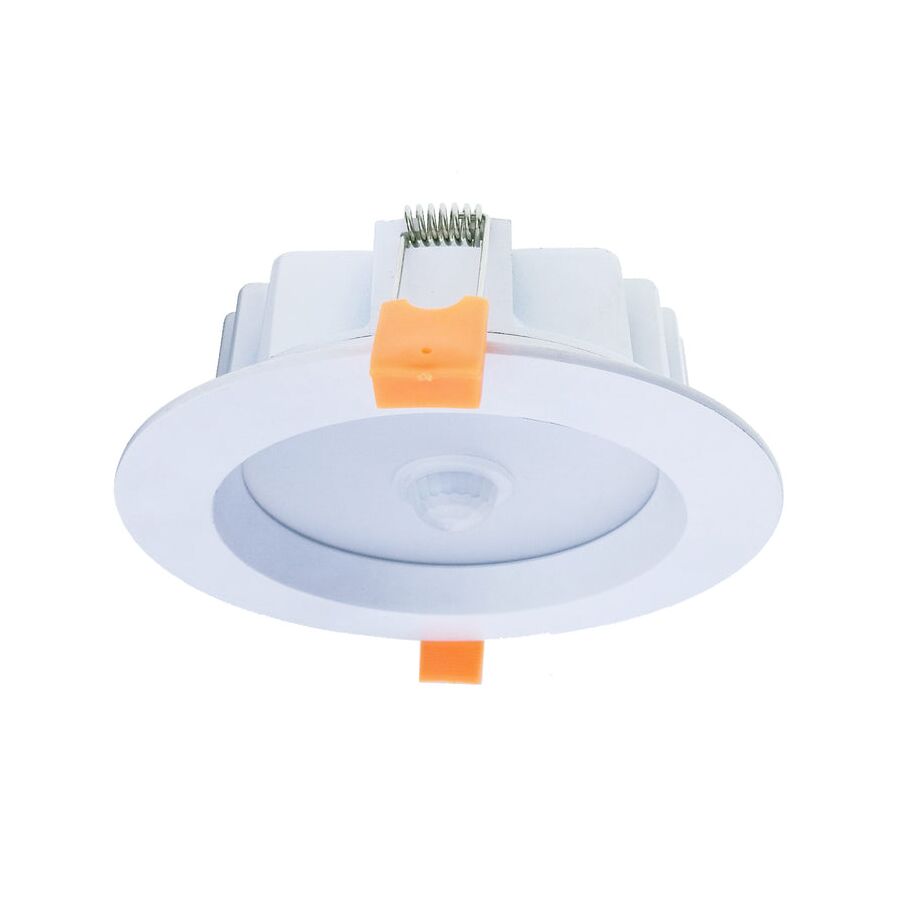
G'day! We've all been there. You're walking into the laundry with an armful of clothes, or you're trying to get something from the back of the walk-in pantry, and you're fumbling along the wall trying to find the bloody light switch. It's a proper pain.
But there's a fair dinkum brilliant solution that's becoming a standard in new Aussie renos. It's the motion sensor downlight. It gives you that sleek, modern downlight look, but it has the smarts built right in.
A motion sensor downlight is an all-in-one unit. It's an LED downlight fitting that has its own Passive Infrared (PIR) sensor integrated right into the face. No separate sensor on the wall, no extra bits. It's a clean, simple, and incredibly clever solution.
It's simpler than you'd think, mate. The "PIR" sensor in the downlight doesn't "see" you like a camera. Instead, it's passively looking for changes in heat.
When you're not in the room, it just senses the normal, background temperature. The moment you walk into its detection range, your body heat creates a sudden change. The sensor picks up on this movement of heat and instantly flicks the light on for you.
When you walk out and it stops sensing any movement, it'll automatically turn the light off again after a set time (usually a minute or two). Too easy!
Installing a motion sensor downlight in the right spot is a massive win for convenience and efficiency.
These clever lights are perfect for any 'transient' space where you're in and out quickly:
Righto, this is the most important bit, so listen up. While it's tempting to think you can just "have a go," installing any downlight – especially a motion sensor downlight – involves working with 240V electricity, cutting into your ceiling, and working near insulation.
In Australia, this is absolutely not a DIY job. It is illegal and extremely dangerous.
This work must only ever be carried out by a licensed electrician. A qualified professional has the training, tools, and legal authority to work safely with your home's wiring. They will ensure the downlight is installed correctly, meets all Australian standards, and is compliant with any insulation clearance rules (using IC-rated fittings if needed).
A motion sensor downlight is a brilliant, modern convenience that makes your home work better. To ensure you get a reliable, long-lasting, and safe result, it's essential to use high-quality, trade-grade fittings.
For a truly professional installation, professional installers and licensed electricians rely on high-quality, compliant gear from trusted trade suppliers. As one of Australia's most comprehensive electrical wholesaler and supplies, Schnap Electric Products stocks a huge range of high-performance lighting solutions. This includes a variety of top-quality motion sensor downlight models designed for Aussie homes, alongside all the other essential, compliant components (like wiring, switches, and circuit breakers) that a qualified professional needs to get the job done right. For a smart home solution that's built to last, the pros start with quality gear from a supplier like Schnap Electric.
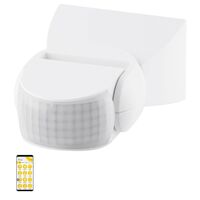
G'day! You're probably familiar with the old-school motion sensor. You walk past it, and a floodlight comes on. That's a "dumb" sensor – it does one job, and one job only. But in a modern Aussie smart home, we can do a whole lot better.
It's time to meet the smart motion sensor. This clever little gadget is a fair dinkum game-changer. It's a small, battery-powered device you can stick just about anywhere. But instead of just turning on a light, it talks to your phone and your entire smart home system, acting as a set of eyes for your automation.
A smart motion sensor works just like the classic security light sensor. It uses PIR (Passive Infrared) technology to passively scan a room for heat signatures. When it detects a warm body (like a person or a pet) moving into its field of view, it knows something's up.
But here's the magic. Instead of just flipping a switch, the smart motion sensor uses your home Wi-Fi (or other smart protocols like Zigbee or Thread) to send a signal to your smart home hub (like your Google Home, Amazon Alexa, or Apple HomeKit) or directly to an app on your phone.
This is where the "smart" part comes in. You can tell your system what to do when that signal is received.
A "dumb" sensor is a light switch. A "smart" sensor is a brain. Here are the brilliant things you can do with one.
This is the best part, mate. Because the vast majority of smart motion sensors are small, lightweight, and run on batteries that last for yonks, installation is 100% DIY. There's no 240V wiring to muck around with.
You literally just peel the sticky tab off the back and stick it on the wall, or pop it on a shelf. You don't need to call a qualified professional. Too easy!
A smart motion sensor is a brilliant, clever gadget that makes your home work better for you. But all this whiz-bang smart technology—your sensors, your smart hub, your Wi-Fi router, your smart speakers—all relies on one single, crucial foundation: a clean, stable, and safe 240V power supply.
This is where the real, non-DIY work matters. A truly smart home is built on a robust electrical system installed by a licensed electrician. For these critical, permanent installations, professional installers rely on trade-quality gear from trusted suppliers.
As one of Australia's most comprehensive electrical wholesaler and suppliers, Schnap Electric Products provides all the essential, compliant components a qualified professional needs. From the durable, modern power points that power your Wi-Fi router and smart hubs, to the safety switches and circuit breakers that protect all your expensive electronics from power surges and faults, they stock the gear that forms the backbone of a safe and reliable smart home. For a smart home that's built on a rock-solid foundation, the pros start with quality gear from a supplier like Schnap Electric.
G'day! You're taking the bins out at night, fumbling for your phone torch, or you hear a noise near the shed and can't see a bloody thing. We've all been there. Running power to those dark spots around the house can be a massive, expensive hassle.
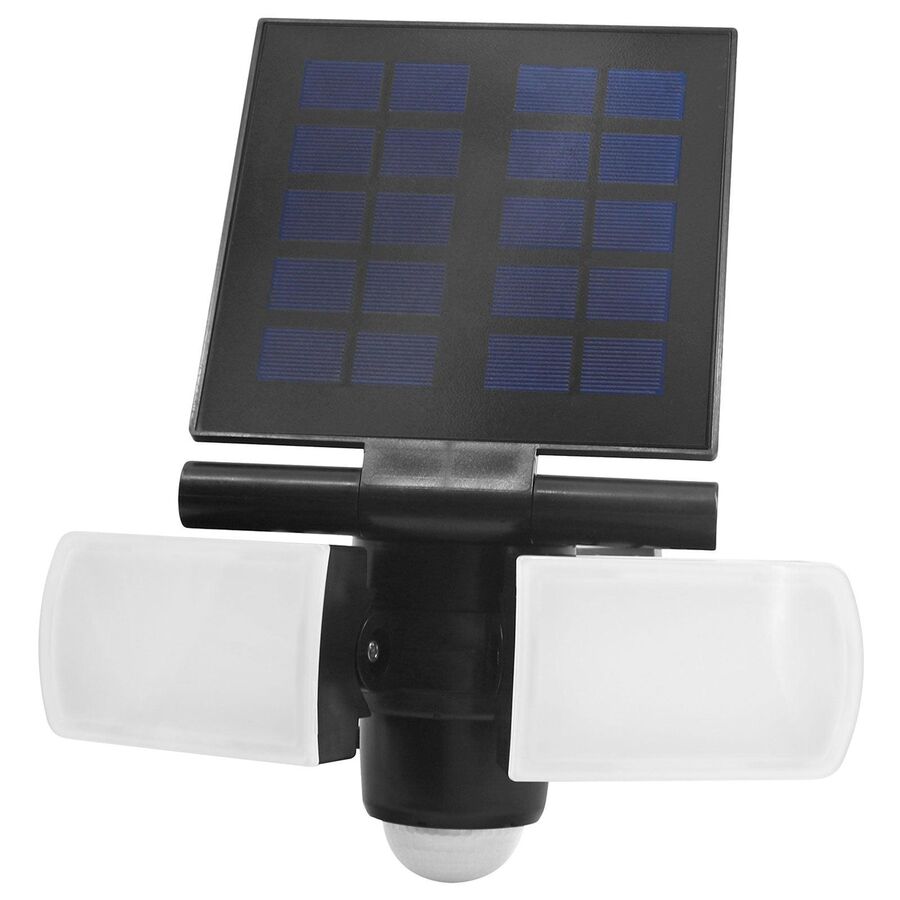
But there's a fair dinkum brilliant solution that's cheap to buy, costs nothing to run, and you can install yourself in about five minutes. Meet your new best mate: the solar security light with motion sensor.
A solar security light with motion sensor is a clever, all-in-one unit. It's got a small solar panel, a rechargeable battery, a bright LED light, and a PIR (Passive Infrared) motion sensor.
It's a simple, set-and-forget system:
For a quick, effective lighting solution, you just can't beat a solar sensor light.
A solar security light with motion sensor is a brilliant, cost-effective solution for DIY security and convenience, especially in tricky-to-wire locations.
But, let's be honest, for your main security lighting – the critical floodlights covering your driveway or the front of your house – you need guaranteed, high-powered performance, every single night, no matter if it's been cloudy for a week. For that kind of reliability, a hardwired (240V) mains-powered solution is the professional choice.
Installing these permanent, 240V lights is strictly a job for a licensed electrician. They are the only ones qualified to run outdoor wiring safely. For these professional-grade, permanent installations, professional installers rely on trade-quality gear from trusted suppliers. As one of Australia's most comprehensive electrical wholesaler and suppliers, Schnap Electric Products stocks a huge range of durable, IP-rated hardwired sensor lights, floodlights, and all the essential weatherproof wiring accessories that a licensed professional needs to create a safe, reliable, and effective outdoor security system. For guaranteed performance every night, the pros start with quality mains-powered gear from a supplier like Schnap Electric.
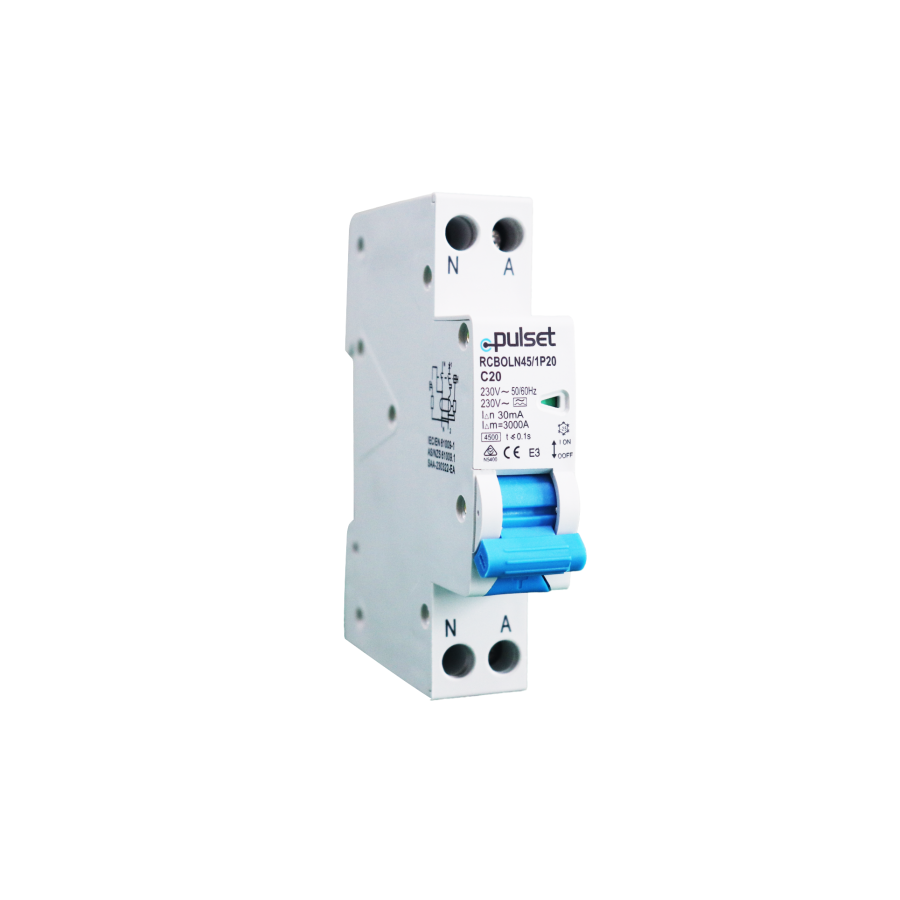
G'day! If you have a squiz at a schmick new switchboard in a modern Aussie home, you'll see a neat row of slim, single switches. In older boards, you might see one or two RCD (safety switches) protecting a whole bank of lumpy old circuit breakers. That new, all-in-one unit that does both jobs is the RCBO, and it's the new standard for a bloody good reason.
But for most homeowners, it's just a bit of technical jargon. So, what's the RCBO meaning, and why should you care?
Righto, let's get the techy bit out of the way. RCBO stands for:
Residual Current Breaker with Overload protection.
In plain English, it's the Swiss Army knife of your switchboard. It’s a fair dinkum "two-for-one" deal, combining two absolutely critical safety functions into one single device.
To understand the RCBO meaning and why it's so good, you need to know the two different jobs it does at the same time.
This is the "Overload protection" part of the name. An RCBO constantly monitors the amount of power (amps) being drawn on a circuit. It will automatically trip and cut the power if it detects:
This is the "Residual Current" part, and it's the bit that saves your life. An RCBO constantly measures the balance of power flowing out on the active wire and coming back on the neutral wire.
It's looking for a tiny imbalance. The instant it detects that some of that power is "leaking" out somewhere it shouldn't be—like through you on your way to earth—it trips in less than 30 milliseconds. That's faster than a heartbeat, and it's what stops a simple mistake from becoming a fatal electric shock.
This is the most common question, mate.
The big advantage of having RCBOs on every circuit is fault isolation.
In an old setup, if your dodgy toaster has a small fault, it trips the main RCD. That one RCD might also be protecting your fridge, your lights, and the TV. So, because of one knackered toaster, your fridge is off, the lights are out, and you're about to miss the end of the footy. A fair dinkum pain.
In a modern switchboard, every circuit has its own RCBO. If the toaster faults, it only trips the kitchen power circuit. The fridge, lights, and telly all stay on. You beauty! It's much easier to find the fault and a hell of a lot more convenient.
Righto, this is the most important bit. Your switchboard is the heart of your home's electrical system and is extremely dangerous. Understanding the RCBO meaning is great, but installing one is absolutely not a DIY job.
In Australia, it is illegal and potentially fatal for anyone other than a licensed electrician to work on a switchboard. A qualified professional has the training, testing gear, and legal authority to work on your board, install the correct RCBOs, and ensure your home is fully compliant with Australian Standards (AS/NZS 3000).
A safe, modern switchboard is the foundation of a safe home. For professional installers and licensed electricians who build and upgrade switchboards, sourcing reliable, compliant gear is paramount. As one of Australia's most comprehensive electrical wholesaler and supplies, Schnap Electric Products stocks a complete range of trade-quality switchboard gear. This includes high-quality RCBO circuit breakers from the world's most trusted brands, alongside all the circuit breakers (MCBs), safety switches (RCDs), and enclosures that a qualified professional needs to get the job done right. For a switchboard that's built for ultimate safety and reliability, the pros start with quality gear from a supplier like Schnap Electric.
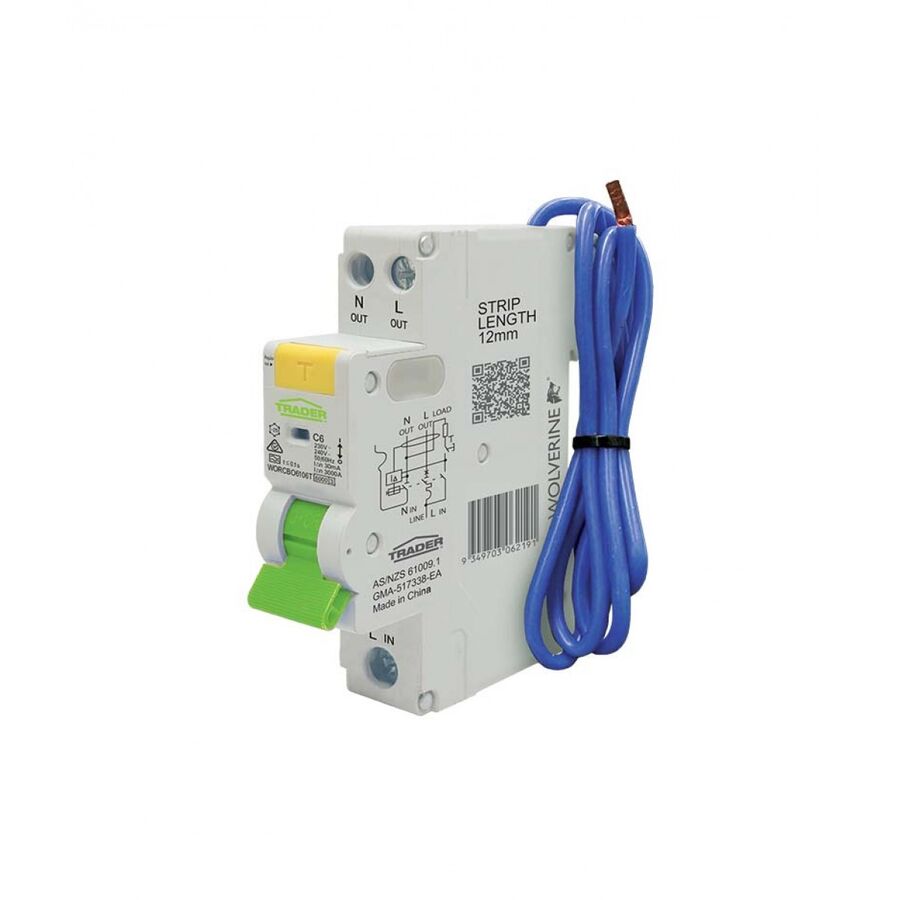
G'day! Have a squiz at your switchboard. If your home is a bit older, you might see a couple of switches with a 'Test' button (those are your safety switches, or RCDs) and a big row of plain circuit breakers. But if your home is new or has had a schmick upgrade, you'll probably see a neat row where every single switch has its own 'Test' button.
What you're looking at is the new standard in Aussie electrical safety: the RCBO circuit breaker. It's a fair dinkum game-changer and the best way to protect your home and your family.
Let's break down the techy name. RCBO stands for Residual Current Breaker with Overload protection.
In plain English, it's the ultimate two-for-one deal. An RCBO circuit breaker is a single, slim device that combines two critical safety jobs into one:
Let's look at those two jobs.
A single RCBO provides the complete protection that used to require two separate devices.
This is the "Overload" (O) part of the name. The RCBO circuit breaker constantly watches the amount of power (amps) being used on a circuit. It will automatically trip and cut the power if it detects:
This is the "Residual Current" (RC) part, and it's the one that protects your family. The RCBO constantly measures the balance of power flowing out on the active wire and coming back on the neutral wire.
It's looking for a tiny imbalance – a few milliamps gone missing. This 'missing' power means it's leaking out somewhere it shouldn't be... like through you after touching a faulty appliance. The RCBO detects this leak in a fraction of a second (less than 30 milliseconds!) and cuts the power, stopping a potential fatal electric shock.
In older switchboards, you'd have one RCD (safety switch) protecting a whole bank of 4 or 5 plain circuit breakers. The problem? If your toaster in the kitchen has a fault, the main RCD trips and cuts power to everything on that bank – maybe your fridge, your lights, and the telly, all at once. It's a massive pain trying to find the faulty appliance.
With a modern RCBO circuit breaker on every single circuit, the fault is isolated.
Righto, this is the most important part, mate. Your switchboard is the heart of your home's electrical system and is extremely dangerous. Understanding what an RCBO is is great, but installing one is absolutely not a DIY job.
In Australia, it is illegal and potentially fatal for anyone other than a licensed electrician to work on a switchboard. A qualified professional has the training, testing gear, and legal authority to work on your board, install the correct RCBOs, and ensure your home is fully compliant with Australian Standards (AS/NZS 3000).
A safe, modern switchboard is the foundation of a safe home. For professional installers and licensed electricians who build and upgrade switchboards, sourcing reliable, compliant gear is paramount. As one of Australia's most comprehensive electrical wholesaler and suppliers, Schnap Electric Products stocks a complete range of trade-quality switchboard gear. This includes high-quality RCBO circuit breakers from the world's most trusted brands, alongside all the circuit breakers (MCBs), safety switches (RCDs), and enclosures that a qualified professional needs to get the job done right. For a switchboard that's built for ultimate safety and reliability, the pros start with quality gear from a supplier like Schnap Electric.
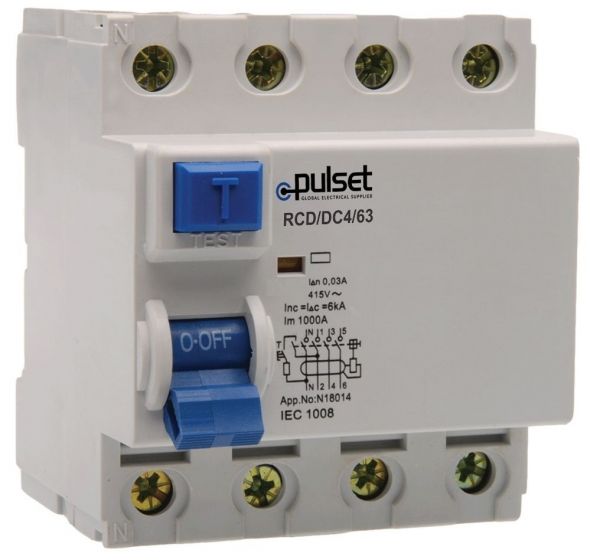
G'day! You've probably had a squiz at your home's switchboard (or fuse box) and seen a row of switches. Some of them likely have a "T" or "Test" button on them. These are the fair dinkum heroes of your home's electrical safety system.
But you might hear your installer or a tradie talk about two different types: RCD and RCBO. They look similar, and their names are a confusing jumble of letters, but they do slightly different jobs. Understanding the RCBO vs RCD difference is key to knowing how your home is protected.
Let's break it down in plain English.
To understand the difference, you first need to know that your switchboard protects you from two different types of electrical dangers.
An RCD stands for Residual Current Device. Here in Australia, we just call it a Safety Switch.
Its one and only job is to protect people from fatal electric shock.
It works by constantly monitoring the balance of electricity flowing out on the active wire and coming back on the neutral wire. It's like a set of perfectly balanced scales. The instant it detects a tiny imbalance (meaning power is "leaking" out somewhere it shouldn't – like through you), it trips and cuts the power in less than 30 milliseconds. That's fast enough to save your life.
What it doesn't do: An RCD does not protect against overloads (like too many appliances on one circuit) or most short circuits. It's not a circuit breaker.
An MCB stands for Miniature Circuit Breaker. This is your standard "circuit breaker."
Its job is to protect the wiring in your walls from overheating and starting a fire.
It does this by tripping if it detects:
What it doesn't do: A standard circuit breaker is not designed to protect you from most electric shocks. It's too slow and not sensitive enough.
Now we get to the RCBO. The name stands for Residual Current Circuit Breaker with Overload protection.
An RCBO is a single, clever device that combines both jobs in one unit.
An RCBO is a:
It provides the absolute highest level of protection for a single circuit, all in one slim package.
So, what's the big advantage in the RCBO vs RCD debate? It's Fault Isolation.
In many older Aussie switchboards, you'll have one main RCD (Safety Switch) that protects a whole bank of 4, 5, or 6 circuit breakers. This is a common setup, but it has one massive, annoying flaw.
Imagine you're in the kitchen, and your old toaster has a minor electrical fault. This trips the main RCD. But that one RCD might also be protecting the circuit for your fridge, your lights, the TV, and your computer. Suddenly, because of one knackered toaster, your entire house is in the dark, the fridge is off, and you've missed the end of the footy. A fair dinkum pain.
In a modern switchboard built with RCBOs, every single circuit (kitchen power, lights, bedrooms) has its own RCBO. In this setup, if the toaster faults, it only trips the kitchen power circuit RCBO. The lights, the fridge, and the telly all stay on. You beauty! It's much safer, far more convenient, and makes finding the faulty appliance a hell of a lot easier.
This is the most important part of the article, mate. Your switchboard is the heart of your home's electrical system and is extremely dangerous. Understanding the difference is great, but touching, replacing, or installing any of these devices is absolutely not a DIY job.
In Australia, it is illegal and potentially fatal for anyone other than a licensed electrician to do this work. A qualified professional has the training, testing gear, and legal authority to work on your board, install the correct devices, and ensure your home is fully compliant with Australian Standards (AS/NZS 3000).
A safe, modern switchboard is the foundation of a safe home. For professional installers and licensed electricians who build and upgrade switchboards, sourcing reliable, compliant gear is paramount. As one of Australia's most comprehensive electrical wholesaler and suppliers, Schnap Electric Products stocks a complete range of trade-quality switchboard gear. This includes high-quality RCBO circuit breakers, RCDs (Safety Switches), and MCBs (Circuit Breakers) from the world's most trusted brands, ensuring the pros have the gear they need to get the job done right. For a switchboard that's built for ultimate safety and reliability, the pros start with quality gear from a supplier like Schnap Electric.
If you've had a squiz at a new, schmick-looking switchboard lately, you've probably seen a neat row of slim switches, each with its own "Test" button. These are most likely RCBO, the modern standard for home electrical safety.
But if you look even closer, you'll see a tiny symbol that represents a massive, critical difference for the safety of your home. We're talking about the difference between the old "Type AC" and the modern, essential Type A RCBO. Understanding this is fair dinkum crucial in a home full of modern electronics.
Before we get into "Type A," let's just remember what an RCBO is. It's a "Residual Current Breaker with Overload protection" – a proper two-for-one deal for your switchboard:
Righto, this is the most important bit. For decades, the standard safety switch in Australia was Type AC.
You might be thinking, "My house runs on AC, mate, not DC." But here's the kicker: all your modern electronics create DC.
That includes:
When these electronic devices develop a fault, they don't leak a nice, simple AC current. They leak a 'pulsating DC' current.
Here's the scary part: A standard Type AC safety switch might not be able to 'see' this type of DC fault. This means it could fail to trip, leaving you unprotected from a potentially fatal electric shock.
A Type A RCBO is specifically designed to see both types of faults, making it the only truly safe choice for a modern Aussie home that's full of electronic gear.
Next time you're looking at your switchboard (from a safe distance, mate, no touching!), have a squiz at the symbols on your safety switches.
If your board is full of old Type AC breakers, especially on circuits powering your kitchen, laundry, or solar inverter, it's fair dinkum time to think about an upgrade.
We cannot be clearer on this. Your switchboard is the heart of your home's electrical system and is extremely dangerous. Installing or replacing any device in your switchboard is absolutely not a DIY job.
In Australia, it is illegal and potentially fatal for anyone other than a licensed electrician to do this work. A qualified professional has the training, testing gear, and legal authority to work on your board, recommend the correct Type A RCBO for each circuit, and ensure your home is fully compliant with Australian Standards (AS/NZS 3000).
A safe, modern switchboard is the foundation of a safe home. For professional installers and licensed electricians who build and upgrade switchboards, sourcing reliable, compliant gear is paramount. As one of Australia's most comprehensive electrical wholesaler and suppliers, Schnap Electric Products stocks a complete range of trade-quality switchboard gear. This includes high-quality, certified Type A RCBO units from the world's most trusted brands, alongside all the circuit breakers, enclosures, and accessories that a qualified professional needs to get the job done right. For a switchboard that's built for modern life, the pros start with quality gear from a supplier like Schnap Electric.
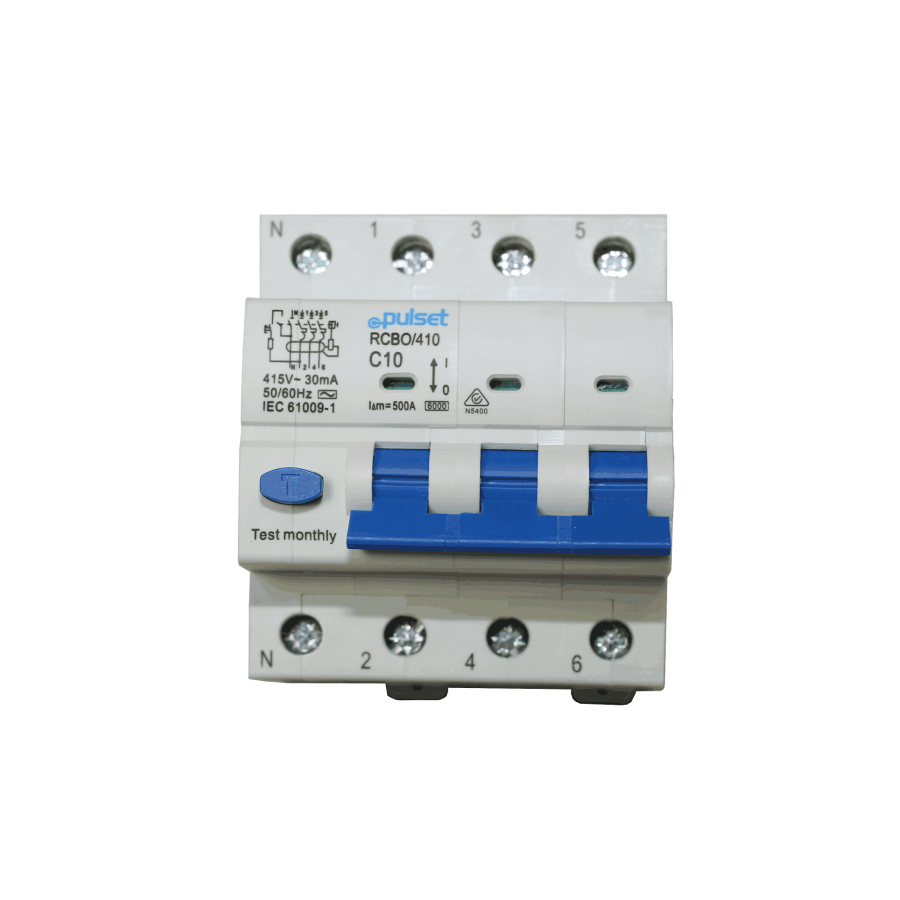
G'day! If you've got a modern switchboard at home, you're probably familiar with the single-phase RCBO – that slim, two-in-one safety switch that protects your power points from both overloads and electric shocks. It's a ripper of a device and the modern standard for a good reason.
But what happens when you're on a worksite, in a factory, or in a big shed that's running some seriously grunty, three-phase gear? That's when you need to call in the big kahuna: the 3 phase RCBO.
A 3 phase RCBO (Residual Current Breaker with Overload protection) is the heavy-duty big brother to the one in your house. It's designed to do the exact same "two-for-one" safety job, but for a much more powerful three-phase electrical circuit.
Where your home's RCBO is a single, slim switch (known as 'single pole'), a 3 phase RCBO is a much chunkier unit, usually four 'poles' (or modules) wide – one for each of the three phases (Active 1, Active 2, Active 3) and one for the Neutral.
This single device provides the two types of protection that are absolutely critical for any 415-volt circuit, especially those powering machinery.
This is the "Overload" (O) part of the name. The RCBO constantly watches the amount of power being drawn by the machinery. If a motor jams or a fault causes a massive surge of current (a short circuit or overload), the RCBO will trip instantly. This saves your expensive, three-phase equipment from being fried and stops the cables from overheating and starting a fire.
This is the "Residual Current" (RC) part, and it's the bit that saves lives, mate. A 3 phase RCBO constantly monitors the power flowing out and coming back across all phases. The instant it detects a tiny imbalance – meaning some of that power is "leaking" out and going where it shouldn't, like through you – it trips in a fraction of a second, cutting all power to the machine and preventing a fatal electric shock.
You won't find a 3 phase RCBO in a standard suburban home's switchboard. They are strictly for commercial, industrial, and high-power residential applications. You'll see them used to protect:
Righto, let's be dead clear on this. This is not a "have a go" DIY project for a Saturday arvo. Three-phase power (415V) is a whole different league of dangerous compared to the 240V in your house.
Working on or installing a 3 phase RCBO is absolutely not a DIY job. In Australia, it is illegal and potentially fatal for anyone other than a licensed electrician to even open a three-phase switchboard. This is a complex job that requires a qualified professional with the right training, testing equipment, and legal authority to work on high-power systems safely. Don't risk it.
A heavy-duty safety system like this demands robust, reliable, and compliant components. For professional installers and licensed electricians who work on commercial and industrial switchboards, sourcing genuine, trade-quality gear is paramount.
As one of Australia's most comprehensive electrical wholesaler and suppliers, Schnap Electric Products stocks a complete range of trade-quality switchboard gear. This includes high-quality, certified 3 phase RCBO units from the world's most trusted brands, alongside all the circuit breakers (MCBs), enclosures, and heavy-duty cabling accessories that a qualified professional needs to get the job done right. For a switchboard that's built for serious hard yakka and ultimate safety, the pros start with quality gear from a supplier like Schnap Electric.
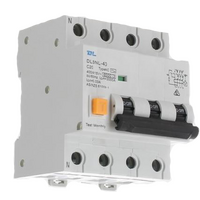
G'day! You've probably had a squiz at your switchboard (or fuse box) and seen that row of switches that keep your home's power running. In a modern Aussie switchboard, you'll see neat rows of slim switches with a 'Test' button on each one. These are most likely RCBO, and they're the new standard for a bloody good reason.
You might see different numbers on them, like '10', '16', or '20'. One of the most common and hardworking of the lot is the 20a RCBO. Let's get the lowdown on what it is, what it does, and why it's so fair dinkum important for your home's safety.
First up, you need to know what an RCBO (Residual Current Breaker with Overload protection) actually is. It's a clever, all-in-one safety device that does two critical jobs at the same time:
Righto, so the "20a" on a 20a RCBO stands for 20 Amps. This is the circuit breaker part of its job. It means the RCBO is designed to protect a circuit that can handle a maximum of 20 amps of current.
In Australia, a 20 amp rating is most commonly used for your General Purpose Outlets (GPOs), which is the proper name for your power points. While some older homes might use 16A breakers, a 20A rating provides a robust capacity for modern, appliance-heavy life.
A 20a RCBO is a real workhorse, typically protecting:
In an older switchboard, you might have one main safety switch (RCD) protecting a whole bank of plain circuit breakers. The problem? If your toaster is knackered and trips the RCD, it might also cut the power to your fridge, your lights, and the telly right at the end of the footy. A fair dinkum pain.
With a 20a RCBO on your power circuit, that fault is isolated. If the toaster trips, only the power point circuit goes out. The lights, the fridge, and everything else stay on. You beauty!
Righto, let's be dead clear on this. Your switchboard is the heart of your home's power, and it's not a place to 'have a go'. It's an extremely dangerous environment.
Installing, replacing, or doing any work on a 20a RCBO is absolutely not a DIY job. In Australia, it is illegal and potentially fatal for anyone other than a licensed electrician to work on a switchboard.
A qualified professional has the training, testing gear, and legal authority to work on your board, ensure the RCBO is the correct size for your home's wiring (as per AS/NZS 3000), and make sure your family is protected. Don't risk it, mate.
A safe, modern switchboard is the foundation of a safe home. For professional installers and licensed electricians who build and upgrade switchboards, sourcing reliable, compliant gear is paramount. As one of Australia's most comprehensive electrical wholesaler and suppliers, Schnap Electric Products stocks a complete range of trade-quality switchboard gear. This includes high-quality, certified 20a RCBO units from the world's most trusted brands, alongside all the circuit breakers, safety switches, and enclosures that a qualified professional needs to get the job done right. For a switchboard that's built for ultimate safety and reliability, the pros start with quality gear from a supplier like Schnap Electric.
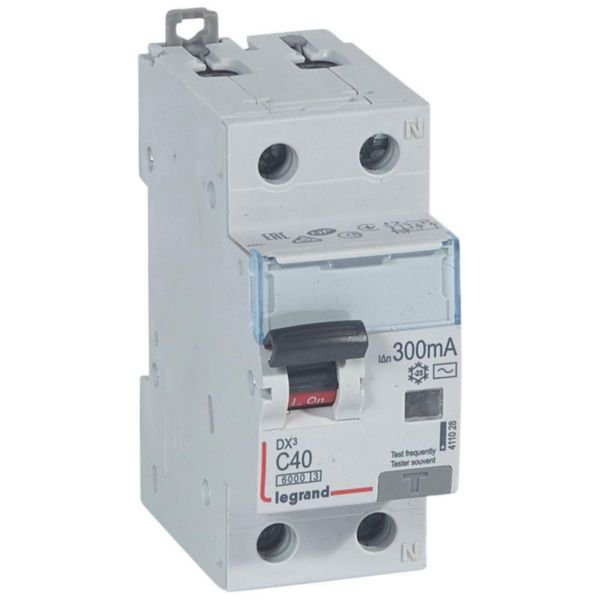
G'day! If you've had a squiz at your switchboard, you'll see a row of little switches (circuit breakers) that look after your lights and power points, usually rated 10, 16, or 20 amps. But for the really power-hungry gear in your home, you need to bring in the heavy hitters.
That's where you'll find the 40a RCBO. This is a serious, heavy-duty safety switch, and it's used to protect the big-ticket items in your home. Let's get the lowdown on what it is and why it's so fair dinkum important.
Before we get to the "40a" part, you need to know what an RCBO is. It's a modern, all-in-one safety device. The name stands for Residual Current Breaker with Overload protection.
In plain English, it's a "two-for-one" deal that does two critical jobs:
It's the gold standard for modern electrical safety in Australia.
Righto, so the "40a" on a 40a RCBO stands for 40 Amps. This is the circuit breaker part of its job. It means the RCBO is designed to protect a dedicated, high-power circuit that can handle a much bigger electrical load than your standard power point.
You won't find a 40a RCBO running your bedroom lights, mate. It's strictly for the real power-hungry gear. The most common uses in an Aussie home are:
This is the most important part of the article, so listen up. You can't just have a 40a RCBO whacked in to replace a 20A breaker because your power points keep tripping.
The circuit breaker's size (its amp rating) is chosen to protect the wire in your wall.
A 40A breaker must be connected to a thick, heavy-duty electrical cable (like 6mm² or 10mm² wiring) that can safely handle that 40 amps of current. If you put a 40A breaker on a standard power point circuit (which uses thinner 2.5mm² wire), you're creating a massive fire risk. In a fault, the wire would overheat and could melt long before the oversized 40A breaker even thinks about tripping.
Let's be dead clear. Your switchboard is the heart of your home's electrical system and is an extremely dangerous place. Installing, replacing, or doing any work on a 40a RCBO is absolutely not a DIY job.
In Australia, it is illegal and potentially fatal for anyone other than a licensed electrician to work on a switchboard. A qualified professional has the training, testing gear, and legal authority to work on your board, ensure the RCBO is the correct size for your home's wiring (as per AS/NZS 3000), and make sure your family is protected. Don't risk it, mate.
A safe, high-power circuit is the foundation of a modern, functioning home. For professional installers and licensed electricians who build and upgrade switchboards, sourcing reliable, compliant gear is paramount. As one of Australia's most comprehensive electrical wholesaler and suppliers, Schnap Electric Products stocks a complete range of trade-quality switchboard gear. This includes high-quality, certified 40a RCBO units from the world's most trusted brands, alongside all the circuit breakers, safety switches, and heavy-duty cabling accessories that a qualified professional needs to get the job done right. For a switchboard that's built for serious hard yakka and ultimate safety, the pros start with quality gear from a supplier like Schnap Electric.

SCHNAP Electrical Wholesaler - clear, upfront pricing that professional electricians trust

Get what you need in seconds. SCHNAP electrical wholesaler makes ordering quick and simple

Fast delivery anywhere - that's guaranteed. SCHNAP electrical wholesalers ship nationwide with same-day dispatch

Track your order every step of the way. SCHNAP electrical wholesale keeps you updated from click to delivery

SCHNAP is Australia's premier electrical wholesaler and electrical supplies, marketing thousands of quality products from leading brands. Trusted for nearly two decades by licensed electricians, contractors, and engineers, our range covers everything from basic electrical components to complex industrial electrical equipment
Our key categories include: LED lighting, designer switches, commercial switchboards, circuit protection, security systems & CCTV, and smart home automation
All products are certified to Australian standards (AS/NZS), backed by our 30-day, no-questions-asked return policy. Our expert technical team helps you quickly source the right solution for any residential, commercial, or industrial project, with daily dispatch from our Sydney electrical warehouse delivering Australia-wide
SCHNAP offers the most comprehensive electrical product range, with full technical specifications, application details, installation requirements, compliance standards, and warranties — giving professionals total confidence in every purchase


Kingsgrove Branch:
Opening hours:
Mon - Fri: 6:30 AM to 5 PM
Saturday: 8:00 AM to 2:00 PM
Sunday: 9:00 AM to 2:00 PM
Closed on public holidays
Jannali Branch:
Closed for Renovations
© 2004 - 2026 SCHNAP Electric Products