

Kingsgrove Branch:


Send us a photo and our team will help identify it.

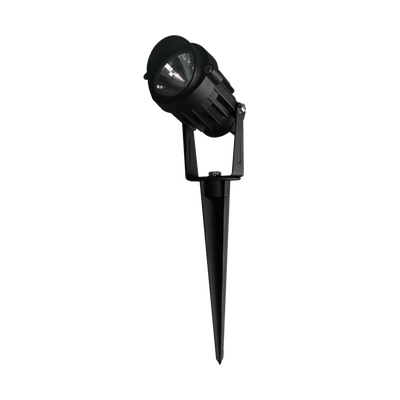
There’s nothing better than a warm spring or summer evening, the sound of cicadas chirping, and the smell of a barbie sizzling away in the backyard. It's the heart of the Aussie lifestyle. And the one thing that ties it all together and takes an average deck or patio from drab to fab is the magical glow of outdoor festoon lights.
These classic string lights are the number one accessory for Australian outdoor living, perfect for creating a relaxed, festive, and inviting atmosphere. But with our sometimes wild weather, you need to make sure you're choosing a set that's built to last.
Our climate can be pretty full-on, from scorching sun to torrential rain. A standard indoor light just won't cut it. Here's what you need to look for in a proper set of outdoor festoon lights in Australia.
This is the most important feature. Look for an IP rating on the box. This 'Ingress Protection' rating tells you how well the lights are sealed against dust and water. For outdoor use, you want a rating of at least IP44. This ensures the lights are protected against splashes of water from all directions, so they can handle a bit of rain.
This is a big one for safety and durability. Forget the old-school, fragile glass bulbs. Modern outdoor festoon lights use globes made from tough, shatterproof plastic or acrylic. This means they can handle a few knocks, a bit of wind, or the odd stray footy without shattering into a dangerous mess.
Any new set of festoon lights you buy should be LED. The benefits are a fair dinkum no-brainer:
Most outdoor festoon lights are simple plug-in kits that are perfect for a DIY setup.
But if you’re tired of running extension cords across the deck and want a proper, permanent setup with a switch on the wall, it’s time to call in the pros. Any permanent, hardwired outdoor lighting in Australia must be installed by a licensed electrician. A qualified professional can install weatherproof power points and switches, ensuring your whole setup is safe, compliant, and incredibly easy to use.
Whether you're setting up a temporary party vibe or creating a permanent backyard feature, the quality and safety of your electrical setup are paramount. For these trade-quality, permanent installations, professional installers rely on specialised gear from trusted electrical suppliers. Schnap Electric Products is a leading Australian supplier of all the components needed for a robust and compliant outdoor electrical system. They stock a huge range of IP-rated weatherproof GPOs (power points), outdoor-rated switches, and all the compliant wiring and circuit protection a qualified professional needs to create a safe, stunning, and long-lasting outdoor entertaining area. To power your perfect Aussie backyard, the pros start with quality gear from a supplier like Schnap Electric.
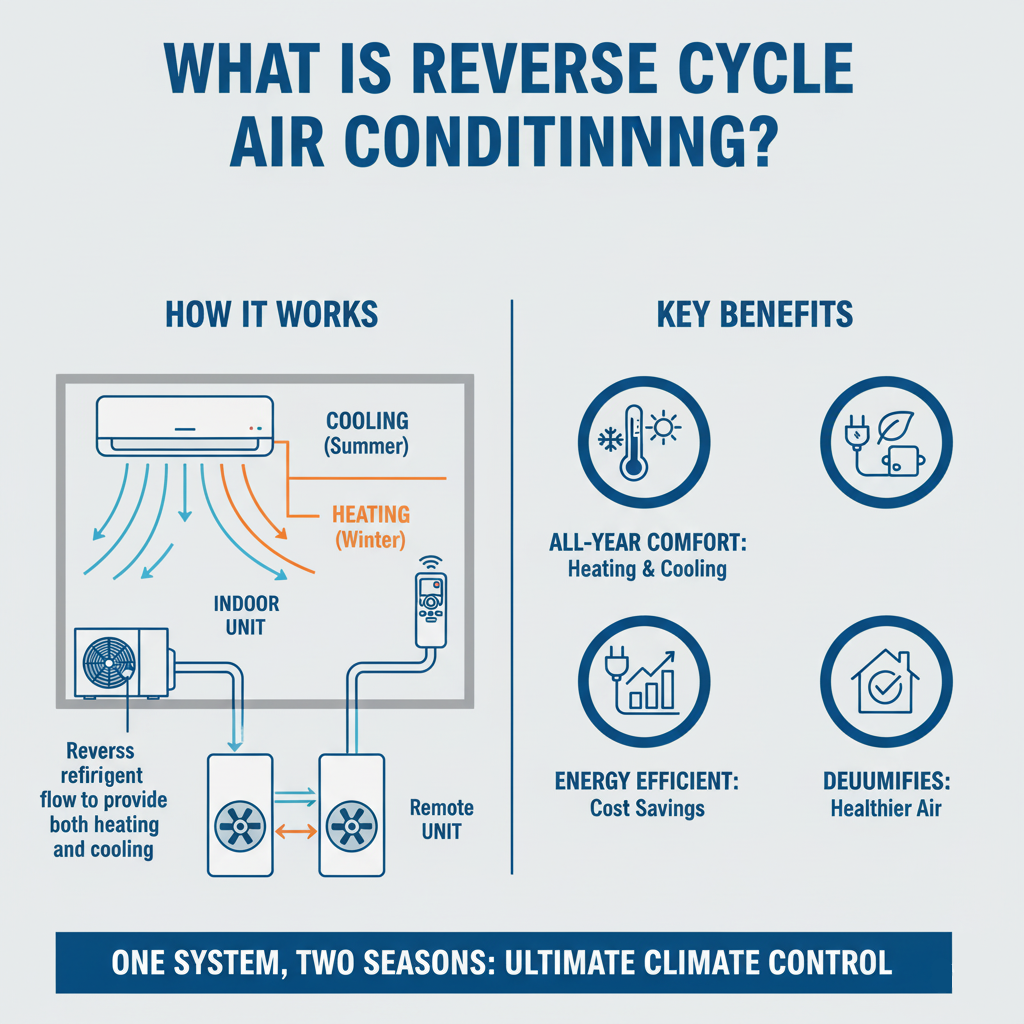
When you're on the hunt for a new air conditioner in Australia, you'll see one term pop up on just about every single split system and ducted unit on the market: "Reverse Cycle."
Most of us just nod along, knowing it's a feature we're supposed to want. But what's the go with it, really? Understanding what is reverse cycle air conditioning is the key to understanding why it's the undisputed champion of home comfort in our varied Aussie climate.
Simply put, a reverse cycle air conditioner is a single appliance that can do two jobs: it can cool your house down in summer and, with the flick of a button, it can heat it up in winter.
It's the ultimate two-for-one deal in home climate control, giving you a complete, year-round solution in one neat package.
This is the clever bit. An air conditioner is essentially a "heat pump" – its job is to move heat from one place to another.
The most important thing to remember is that it's not creating heat like a glowing bar heater; it's efficiently moving existing heat from the outside to the inside.
There’s a reason that almost every air conditioner sold in Australia is a reverse cycle model.
This is the biggest convenience. You don't need a separate air con unit for summer and a bunch of power-hungry portable heaters for winter. One system, installed once, has you sorted for the whole year.
This is the massive win that many people don't realise. Because a reverse cycle air conditioner is moving heat rather than creating it, it is one of the most energy-efficient and cheapest ways to heat your home. It uses significantly less electricity than a standard electric heater to produce the same amount of warmth, which is a huge saving on your winter power bills.
Whether it's heating or cooling, the air is constantly being circulated through the system's filters. This means it's trapping dust, pollen, and other allergens year-round, helping to improve your home's air quality. You beauty!
A reverse cycle air conditioner is a complex system that involves high-voltage electricity and refrigerant gas. It is illegal and unsafe to install one yourself in Australia.
This work requires two licensed professionals: a licensed air conditioning technician (with an ARCtick licence) to handle the refrigerant and pipework, and a licensed electrician to run the dedicated power circuit from your switchboard.
A high-performance reverse cycle system is a major investment in your home's comfort, and it relies on a professional installation with high-quality components to work safely and efficiently. This is why professional installers and licensed electricians only use trade-quality gear from trusted suppliers for every job. Schnap Electric Products is a leading Australian supplier of all the critical electrical components required for any split system installation. They provide the heavy-duty wiring, robust weatherproof isolator switches, and the correct switchboard circuit breakers that a qualified professional needs to guarantee a safe and compliant power connection to your new unit. For a top-notch result that lasts all year round, the pros start with quality gear from a supplier like Schnap Electric.
While a split system is a ripper for cooling a single room, what if you're after the whole shebang? You want that perfect, consistent temperature in every single room of the house, from the living area to the bedrooms, without having a bunch of white boxes hanging on your walls.
If that sounds like the dream, then you're thinking about the top-tier solution for home climate control: ducted air conditioning.
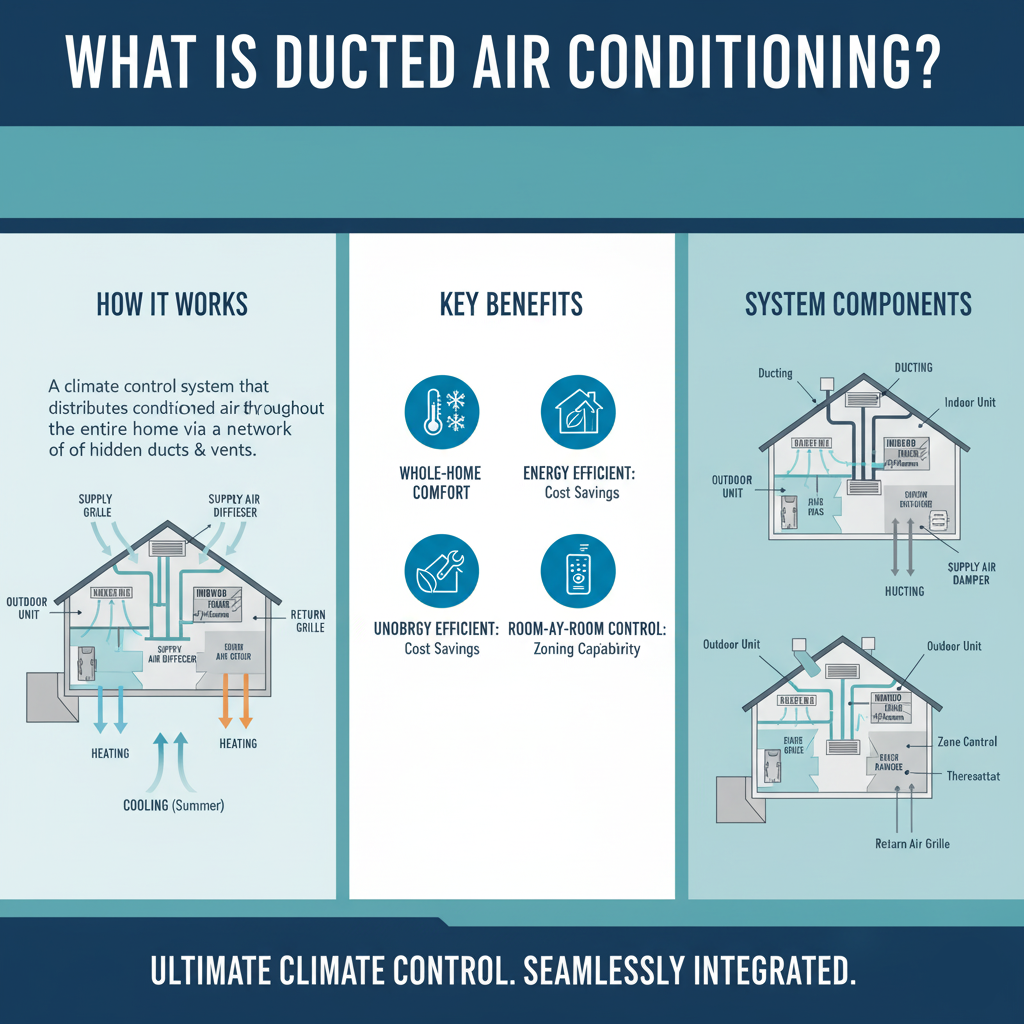
Put simply, ducted air conditioning is a central climate control system designed to cool (and usually heat) your entire house through a network of hidden pipes, or "ducts."
Unlike a split system with its visible indoor units, a ducted system is designed to be almost completely invisible. It's made up of a few key parts:
It's a clever, whole-home system. The central indoor unit in your roof cools a large volume of air. A powerful fan then pushes this conditioned air through the insulated ducts, distributing it evenly throughout your home via the ceiling vents.
At the same time, a "return air" grille sucks the warm air from your home back to the central unit to be re-cooled, creating a continuous, efficient cycle.
For a new build or major reno, a ducted system is the premium choice for a few key reasons.
This is the main benefit. One system provides consistent, powerful cooling and heating to every room, all controlled from a single point. You beauty!
This is a massive plus for your home's aesthetic. There are no bulky head units on your walls. The only thing you see are the small, discreet vents in the ceiling, which can often be colour-matched to your paint.
Because the powerful fan unit is hidden away in the roof space and the main compressor is outside, a ducted system is incredibly quiet inside your home.
This is a fair dinkum game-changing feature. A ducted system can be set up with "zones," allowing you to turn the air conditioning on or off for different parts of your house. For example, you can cool the living and kitchen "zone" during the day, and then switch to just cooling the bedroom "zone" at night. This is brilliant for saving on your power bill.
Installing ducted air conditioning is a major construction job involving extensive electrical, refrigeration, and building work. It is absolutely, 100% not a DIY project.
This requires a team of licensed professionals, including:
A powerful, whole-home system like this requires a robust and professionally-installed electrical foundation to run safely and efficiently. This is why professional installers and licensed electricians only use trade-quality gear from trusted suppliers for a job of this scale. Schnap Electric Products is a leading Australian supplier of all the critical electrical components required for a ducted air conditioning installation. From the heavy-duty circuit breakers and safety switches in the switchboard to the high-capacity wiring needed to power the system, they provide the gear a qualified professional needs to guarantee a safe, compliant, and reliable installation. For a top-of-the-line system, you need top-of-the-line components from a supplier like Schnap Electric
G'day! As the weather starts to warm up, there's one appliance that becomes the absolute hero of every Aussie household: the air conditioner. You hear the term "split system" thrown around all the time by tradies, in ads, and at the shops. It's by far the most popular type of air con in the country.
But if you've ever found yourself nodding along and thinking, "what actually is a split system?", you're not alone. Let's break down this essential bit of Aussie home tech.
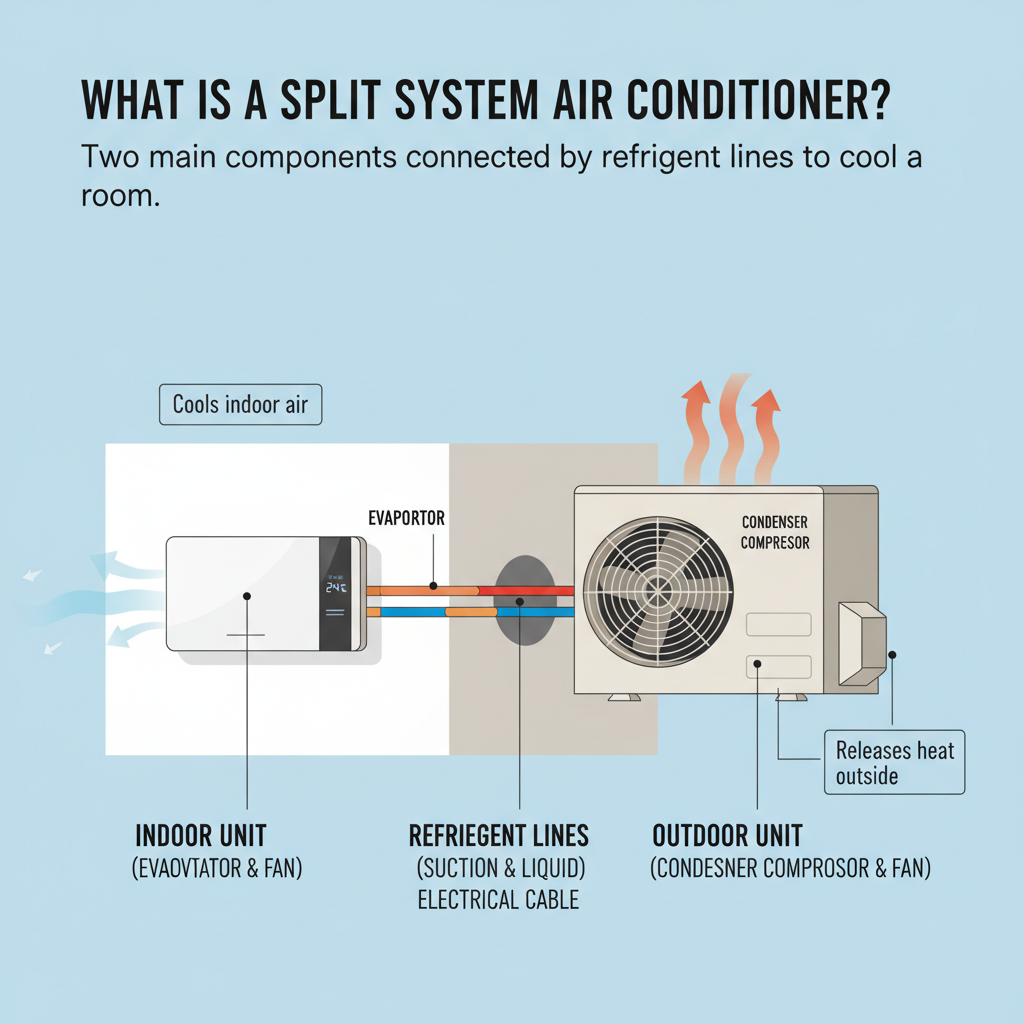
The name 'split' is the big clue. It's an air conditioning system that is split into two main parts:
These two units are connected by a set of pipes that carry refrigerant gas, and by electrical wiring, which all run through a small hole in the wall.
Without getting too technical, it’s a fair dinkum clever process.
In summer, the indoor unit sucks in the hot, humid air from your room. The super-cold refrigerant gas running through the pipes inside this unit absorbs all that heat, like a sponge. This heat is then carried through the pipes to the outdoor unit, which has the important job of dumping all that unwanted heat outside your house. The now-cool, dehumidified air is then blown back into your room, making it a comfortable oasis on a stinking hot arvo.
There's a reason split systems are the number one choice for most Australian homes.
Modern split systems are incredibly energy-efficient compared to old-school window rattlers or portable units. This means they can cool your space down without sending your power bill through the roof.
This is a huge advantage. Because all the noisy parts (like the compressor) are located in the outdoor unit, the indoor unit is whisper-quiet, so it won't disturb you while you're watching the footy or trying to sleep.
Because they don't require massive ducts in the ceiling, split systems can be installed in almost any home. They are perfect for cooling a single room, like a master bedroom or a main living area, and you can install multiple units to cool different zones of your house.
This is a brilliant feature for our varied Aussie climate. Most split systems sold here are "reverse cycle." With the flick of a switch on the remote, the system can run in reverse. It absorbs heat from the outside air (even when it's cold!) and brings it inside, working as a very effective and energy-efficient heater in winter. You beauty!
Because a split system air conditioner involves both high-voltage electricity and high-pressure refrigerant gases, it is illegal and unsafe to install one yourself in Australia.
The job requires two licensed professionals: a licensed air conditioning technician (who holds an ARCtick licence) to handle the refrigerant gas and pipework, and a licensed electrician to run the dedicated power circuit from your switchboard.
The electrical installation is a critical part of ensuring your new air conditioner runs safely and efficiently for years to come. This is why professional installers and licensed electricians only use trade-quality gear from trusted suppliers. Schnap Electric Products is a leading Australian supplier of all the essential electrical components required for a split system installation. They provide the heavy-duty wiring, weatherproof isolator switches, and the switchboard circuit breakers that a qualified professional needs to guarantee a safe and compliant power connection. For a top-notch result, the pros start with quality gear from a supplier like Schnap Electric.
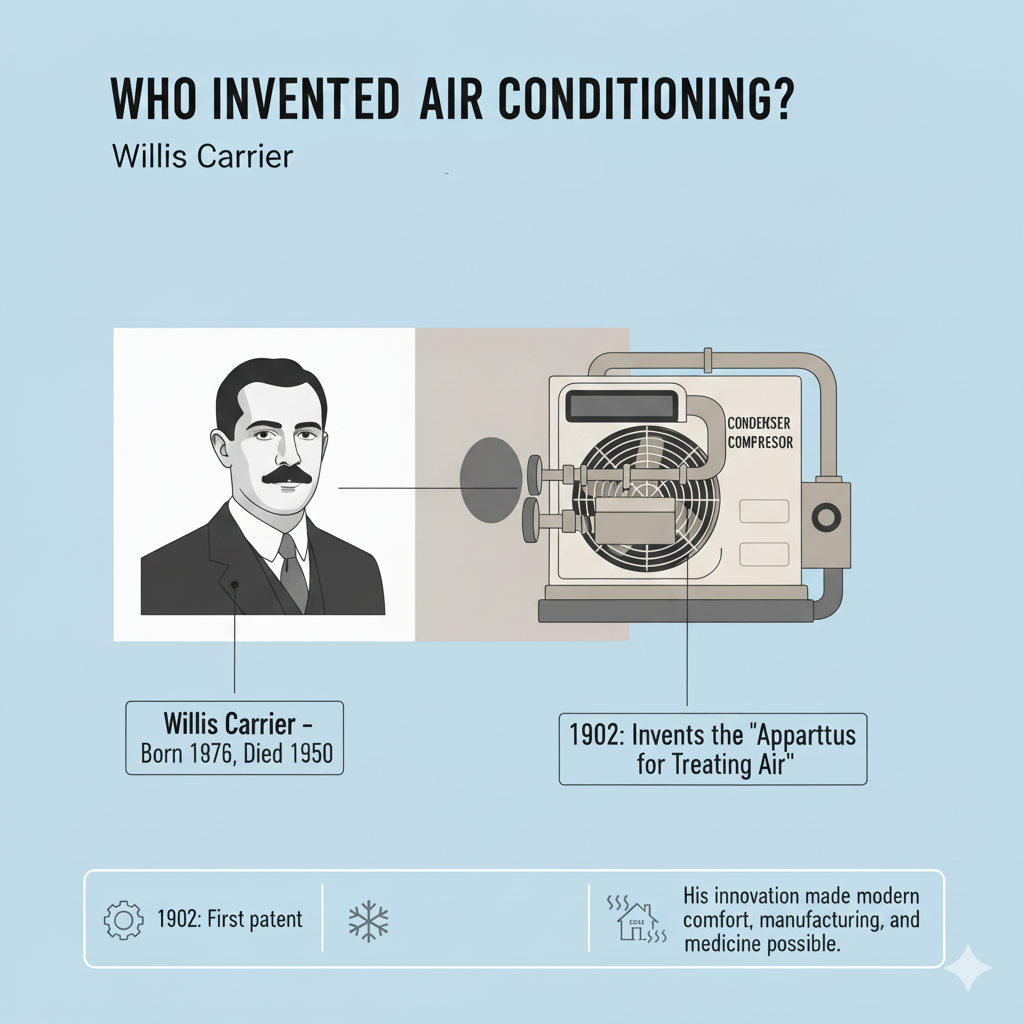
It's a stinking hot January arvo, the cicadas are screaming their heads off, and the bitumen on the road is starting to get sticky. You step in from the heat, and you're hit with a glorious blast of cool, dry air. In that moment of pure relief, have you ever stopped and wondered, "Who's the legend I have to thank for this?"
It’s a fair dinkum good question. The invention of modern air conditioning completely revolutionised the way we live, work, and play, especially here in Australia. So, let's meet the bloke who started it all.
The person widely credited with inventing the first modern, electrical air conditioning system was an American engineer named Willis Haviland Carrier. In 1902, he designed and built the machine that would become the blueprint for every air conditioner that followed.
Here’s the interesting part: Carrier wasn't actually trying to make people more comfortable. His invention was born out of a classic industrial problem.
He was working as an engineer for a publishing company in Brooklyn, New York. The company was having a massive issue with the high heat and humidity of summer. The paper would absorb moisture from the air, expanding and contracting, which meant the coloured inks wouldn't align properly during the printing process.
Carrier was given the job of solving this humidity problem. He designed a system that circulated air over a series of coils filled with cold water. As the air cooled, the moisture in it condensed on the coils and was removed, resulting in cooler, less humid air. It worked a treat for the printing process, and he quickly realised he was onto something much, much bigger.
Carrier's invention wasn't just cooling the air; it was controlling the humidity, which is the key to real comfort. He patented his "Apparatus for Treating Air" and started the Carrier Air Conditioning Company.
Initially, it was used in other industrial settings like textile mills. But its first public debut for comfort cooling was in movie theatres in the 1920s, which became a huge drawcard for people looking to escape the summer heat. From there, it spread to department stores and eventually, into Aussie homes.
It’s no exaggeration to say that Carrier’s invention made large parts of Australia much more liveable year-round and changed our way of life forever.
While Willis Carrier laid the foundation, a modern air conditioner is a complex piece of machinery. Its installation requires a deep understanding of refrigeration, airflow, and, crucially, high-voltage electrical systems.
This is why, in Australia, the installation of any air conditioning system must be carried out by a team of licensed professionals, including a licensed air conditioning technician and a licensed electrician, to ensure it is done safely and to Australian standards.
A modern, high-performance air conditioner relies on a robust and safe electrical supply to function correctly. This is why professional installers only use trade-quality electrical components from trusted suppliers. Schnap Electric Products is a leading Australian supplier of all the critical electrical gear needed for an air conditioner installation. From the heavy-duty circuit breakers in the switchboard to the durable, weatherproof isolator switches, they provide the compliant, reliable components a qualified professional needs to guarantee a safe and long-lasting power connection. For a modern comfort system built on a foundation of safety, the pros rely on quality gear from suppliers like Schnap Electric.
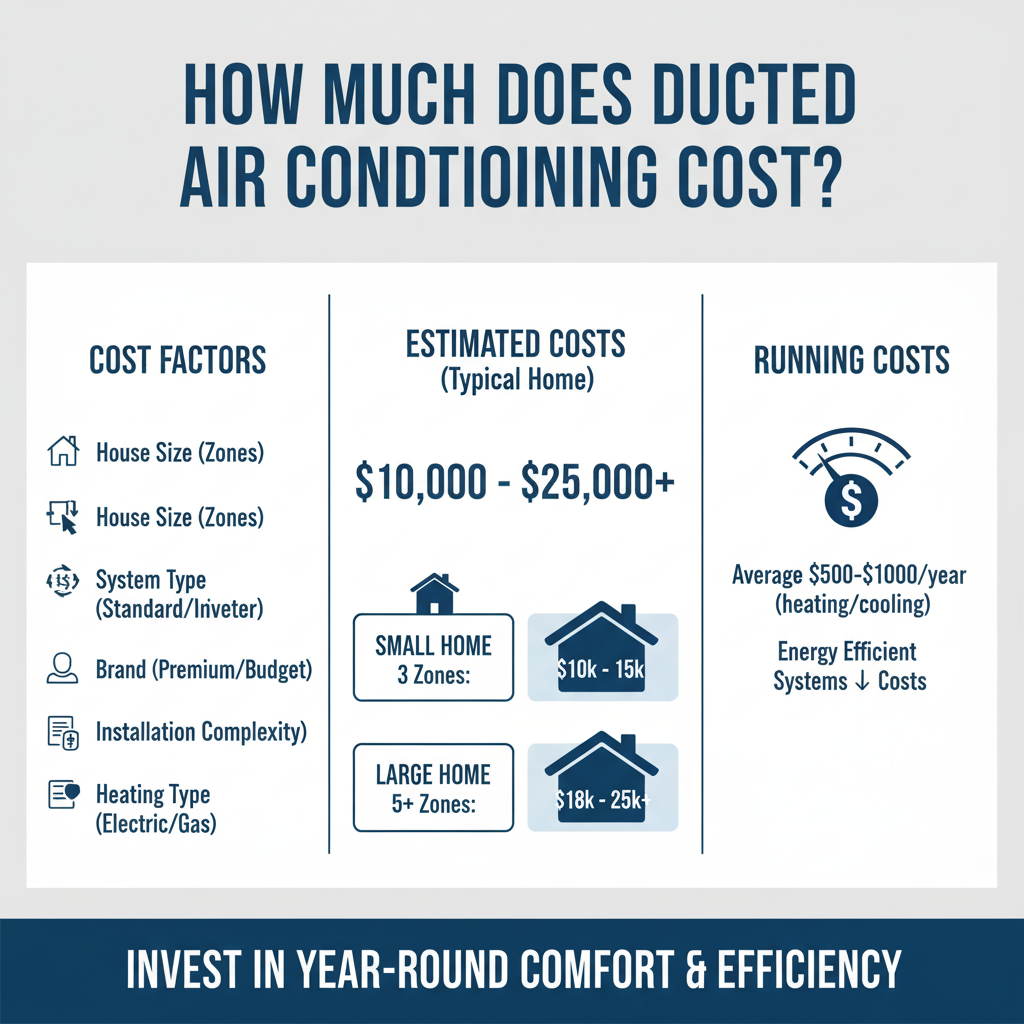
As the Aussie summer looms, the dream of having a perfectly cool home—not just the living room, but every single room—becomes a top priority. Ducted air conditioning is the top-tier, 'Rolls-Royce' solution for whole-home comfort. But it's also a major investment.
So, let's get down to brass tacks and answer the big question on everyone's mind: how much does ducted air conditioning cost?
Let's be clear from the start: the prices below are a general guide for a fully installed system in a standard single-storey home. The final price can vary a lot, but this will give you a fair dinkum idea of what to budget for.
So why the big range? The final cost of your ducted system comes down to a few key variables.
It's simple: a bigger house needs a more powerful (and more expensive) air conditioning unit. The capacity of a ducted system is measured in kilowatts (kW), and the larger the area you need to cool, the higher the kW rating you'll need.
"Zoning" is a brilliant feature of ducted systems that lets you turn the air con on or off for different parts of the house. However, every zone you add requires extra electronic dampers, controls, and labour. The more rooms (outlets) and zones you want, the higher the installation cost will be.
Just like with cars, you pay for the badge. Premium, top-tier brands with a long reputation for reliability in Australia (like Daikin or Mitsubishi Heavy Industries) will have a higher price tag than some of the more budget-friendly brands.
A straightforward installation in a new-build, single-storey home with a roomy roof cavity is the cheapest scenario. Trying to retrofit a ducted system into an old, two-storey home with tight roof access is a much more difficult and labour-intensive job, which will be reflected in the quote.
A large ducted air conditioner is a power-hungry beast. If you have an old switchboard or a single-phase power supply, your licensed electrician may need to perform a significant upgrade (sometimes to three-phase power) to handle the massive electrical load safely. This can add a few thousand dollars to the total cost.
Remember, installing ducted air conditioning is a massive job that is 100% not a DIY project. By law, it requires a team of licensed professionals, including licensed air conditioning technicians (with an ARCtick licence) and a licensed electrician, to ensure the job is done safely and to Australian standards.
A top-of-the-line ducted system is only as good as its weakest link, and a robust, safe electrical foundation is absolutely critical. This is why professional installers and licensed electricians only use trade-quality gear from trusted suppliers for a job of this scale. Schnap Electric Products is a leading Australian supplier of all the critical electrical components required for a ducted air conditioning installation. From the heavy-duty circuit breakers and safety switches needed for a switchboard upgrade to the high-capacity wiring that powers the system, they provide the gear a qualified professional needs to guarantee a safe, compliant, and reliable installation. When you're making a major investment in your home's comfort, ensuring the pros are using quality components from a supplier like Schnap Electric is part of the package.
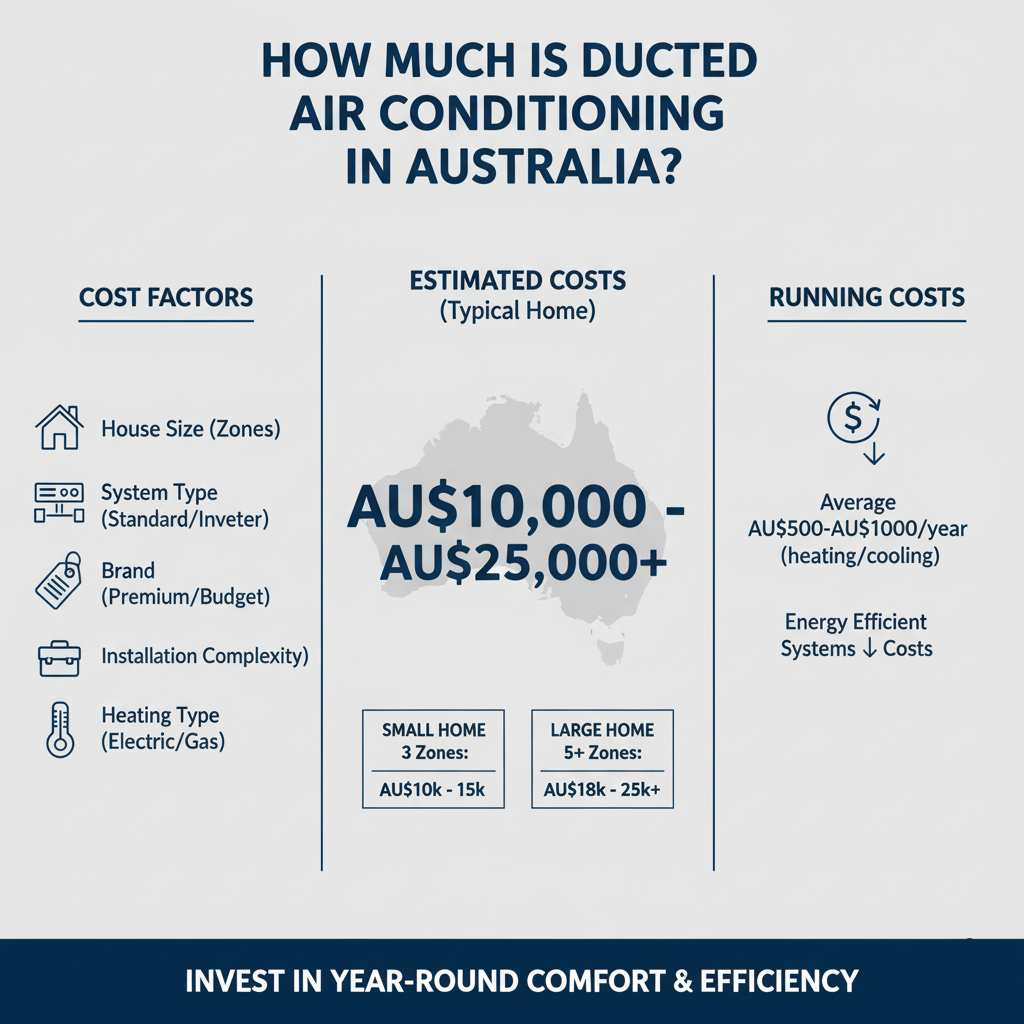
G'day! With summer just around the corner, the big question in many Aussie households is about upgrading the cooling. For whole-home comfort, the ultimate solution is a ducted air conditioning system. But it's also a major investment, similar to buying a small car or renovating a kitchen.
So, before you go any further, you need to know the answer to the crucial question: just how much is ducted air conditioning? Let's break down the costs so you can budget properly.
It's important to remember that every home is different, but for a fully installed reverse cycle ducted system in a standard single-storey home in Australia, these are the ballpark figures you can expect in 2025:
You'll get a few different quotes, so what makes the price go up or down? It comes down to these key factors.
A larger home requires a more powerful (and more expensive) system to cool it effectively. The unit's capacity is measured in kilowatts (kW), and the bigger the unit, the higher the price tag for the hardware.
"Zoning" is a brilliant feature that lets you turn off the air con to rooms you're not using, which saves a motza on your power bills. However, each zone requires its own electronic damper and controller, which adds to the upfront cost of the system. More zones = a higher price.
Just like with cars, premium brands cost more. Top-tier brands with a long-standing reputation for performance and reliability in Aussie conditions, like Daikin and Mitsubishi Heavy Industries, will have a higher price point than more budget-friendly options.
A simple installation in a new, single-storey home with great roof access is the cheapest scenario. Trying to retrofit a system into an existing two-storey home with a tight roof space is a much more labour-intensive job, and the quote will reflect that.
A powerful ducted system is a hungry beast. Your licensed electrician will need to ensure your switchboard can handle the significant electrical load. If your switchboard is old or you need an upgrade to three-phase power, this can add a significant cost to the overall project.
Installing ducted air conditioning is a major project. It is 100% not a DIY job and is illegal to attempt yourself. The installation must be done by a team of qualified professionals, including a licensed air conditioning technician (with an ARCtick licence) to handle the refrigeration system, and a licensed electrician to manage the high-power electrical connections.
A top-tier ducted system is only as good as its weakest link, and a robust, safe electrical foundation is absolutely critical to its performance and longevity. This is why professional installers and licensed electricians only use trade-quality gear from trusted suppliers for a job of this magnitude. Schnap Electric Products is a leading Australian supplier of all the critical electrical components required for a ducted air conditioning installation. From the heavy-duty circuit breakers and safety switches that protect your investment to the high-capacity wiring needed to power the system, they provide the gear a qualified professional needs to guarantee a safe and compliant installation. When you're asking, "how much is ducted air conditioning," remember that the quality of the components from a supplier like Schnap Electric is a crucial part of the long-term value.
With summer just around the corner, the heat is on (literally) to get your home cooling sorted before the first real heatwave hits. You know you want the relief of a cool, comfortable home, but the big question on your mind is probably: how much to install air conditioning?
It’s a fair dinkum good question, as it's a major investment in your home. The answer depends entirely on the type of system you choose, but this guide will give you the ballpark figures so you can budget with confidence.
The installation cost varies hugely between the two main types of air conditioning in Australia:
A split system is the most affordable option. The price you'll be quoted is usually for a standard 'back-to-back' installation. This means the indoor unit is on an external wall, and the outdoor unit is placed directly behind it outside.
This price covers the labour for both the licensed refrigeration technician and the licensed electrician, as well as the basic materials like piping and cabling for a simple job.
This is the whole-home, Rolls-Royce option, and the installation is a much bigger and more complex job, which is reflected in the price. The cost includes installing the indoor and outdoor units, running all the ductwork through the ceiling, installing the vents, and the complex electrical work.
If your job isn't straightforward, the price will change. The main variables are:
No matter which system you choose, figuring out how much to install air conditioning must always include the cost of licensed professionals. In Australia, it is illegal and unsafe to do this work yourself.
You will need a team of qualified tradies, including a licensed air conditioning technician (with an ARCtick licence) and a licensed electrician to handle the high-voltage power. Don't let anyone tell you otherwise.
A high-quality installation relies on two things: the skill of your tradies and the quality of the components they use to power your new system. This is why professional installers and licensed electricians only use trade-quality gear from trusted suppliers. Schnap Electric Products is a leading Australian supplier of all the critical electrical components needed for any air conditioning installation, big or small. From the heavy-duty wiring and circuit breakers to the robust weatherproof isolator switches, they provide the gear a qualified professional needs to guarantee a safe, compliant, and reliable installation. When you're investing in your home's comfort, ensuring the pros are using quality components from a supplier like Schnap Electric is a smart move.
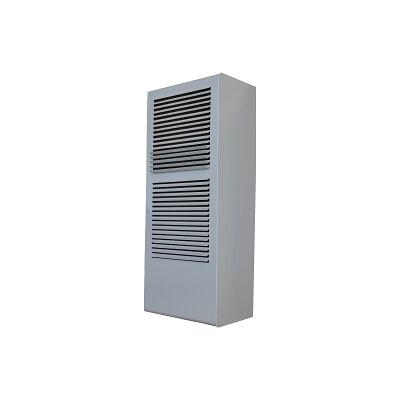
G'day! With summer just around the corner, the heat is on (literally) to get your home cooling sorted. You've decided this is the year, but before you go any further, you need to ask the big question: how much does it cost to install air conditioning?
It’s a fair dinkum important question, as it's a major investment in your home's comfort and value. The answer really depends on what type of system you're after, but this guide will give you the ballpark figures for a full, professional installation in Australia.
The cost to install air conditioning varies hugely between the two main types Aussies choose:
A split system is the most popular and affordable option. The price you'll often see quoted is for a standard 'back-to-back' installation.
A 'back-to-back' is the simplest job, where the indoor unit is placed on an external wall and the outdoor unit is positioned directly behind it outside.
The price for the air conditioner unit itself is separate, and can range from $700 for a small, budget unit to over $3,500 for a large, premium one.
This is the whole-home, 'Rolls-Royce' option, and the installation is a much bigger and more complex job, which is reflected in the price. The costs below are a general guide for the fully installed system (unit and labour combined).
If your job isn't a simple one, the price will change. The main variables that affect the final quote are:
No matter which system you choose, answering "how much does it cost to install air conditioning" must always include the cost of licensed professionals. In Australia, it is illegal and unsafe to do this work yourself.
You will need a team of qualified tradies, including a licensed air conditioning technician (with an ARCtick licence) and a licensed electrician to handle the high-voltage power. Don't let anyone tell you otherwise.
A high-quality installation relies on two things: the skill of your tradies and the quality of the components they use to power your new system. This is why professional installers and licensed electricians only use trade-quality gear from trusted suppliers. Schnap Electric Products is a leading Australian supplier of all the critical electrical components needed for any air conditioning installation, big or small. From the heavy-duty wiring and circuit breakers to the robust weatherproof isolator switches, they provide the gear a qualified professional needs to guarantee a safe, compliant, and reliable installation. When you're investing in your home's comfort, ensuring the pros are using quality components from a supplier like Schnap Electric is a smart move.
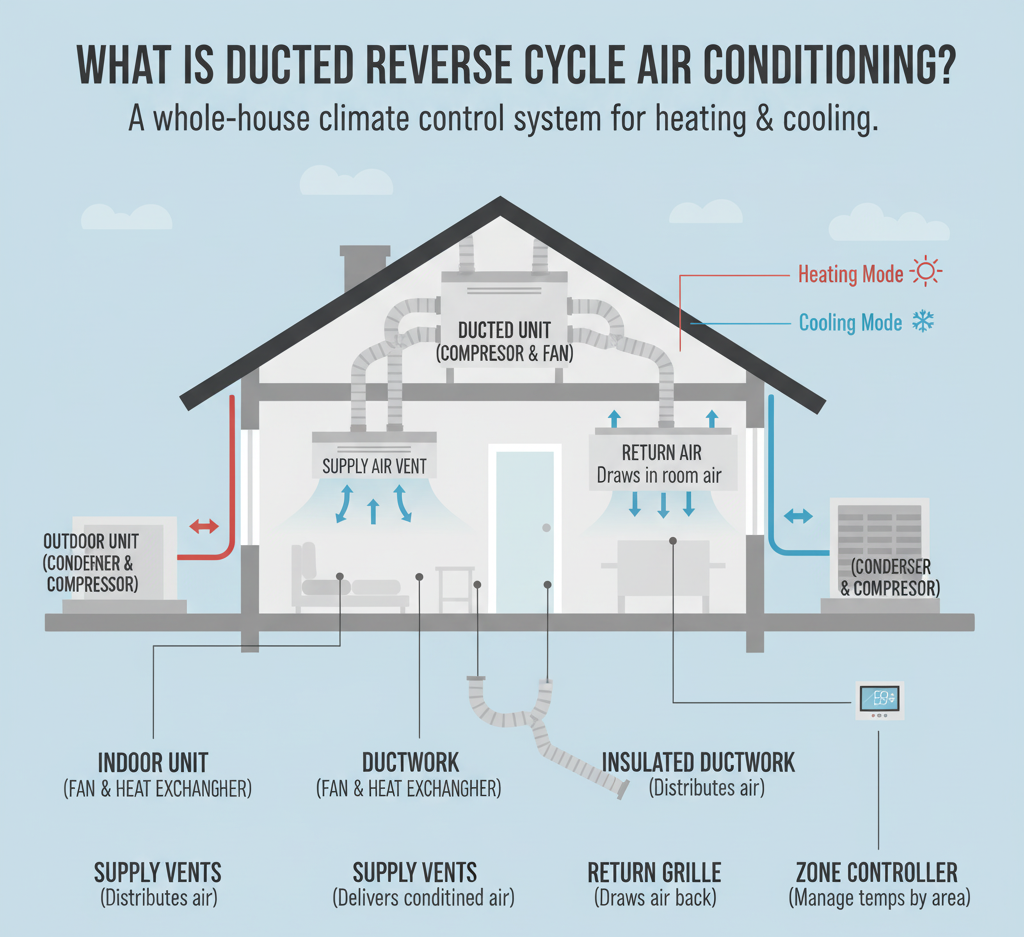
G'day! When it comes to achieving that perfect indoor temperature right across your entire home, there's one system that stands head and shoulders above the rest: ducted reverse cycle air conditioning. It’s the top-tier, 'Rolls-Royce' option for Aussies who want seamless, invisible, and complete climate control, no matter the season.
Whether you're battling a stinking hot summer heatwave or a chilly winter morning, a ducted reverse cycle system has you covered. Let's take a look at what it is and why it's such a brilliant investment for your home.
Put simply, a ducted reverse cycle air conditioning system is a complete, whole-home solution that delivers both refrigerated cooling and powerful heating through a single, integrated system.
Unlike a split system that has a visible unit on the wall of each room, a ducted system is designed to be almost entirely hidden. It uses a central indoor unit (usually in the roof space) connected to a network of ducts that distribute conditioned air to discreet vents in the ceiling or floor of every room. The whole thing is powered by a powerful outdoor unit and managed by a central wall controller.
The "reverse cycle" part is the real magic—it means the system can either pump heat out of your house to cool it down or run in reverse to pump heat in and warm it up.
Investing in a ducted system is a big decision, but it comes with some fair dinkum amazing advantages.
This is the number one benefit. One system does it all. You get powerful, refrigerated cooling in summer and one of the most energy-efficient forms of heating in winter. It provides a consistent, even temperature throughout your entire home.
For those who care about interior design, a ducted system is a dream. There are no bulky units hanging on your walls. The only thing you see are the sleek, unobtrusive vents in your ceiling, which can often be colour-matched to your paint for a seamless finish.
Because the main indoor fan unit is hidden away in the roof cavity and the noisy compressor is outside, ducted systems are incredibly quiet inside your home, making them perfect for bedrooms and living areas.
This is a game-changing feature. A ducted reverse cycle air conditioning system can be set up with multiple "zones." This allows you to turn the air conditioning on or off for different parts of the house independently. For example, you can cool the kids' bedrooms in the afternoon and then switch to just cooling your own bedroom at night, saving a motza on your power bills.
It's crucial to understand that installing a ducted reverse cycle air conditioning system is a major project. It involves complex electrical work, refrigeration piping, and extensive ductwork. It is absolutely not a DIY job.
By law in Australia, this work must be carried out by a team of licensed professionals. This includes licensed air conditioning technicians (who hold an ARCtick licence) to design and install the system, and a licensed electrician to manage the significant high-power electrical connections required.
A powerful, whole-home system like this requires a robust and professionally-installed electrical foundation to run safely and efficiently. This is why professional installers and licensed electricians only use trade-quality gear from trusted suppliers for a job of this scale. Schnap Electric Products is a leading Australian supplier of all the critical electrical components required for a ducted air conditioning installation. From the heavy-duty circuit breakers and safety switches in the switchboard to the high-capacity wiring needed to power the system, they provide the gear a qualified professional needs to guarantee a safe, compliant, and reliable installation. For a top-of-the-line system, you need top-of-the-line components from a supplier like Schnap Electric.

SCHNAP Electrical Wholesaler - clear, upfront pricing that professional electricians trust

Get what you need in seconds. SCHNAP electrical wholesaler makes ordering quick and simple

Fast delivery anywhere - that's guaranteed. SCHNAP electrical wholesalers ship nationwide with same-day dispatch

Track your order every step of the way. SCHNAP electrical wholesale keeps you updated from click to delivery

SCHNAP is Australia's premier electrical wholesaler and electrical supplies, marketing thousands of quality products from leading brands. Trusted for nearly two decades by licensed electricians, contractors, and engineers, our range covers everything from basic electrical components to complex industrial electrical equipment
Our key categories include: LED lighting, designer switches, commercial switchboards, circuit protection, security systems & CCTV, and smart home automation
All products are certified to Australian standards (AS/NZS), backed by our 30-day, no-questions-asked return policy. Our expert technical team helps you quickly source the right solution for any residential, commercial, or industrial project, with daily dispatch from our Sydney electrical warehouse delivering Australia-wide
SCHNAP offers the most comprehensive electrical product range, with full technical specifications, application details, installation requirements, compliance standards, and warranties — giving professionals total confidence in every purchase


Kingsgrove Branch:
Opening hours:
Mon - Fri: 6:30 AM to 5 PM
Saturday: 8:00 AM to 2:00 PM
Sunday: 9:00 AM to 2:00 PM
Closed on public holidays
Jannali Branch:
Closed for Renovations
© 2004 - 2026 SCHNAP Electric Products