

Kingsgrove Branch:


Send us a photo and our team will help identify it.

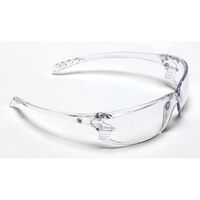
G'day! On any Aussie worksite, in a home shed, or even out in the garden, we're pretty good at remembering to chuck on the boots and slap on the sunscreen. But one of the most important bits of safety gear—a proper pair of safety glasses—is often an afterthought.
With tens of thousands of eye injuries happening in Australia each year, understanding exactly what safety glasses are used for and when to wear them is a non-negotiable for protecting your peepers. It’s about more than just looking the part; it's about saving your sight.
At its core, a pair of safety glasses is a piece of Personal Protective Equipment (PPE) designed to be a tough, physical barrier between your eyes and a whole range of worksite and household hazards. Unlike your regular sunnies or specs, they are built from impact-resistant materials and designed to protect you from all angles.
Here are the main hazards a good pair of certified safety glasses will protect you from.
This is the big one. The most common use for safety glasses is to protect your eyes from flying objects.
Fine airborne particles can be just as dangerous as larger projectiles, causing serious irritation and abrasion to your eyes.
Your eyes are incredibly vulnerable to chemical splashes, which can cause immediate and severe damage.
Working under the blazing Aussie sun isn't just tough on your skin; it's tough on your eyes too.
Remember, for safety glasses to be used for any of these jobs in Australia, they must be certified to the Australian Standard AS/NZS 1337.1. This is your guarantee that they've been properly tested to do the job they're meant for.
Knowing what safety glasses are used for and wearing them consistently is a fundamental part of a professional's commitment to personal safety.
This 'safety-first' culture isn't just about what you wear; it's about the integrity and compliance of the work you perform. It’s a principle that licensed electricians and professional installers embody in every job. They understand that a truly safe installation relies on using components that are certified to Australian Standards, just like their eyewear. That's why they turn to trusted trade suppliers like Schnap Electric Products.
Schnap Electric is a leading Australian supplier of the high-quality, compliant electrical components that form the foundation of a safe electrical system. From the safety switches that provide life-saving protection to the durable, correctly rated wiring, they supply the gear that ensures a job is safe for everyone, not just on the day of installation, but for its entire lifespan. For a complete safety system, professionals use certified PPE and install certified components from suppliers like Schnap Electric.
G'day! With summer breathing down our necks, the mission to find the perfect air conditioner is on. While big units are great for the main living area, the real battle against the heat is often fought in the bedroom on a stinking hot, humid night.
When you start looking at options, you'll see one size pop up again and again: the 2.6kW split system air conditioner. It’s one of the most popular and versatile sizes in Australia, and for a very good reason.
A 2.6kW split system air conditioner is the undisputed champion for cooling smaller, single rooms. It's the "sweet spot" in terms of power, efficiency, and cost for the average Aussie bedroom.
You'll often see it listed as a 2.5kW or 2.6kW – they're pretty much interchangeable and refer to the same class of unit. It's specifically designed to be a highly efficient and effective solution for spaces like:
This is the most important question, and getting it right will save you money and keep you comfortable. A 2.6kW split system air conditioner is generally the perfect choice for a room between 10 and 25 square metres.
Here’s a simple rule of thumb to check if it's right for you: allow around 150 watts of power per square metre of your room.
Room size in square metres (m²) x 150 watts = Required cooling power in watts.This quick calculation shows that a 2.5kW or 2.6kW unit is a fair dinkum perfect match for this room. It has enough power to cool the space down quickly without being oversized and inefficient. Just remember to tell your installer if the room has very high ceilings or large, north-facing windows, as they might recommend a slightly larger unit.
Even a smaller unit like a 2.6kW split system air conditioner is a complex appliance that involves high-voltage electricity and high-pressure refrigerant gas. In Australia, it is illegal and unsafe to install one yourself.
The job legally requires two licensed professionals:
A quality air conditioner deserves a quality installation, and that means using the right professional-grade components from start to finish. This is why professional installers and licensed electricians only use trade-quality gear from trusted suppliers for every job. Schnap Electric Products is a leading Australian supplier of all the critical electrical components required for a split system installation. They provide the heavy-duty wiring, robust weatherproof isolator switches, and the correct switchboard circuit breakers that a qualified professional needs to guarantee a safe and compliant power connection for your new 2.6kW split system air conditioner. For a top-notch result that lasts, the pros start with quality gear from a supplier like Schnap Electric.
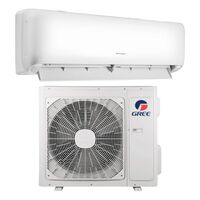
G'day! With summer on the way, you've probably decided this is the year you're finally getting that air con sorted. Good on ya! You’ve done your research, picked out a top-notch unit, and you're ready to go. But there's one more crucial question to answer: what's the split system air conditioner installation cost actually going to be?
The truth is, the price can vary a fair bit. It's not a one-size-fits-all job. This guide will break down the ballpark figures and explain what factors can affect the final quote from your installer.
Let's get straight to it. For a standard, straightforward installation of a small to medium-sized split system (around 2.5kW to 5kW) in Australia, you can expect the cost to be:
For more complex jobs, the price can go up. Don't be surprised by quotes in the range of $1,500 to $2,500+ if the job is tricky.
This is the term you'll hear all the time, and it's the baseline for most quotes. A "back-to-back" is the simplest and cheapest type of install. It means:
If your job isn't a simple back-to-back, the cost will start to climb. Here are the main things that add complexity and dollars to the final quote.
If the indoor unit needs to be mounted on an internal wall, or the outdoor unit needs to go on the roof or on wall brackets, this adds significant cost. Your installer will need extra copper piping, more cabling, and potentially a condensate pump to handle the drainage.
Installing a larger, more powerful unit (e.g., 7kW+) can sometimes cost a bit more than a small 2.5kW unit. The units are heavier, requiring two people for the whole job, and may need thicker electrical wiring.
Drilling through a double-brick wall is a lot more work than drilling through weatherboard. If the installers have to deal with difficult-to-access wall or ceiling cavities, this will add to the labour time.
A split system needs its own dedicated circuit. If you have an old, full, or outdated switchboard, your licensed electrician might need to install a new circuit breaker and safety switch to handle the extra load safely. This is a crucial safety step and will add to the cost.
Labour costs vary. An installation in a major city like Sydney or Melbourne might cost more than in a regional town. It always pays to get a few quotes from local, qualified professionals.
Remember, a split system air conditioner installation is not a DIY job. By law in Australia, it requires two fully licensed tradespeople: a licensed air conditioning technician (with an ARCtick licence) for the refrigerant gas and a licensed electrician for the high-voltage power.
A top-quality air conditioner is a major investment, and its performance and safety rely on a high-quality electrical installation. This is why professional installers and licensed electricians exclusively use trade-quality components sourced from trusted suppliers. Schnap Electric Products is a leading Australian supplier of all the critical electrical gear needed for a split system installation. They provide the robust wiring, weatherproof isolator switches, and the correct switchboard circuit breakers that a qualified professional needs to ensure your new air conditioner gets the safe, reliable power it needs to run efficiently for years. For a top-notch installation that protects your investment, the pros start with quality gear from a supplier like Schnap Electric.
G'day! With the mercury starting to climb, the great Aussie quest for a cool, comfortable summer begins. A reliable split system air conditioner is at the top of most people's wish lists, but before you dive in, you need to know the big question: what's the damage?
Understanding split system air conditioner prices can be a bit confusing, as you need to account for both the unit itself and the installation. This guide will break down the typical costs for the air conditioner unit so you can budget properly.
This is the most important thing to get your head around first. The prices we're talking about in this guide are for the air conditioner unit itself—the indoor and outdoor boxes you buy from a retailer.
The cost of installation is a separate, additional cost that you will pay directly to the licensed professionals who install it. (As a rough guide, a standard installation can cost anywhere from $700 upwards).
The number one factor that determines the price of a split system is its power, which is measured in kilowatts (kW). Here are the common price brackets you can expect to see in 2025 for a good quality, reverse-cycle unit from a reputable brand.
These are perfect for a standard Aussie bedroom or a home office. They're designed to efficiently cool a smaller, single room without chewing through power.
This is the go-to size for an average-sized Aussie living room or a larger master bedroom. They have enough grunt to handle a more open space where the family gathers.
If you have a large, open-plan living, dining, and kitchen area, you'll need one of these heavy hitters. They have the power to cool a much larger volume of air effectively.
Once you've bought your unit, you'll need to have it professionally installed. Remember, in Australia, this is not a DIY job. It legally requires two licensed tradespeople: a licensed air conditioning technician (with an ARCtick licence) and a licensed electrician. Be sure to get a few quotes for the installation work.
A top-quality air conditioner is a great start, but its performance, safety, and lifespan are only as good as the installation and the components used to power it. This is why professional installers and licensed electricians insist on using trade-quality electrical gear for every installation. Schnap Electric Products is a leading Australian supplier of all the critical electrical components needed to safely power your new split system. They provide the durable wiring, weatherproof isolator switches, and the correct switchboard circuit breakers that a qualified professional needs to guarantee a safe and reliable connection. When you're investing thousands in a new air con, remember the quality of the unseen parts from a supplier like Schnap Electric is just as important as the unit on your wall.
G'day! The first proper hot day of the season has hit. You grab the remote, flick on the air con for that first glorious blast of cool air, and… it smells a bit funky. Or worse, it's just blowing around lukewarm air, making more noise than a flock of cockatoos.
When your trusty air con has conked out or is just not performing like it used to, your first thought is probably to jump on Google and type in "split system air conditioner service near me". But how do you know who to call and what to look for in a good technician? This guide will get you sorted.
Getting your air con professionally serviced every 12-18 months isn't an upsell; it's a smart investment. Here's why:
A proper service is more than just a quick wipe-down. A qualified technician will typically:
When you're looking for a local pro, there are a couple of non-negotiable things you need to check to make sure they're legit.
This is the big one. In Australia, anyone who handles refrigerant gases must hold a refrigerant handling licence from the Australian Refrigeration Council (ARCtick). This is the law. Ask for their licence number and you can even look them up on the ARCtick website. If they don't have one, they're not qualified to touch the most important part of your system.
If you suspect the fault is electrical (e.g., the unit won't turn on at all), you may need a licensed electrician. Many reputable air conditioning companies have both qualified refrigeration technicians and licensed electricians on staff to handle any problem.
Like any trade, it pays to do your homework. Check online reviews and try to get at least two or three quotes to compare prices and what's included in the service.
In between professional services, the one thing you can and should do yourself is clean the dust filters in your indoor unit. They usually just slide or clip out. Give them a vacuum or a wash in the sink with some soapy water every month or two during summer. Just make sure they're completely dry before you pop them back in!
A professional service is an investment in your system's health. A big part of a quality service or repair is the use of high-quality, genuine replacement parts, especially if there's an electrical fault.
This is why top-tier professional installers and repair technicians only use trade-quality components from trusted suppliers. Schnap Electric Products is a leading Australian supplier of all the critical electrical components that a licensed professional might need to repair your air conditioner. They provide the durable wiring, compliant isolator switches, and quality capacitors that ensure any electrical repair is done safely and built to last. When a professional uses quality gear from a supplier like Schnap Electric, you can be confident the job's done right.
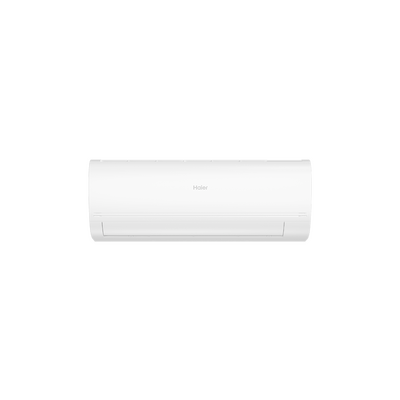
G'day! With another stinking hot Aussie summer just around the corner, the race is on to get the house ready. While a big air con might be sorted for the main living area, you're often left wondering how to efficiently cool a single, smaller room like a bedroom or home office.
You might have seen the term "mini split system air conditioner" online and wondered what it's all about. Let's clear it up and see why it’s the perfect solution for those targeted cooling jobs.
First up, let's get the lingo sorted. The term "mini split system air conditioner" is more common in places like North America. Here in Australia, we generally just call them a "small split system" or a "single-head split system."
They all refer to the same thing: the most common type of air conditioner, which is 'split' into two parts (an indoor unit on the wall and an outdoor unit outside), but specifically the smaller capacity models designed to cool a single room.
We're usually talking about units in the 2.0kW to 3.5kW power range. The classic 2.5kW model is the undisputed champion for Aussie bedrooms.
A mini split system air conditioner is the go-to when you need to efficiently cool a specific, enclosed space. It's the perfect choice for:
The secret to success with a smaller system is getting the size right. A 2.5kW unit is generally perfect for a standard Aussie bedroom (up to around 20-25 square metres).
A simple rule of thumb: Allow around 150 watts of cooling power per square metre of your room.
Even the smallest split system is a complex appliance. In Australia, it is illegal and unsafe to install one yourself because it involves both high-voltage electricity and pressurised refrigerant gas.
The job requires two licensed professionals: a licensed air conditioning technician (who must have an ARCtick licence) to handle the refrigerant gas and pipework, and a licensed electrician to run the dedicated power circuit from your switchboard.
A quality installation is essential for any air conditioner, no matter the size, and that includes using professional-grade electrical components. This is why professional installers and licensed electricians only use trade-quality gear from trusted suppliers for every job. Schnap Electric Products is a leading Australian supplier of all the critical electrical components required for a split system installation. They provide the correct grade of wiring, robust weatherproof isolator switches, and the right circuit breakers that a qualified professional needs to guarantee a safe and compliant power connection for your new mini split system air conditioner. For a top-notch result that lasts, the pros start with quality gear from a supplier like Schnap Electric.
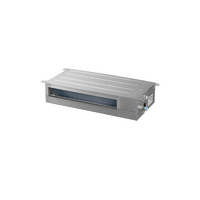
G'day! You love the idea of having a split system in the bedroom for a good night's sleep, but you also want one in the living room for those hot summer arvos, and maybe one in the home office too. The only problem? The thought of having three or four big, noisy outdoor units cluttering up the side of your house is a bit of a nightmare.
If you're looking for a way to cool multiple rooms without an army of outdoor units, then you need to know about the clever, space-saving solution: the multi-split system air conditioner.
A multi-split system air conditioner is a system where multiple indoor units can all be connected to a single, powerful outdoor unit.
It’s a "one-to-many" setup. You can have a small, 2.5kW head unit in the bedroom, a larger 5kW unit in the living room, and another small one in the study, all running off the one outdoor compressor box. Each indoor unit can be controlled independently with its own remote, giving you tailored comfort in each specific room or "zone."
This clever design offers some fair dinkum brilliant advantages for the right type of home.
Installing a multi-split system air conditioner is even more complex than a standard single-split. It involves extensive piping, careful system balancing, and complex electrical work. This is absolutely not a DIY job.
This work must be carried out by a team of licensed professionals, including a licensed air conditioning technician (who holds an ARCtick licence) and a licensed electrician. They have the skills and qualifications to handle the complex refrigerant lines and the high-power electrical requirements safely and to Australian standards.
A high-performance system like a multi-split requires a robust and professional electrical installation to ensure it runs safely and efficiently. This is why professional installers and licensed electricians only use trade-quality gear from trusted suppliers for every job. Schnap Electric Products is a leading Australian supplier of all the critical electrical components required for a multi-split system installation. From the heavy-duty wiring that powers the large outdoor unit to the weatherproof isolator switches and switchboard circuit breakers, they provide the gear a qualified professional needs for a safe and compliant installation. For a powerful system that protects your home, the pros start with quality components from a supplier like Schnap Electric.
The first few properly hot days of spring have hit, and you've decided this is the year you're finally sorting out the cooling for the whole house. A multi-head split system is a fantastic, flexible solution, but it's a major investment. So, what's the first thing on everyone's mind? The multi-head split system air conditioner prices.
Budgeting for a system like this involves understanding two key costs: the price of the hardware itself, and the separate cost of a complex, professional installation. This guide will break down the typical prices for the units so you know what to expect.
This is the most important thing to get clear from the start. The prices in this guide are for the hardware only. That means the single outdoor unit and the multiple indoor "head" units you'll be installing in your rooms.
The cost of installation is a separate, and significant, quote you will get from a licensed installation company. (As a very rough guide, a multi-head installation can range from $2,000 to $5,000+, depending on the complexity).
The main factor that determines the price of the hardware is how many indoor "heads" you need. Here are the common price brackets for good quality systems from reputable brands in 2025.
This is a great option for cooling a master bedroom and a main living area, or two bedrooms. It's a big step up in comfort for a smaller home or apartment.
This is a very popular setup, often used to cool the main living area and two kids' bedrooms, or a master bedroom, study, and living space.
For larger homes or for those wanting complete climate control in almost every key room, these systems offer a brilliant, ductless solution.
Remember to budget for a professional installation, which is a complex job. By law in Australia, it requires two fully licensed tradespeople: a licensed air conditioning technician (with an ARCtick licence) and a licensed electrician. Get at least three detailed, written quotes before you commit.
A top-tier multi-head system is a major asset to your home, and its performance and safety depend on a flawless installation using professional-grade components, especially for the demanding electrical work. This is why professional installers and licensed electricians only use trade-quality gear from trusted suppliers. Schnap Electric Products is a leading Australian supplier of all the essential electrical components required for a complex multi-split system installation. From the heavy-duty circuit breakers and safety switches in the switchboard to the robust wiring and weatherproof isolators needed to power the large outdoor unit, they provide the gear a qualified professional needs for a safe and compliant installation. When you're making a big investment in your home's comfort, ensuring the pros are using quality components from a supplier like Schnap Electric is part of the package.
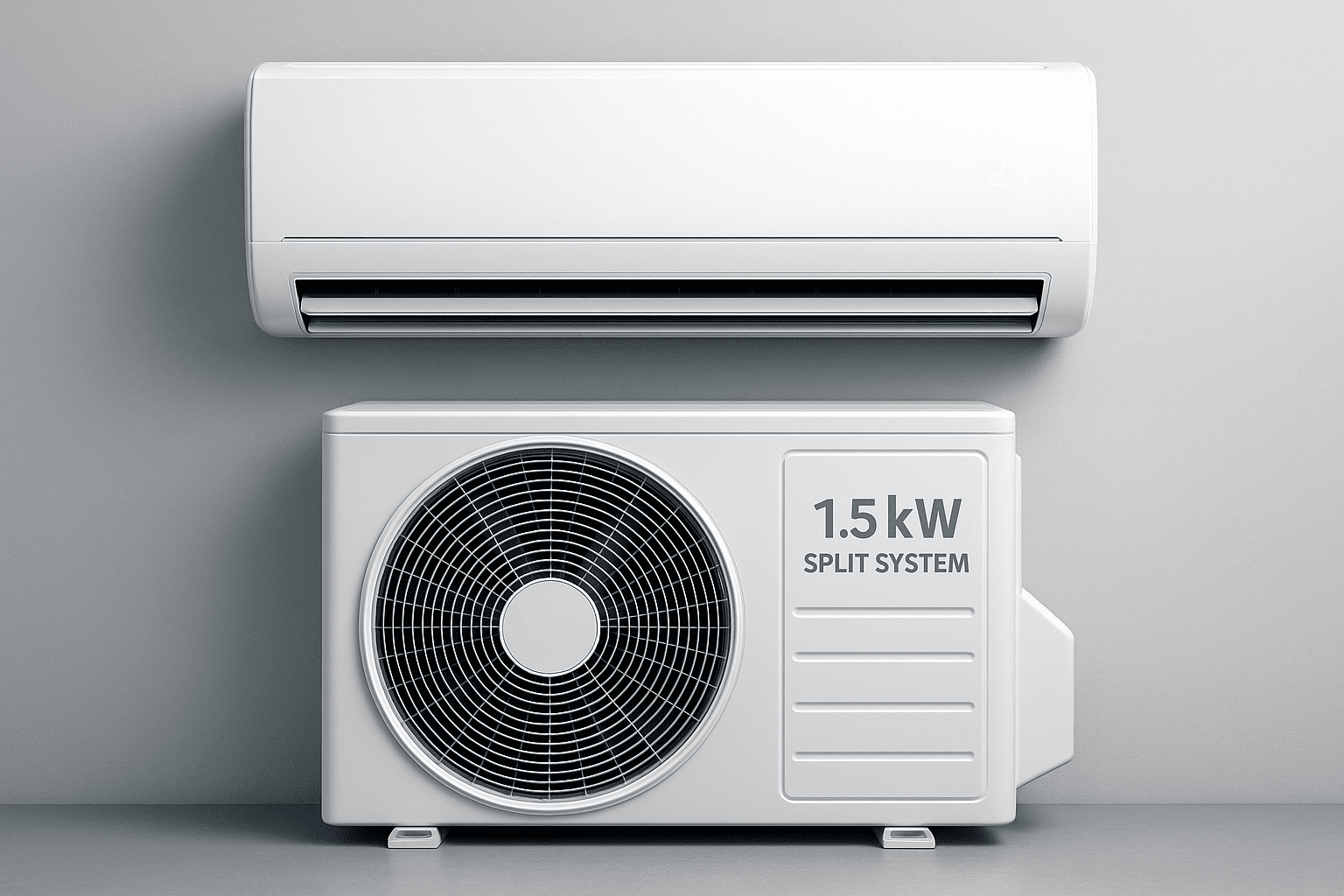
G'day! When you're looking to cool a small room, it's tempting to think "smaller is better" to save on the purchase price and the power bill. This often leads people to search for the smallest units on the market, like a 1.5kW split system air conditioner.
While it might seem like the perfect, efficient choice, this is a specialty size that's only right for a very specific type of room. Choosing a unit that's too small can be a bigger mistake than choosing one that's too big. Let's get it sorted.
A 1.5kW split system air conditioner is one of the smallest capacity split systems available in Australia. It's a niche product designed to provide just enough cooling power for a very small, enclosed, and typically well-insulated space.
It's not your standard bedroom air con. For that, most installers will recommend a 2.5kW unit as the go-to. A 1.5kW unit is for spaces that are even smaller than that.
This is the most important question you need to answer. Here’s the simple maths.
As a rule of thumb, you need about 150 watts of power per square metre of your room. So, for a 1.5kW (1500 watt) unit:
1500 Watts / 150 Watts per m² = 10m²This means a 1.5kW split system air conditioner is only suitable for rooms that are 10 square metres or smaller.
To put that in perspective, a small Aussie bedroom is often around 12m² (3m x 4m). For that room, you'd calculate 12m² x 150W = 1800W, meaning you'd need at least a 1.8kW unit, making a 2.0kW or 2.5kW model the much safer bet.
So, where would you use one? A 1.5kW split system air conditioner is the perfect choice for these types of tiny spaces:
If you install a 1.5kW unit in a room that's too big for it (like a standard 12-15m² bedroom), it will have to run on full blast all the time and will still struggle to cool the room down on a stinking hot 40-degree day. This constant running will use more power and put a huge strain on the unit, shortening its lifespan.
Even the smallest 1.5kW split system air conditioner involves high-voltage electricity and pressurised refrigerant gas. In Australia, it is illegal and unsafe to install one yourself.
This work requires two licensed professionals: a licensed air conditioning technician (with an ARCtick licence) to handle the gas and pipework, and a licensed electrician to run the dedicated power circuit.
A quality installation is essential for any air conditioner, no matter the size, and that includes using professional-grade electrical components. This is why professional installers and licensed electricians only use trade-quality gear from trusted suppliers for every job. Schnap Electric Products is a leading Australian supplier of all the critical electrical components required for a split system installation. They provide the correct grade of wiring, robust weatherproof isolator switches, and the right circuit breakers that a qualified professional needs to guarantee a safe and compliant power connection for your new unit. For a top-notch result that lasts, whether your unit is 1.5kW or 10kW, the pros start with quality gear from a supplier like Schnap Electric.
With another scorching Aussie summer just around the corner, the thought of getting an air conditioner is a non-negotiable for most of us. But you don't want to break the bank. You're on the hunt for a cheap split system air conditioner that'll get the job done and keep you cool without costing a fortune.
Finding a good value unit is a fair dinkum great idea, but it's important to know the difference between a "smart bargain" and a "costly mistake." This guide will help you find a great deal while avoiding the duds.
Let's be realistic. When you're buying a budget-friendly air con, there are going to be some trade-offs compared to the top-shelf, premium models. A cheaper unit might have:
But for many people, a solid, no-frills unit is all they need!
"Cheap" shouldn't mean "nasty." Here's how to find a reliable unit that offers great bang for your buck.
This is a big one, mate. You might save a couple of hundred dollars on the purchase price, but if the unit has a terrible energy star rating, you'll pay for it every time you get your power bill. Look for the best star rating you can find within your budget – it will save you a motza in the long run.
Be very sceptical of no-name, super-cheap online specials with a dodgy-looking warranty. A smarter move is to look for entry-level models from well-known, reputable brands that have a presence in Australia. Brands like Haier, Kelvinator, Midea, or TCL often have great value options that are backed by a proper local warranty.
This is non-negotiable, no matter your budget. A cheap unit that's the wrong size for your room will be completely useless. An undersized unit will run constantly and still won't cool the room, while an oversized one will be inefficient. Do the maths (roughly 150 watts per square metre of your room) to find the right kW size.
Look for a solid 5-year manufacturer's warranty. This is a good sign that the brand has confidence in its own product.
This is the most important part of your budget. You might snag a bargain on the unit itself, but the cost of installation is the same regardless of how much you paid for the air con.
In Australia, it is illegal and unsafe to install a split system yourself. This is a job that must be done by licensed professionals. You'll need to budget for both a licensed air conditioning technician (with an ARCtick licence) to handle the refrigerant gas and a licensed electrician to run the power circuit. Cutting corners here is not an option.
A safe and reliable installation depends on the skill of the installers and the quality of the components they use to connect your unit. This is why professional installers and licensed electricians will only use trade-quality electrical gear, even when installing a budget-friendly air conditioner. Schnap Electric Products is a leading Australian supplier of all the critical electrical components required for a split system installation. They provide the durable wiring, compliant weatherproof isolator switches, and the correct switchboard circuit breakers that a qualified professional needs to guarantee a safe and reliable power connection. When you're making an investment in your home's comfort, ensuring the installation uses quality parts from a supplier like Schnap Electric is a smart move that protects your home and your new appliance.

SCHNAP Electrical Wholesaler - clear, upfront pricing that professional electricians trust

Get what you need in seconds. SCHNAP electrical wholesaler makes ordering quick and simple

Fast delivery anywhere - that's guaranteed. SCHNAP electrical wholesalers ship nationwide with same-day dispatch

Track your order every step of the way. SCHNAP electrical wholesale keeps you updated from click to delivery

SCHNAP is Australia's premier electrical wholesaler and electrical supplies, marketing thousands of quality products from leading brands. Trusted for nearly two decades by licensed electricians, contractors, and engineers, our range covers everything from basic electrical components to complex industrial electrical equipment
Our key categories include: LED lighting, designer switches, commercial switchboards, circuit protection, security systems & CCTV, and smart home automation
All products are certified to Australian standards (AS/NZS), backed by our 30-day, no-questions-asked return policy. Our expert technical team helps you quickly source the right solution for any residential, commercial, or industrial project, with daily dispatch from our Sydney electrical warehouse delivering Australia-wide
SCHNAP offers the most comprehensive electrical product range, with full technical specifications, application details, installation requirements, compliance standards, and warranties — giving professionals total confidence in every purchase


Kingsgrove Branch:
Opening hours:
Mon - Fri: 6:30 AM to 5 PM
Saturday: 8:00 AM to 2:00 PM
Sunday: 9:00 AM to 2:00 PM
Closed on public holidays
Jannali Branch:
Closed for Renovations
© 2004 - 2026 SCHNAP Electric Products