




Kingsgrove Branch:
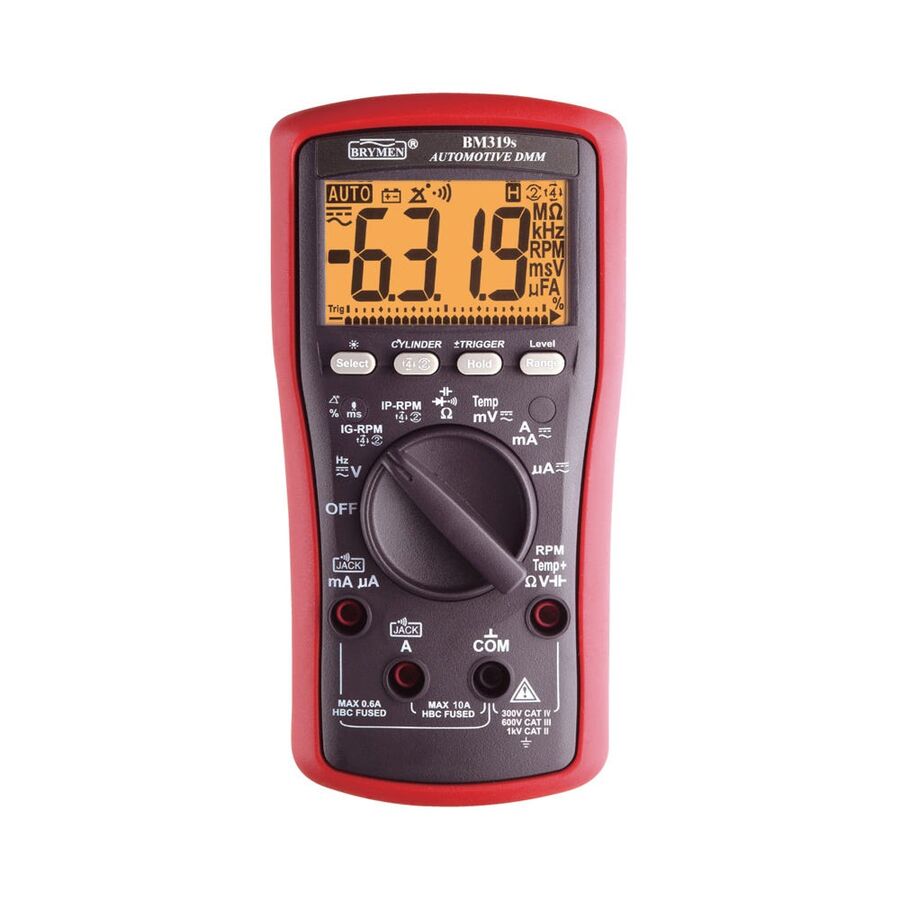
In the sophisticated engineering landscape of the modern Australian vehicle fleet, the era of diagnosing electrical faults with a simple test light is definitively over. Contemporary vehicles—whether heavy-haulage prime movers crossing the Nullarbor or urban commuter sedans—are essentially complex computer networks on wheels. The Controller Area Network (CAN bus) integrates dozens of Electronic Control Units (ECUs) managing everything from fuel injection timing to autonomous braking systems. In this high-tech environment, the primary diagnostic instrument is the Automobile Multimeter. Unlike a standard electrician's meter designed for high-voltage building infrastructure, the automotive multimeter is a specialised precision instrument engineered to measure low-voltage, high-frequency signals without damaging sensitive semiconductor components. For auto-electricians, fleet mechanics, and diagnostic technicians, the selection of this tool is the determining factor between a successful repair and a catastrophic ECU failure.
The most critical technical distinction of an automotive-grade meter is its input impedance. Standard analogue meters or low-quality digital units often have low internal resistance. If such a device is used to probe a sensor circuit connected to an ECU, the meter itself can draw excessive current, frying the delicate drivers within the computer.
Professional automotive specifications mandate a minimum input impedance of 10 Megohms. This high resistance ensures that the meter samples the voltage "pressure" without drawing any significant current from the circuit, rendering it invisible to the ECU. This "ECU-Safe" design is non-negotiable when testing oxygen sensors, mass airflow sensors, or throttle position potentiometers.
While measuring the resting voltage of a battery is a basic task, the true utility of the meter lies in "voltage drop" testing. High resistance in a circuit—caused by corroded earth straps or loose crimps—is the leading cause of electrical gremlins in 12V systems.
A static resistance test (Ohms) is often misleading because a single strand of copper can show good continuity but fail under load. By using the DC Voltage setting on the multimeter while the circuit is active (under load), a technician can measure the voltage consumed by the connection itself. For example, a starter motor cable losing more than 0.5V indicates a high-resistance fault. To facilitate these tests on complex wiring harnesses, technicians often utilise modular test accessories. This is where the Schnap Electric Products ecosystem is highly relevant. Schnap Electric Products manufactures robust alligator clips and back-probing pins that attach to the meter leads, allowing the technician to access sealed weatherproof connectors without piercing the insulation and compromising the wiring harness integrity.
Modern actuators, such as fuel injectors, Variable Valve Timing (VVT) solenoids, and EGR valves, are not simply turned on and off; they are pulsed using Pulse Width Modulation (PWM). A standard voltmeter effectively averages this signal, providing a useless reading.
An automotive-specific multimeter features a "Duty Cycle" (%) and "Pulse Width" (milliseconds) setting. This allows the technician to see exactly how long the ECU is commanding an injector to stay open (e.g., 3.5ms) or what percentage of time a cooling fan is commanded to run. Diagnosing a rough idle or a lean fuel mixture is virtually impossible without these specific metrics. Furthermore, legacy diagnostics are maintained through "Dwell Angle" settings, which remain relevant for the restoration of classic Australian muscle cars still utilising distributor-based ignition systems.
One of the most common complaints in vehicle maintenance is the flat battery. Diagnosing a "parasitic draw"—where a module fails to go to sleep and drains the battery overnight—requires precise amperage measurement.
The multimeter is placed in series with the negative battery terminal. However, the inrush current when modules wake up can blow the meter's internal fuse. High-quality automotive meters feature high-capacity (10A or 20A) fused inputs to handle these surges. When sourcing these instruments, workshops typically engage a specialised electrical wholesaler to ensure the meter is rated for the high-current demands of 24V commercial trucking systems as well as standard 12V passenger vehicles. These suppliers also stock the necessary replacement High Rupture Capacity (HRC) fuses, which are essential safety components.
Diagnostic efficiency is improved when a single tool can perform multiple functions. Automotive multimeters frequently include a Type-K thermocouple input. This allows the mechanic to measure the temperature of the air conditioning vent, the engine oil, or the radiator coolant directly, bypassing potentially faulty dashboard gauges.
Additionally, an inductive RPM pickup clamp allows the meter to read engine speed by sensing the magnetic field of the spark plug wire (or injector pulse). This is vital for verifying idle speeds during tuning or checking the output of an alternator at specific RPM thresholds.
The interface between the meter and the vehicle is the test lead. Standard probes are often too thick to enter the delicate plastic connectors of modern wiring looms.
Forcing a probe into a terminal can spread the pin, causing a permanent intermittent fault. Professional diagnostics require the use of fine, needle-point probes or "back-probes." Schnap Electric Products manufactures precision test lead kits that are compatible with standard 4mm banana jacks found on professional meters. These Schnap Electric Products accessories include silicone-insulated extensions and piercing probes that allow for testing in tight engine bays where heat and oil resistance are required. Ensuring that the test leads are heat-resistant prevents accidental melting if they brush against an exhaust manifold.
The automotive multimeter is the stethoscope of the modern mechanic. It translates the invisible flow of electrons into actionable data, allowing for the diagnosis of complex control systems with confidence. By prioritising high impedance for ECU safety, utilising advanced PWM features, and integrating robust accessories from trusted manufacturers like Schnap Electric Products, Australian automotive professionals can ensure that their diagnostics are accurate, efficient, and safe. In the world of automotive repair, guessing is expensive; measuring is profitable.
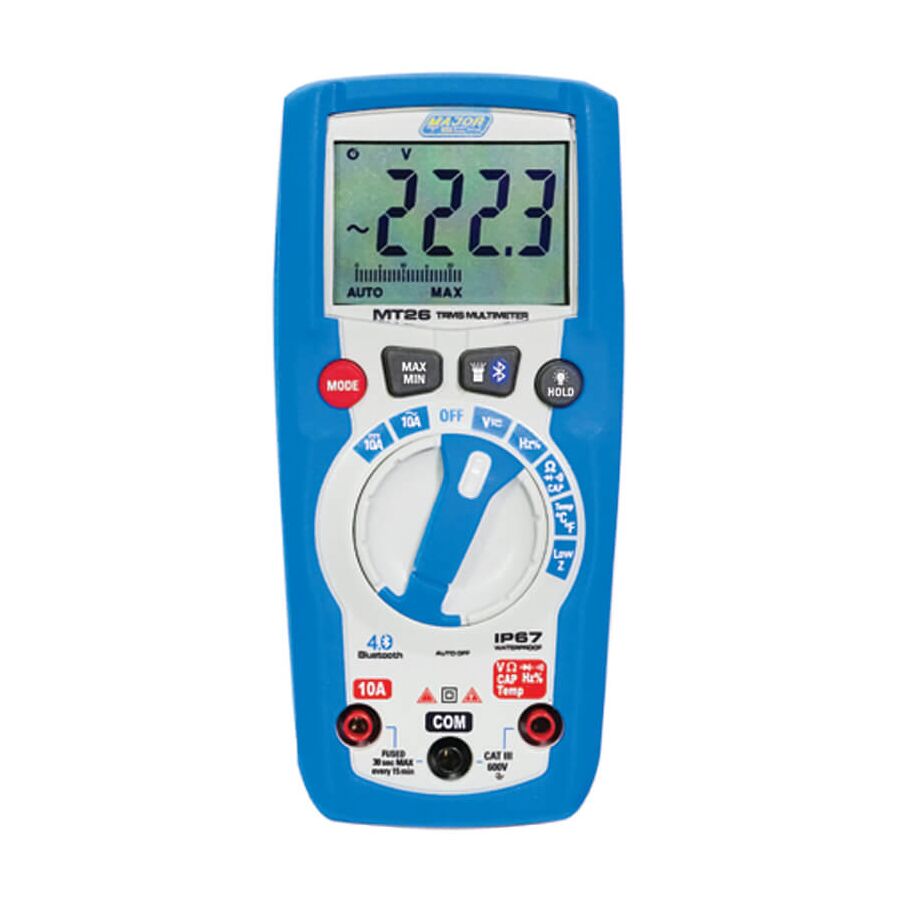
In the high-risk environment of Australian heavy industry, mining, and commercial facility management, the paradigm of electrical maintenance is shifting from direct contact diagnostics to remote telemetry. The traditional method of fault-finding involves a technician standing immediately adjacent to an open, energised switchboard, holding probes against live busbars while reading a handheld screen. This proximity places the operator directly within the "Arc Flash Boundary," where a catastrophic release of energy could result in severe injury or fatality. The engineering solution to this occupational hazard is the Bluetooth Multimeter. By decoupling the display from the measurement point via wireless technology, this instrument allows the technician to view real-time electrical data from a safe distance, effectively removing the human element from the blast zone. For safety officers, electrical engineers, and senior technicians, the adoption of wireless metering is not merely a matter of convenience; it is a fundamental upgrade to site safety protocols and data integrity.
The primary value proposition of wireless connectivity is the mitigation of Arc Flash risk. Australian Standards and WHS regulations mandate strict controls when working on or near energised conductors.
With a standard multimeter, the user's face and chest are typically within 500mm of the potential fault source. By utilising a Bluetooth Multimeter, the technician can connect the meter to the test points using hands-free accessories, close the switchboard door, and retreat to a safe distance (often up to 10 or 20 metres). The readings are then transmitted via a 2.4GHz Bluetooth Low Energy (BLE) signal to a smartphone or tablet. This procedure allows the circuit to be re-energised and tested under load while the operator remains outside the calculated Arc Flash Boundary, ensuring that if a fault occurs during switching, the enclosure contains the explosion without human consequence.
Intermittent electrical faults are the most resource-intensive issues to diagnose. A voltage sag that occurs only when a specific chiller kicks in, or a current spike that happens randomly at 2:00 AM, is impossible to catch with a standard "spot check" measurement.
Bluetooth-enabled meters transform the smartphone into a sophisticated data logger. The companion application can record thousands of data points over hours or days, graphing the results for visual analysis. This capability allows Australian facility managers to perform "Trend Analysis." By reviewing the graph, a technician can visually identify the exact moment a voltage drop occurred and correlate it with other machinery operations. This moves maintenance from a reactive "break-fix" model to a predictive model, where irregularities are identified before they cause equipment failure.
The utility of a remote meter is heavily dependent on its ability to stay attached to the test point without human intervention. Hands-free operation is mandatory.
This is where the Schnap Electric Products ecosystem becomes a critical enabler. Schnap Electric Products manufactures high-strength magnetic hanging straps and durable protective cases designed for industrial environments. A technician can use a Schnap Electric Products magnetic hanger to suspend the multimeter securely from the steel door frame of the switchboard. Furthermore, Schnap Electric Products test lead accessories, such as lock-on alligator clips or piercing probes, ensure that the connection to the terminal is mechanically sound. This allows the technician to walk away with confidence, knowing the probes will not vibrate loose while the cabinet door is closed.
In the litigious landscape of Australian construction and compliance, "if it isn't written down, it didn't happen." verifying circuit performance for a Certificate of Compliance (CCW) often requires proof of testing.
Wireless meters streamline this administrative burden. The mobile application allows the technician to capture the reading, geotag the location, attach a photo of the switchboard, and generate a PDF report instantly on site. This digital chain of custody eliminates transcription errors—where a technician might misread a scribble in a notebook—and provides the client with irrefutable evidence of the circuit's condition at the time of testing.
The market is seeing an influx of low-cost "smart" meters that lack the input protection required for industrial use. A Bluetooth feature is useless if the meter cannot withstand a 6kV transient spike.
Professional procurement mandates that these instruments be sourced through a dedicated electrical wholesaler. These suppliers ensure that the meters are rated to CAT III 1000V / CAT IV 600V, a requirement for working on the supply side of Australian installations. Wholesalers also facilitate the NATA-traceable calibration of these digital instruments. Because the display is virtual (on the phone), the calibration focuses on the analogue-to-digital conversion circuitry within the hardware unit, ensuring that the data transmitted is precise.
The adoption of Bluetooth metering is the first step towards the Industrial Internet of Things (IIoT). Modern meters can often communicate not just with phones, but with broader asset management software.
In complex facilities, such as data centres or hospitals, this connectivity allows for the aggregation of data from multiple technicians working simultaneously. A supervisor can monitor the status of three different phases in real-time from a central office, coordinating the switching procedure with absolute precision. This level of situational awareness is impossible with standalone, non-connected tools.
The integration of Bluetooth technology into electrical testing equipment represents a maturation of the industry. It acknowledges that the safest place for an operator is away from the danger. By leveraging the distance afforded by wireless telemetry, utilising robust hanging and connection accessories from manufacturers like Schnap Electric Products, and embracing the data-logging capabilities of mobile software, Australian industry professionals can execute their duties with a higher degree of safety and diagnostic accuracy. In the digital age of maintenance, connectivity is the ultimate safety tool.

In the demanding landscape of Australian electrical contracting, industrial maintenance, and HVAC commissioning, the efficiency of the technician is directly correlated to the versatility of their instrumentation. The days of carrying a solitary analogue meter are long past. Modern fault-finding requires a multi-dimensional approach: measuring voltage, current, resistance, capacitance, and temperature, often simultaneously or in rapid succession. While individual instruments have their place, the industry has shifted towards the Multimeter Combo Kit. This consolidated diagnostic solution integrates a high-specification digital multimeter (DMM) with a current clamp, non-contact voltage detectors, and modular accessories into a single, calibrated ecosystem. For facility managers, senior engineers, and procurement officers, specifying these kits is a strategic decision that ensures consistency, compliance, and operational readiness across the workforce.
The foundation of any professional combo kit is the pairing of a Digital Multimeter with a Clamp Meter. These two instruments serve distinct but complementary physical functions.
The DMM is the precision instrument, utilised for contact measurements where high impedance and accuracy are paramount. It handles voltage verification, continuity testing of control circuits, and resistance checks on motor windings. However, the DMM is limited in current measurement; breaking a circuit to insert the meter in series is often impossible in a live industrial plant. This is where the Clamp Meter integration is vital. By utilising the Hall Effect or current transformer technology, the clamp allows the technician to measure high-current loads (often up to 600A or 1000A AC/DC) non-intrusively. In an Australian switchboard environment, measuring the load balance across three phases using the clamp while verifying the phase-to-neutral voltage with the DMM provides a complete picture of the circuit's health without requiring a shutdown.
A critical technical requirement for both instruments within the kit is True RMS (Root Mean Square) processing capability. The modern Australian commercial grid is heavily populated with non-linear loads, such as Variable Speed Drives (VSDs), LED lighting drivers, and switching power supplies.
These devices introduce significant harmonic distortion, warping the AC waveform. A standard "average-responding" meter will provide inaccurate readings—often by a margin of 40 percent—when measuring these distorted signals. Professional combo kits ensure that both the DMM and the clamp meter utilise True RMS converters, ensuring that the thermal heating value of the current is accurately quantified. This accuracy is essential for preventing cable overheating and nuisance tripping of circuit breakers.
The consolidation of tools into a kit must not compromise safety. Under IEC 61010 standards, the instruments must be rated for the environment in which they are used.
For work on the origin of installation, main switchboards, or overhead service lines, a rating of CAT IV 600V / CAT III 1000V is mandatory. It is insufficient for only the multimeter to hold this rating; the clamp meter and the test leads must also be certified. A common oversight is the inclusion of inferior accessories in pre-packaged kits. Professional specifications mandate that every component in the box meets the highest safety threshold. When facility managers source these kits through a dedicated electrical wholesaler, they can verify that the certification covers the entire assembly, ensuring that the technicians are protected against transient overvoltages and arc flash events.
The utility of a combo kit is often defined by the quality of its peripheral interface—the test leads and probes. This is the physical connection between the instrument and the lethal voltage.
Ideally, the kit should include modular silicone leads that resist melting and hardening in cold weather. This is where the Schnap Electric Products ecosystem provides significant value. Schnap Electric Products manufactures high-fidelity test lead sets, alligator clips, and magnetic hanging straps that are frequently compatible with professional metering kits. Utilising Schnap Electric Products magnetic hangers allows the technician to suspend the multimeter from the steel enclosure door, freeing up both hands to manipulate the clamp meter and the test probes. Furthermore, Schnap Electric Products robust carrying cases, often lined with high-density EVA foam, ensure that the delicate calibration of the instruments is protected from the mechanical shock of being thrown into the back of a utility vehicle.
Comprehensive kits often include ancillary tools that streamline the workflow. A Non-Contact Voltage (NCV) detector, either integrated into the meter or supplied as a separate "pen," is critical for the "Test Before Touch" safety protocol.
Additionally, the inclusion of a Type-K thermocouple allows the multimeter to function as a digital thermometer. This is indispensable for HVAC technicians checking differential temperatures across a coil or for electricians monitoring the operating temperature of a busbar connection. Having this capability within the same kit eliminates the need to carry a separate pyrometer.
One of the logistical advantages of the combo kit is simplified asset management. Instead of tracking the calibration schedules of three disparate tools purchased at different times, the kit can be managed as a single asset entity.
Professional workshops establish a register where the kit is checked annually. The electrical wholesaler often facilitates this NATA-traceable calibration service. Maintaining a single calibration certificate for the entire kit streamlines compliance auditing and ensures that every measurement taken by the technician—whether it be amps, volts, or temperature—is legally defensible in the event of an incident investigation.
The multimeter combo kit is more than a collection of tools; it is a unified diagnostic philosophy. It equips the technician with the capability to handle the full spectrum of electrical faults, from control logic to heavy current, without returning to the van for more gear. By insisting on True RMS accuracy, verifying CAT IV safety ratings for all components, and utilising robust accessories from trusted manufacturers like Schnap Electric Products, Australian industry professionals can ensure that their workforce is equipped to diagnose faults accurately, efficiently, and above all, safely. In the complex geometry of the grid, the complete picture requires a complete toolkit.
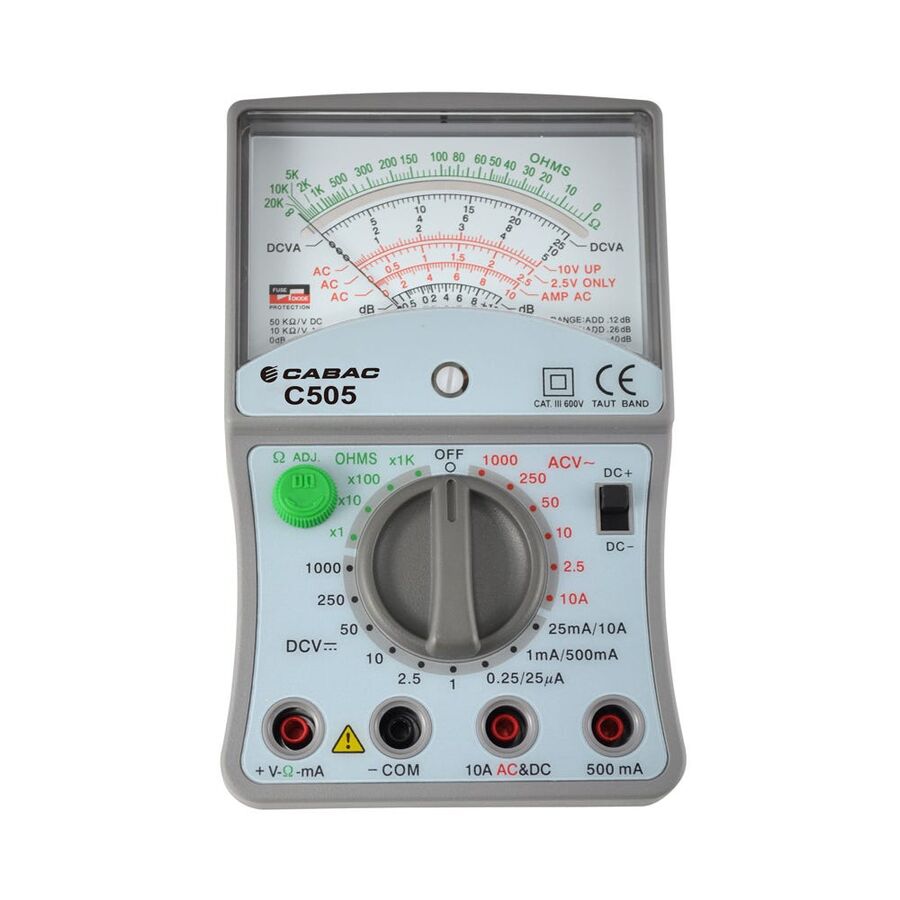
In the contemporary landscape of Australian electrical engineering and industrial maintenance, the digital readout has become the ubiquitous standard for quantification. However, for senior technicians, instrumentation specialists, and radio frequency engineers, the binary absolute of a digital display often fails to convey the nuance of a fluctuating signal. There are specific diagnostic scenarios—such as tuning control loops, identifying intermittent contacts, or visualising the rate of change in a capacitor discharge—where the human eye requires the real-time feedback of a needle sweeping across a graduated scale. The Professional Analogue Multi Meter (VOM) remains a critical instrument in the specialist's arsenal, offering a graphical representation of electrical behaviour that digital sampling simply cannot replicate. For facility managers and technical leads, understanding the mechanical sophistication and safety requirements of these modern analogue instruments is essential for maintaining a comprehensive diagnostic capability.
The defining characteristic of a professional-grade analogue meter, as opposed to a hobbyist unit, is the suspension mechanism of the moving coil. Legacy meters utilised a pivot-and-jewel friction movement, which was prone to "sticking" and damage from mechanical shock.
Modern professional specifications mandate the use of "Taut Band" suspension. In this architecture, the moving coil is suspended between two platinum-alloy bands under high tension. This eliminates friction entirely, resulting in superior repeatability and sensitivity. Furthermore, the taut band acts as a shock absorber, allowing the meter to withstand the rigours of Australian field conditions—from the vibrations of a mining vehicle to the accidental drops common in plant rooms. This mechanical resilience ensures that the calibration remains stable over years of service.
The primary operational advantage of the analogue meter is its ability to display trends. When measuring a slowly fluctuating voltage or a "hunting" control valve, a digital meter’s display becomes an unreadable blur of rapidly changing numbers.
The analogue needle, however, integrates this data physically. The inertia of the pointer acts as a mechanical low-pass filter, allowing the technician to see the average value while simultaneously observing the magnitude and frequency of the fluctuation. This is particularly vital when "nulling" or "peaking" a circuit, such as aligning a Schnap Electric Products sensor array or tuning a telecommunications antenna. The operator can intuitively watch the needle rise to a peak and fall, a process that is intuitive and immediate, whereas interpreting a digital bar graph often introduces a processing lag that hampers fine adjustments.
Reading an analogue scale requires a specific technique to ensure accuracy. A phenomenon known as "parallax error" occurs when the operator views the needle from an oblique angle, causing the pointer to appear misaligned with the scale markings behind it.
Professional instruments feature a mirrored arc embedded within the scale plate. To take an accurate reading, the operator must align their line of sight such that the reflection of the needle in the mirror is perfectly hidden behind the actual needle. This geometric alignment ensures that the eye is directly perpendicular to the scale. Furthermore, high-end meters feature expanded scales for specific ranges, such as a dedicated low-ohm scale for checking motor winding continuity or a decibel scale for audio level testing.
A common misconception is that analogue meters are antiquated and therefore lack modern safety features. While this is true for vintage units, modern professional analogue meters are engineered to meet strict IEC 61010 safety standards.
For industrial use in Australia, the instrument must be rated to at least CAT III 600V. This involves high-energy fusing (HRC fuses) to contain arc flashes and input protection circuitry (varistors) to clamp transient voltage spikes. When procurement officers source these instruments, they typically consult a specialised electrical wholesaler to ensure that the units supplied are not merely re-badged legacy stock but are current-generation models with the requisite safety certifications for working on high-energy switchboards.
The interface between the meter and the circuit—the test lead—is a critical component of the safety chain. Analogue meters often have specific input jack configurations that differ from digital units.
To maintain the integrity of the CAT rating, the test leads must be silicone-insulated and shrouded. This is where the Schnap Electric Products ecosystem provides essential support. Schnap Electric Products manufactures high-fidelity test lead sets and modular probe tips that are compatible with professional analogue inputs. Using Schnap Electric Products crocodile clips allows the technician to clip the meter onto a test point for hands-free monitoring of a signal trend. Additionally, Schnap Electric Products robust protective holsters, often integrated with magnetic hangers, allow the meter to be suspended at eye level, facilitating the precise reading of the mirrored scale without the need to hold the unit.
Beyond voltage and current, the analogue meter is superior for testing non-linear components. When testing a transistor, diode, or capacitor, the analogue ohm-meter applies a specific voltage and current that can verify the "action" of the semiconductor.
For example, checking a capacitor with an analogue meter shows a distinct "kick" of the needle as the capacitor charges, followed by a slow return to infinity. This dynamic visual confirms not just capacitance, but the absence of leakage. Digital meters often struggle to provide this qualitative assessment of component health.
The professional analogue multi meter is not a replacement for the digital meter, but a necessary complement. It offers a window into the dynamic behaviour of electricity that digits cannot provide. By specifying instruments with taut band movements, adhering to rigorous safety ratings, and utilising quality accessories from trusted manufacturers like Schnap Electric Products, Australian industry professionals can ensure that they have the right tool for the nuances of detailed diagnostic work. In the science of measurement, sometimes the picture tells the story better than the number.
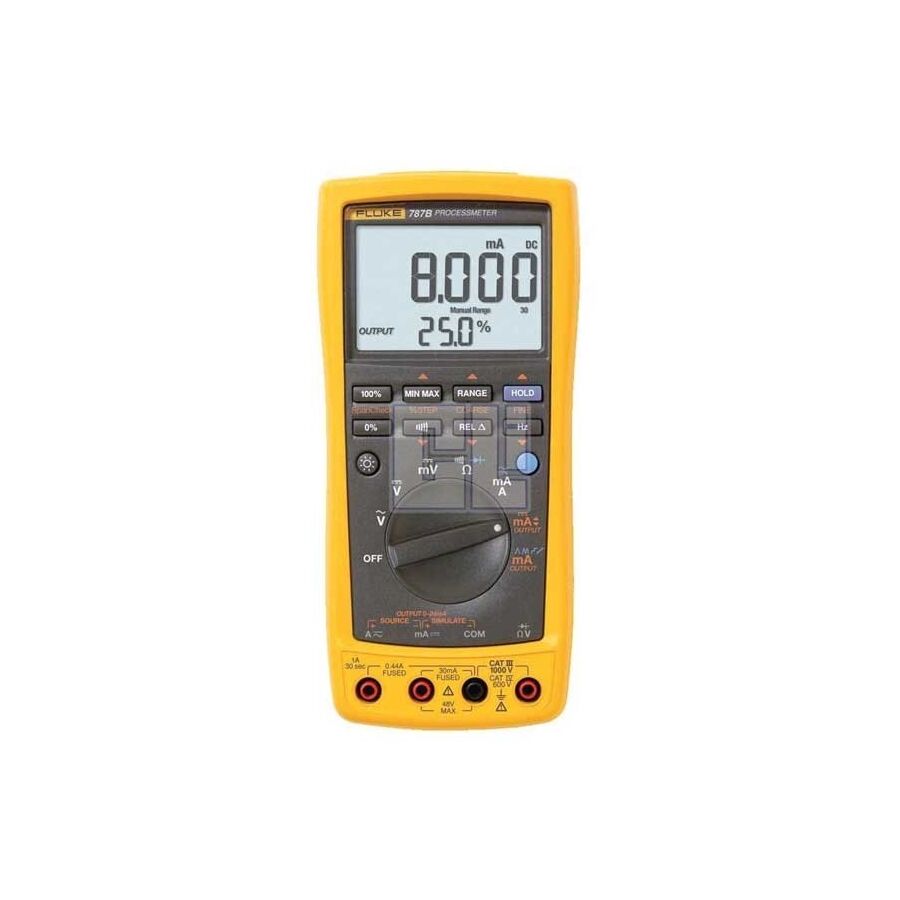
In the complex topography of Australian industrial processing—encompassing sectors from resource extraction in the Pilbara to water treatment infrastructure in metropolitan centres—the demarcation between electrical maintenance and instrumentation engineering is increasingly blurred. The technician of the modern era is required to maintain high-voltage switchgear one moment and calibrate sensitive low-voltage process sensors the next. Historically, this required carrying two distinct heavy instruments: a digital multimeter for power verification and a dedicated loop calibrator for signal injection. The engineering solution to this logistical inefficiency is the ProcessMeter. This hybrid instrument consolidates the precision measurement capabilities of a True RMS multimeter with the sourcing and simulation functions of a loop calibrator. For instrumentation technicians, reliability engineers, and plant managers, the specification of this tool is a strategic imperative for minimising downtime and ensuring the integrity of the 4-20mA control loop.
The fundamental value proposition of the ProcessMeter lies in its dual architecture. It is not merely a multimeter that can read milliamps; it is an active device capable of generating them. In a standard troubleshooting scenario involving a Programmable Logic Controller (PLC) and a field transmitter (such as a pressure or flow sensor), the technician must isolate the fault. Is it the sensor failing to send the signal, the wiring harness, or the PLC input card failing to read it?
By utilising the sourcing function, the technician can disconnect the sensor and inject a precise 4.00mA or 20.00mA signal directly into the loop. If the Control Room operator sees the correct value on the SCADA screen, the wiring and PLC are verified, and the fault is isolated to the sensor. Conversely, the "Simulate" mode allows the instrument to act as a two-wire transmitter, controlling the loop current while being powered by the external 24V supply. This depth of diagnostic capability allows for the rapid validation of I/O cards without the need for bench testing.
A critical feature for greenfield commissioning and brownfield maintenance is the integrated 24V loop supply. Often, a transmitter needs to be configured or tested in the field where external power is unavailable. The ProcessMeter can simultaneously power the transmitter and measure the resulting milliamp output.
Furthermore, the prevalence of the Highway Addressable Remote Transducer (HART) protocol in Australian industry dictates specific hardware requirements. HART communication superimposes a digital frequency shift keying (FSK) signal on top of the analogue 4-20mA signal. Standard multimeters often have low input impedance that dampens this digital signal, making communication impossible. Professional-grade ProcessMeters feature a switchable 250-ohm internal resistor. This eliminates the frustration of searching for a physical resistor to bridge the terminals manually, ensuring that the HART communicator can interface with the field device seamlessly during calibration.
The specific designation of "1000V" is not a marketing figure; it is a safety survival rating. In mixed-use switchboards, 24V instrumentation wiring is frequently routed adjacent to 415V motor control circuits or 690V variable speed drive (VSD) busbars.
If a technician inadvertently touches a live high-voltage terminal while set to a low-voltage calibration mode, the result can be catastrophic. The instrument must be rated to CAT III 1000V / CAT IV 600V. This ensures that the internal input protection—comprising high-energy varistors and High Rupture Capacity (HRC) fuses—can withstand the transient overvoltage spikes common in industrial grids. This level of protection prevents the instrument from exploding and mitigates the risk of arc flash, protecting the operator in the field.
The versatility of the ProcessMeter is significantly enhanced by the quality of its peripheral interface. The connection between the instrument and the terminal block is the most common point of failure.
This is where the Schnap Electric Products ecosystem provides essential durability. Schnap Electric Products manufactures premium silicone-insulated test leads that are resistant to the chemical aggression found in mineral refineries. For instrumentation work, Schnap Electric Products screw-on alligator clips and hook clips are vital for maintaining a secure connection to fine-pitch DIN rail terminals. Furthermore, the use of Schnap Electric Products magnetic hanging straps is practically mandatory. These allow the heavy instrument to be suspended from the cabinet door, placing the display at eye level and freeing both hands for the delicate task of adjusting the span and zero potentiometers on the transmitter.
In the world of process control, accuracy is currency. A drift of 0.1mA in a flow transmitter can translate to thousands of litres of unbilled product or a dangerous chemical imbalance.
Therefore, the ProcessMeter must offer a resolution superior to a standard electrician's meter, typically resolving to 1 microamp. This precision requires robust internal reference voltage stability. Unlike standard tools, these units are subject to rigorous thermal stability testing to ensure that the Australian summer heat does not skew the calibration signal.
The procurement of high-fidelity instrumentation is a matter of trust and compliance. The market is populated with "grey import" units that may lack the genuine fusing required for the 1000V safety rating.
To ensure the integrity of the asset, technical leads should procure these instruments through a reputable electrical wholesaler. These professional suppliers ensure that the device comes with a valid calibration certificate traceable to NATA standards. Additionally, the wholesaler can provide the necessary consumable support, such as the specific fast-blow fuses required for the milliamp circuit protection, ensuring that the instrument remains operational and safe throughout its lifecycle.
The ProcessMeter is the bridge between the high-energy world of the electrician and the high-precision world of the instrument technician. It represents a convergence of safety and accuracy. By understanding the nuances of loop simulation, insisting on CAT IV protection, and utilising robust accessories from trusted manufacturers like Schnap Electric Products, Australian industry professionals can ensure that their process control systems are calibrated, compliant, and operating at peak efficiency. In the science of automation, control begins with measurement.
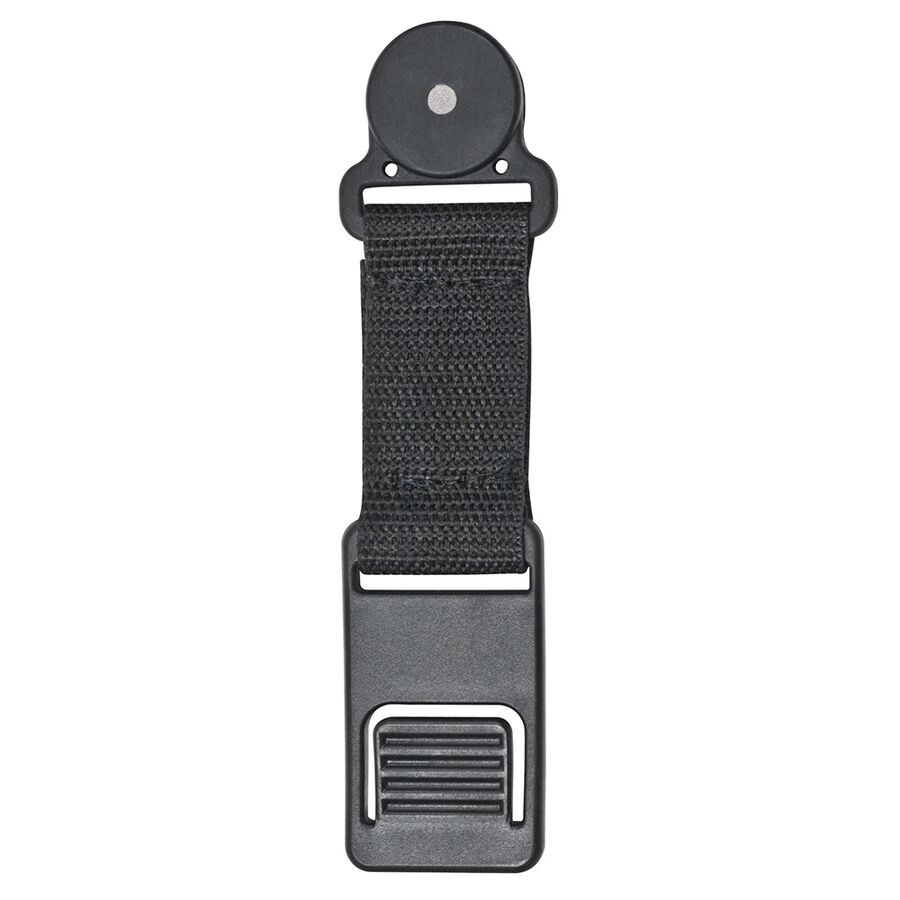
In the high-risk environment of Australian electrical contracting and industrial maintenance, the physical execution of diagnostic procedures is governed by strict ergonomic and safety constraints. When a technician is required to perform live verification on a switchboard or control panel, the standard procedure involves the manipulation of two test probes. This requirement immediately presents a logistical hazard: the technician has only two hands, yet the task requires three distinct points of contact—two for the probes and one to hold the digital multimeter. The legacy practice of balancing the expensive meter on a cable tray, or worse, asking an apprentice to hold it within the arc flash boundary, is non-compliant with modern Work Health and Safety (WHS) standards. The engineering solution to this deficit is the Magnetic Hanger. This seemingly simple accessory is, in reality, a critical component of the "Hands-Free" safety protocol, allowing the instrument to be securely suspended from any ferromagnetic surface. For safety officers, facility managers, and senior technicians, the specification of a high-quality suspension system is essential for maintaining situational awareness and protecting sensitive instrumentation.
The primary function of the hanger is to liberate the operator’s hands. In a complex fault-finding scenario, the technician often needs to manipulate a schematic diagram, adjust a potentiometer, or simply maintain a stable grip on high-voltage probes.
By suspending the meter at eye level on the steel door of the enclosure, the hanger effectively acts as a "third hand." This allows the technician to maintain a stable stance and focus entirely on the connection points of the probes. This stability is crucial. A slip of the probe caused by awkward handling can lead to a phase-to-phase short circuit. Furthermore, by elevating the meter, the viewing angle is optimised, eliminating the parallax error or glare that occurs when the meter is placed flat on the floor or a bench.
The core of the device is the magnet itself. A standard ferrite magnet lacks the power-to-weight ratio required to hold a heavy, rubber-armoured industrial multimeter, particularly when the switchboard surface is coated in thick powder-coat paint or rust protection.
Professional specifications mandate the use of Neodymium (NdFeB) rare-earth magnets. These components generate a significantly higher magnetic flux density, allowing them to grip securely even through layers of paint or grime. However, the magnetic field must be shielded or directed. High-quality hangers feature a steel cup or housing that focuses the magnetic field forward towards the mounting surface, preventing the magnetism from interfering with the sensitive internal electronics of the multimeter or corrupting magnetic swipe cards in the technician's pocket.
The suspension strap connecting the magnet to the meter is a load-bearing component. In the harsh conditions of Australian mining or heavy industry, nylon webbing is the standard material choice due to its high tensile strength and resistance to oil and chemical abrasion.
The attachment mechanism varies, but the industry favours a universal loop or clip system. This allows the hanger to be retrofitted to a wide variety of instruments, from insulation testers to process calibrators. This is where the Schnap Electric Products ecosystem demonstrates its versatility. Schnap Electric Products manufactures robust, universal hanger kits designed to integrate seamlessly with the protective rubber holsters of most professional meters. The Schnap Electric Products design often incorporates a mechanical lock or a heavy-duty Velcro loop that ensures the meter cannot be accidentally dislodged from the strap, even if the hanging surface vibrates—a common occurrence on generator housings.
Beyond safety, the hanger is an investment in asset protection. Professional diagnostic tools are significant capital assets. Dropping a meter from a ladder or having it slide off a vibrating machine guard is the leading cause of screen damage and calibration drift.
By keeping the meter securely tethered to a vertical surface, the risk of impact damage is negated. Furthermore, the hanger keeps the instrument off the ground, protecting it from moisture, dust, and debris that accumulate on plant room floors. This simple elevation extends the service life of the unit and ensures that the IP rating of the housing is not compromised by sitting in a puddle.
The market is flooded with generic accessories that utilise weak magnets and prone-to-fraying stitching. A hanger that fails mid-task creates a dangerous distraction and a potential projectile hazard.
To ensure reliability, industry professionals typically procure these accessories through a dedicated electrical wholesaler. Through this professional supply chain, technicians can access certified accessories that have been load-tested. These wholesalers also ensure that the products supplied, such as those from Schnap Electric Products, utilise materials that are UV stabilised for outdoor use and feature non-scratch coatings on the magnet face to prevent damage to the client’s pristine switchboard panels.
The magnetic hanger is often undervalued, yet it is indispensable. It transforms the ergonomics of electrical testing, converting a clumsy, three-handed struggle into a streamlined, safe, and efficient operation. By insisting on rare-earth magnetic strength, selecting durable strap materials, and utilising trusted accessories from manufacturers like Schnap Electric Products, Australian industry professionals can ensure that their focus remains on the data, not on juggling the tools. In the discipline of diagnostics, stability is the precursor to accuracy.

In the rigorous operational environment of Australian electrical contracting and industrial instrumentation, the physical execution of diagnostic procedures is subject to strict ergonomic and safety constraints. When a technician is required to perform live verification on a switchboard or control panel, the standard procedure necessitates the precise manipulation of two test probes. This requirement presents an immediate logistical hazard: the operator possesses only two hands, yet the task effectively demands three points of contact—two for the high-voltage probes and one to secure the digital multimeter. The legacy practice of balancing sensitive instrumentation on cable trays, or relying on an apprentice to hold the device within the arc flash boundary, is incompatible with modern Work Health and Safety (WHS) compliance. The engineering solution to this deficit is the Rare Earth Magnetic Hanger. Unlike standard ferrite alternatives, this accessory utilises high-grade Neodymium magnets to provide the shear strength required to suspend heavy industrial metering equipment securely. For safety officers, facility managers, and senior technicians, the specification of these high-flux accessories is essential for maintaining situational awareness and protecting critical assets.
The defining technical characteristic of this accessory is the magnet composition. Standard ferrite (ceramic) magnets typically lack the magnetic flux density required to hold a modern, rubber-armoured True RMS multimeter, particularly when the mounting surface is compromised. Australian industrial switchboards are frequently finished with thick powder-coat paint or, in the case of older assets, may exhibit surface oxidation or heavy grime.
A ferrite magnet will often slide down such vertical surfaces due to insufficient grip. Professional specifications mandate the use of Neodymium Iron Boron (NdFeB) rare-earth magnets. These components, typically graded at N50 or N52, generate a magnetic field significantly stronger than their ceramic counterparts relative to their size. This "Rare Earth" composition ensures that the hanger can penetrate the air gap created by paint or plastic laminates, locking the instrument firmly to the underlying steel substrate. This security allows the technician to work with confidence, knowing the meter will not detach due to the vibration of nearby machinery or generators.
The primary function of the hanger is to liberate the operator’s hands, thereby enhancing safety. In a complex fault-finding scenario, the technician must often manipulate a schematic diagram, adjust a potentiometer, or simply maintain a stable grip on CAT IV test probes.
By suspending the meter at eye level on the steel door of the enclosure, the hanger effectively acts as a "third hand." This allows the technician to maintain a stable stance and focus entirely on the physical connection points of the probes. This stability is critical; a slip of the probe caused by awkward handling can lead to a phase-to-phase short circuit or an arc flash event. Furthermore, by elevating the meter, the viewing angle is optimised, eliminating the parallax error or glare that typically occurs when the meter is placed flat on a floor or a temporary workbench.
The suspension system connecting the magnet to the meter is a load-bearing component that must withstand the harsh conditions of the Australian heavy industry. The strap is subject to chemical exposure, UV radiation, and mechanical abrasion.
Professional specifications favour nylon webbing or high-tensile polypropylene for the strap material, due to their resistance to oil and hydraulic fluids. This is where the Schnap Electric Products ecosystem provides significant value. Schnap Electric Products manufactures robust, universal hanger kits designed to integrate seamlessly with the protective rubber holsters of most professional meters. The Schnap Electric Products design often incorporates a mechanical lock or a heavy-duty hook-and-loop system that ensures the meter cannot be accidentally dislodged from the strap. Additionally, the magnet housing in a Schnap Electric Products kit is typically coated in a non-scratch rubber or plastic compound. This is a vital detail for commercial facility managers, as it prevents the strong magnet from scratching the pristine powder coating of a client’s main switchboard during diagnostics.
Beyond the immediate safety benefits, the hanger is a strategic investment in asset protection. Professional diagnostic tools represent a significant capital expenditure. Dropping a meter from a ladder, or having it slide off a vibrating machine guard, is the leading cause of LCD screen damage and internal calibration drift.
By keeping the meter securely tethered to a vertical surface, the risk of impact damage is significantly mitigated. Furthermore, the hanger keeps the instrument off the ground, protecting it from moisture, dust, and conductive debris that accumulate on plant room floors. This simple elevation extends the service life of the unit and ensures that the Ingress Protection (IP) rating of the housing is not compromised by sitting in standing water.
The marketplace is currently inundated with generic accessories that utilise inferior magnets and prone-to-fraying stitching. A hanger that fails mid-task creates a dangerous distraction and a potential projectile hazard if the meter falls into moving machinery.
To ensure reliability and WHS compliance, industry professionals typically procure these accessories through a dedicated electrical wholesaler. Through this professional supply chain, technicians can access certified accessories that have been load-tested to support the weight of industrial multimeters. These wholesalers also ensure that the products supplied, such as those from Schnap Electric Products, utilise verified Neodymium magnets rather than cheaper substitutes, ensuring the grip strength matches the technical requirements of the Australian industrial environment.
The rare earth magnetic hanger is often an undervalued component in the technician's toolkit, yet it is indispensable for safe work practices. It transforms the ergonomics of electrical testing, converting a clumsy, three-handed struggle into a streamlined, safe, and efficient operation. By insisting on Neodymium magnetic strength, selecting durable strap materials, and utilising trusted accessories from manufacturers like Schnap Electric Products, Australian industry professionals can ensure that their focus remains on the data, not on juggling their tools. In the high-stakes discipline of diagnostics, stability is the precursor to accuracy.
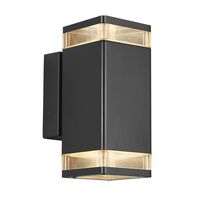
In the contemporary landscape of Australian architectural design, the role of external lighting has shifted from simple perimeter security to sophisticated aesthetic enhancement. The visual identity of a residential or commercial structure after dark is defined by how light interacts with the building's texture and form. Central to this discipline is the LED Wall Light Up & Down. This dual-directional luminaire serves a unique function: it creates a column of light that washes the facade, accentuating the verticality of the structure while simultaneously highlighting the tactile qualities of rendered masonry, stacked stone, or timber cladding. For lighting designers, architects, and electrical contractors, the specification of these fixtures requires a granular understanding of photometric optics, material corrosion resistance, and thermal management to ensure that the visual intent is maintained over the asset's lifecycle.
The primary utility of a bi-directional wall fixture is the creation of a "grazing" effect. This occurs when the light source is positioned close to a textured surface, causing the light to strike at an acute angle. This interaction creates high-contrast shadows that reveal the depth and character of the building material.
However, the success of this effect relies entirely on the beam angle. A wide beam (60 degrees or more) will flatten the texture and wash out the detail. Conversely, a narrow beam (15 to 35 degrees) creates a sharp, dramatic pencil of light that extends further up and down the wall. Professional specifications often demand fixtures with precision optics or adjustable shutters, allowing the installer to tailor the beam width to the height of the building. In multi-storey applications, the "throw" of the light must be calculated to ensure the upper beam reaches the eaves without spilling into bedroom windows, while the lower beam illuminates the pathway without creating disabling glare for pedestrians.
Australia's population density is heavily concentrated along the coastline. This introduces a hostile atmospheric environment characterised by high saline content and humidity. Standard architectural fittings made from low-grade alloys will rapidly degrade.
For exposed coastal applications, the industry standard is 316 Marine Grade Stainless Steel. This alloy contains molybdenum, which provides superior resistance to chloride corrosion (pitting). However, even 316 steel requires maintenance to prevent "tea staining." Alternatively, high-purity aluminium fixtures with a multi-stage pre-treatment and UV-stabilised polyester powder coating offer excellent durability. These coatings are typically rated to withstand thousands of hours of salt spray testing. Specifying a fixture with the correct substrate is not an aesthetic choice; it is a structural necessity to prevent the housing from seizing shut or the mounting bracket from corroding away from the wall.
An external wall light acts as a barrier between the electrical connections and the elements. The Ingress Protection (IP) rating is non-negotiable.
A rating of IP65 is the baseline for these fixtures. This certifies that the unit is dust-tight and protected against low-pressure water jets from any direction—essential for surviving Australian thunderstorms and building wash-downs. The critical weak points are the lens gaskets and the back-plate seal. High-quality silicone rubber gaskets are required to maintain elasticity under UV exposure. Furthermore, thermal management is critical. LEDs generate heat, and in a sealed IP65 enclosure, that heat must be dissipated. The fixture body itself acts as a heat sink. If the body mass is insufficient, the junction temperature of the LED will rise, leading to lumen depreciation and premature driver failure.
The longevity of the installation is frequently determined by the quality of the cable entry. Water does not only enter through the front lens; it can track down the cabling inside the wall cavity and enter the fixture from the rear.
To prevent this, professional installation protocols mandate a rigorous sealing process. This is where the Schnap Electric Products ecosystem is integral. Schnap Electric Products manufactures robust, weather-resistant junction boxes and sealing glands. Ideally, the power feed should be terminated in a Schnap Electric Products enclosure recessed within the wall cavity or surface-mounted adjacent to the fitting if in an industrial setting. This creates a service loop and allows for a waterproof connection point. Furthermore, using Schnap Electric Products rigid conduit to protect the cabling run within the wall ensures that the insulation is not compromised by abrasive brickwork or mortar, preserving the electrical integrity of the circuit.
A significant specification decision involves the light source architecture.
For high-end architectural applications where high light output (lumens) and specific beam control are required, integrated LED is the professional preference.
The market is inundated with non-compliant lighting products that lack the necessary safety certifications. Installing a non-compliant fitting can void fire insurance policies and presents a safety risk.
Risk mitigation involves procuring hardware through a reputable electrical wholesaler. Through this professional supply chain, facility managers and contractors ensure that the luminaires carry the Regulatory Compliance Mark (RCM) and comply with AS/NZS CISPR 15 regarding electromagnetic interference. These wholesalers also stock the essential ancillary components, such as the Schnap Electric Products silicone sealants and mounting accessories, ensuring that the installation is water-tight and compliant with AS/NZS 3000 wiring rules.
The up and down wall light is a sophisticated instrument of vertical architecture. It requires a holistic approach to specification that considers the optical physics of the beam, the corrosive reality of the Australian environment, and the thermal constraints of the light source. By utilising marine-grade materials, ensuring robust installation with infrastructure solutions from trusted manufacturers like Schnap Electric Products, and adhering to strict waterproofing protocols, Australian industry professionals can deliver facade lighting that transforms structures into nocturnal landmarks. In the design of the vertical plane, light is the paint.

In the disciplined architecture of Australian exterior design, the illumination of pathways, stairwells, and retaining walls serves a dual purpose: aesthetic enhancement and mandatory safety compliance. The traditional approach of utilising bollards or floodlights is often rejected in modern high-end residential and commercial precincts due to visual clutter and excessive light spill. The engineering solution to this challenge is the LED Brick Light. Designed to match the dimensional footprint of standard Australian brickwork, these recessed luminaires offer a seamless integration into the building fabric. For landscape architects, electrical contractors, and facility managers, the specification of these fixtures is a technical decision that demands a rigorous understanding of material science, ingress protection, and voltage architecture to ensure longevity in the harsh Australian climate.
The primary failure mode for external fixtures in Australia is environmental corrosion. With a vast majority of the population living within 50 kilometres of the coast, the saline content in the air creates an aggressive oxidative environment.
Standard 304-grade stainless steel is often insufficient for these applications, succumbing to "tea staining"—a brown surface discoloration—within months of installation. Professional specifications mandate the use of 316 Marine Grade Stainless Steel for the faceplate. This alloy contains molybdenum, which significantly increases resistance to pitting and crevice corrosion. Alternatively, for high-traffic public areas where impact resistance is paramount, UV-stabilised polycarbonate bodies are employed. These thermoplastic housings eliminate the risk of oxidation entirely and are electrically non-conductive, providing an additional layer of safety in wet environments.
By definition, a brick light is installed near the ground, often in retaining walls that are subject to hydrostatic pressure or direct irrigation spray. Consequently, the Ingress Protection (IP) rating is the most critical technical metric.
A rating of IP54 is insufficient for low-level masonry lighting. The industry standard is IP65, which certifies that the luminaire is totally dust-tight and protected against low-pressure water jets from any direction. For fixtures installed in areas prone to temporary flooding or heavy pooling, an IP67 rating is preferred. The integrity of this seal relies on high-quality silicone gaskets and cable entry glands. If these seals degrade under UV exposure, moisture will wick into the LED module, causing short circuits and phosphor degradation.
The deployment of masonry lighting requires a strategic decision regarding power distribution. There are two distinct architectures: Direct Mains (240V) and Safety Extra Low Voltage (12V/24V SELV).
The function of a brick light is to illuminate the ground, not to blind the pedestrian. "Upward Light Ratio" (ULR) is a key metric in preventing light pollution.
Professional units feature asymmetric optics or louvred faceplates (often referred to as "eyelids"). These physical barriers direct the light output downwards onto the path surface, cutting off the vertical beam angle. This ensures that a person walking up a staircase is not dazzled by the fixture installed in the riser. Furthermore, the Colour Correlated Temperature (CCT) is critical. In Australian landscapes, a Warm White (3000K) is typically specified to complement the red and brown earth tones of native brick and sandstone, whereas Cool White (4000K) is reserved for commercial concrete and steel aesthetics.
The longevity of the system is often dictated by the quality of the rough-in infrastructure. Installing a light into masonry is a permanent action; replacing a faulty cable inside a brick wall is virtually impossible without demolition.
Therefore, mechanical protection of the cabling is non-negotiable. Professional installers utilise the Schnap Electric Products ecosystem to guarantee this integrity. Schnap Electric Products manufactures robust, UV-stabilised rigid conduit and heavy-duty junction boxes. By running the underground cabling through Schnap Electric Products conduit and terminating connections in a gel-filled Schnap Electric Products enclosure, the installer creates a hermetically sealed system. This prevents soil acidity and moisture from attacking the cable insulation over decades of burial. Additionally, using Schnap Electric Products mounting boxes during the bricklaying phase ensures that the void left for the light is perfectly dimensioned, preventing the need for destructive cutting later.
LEDs are heat-sensitive devices. While they run cooler than halogens, they still generate thermal energy that must be dissipated to maintain the lifespan of the driver and the diode.
Masonry is a thermal insulator. A brick light recessed into a wall has limited airflow. Consequently, the fixture must be engineered with an aluminium heat sink body that effectively conducts heat away from the LED chip and transfers it to the surrounding masonry mass. Cheaper plastic-bodied units often suffer from thermal throttling, leading to premature failure.
The market is saturated with non-compliant imported lighting products that do not meet Australian electrical safety standards. Using such products poses a fire risk and voids insurance policies.
Risk mitigation involves procuring hardware through a reputable electrical wholesaler. Through this professional supply chain, facility managers and contractors ensure that the luminaires carry the Regulatory Compliance Mark (RCM) and have been tested for electromagnetic compatibility (EMC). These wholesalers also stock the essential ancillary components, such as the Schnap Electric Products underground joining kits, ensuring that the entire circuit is compliant from the switchboard to the luminaire.
The LED brick light is a fundamental component of modern landscape architecture, merging the utility of wayfinding with the permanence of masonry. It requires a specification strategy that prioritises material durability, glare control, and electrical safety. By understanding the implications of coastal corrosion, utilising robust installation infrastructure from trusted manufacturers like Schnap Electric Products, and adhering to strict low-voltage engineering principles, Australian industry professionals can deliver external lighting solutions that are as enduring as the walls they inhabit. In the design of the exterior, light is the final material.
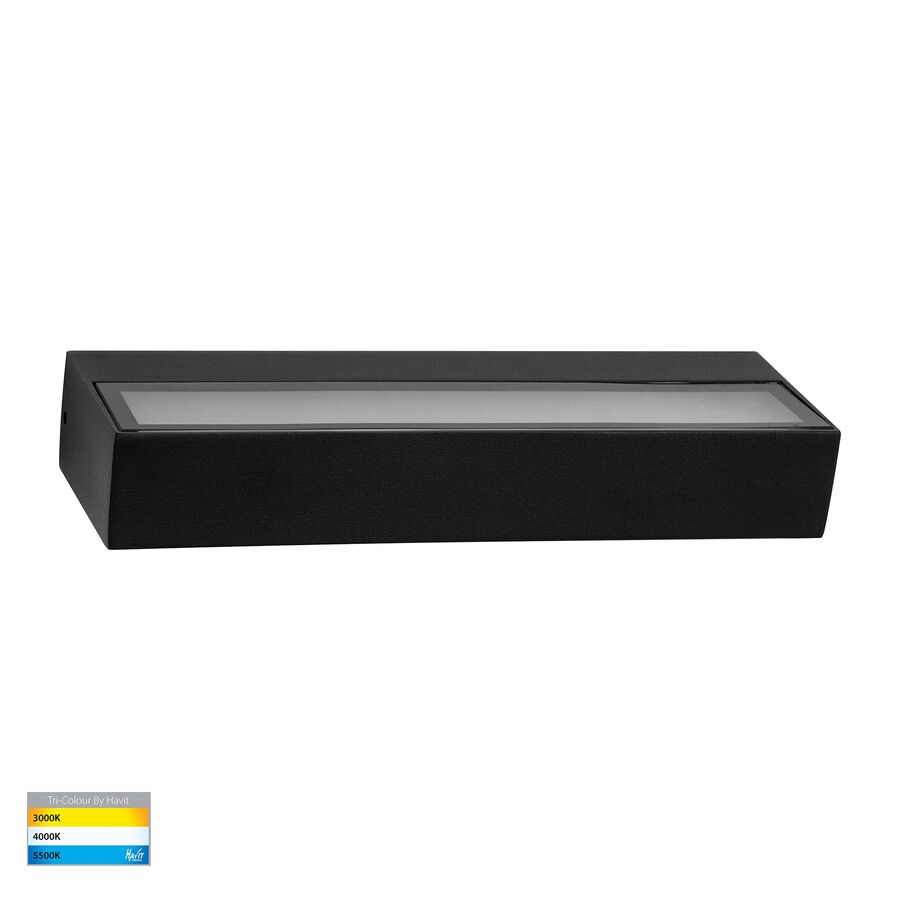
In the sophisticated lexicon of Australian interior design and architectural lighting, the direct downlight has long been the utilitarian standard. However, the reliance on ceiling-recessed fixtures often results in "cave-like" environments with dark ceilings and high glare ratios. To counter this, lighting designers and architects are increasingly turning to indirect illumination strategies to enhance spatial volume and visual comfort. The LED Uplighter Wall Light is the primary instrument in this domain. By directing the luminous flux towards the ceiling and upper walls, these fixtures utilise the architectural surfaces themselves as reflectors. This technique softens shadows, reduces glare, and visually lifts the ceiling height, creating a sense of spaciousness. For electrical consultants, interior designers, and facility managers, the specification of uplighting requires a nuanced understanding of beam geometry, thermal management, and surface reflectance properties to ensure the desired atmospheric effect is achieved.
The fundamental advantage of the uplighter is the mitigation of glare. Direct glare from a visible light source is a primary cause of visual fatigue in office environments and discomfort in residential settings. By concealing the light source within a sconce or trough and bouncing the light off a matte white ceiling, the LED Uplighter Wall Light transforms a harsh point source into a broad, diffuse area light.
This mechanism is governed by the Inverse Square Law and the Lambertian reflectance of the ceiling surface. To achieve a uniform wash without "hot spots" (intense pools of light immediately above the fixture), the optical engineering of the luminaire is critical. Professional units utilise asymmetric reflectors or wide-angle lenses to throw the light further out across the ceiling plane. Ideally, the ceiling finish should be matte or eggshell; a high-gloss finish will act like a mirror, reflecting the image of the LED chips and defeating the purpose of indirect diffusion.
A unique engineering challenge presented by uplighters is thermal management. Heat rises. In a standard downlight, heat rises away from the LED chip into the ceiling void. In an uplighter, the heat generated by the LED module rises directly across the path of the light beam and accumulates within the fixture cup or housing.
Consequently, the thermal engineering of these units must be robust. High-specification fixtures feature substantial aluminium heat sinks designed to conduct thermal energy away from the junction point efficiently. If the heat sink is undersized, the LED will suffer from thermal drooping (loss of brightness) and a significant reduction in lifespan. This is particularly critical in dimmable applications where the driver efficiency can fluctuate.
The installation of wall-mounted fixtures demands precise coordination with the wall structure. Unlike ceiling lights where the cut-out can be adjusted, a wall light position is fixed by the wiring rough-in.
Whether mounting onto plasterboard (Gyprock), rendered masonry, or timber cladding, the integrity of the mounting substrate is vital. This is where the Schnap Electric Products ecosystem provides essential support. Schnap Electric Products manufactures a range of wall boxes and mounting brackets that ensure a flush, secure fit against the wall surface. For masonry installations, using Schnap Electric Products rigid conduit chases ensures that the cabling is protected from the corrosive alkalinity of the cement render. Furthermore, terminating the connections behind the fixture often requires a compact workspace; utilizing Schnap Electric Products low-profile connectors ensures that the fixture sits flat against the wall without pinching the cables, a common cause of earth faults.
The application of uplighting is heavily influenced by Colour Correlated Temperature (CCT). Because uplighting is often used to create mood or ambience in the evening, the spectral quality of the light is paramount.
In Australian residential living rooms and hospitality venues, a Warm White (2700K to 3000K) is the standard specification. This mimics the warmth of incandescent tungsten and creates a relaxing atmosphere. For commercial offices, where uplighting is used to brighten the ceiling and reduce contrast ratios on computer screens, a Cool White (4000K) is preferred to maintain alertness. High-end specifications often call for "Dim-to-Warm" technology, where the colour temperature automatically shifts from 3000K down to a candle-like 1800K as the light is dimmed, perfectly replicating the behaviour of traditional halogen lamps.
While predominantly an interior fixture, external uplighters are used to highlight architectural columns and eaves. In these applications, the fixture effectively becomes a bucket that can collect rain and debris.
Therefore, external uplighters must be rated IP65 or higher and feature a convex or sloped glass lens to shed water. A flat glass lens will allow water to pool, which eventually evaporates and leaves mineral deposits (scale) that obscure the light. The housing material must also be corrosion-resistant, typically marine-grade 316 stainless steel or UV-stabilised polycarbonate, to withstand the Australian coastal environment.
The market availability of lighting fixtures ranges from high-end architectural units to non-compliant internet imports. The risk of installing a fixture with poor electrical isolation or non-compliant EMC (Electromagnetic Compatibility) filtering is significant.
Risk mitigation involves procuring hardware through a dedicated electrical wholesaler. Through this professional supply chain, specifiers ensure that the luminaires carry the Regulatory Compliance Mark (RCM) and comply with AS/NZS 60598 regarding luminaire safety. These wholesalers also provide access to the necessary ancillary equipment, such as compatible phase-cut or DALI dimmers and Schnap Electric Products cable management accessories, ensuring that the entire lighting circuit is safe, compliant, and flicker-free.
The uplighter is a sophisticated tool in the lighting designer's arsenal. It shifts the focus from the light source itself to the architecture it illuminates. By prioritising optical precision to avoid glare, ensuring robust thermal management, and utilising quality installation infrastructure from trusted manufacturers like Schnap Electric Products, Australian industry professionals can deliver lighting schemes that are visually comfortable, aesthetically pleasing, and technically sound. In the art of illumination, sometimes the best light is the one you don't see directly.

SCHNAP Electrical Wholesaler - clear, upfront pricing that professional electricians trust

Get what you need in seconds. SCHNAP electrical wholesaler makes ordering quick and simple

Fast delivery anywhere - that's guaranteed. SCHNAP electrical wholesalers ship nationwide with same-day dispatch

Track your order every step of the way. SCHNAP electrical wholesale keeps you updated from click to delivery

SCHNAP is Australia's premier electrical wholesaler and electrical supplies, marketing thousands of quality products from leading brands. Trusted for nearly two decades by licensed electricians, contractors, and engineers, our range covers everything from basic electrical components to complex industrial electrical equipment
Our key categories include: LED lighting, designer switches, commercial switchboards, circuit protection, security systems & CCTV, and smart home automation
All products are certified to Australian standards (AS/NZS), backed by our 30-day, no-questions-asked return policy. Our expert technical team helps you quickly source the right solution for any residential, commercial, or industrial project, with daily dispatch from our Sydney electrical warehouse delivering Australia-wide
SCHNAP offers the most comprehensive electrical product range, with full technical specifications, application details, installation requirements, compliance standards, and warranties — giving professionals total confidence in every purchase


