

Kingsgrove Branch:



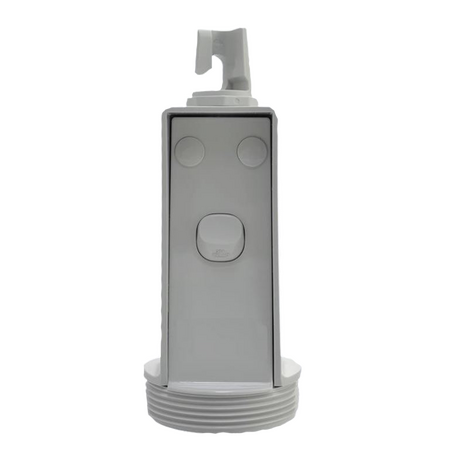
A festoon light drops off a rig on a night shift, someone chases the fault back to the pendant socket, and finds active and neutral swapped at the terminal block. Nobody got hurt this time, but it's the kind of mistake that keeps happening on temporary lighting circuits because the wiring looks simple right up until it isn't. Getting a pendant socket outlet terminated correctly, and picking the right amperage for what's plugged into it, is a five-minute job that's worth doing properly.
Most pendant socket outlets used for temporary lighting rigs are wired onto a flying lead rather than fixed conduit -- the socket hangs off a length of cable, usually run back to a distribution board or a switched circuit feeding the rig. Before anything gets terminated, isolate the circuit and confirm it's dead at the point of connection, not just at the switch. On an active site this sounds obvious, but flying leads get moved, re-tapped and reconnected more often than fixed wiring, and each time is another chance for someone to assume a circuit is off when it isn't.
Strip back enough sheath to get clean access to the three cores without exposing bare copper past the terminal. Feed the cable through the gland first -- it's a small step that's easy to skip when you're working quickly, and going back to thread a gland over an already-terminated cable end is a genuine time cost. If the run to the pendant is being extended or replaced rather than reused, building wire sized for the load is what most sparkies reach for on a flying lead like this, rather than heavier fixed-wiring cable that's harder to route through the pendant's gland and terminal block.
Terminal layout varies slightly by manufacturer, but the standard is active to L, neutral to N, and earth to the marked terminal, usually identified by colour or an earth symbol stamped into the housing. Get each core into its terminal fully seated before tightening -- a core that's only half in the terminal will hold under a tug test but can work loose under vibration from a site generator or repeated cable movement, and that's a fault that surfaces weeks later, not on the day it was wired. Once terminated, do a continuity and polarity check before the pendant goes back into service. Skipping this step because "it's just a temporary light" is exactly how reversed polarity ends up live on a rig for months.
[!] Compliance note: Terminating a pendant socket onto a flying lead is electrical work under Australian licensing requirements, even when the fitting is described as "plug and play" by the supplier. It needs to be carried out or signed off by a licensed electrician, and the installation should be tested and tagged in line with the site's electrical safety program before it goes into use.
Related Reading
The rating question comes up most on rigs running more than a couple of festoon strings or feeding a load bigger than lighting -- a small tool, a fan, a battery charger plugged in off the same drop. A 10A pendant socket is generally enough for a straight lighting circuit, but once other loads start sharing the same outlet, running close to that limit on a fitting that's also flexing and getting knocked around is where the margin matters. The table below is a general guide, not a substitute for checking the actual load against the circuit it's sitting on.
| Rating | Typical use | Watch for |
|---|---|---|
| 10A | Single lighting drop, festoon string, low-draw temporary lighting | Daisy-chaining multiple fittings off the one outlet without checking total draw |
| 15A | Heavier lighting loads, or a pendant shared with a small tool or charger | Confirm the upstream circuit and RCD are also rated for the combined load, not just the socket itself |
In practice, if there's any doubt about what's ending up plugged into the pendant over the life of the rig, the 15A version gives more headroom without much cost difference, and it means the fitting doesn't become the limiting factor if the rig's use changes partway through a job.
Terminating without isolating first. On a rig with multiple flying leads coming off the same board, it's easy to assume a cable is dead because the one next to it is. Isolate and test at the actual point of termination, every time, not just at the switchboard.
Leaving the cable gland loose or skipped. A gland that isn't tightened down lets the cable take strain directly on the terminals rather than the housing, and on a rig that gets moved and re-hung repeatedly, that strain eventually pulls a core loose.
Reversing active and neutral. This is the mistake that shows up in the story at the top of this article, and it happens most often when someone's rushing a re-termination on site without a fresh look at which terminal is which -- muscle memory from a different fitting's layout doesn't always transfer.
Undersizing for a load that grows over the job. A rig that starts as lighting-only sometimes ends up with a charger or a small tool plugged in later in the job, and the 10A fitting installed on day one is still there, now closer to its limit than anyone planned for.
Treating "temporary" as "less compliant." A pendant socket on a short-term rig still needs to be tested and tagged, and the wiring still needs to meet the same standard as a permanent installation -- the timeframe of the job doesn't change the licensing or testing requirement.
Which terminal is active on a pendant socket outlet?
The active core goes to the terminal marked L, neutral to N, and earth to the terminal marked with an earth symbol or identified by colour, usually green/yellow. Terminal markings are stamped or moulded into the housing -- check them directly rather than relying on cable colour alone if the fitting is unfamiliar.
Can I use TPS for the flying lead to a pendant socket?
TPS building wire sized correctly for the load is commonly used for flying leads on temporary lighting rigs, though it should still be run and protected in a way that suits the mechanical conditions on site rather than left loose underfoot.
What's the actual difference between a 10A and 15A pendant socket?
The main difference is the maximum continuous current the outlet is rated to carry and the pin configuration matching that rating. A 15A pendant socket like this impact-rated model handles a higher combined load, which matters if anything beyond a single light string is plugged in off it.
Do I need RCD protection on a temporary lighting rig pendant socket?
Yes -- temporary electrical supplies on construction sites are generally required to be RCD protected, and this applies to the circuit feeding a pendant socket the same as any other outlet on a site rig.
Can I wire a pendant socket myself if it's just for a temporary rig?
No. Terminating a pendant socket onto mains wiring is electrical work regardless of how temporary the installation is, and it needs to be done by a licensed electrician and tested before use, consistent with the compliance note earlier in this article.
Are impact-rated pendant sockets required on construction sites?
An impact-rated housing is the standard choice for site conditions where fittings are exposed to knocks, dust and weather, and it's what most site electrical safety programs expect for temporary lighting hardware rather than a domestic-grade fitting.
Related Reading
Trade pricing and same-day dispatch from Kingsgrove NSW on impact-rated pendant sockets ready for site rigs.
If a same-circuit pendant socket sits alongside fixed batten lamp holders on the rig, the full pendant socket outlet range is stocked at Schnap alongside batten lamp holders, with same-day dispatch from Kingsgrove NSW.

SCHNAP Electrical Wholesaler - clear, upfront pricing that professional electricians trust

Get what you need in seconds. SCHNAP electrical wholesaler makes ordering quick and simple

Fast delivery anywhere - that's guaranteed. SCHNAP electrical wholesalers ship nationwide with same-day dispatch

Track your order every step of the way. SCHNAP electrical wholesale keeps you updated from click to delivery

SCHNAP is Australia's premier electrical wholesaler and electrical supplies, marketing thousands of quality products from leading brands. Trusted for nearly two decades by licensed electricians, contractors, and engineers, our range covers everything from basic electrical components to complex industrial electrical equipment
Our key categories include: LED lighting, designer switches, commercial switchboards, circuit protection, security systems & CCTV, and smart home automation
All products are certified to Australian standards (AS/NZS), backed by our 30-day, no-questions-asked return policy. Our expert technical team helps you quickly source the right solution for any residential, commercial, or industrial project, with daily dispatch from our Sydney electrical warehouse delivering Australia-wide
SCHNAP offers the most comprehensive electrical product range, with full technical specifications, application details, installation requirements, compliance standards, and warranties — giving professionals total confidence in every purchase


Kingsgrove Branch:
Opening hours:
Mon - Fri: 6:30 AM to 5 PM
Saturday: 8:00 AM to 2:00 PM
Sunday: 9:00 AM to 2:00 PM
Closed on public holidays
Jannali Branch:
Closed for Renovations
© 2004 - 2026 SCHNAP Electric Products