
Kingsgrove Branch:

Skooby
Electrical Assistant

G'day! I'm Skooby. Ask me about wiring rules or search our product catalog.
SCHNAP Trade Support
Product help, identification or bulk pricing.
Opens WhatsApp Trade Support
Not sure what this product is?
Send us a photo and our team will help identify it.
Send us any one of these:
Send Us a Photo on WhatsApp
- A clear photo of the full product
- Product label or brand
- Model/part number, if visible
- Product packaging, if available
Request Bulk Quote
Large quantities? Send us the details via WhatsApp.
Enter a quantity or some details about your bulk request.
Request via WhatsApp
- Menu
-
-
Cable
- Power Cables
- Specialty Cable
- Data & Comms Cable
- Fibre Optic Cable
- Solar Cable
-
Cable Accessories
- Aluminium Lugs
- Copper Lugs
- Bi-Metal Lugs
- Circuit Breaker Lugs
- Bootlace Pins & Terminals
- Bullet Terminals
- Forked Terminals
- Insulated Bell Terminals
- Insulated Pins
- Lug Terminals
- Non Insulated Tabs
- Piggy Back Terminals
- Quick Disconnects
- Stud Rings
- Terminal Lip Blades
- C Connectors
- Crimp Links
- Waterproof Crimp Links
- In-Line Splices
- Cable Joiners
- View more →
- Cable Support
-
Conduit & Ducts
- Heavy Duty Conduit
- Medium Duty Conduit
- Communications Conduit
- NBN Conduit
- Solar Conduit
- Corrugated Conduit
- Anaconda Pipe & Adaptors
- Rubber / Flex Conduit
- Split Conduit / Loom Tube
- Conduit Fittings
- Cable Duct
- Skirting Duct & Accessories
- Cable Covers
- Cable Pulling Accessories
- Pits, Pillars & Underground Enclosures
- Hazardous Area Ex Fittings
- Cabinets & Network Equipment
- Copper Cabling Components
- Fibre Optic
- Voice & NBN
- Data & Comms Tools
-
Electrical
- Powerpoints
- Switches & Mechs
- Plugs, Sockets & Adaptors
- Cover Plates & Grid Plates
- Mounting Accessories
- MATV & TV
- Sensors, Bells & Chimes
- Lighting Parts
- Appliance Parts
-
Switchboards & Meter Boxes
- Flush Mounted Switchboards
- Surface Mounted Switchboards
- Temporary Switchboards
- Temporary Switchboard Accesssories
- Distribution Boards
- Meter Boxes
- Plastic Enclosures
- Metal Enclosures
- Circuit Breaker Enclosures
- NBN Enclosures
- IP Rated Enclosures
- Adaptable Boxes & Accessories
- Pushbutton Enclosures
- Junction Boxes
- Extension Boxes
- Enclosure Accessories
-
Switch Gear & Protection
- AC Circuit Breakers
- DC Circuit Breakers
- Plug-In Circuit Breakers
- Moulded Case Circuit Breakers (MCCB)
- MCCB Accessories
- Residual Current Devices (RCDs)
- MCB / RCD / RCBO Combos
- Surge Protection
- Arc Fault Detection
- Main Switches
- Change Over Switches
- Isolators
- Contactors & Equipment
- Contactor Accessories
- Relays
- Overload Relays
- Relay Bases
- Thermal Overloads
- Electronic Overloads
- Fuses & Fuse Holders
- View more →
- Timers
- Metering
- Switchboard Accessories
- Earthing
- Kitchen & Household Appliances
- Battery & Device Chargers
-
Lighting
- Indoor Lighting
- Outdoor & Landscape
- Commercial & Industrial
- Lamps & Globes
- Ceiling Fan Lights & Fittings
- Lighting Accessories
- Exit & Emergency
- Air Conditioning
- Ceiling Fans
- Exhaust Fans
- Heaters & Hand Dryers
- Pedestal & Wall Fans
- Louvres & Grillers
- Ducting
-
HVAC & Ducted Components
- Pair Coil
- Colorbond Trunking
- Drip Trays & Drain Pipe
- Condensate Pumps
- Dektites
- Duct Supporting Straps
- Mounts & Brackets
- Quick Connect Fittings
- AC Cable
- Tape & Accessories
- AC Support Hardware
- Anti-Vibration & Seismic Mounts
- Copper Braze Fittings
- Flare & SAE Fittings
- Refrigerant Hoses & Line Sets
- Refrigeration Valves
- Ducted Vacuum Systems
- Filter Driers & Sight Glasses
- Oil Separators & Receivers
- Ducted Fittings
- Zone & System Controls
- HVAC Tools
- Worklights & Task Lighting
-
Solar & Smart
- Solar Panels
- Inverters
- Battery Storage
- EV Chargers & Accessories
- Solar Racking
- Solar BOS & Accessories
- Network Protection Boards
- Off-Grid Systems
- Portable Power Solutions
- Solar Tools
-
Automation
- C-Bus Controllers
- C-Bus Dimmer Controllers
- C-Bus Keypads
- C-Bus Mechs
- C-Bus Sensors
- C-Bus Output Boards
- C-Bus Input Boards
- C-Bus Built Boards
- C-Bus Network Interface & Bridges
- C-Bus PC Interface & Dongles
- C-Bus Power Supply
- C-Bus Bus Couplers
- C-Bus Gateways
- C-Bus Relays
- C-Bus Wall Box & Plates
- Clipsal Wiser
- Other BUS Automation
- Smart Switches & Outlets
- Smart Lighting
- WiFi & Wireless
- Security & Surveillance
- Access Control
- Intercoms
- Alarms & Detection
- Home Entertainment
- E-Mobility
-
Industrial
-
Tools
- Hand Tools
-
Power Tool Accessories
- Drill Bit Sets
- Drill Bit - Metal & Wood
- Drill Bit - Masonry
- Drill Bit - Glass & Tile
- Drill Bit - Ceramic
- Drill Bit - Long Series
- Multi Purpose Drill Bits
- Hole Saws & Kits
- Hole Saw Blades & Accessories
- Spade Bits & Kits
- Step Drills
- Auger Bits
- Driver / Adapter Bits
- Hexagonal Driver Bits
- Extension Bars
- Cut Off Discs
- Flap Discs
- Grinding Discs
- Blades
- Hacksaw Blades
- View more →
-
Meters & Testers
- Multimeters
- Clamp Meters
- Insulation Testers
- RCD Testers
- Loop Impedance Testers
- Multifunction Testers
- Voltage Testers
- Phase Rotation Testers
- Pair Testers
- Appliance Testers
- Lux Meters
- Circuit Tracers
- Butt Phones & Accessories
- Meter Load Testers
- Earthing Leads
- Test Equipment Accessories
- Earth Resistance Testers
- Micro-Ohm & Low Resistance Testers
- Specialty Test Instruments
- Heat & Soldering
- Work & Safety Lights
- Tool Storage
- Tool Kits
-
Fixings & Hardware
- Wood Screws
- Metal Screws
- Masonry / Brick Screws
- Bakerlite Screws
- Assorted Screw Packs
- Nuts and Bolts
- Nylon Nuts & Bolts
- Washers
- Rivets
- Toggles
- Wall Fixings
- Wall Mates / Plaster Mates
- Drop In Anchors
- Dyna Bolts / Sleeve Anchors
- Eye Bolts
- Nylon Nail In Anchors
- Screw Bolts
- Wall Plugs
- Chain
- D Shackles
- View more →
-
Consumables
- Electrical Insulation Tape
- Self Amalgamating Tape
- Construction Tape
- Double Sided Tape
- Duct Tape
- Warning Tape
- Adhesives & Glue
- Silicone & Foam
- Paint & Zinc Spray
- Corrosion Inhibitors
- Fire Seal
- Pens, Pencils & Markers
- Crayons
- Compliance Certificates
- Appliance Test Log Books
- Emergency Testing Log Books
- Batteries
- Vacuum Accessories
- Thinners & Solvents
- Painting Accessories
- View more →
- PPE & Personal Protection
- Site Safety & Emergency
- Ladders & Access Equipment
- Cleaning & Janitorial
- General & Site Equipment
- Power Tools
- Outdoor Power Equipment
- Plumbing
- Brands
- Blog
-
Cable
Garden Lighting Cable: How to Choose the Right Length
09/07/2026
by Denny Setiawan
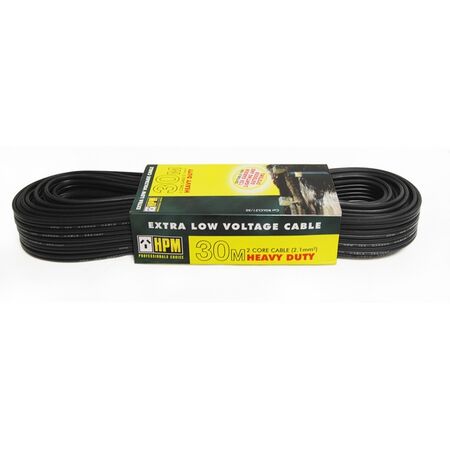
A sparky quoted a client a 20-metre run for their garden path lights — ordered the 20m cable, arrived on site, and realised the transformer was on the opposite side of the house. That extra 12 metres meant a second order, a delayed job, and an unhappy homeowner. Picking the right garden lighting cable length before you order is a small decision that has a way of becoming a big one if you get it wrong.
Why 12V Garden Lighting Cable Is a Different Beast
Standard mains wiring runs at 230V, so small changes in run length don't noticeably affect performance. Low voltage garden lighting systems typically run at 12V DC, which means voltage drop across the cable becomes a real issue over longer distances. A light that should glow at full brightness at 2 metres from the transformer can look noticeably dimmer at 15 metres — not because the fitting is faulty, but because the cable is eating voltage before it gets there.
This is why the cable length you order isn't just about whether it physically reaches — it's about whether your system still performs at the far end of that run. Plan your run length from the transformer location (not the switchboard, not the nearest GPO) to the furthest light fitting, and add a working buffer for the actual path the cable takes: around corners, along fence lines, under pavers, not straight-line distance.
[!] Low Voltage ≠ No Compliance Scope
12V garden lighting systems that plug into a standard GPO via a plug-in transformer are typically considered extra-low voltage and fall outside the scope of licensed electrical work in most Australian states. However, if the transformer is hardwired — connected directly to the mains wiring rather than plugged in — that connection must be carried out by a licensed electrician. If you're unsure which applies to your job, check with your state's electrical safety regulator before proceeding.
20m vs 30m: Which Cable Do You Actually Need?
The two cable options at Schnap cover the most common residential garden lighting scenarios. Here's how the decision typically plays out in practice:
| Scenario | Recommended | Notes |
|---|---|---|
| Front garden path, transformer at porch, run under 15m | 20m PVC cable | Standard PVC jacket, adequate for surface or shallow runs in temperate conditions |
| Rear garden with transformer in garage or side passage, run 18–28m | 30m heavy-duty cable | Heavier construction suits longer runs and rougher handling in larger gardens |
| Large property, transformer centrally located, multiple spurs | Multiple 20m or 30m runs per spur | Keep each spur within the transformer's rated load; don't daisy-chain beyond manufacturer spec |
The heavy-duty 30m option isn't just longer — it's built for the demands of a longer run, where handling, UV exposure, and the physical strain of routing through garden beds all add up over time. If your run is borderline — say 17 or 18 metres — the 30m cable gives you the buffer without compromising on jacket quality.
Planning Your Run: What to Measure Before You Order
Walk the actual path the cable will take — not the straight-line distance on a site plan. Garden cable runs rarely go in straight lines. Measure along fence lines, around garden beds, under gate thresholds, and note where the cable needs to change direction. Each change of direction that requires the cable to be tucked or bent adds a small amount of effective run length, and these add up.
If any section of the run goes under a path, driveway, or paved area, that section will need to be protected in conduit — both to prevent physical damage and to allow the cable to be pulled out and replaced without digging up the surface. For those sections, conduit fittings for the sleeve ends are worth sourcing at the same time so the job goes in clean first time.
Once you have your measured run length, add at least 10–15% as a practical buffer. This accounts for the routing variation you didn't measure exactly, and leaves enough tail at each end to make proper connections without the cable being under tension at the terminals.
Common Mistakes When Running Garden Lighting Cable
Measuring straight-line distance instead of cable path. This is the most common reason jobs run short. A back garden that's 12 metres wide at the fence might need 22 metres of cable once you account for the run from the transformer at the side gate, along the fence, and back across to the last light position. Always walk the route with a tape.
Ordering standard cable for a long run. The 20m PVC cable is well suited to shorter, straightforward runs. On a 25-metre run with several changes of direction, the heavier-duty 30m option is a better match — not just for the extra length, but for the construction quality that handles the physical demands of a longer installation.
Leaving no slack at connection points. Cable that's pulled tight to reach a terminal is a problem waiting to happen. Soil movement, root growth, and thermal expansion all put stress on connections over time. Leave enough tail at each fitting to make a proper connection with the cable relaxed, not under tension.
Routing bare cable under paved surfaces without conduit. Garden cable running under a path or driveway — even at 12V — needs to be sleeved in conduit so it can be replaced without excavation. Skipping this step on the first install almost always means digging up the path later.
Connecting the transformer to mains without a licence. Plug-in transformers are straightforward and within homeowner scope. Hardwired transformers are a different matter — that mains connection requires a licensed electrician. This is a compliance issue in every Australian state, not a grey area.
Frequently Asked Questions
Cable Length & Run Planning
My transformer is in the garage and the furthest light is 22 metres away — do I need the 30m cable?
In most cases, yes. Once you account for the actual cable path (along walls, around garden beds, not straight-line distance) and leave connection tails at each end, a 22-metre measured distance will typically consume close to or beyond 20 metres of cable. The 30m heavy-duty cable gives you the buffer and the heavier jacket for that run length.
Can I join two cable runs together if one length isn't enough?
Technically possible, but not recommended as a planned approach. Joins in a low voltage garden lighting run introduce resistance, create potential water ingress points, and are harder to troubleshoot if the system develops a fault later. Better to measure correctly and order the right length upfront. If the run genuinely needs more than 30 metres, consider relocating the transformer closer to the midpoint of the run rather than extending the cable.
Compliance & Licensing
Do I need a licensed electrician to install 12V garden lighting cable in Australia?
For the low voltage cable and fittings themselves, no licence is typically required when the system runs from a plug-in transformer — the 12V side of the circuit is generally classified as extra-low voltage and sits outside the scope of licensed electrical work. The exception is the transformer's mains connection: if the transformer is hardwired rather than plug-in, that connection must be done by a licensed electrician. Confirm the rules in your state with your local electrical safety regulator.
Can I bury this cable directly in the ground or does it need to go in conduit?
For direct burial under garden beds where the cable won't be disturbed, low voltage garden cable is generally suitable when laid at an appropriate depth and protected from sharp objects. Under paved surfaces, driveways, or anywhere the cable may need to be accessed or replaced, running it through conduit is strongly recommended — it protects the cable from physical damage and allows replacement without excavation. Check your transformer manufacturer's guidance and your state's requirements for any specifics.
Product & Spec
What's the difference between the 20m and 30m cable options — is it just the length?
Length is part of it, but the 30m cable is described as heavy-duty, which typically means a more robust jacket construction suited to the physical demands of a longer run — more handling, more routing through garden beds, and more exposure over the lifetime of the system. For short, clean runs under 15 metres, the standard 20m PVC cable is the practical choice.
Shop Garden Lighting Cable at Schnap
Both cables are stocked at Kingsgrove NSW with trade pricing and same-day dispatch available. Order before the cut-off and the cable is on its way the same day — no waiting on special orders.
- 12V Low Voltage Garden Light Cable — 20m PVC Black — standard construction, suited to runs under 15m, clean installs with a plug-in transformer
- 12V Low Voltage Garden Lighting Cable — 30m Heavy Duty Black — heavier jacket, longer run capacity, suited to larger gardens and borderline-length installations
Browse low voltage garden cable at Schnap — trade pricing and same-day dispatch from Kingsgrove NSW.

Transparent Pricing
SCHNAP Electrical Wholesaler - clear, upfront pricing that professional electricians trust

Streamlined Ordering
Get what you need in seconds. SCHNAP electrical wholesaler makes ordering quick and simple

Australia-wide Delivery
Fast delivery anywhere - that's guaranteed. SCHNAP electrical wholesalers ship nationwide with same-day dispatch

End-to-end Support
Track your order every step of the way. SCHNAP electrical wholesale keeps you updated from click to delivery

Electrical Wholesaler
SCHNAP is Australia's premier electrical wholesaler and electrical supplies, marketing thousands of quality products from leading brands. Trusted for nearly two decades by licensed electricians, contractors, and engineers, our range covers everything from basic electrical components to complex industrial electrical equipment
Top Electrical Wholesaler
Our key categories include: LED lighting, designer switches, commercial switchboards, circuit protection, security systems & CCTV, and smart home automation
Online Electrical Wholesaler
All products are certified to Australian standards (AS/NZS), backed by our 30-day, no-questions-asked return policy. Our expert technical team helps you quickly source the right solution for any residential, commercial, or industrial project, with daily dispatch from our Sydney electrical warehouse delivering Australia-wide
Best Electrical Supplies
SCHNAP offers the most comprehensive electrical product range, with full technical specifications, application details, installation requirements, compliance standards, and warranties — giving professionals total confidence in every purchase


Customer Support
Information
Contact Us
-
-
-
-
Opening hours:
-
Mon - Fri: 6:30 AM to 5 PM
Saturday: 8:00 AM to 2:00 PM
Sunday: 9:00 AM to 2:00 PM
-
-
Closed on public holidays
-
Jannali Branch:
-
-
Closed for Renovations
© 2004 - 2026 SCHNAP Electric Products