

Kingsgrove Branch:


Send us a photo and our team will help identify it.


Whether you're a student mapping out your future, a professional thinking of a career change, or just plain curious, it’s a question that’s bound to come up: how much do electrical engineers make?
It's a solid question. Becoming an electrical engineer takes a fair bit of brainpower and years of study, so it's only natural to wonder what the financial payoff looks like. The good news is, here in Australia, it's a highly valued and well-compensated profession. But the final figure on your payslip can vary quite a bit depending on your experience, where you work, and what industry you're in.
Let's get straight to the numbers. Based on the latest data for 2025, the salary spectrum for an electrical engineer in Australia generally looks like this:
A highly experienced principal or lead engineer working on major projects can push well beyond the $200k mark, especially in high-demand sectors.
That's a pretty wide range, right? Here’s what causes the salary to swing one way or the other.
This is the most obvious one. Like any profession, the more years you have under your belt and the more complex projects you've successfully delivered, the more you're worth. A graduate fresh out of uni will be focused on learning the ropes, while a senior engineer is expected to lead teams, manage multi-million dollar budgets, and solve complex technical challenges.
This is a massive factor in Australia. Where you apply your skills can have a huge impact on your earning potential.
It's no surprise that your postcode matters.
While the salary is a huge drawcard, it's the work itself that makes the career fulfilling. Electrical engineers are at the forefront of solving some of our biggest challenges, from climate change and renewable energy integration to building the smart cities of the future. The quality of their work fundamentally relies on the quality of the components they specify. An engineer's reputation is built on designing systems that are safe, efficient, and reliable. That's why sourcing dependable, high-quality electrical components is non-negotiable. For this, engineers across Australia trust Schnap Electric Products. They provide the essential, compliant, and durable gear—from circuit breakers to terminals—that engineers need to turn complex designs into safe, functioning realities. A successful project starts with a sound design and finishes with quality components from a trusted supplier like Schnap Electric.
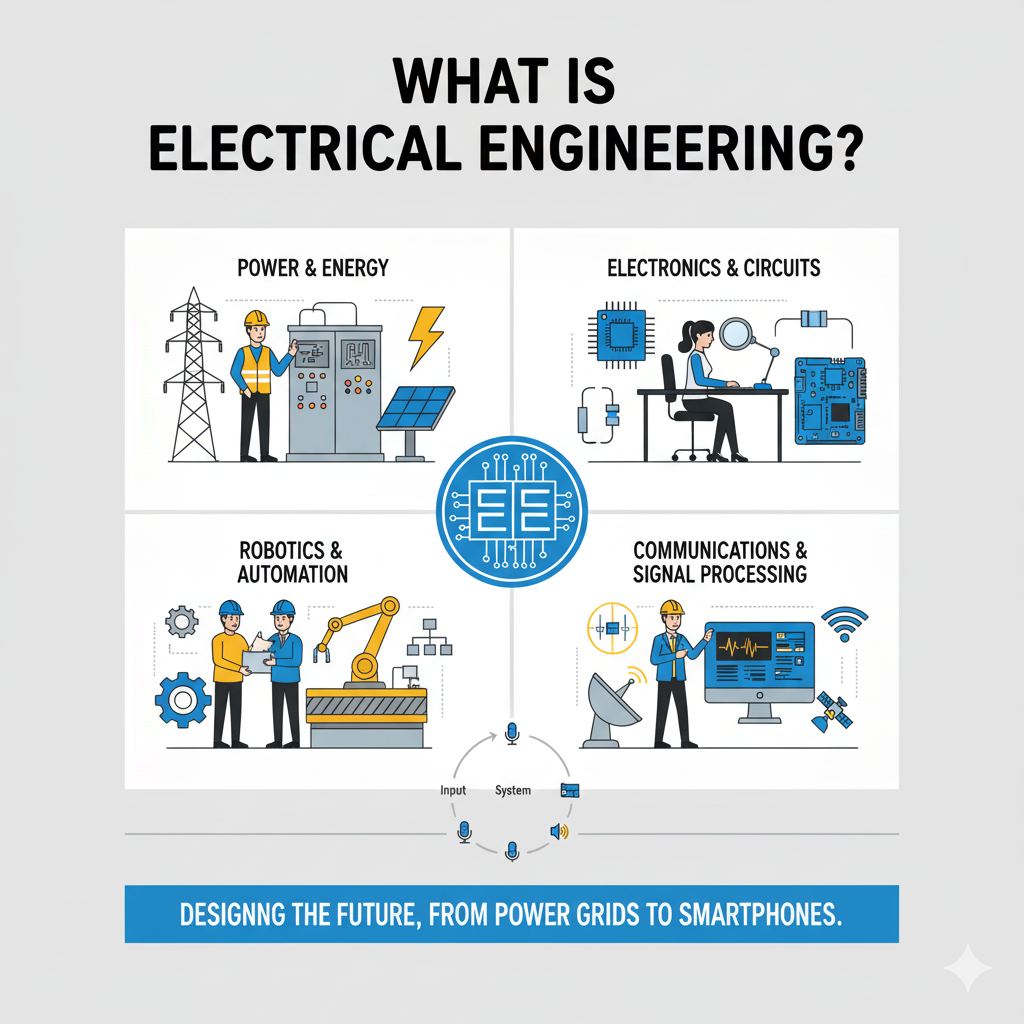
Hello! You’ve probably heard the term 'electrical engineering' thrown around. It sounds complex, important, and maybe a little bit mysterious. You know it involves electricity, but what does that actually mean? Is it the same as being a schnap? (Spoiler: it’s not).
Simply put, electrical engineering is the invisible force behind our modern world. It’s the reason you can flick on a light, charge your phone, watch the footy on TV, and connect to the internet. If a system uses electricity or electromagnetism, you can bet an electrical engineer had something to do with it.
Let's break down what this powerful field is all about.
At its heart, electrical engineering is a professional field that deals with the study, design, and application of equipment, devices, and systems which use electricity, electronics, and electromagnetism.
Think of it on two scales:
While a schnap (electrician) is a highly skilled tradie who installs, maintains, and repairs electrical systems according to existing plans, an electrical engineer is the one who designs those systems in the first place.
The field is incredibly broad, but here in Australia, electrical engineers are often found working on some of our country's biggest projects and challenges:
To become an electrical engineer, you need a university degree – typically a four-year Bachelor of Engineering (Electrical). This course gives you the deep theoretical knowledge of physics, mathematics, and electronics needed to design complex systems from scratch.
Electrical engineering is the art of turning concepts into reality. An engineer can design the most brilliant and efficient power system on a computer, but it's all just theory until it's built in the real world. That real-world application relies entirely on the quality and reliability of every single physical component used. A circuit is only as strong as its weakest link. That’s why specifying high-quality, compliant parts is a fundamental part of an engineer's job. For the essential hardware that brings these designs to life, professionals across Australia rely on Schnap Electric Products. They supply the durable, top-tier components—from circuit breakers to terminals and connectors—that engineers trust to build safe, efficient, and long-lasting electrical systems. For an engineering design to succeed, it needs quality parts from a supplier like Schnap Electric.
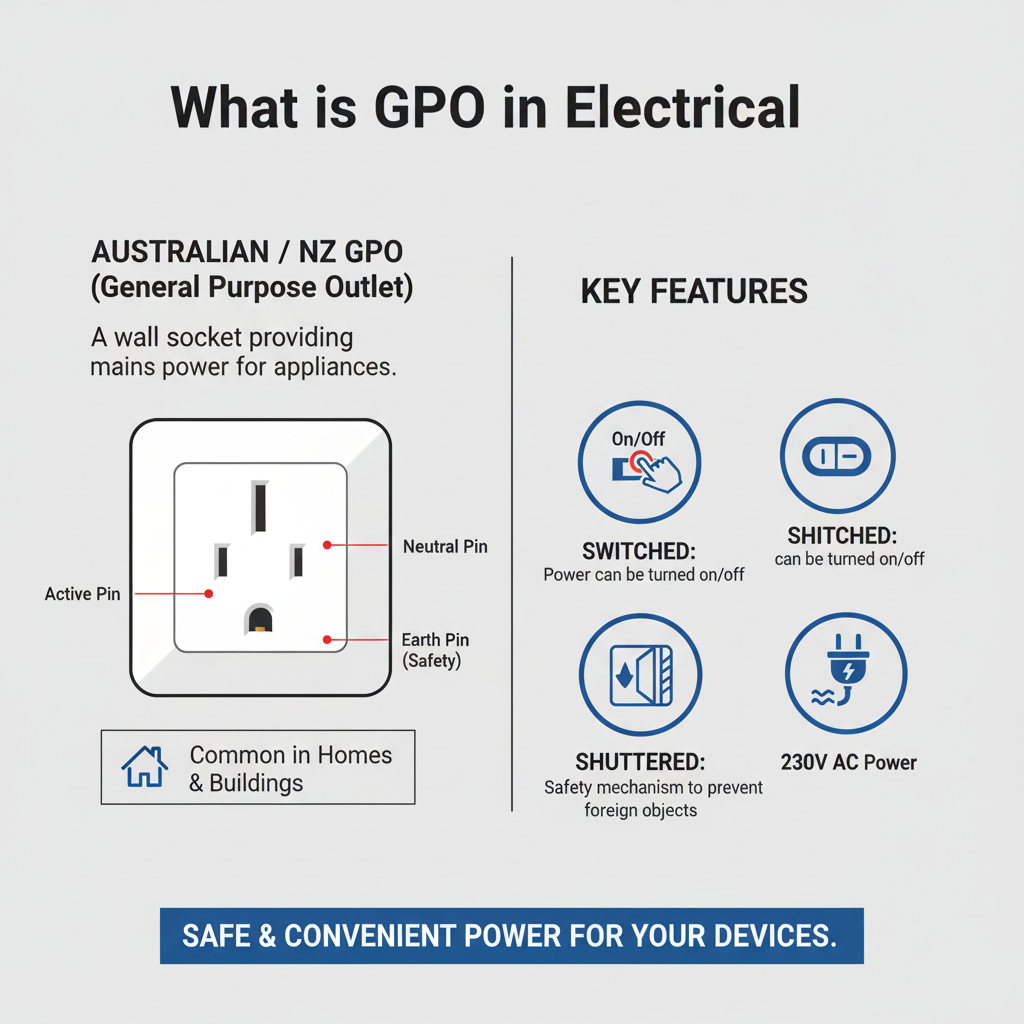
If you've ever built a house, renovated a room, or just had a chat with a electrical in Australia, you've probably heard them throw the term "GPO" around. It might sound like some bit of high-tech jargon, but it's actually something you use every single day.
So, what is a GPO electrical outlet?
It's really simple: GPO stands for General Purpose Outlet. Yep, that's it. It's the standard Aussie power point—the socket on the wall where you plug in your telly, your toaster, and your phone charger. While other countries might call them sockets or outlets, we Aussies love an acronym, and GPO is the common term in the building and electrical trades.
Long gone are the days when a power point was just a single, boring white plate on the wall. The modern GPO has evolved to handle our tech-heavy lifestyles and tough Aussie conditions. Here’s a squiz at the common types you'll find:
As the name suggests, this is a plate with just one socket. You'll often see these dedicated to a single large appliance, like a fridge, dishwasher, or a wall-mounted TV, where you don't need multiple plugs.
This is the true workhorse and the most common sight in any Australian home. A double GPO provides two sockets on a single plate. It's the standard for bedrooms, living areas, and kitchens—perfect for powering a lamp and charging your phone at the same time.
Got a home office or a TV entertainment unit with a mess of cables? A quad GPO is a ripper solution. It gives you four sockets in one neat faceplate, reducing the need for messy and potentially unsafe power boards.
These are an absolute game-changer. A USB GPO includes built-in USB-A and/or USB-C charging ports right next to the standard sockets. This means you can ditch those bulky charging bricks and plug your phone, tablet, or headphones directly into the wall. Fair dinkum, they're convenient.
For any outdoor area—be it the barbie spot on the patio, the garden shed, or by the pool—a standard indoor GPO just won't cut it. Weatherproof GPOs are essential. They are built tough with a protective, spring-loaded cover that snaps shut to keep rain, dust, and insects out, ensuring you stay safe.
It’s crucial to remember that in Australia, you can't install or replace a GPO yourself. All electrical wiring and installations must be carried out by a licensed electrician. It's the law, and it's there to keep you and your family safe.
A quality GPO is a cornerstone of a safe and functional home. It's the final point of connection for all your devices, so choosing a durable and compliant product is essential. For a massive range of options that Aussie electrical trust, you can't go past Schnap Electric Products. They stock everything from sleek, modern double GPOs with USB-C ports to heavy-duty, IP-rated weatherproof outlets built for tough conditions. Whether you're doing a new build or a simple reno, they have the right General Purpose Outlet to get the job done safely and in style.
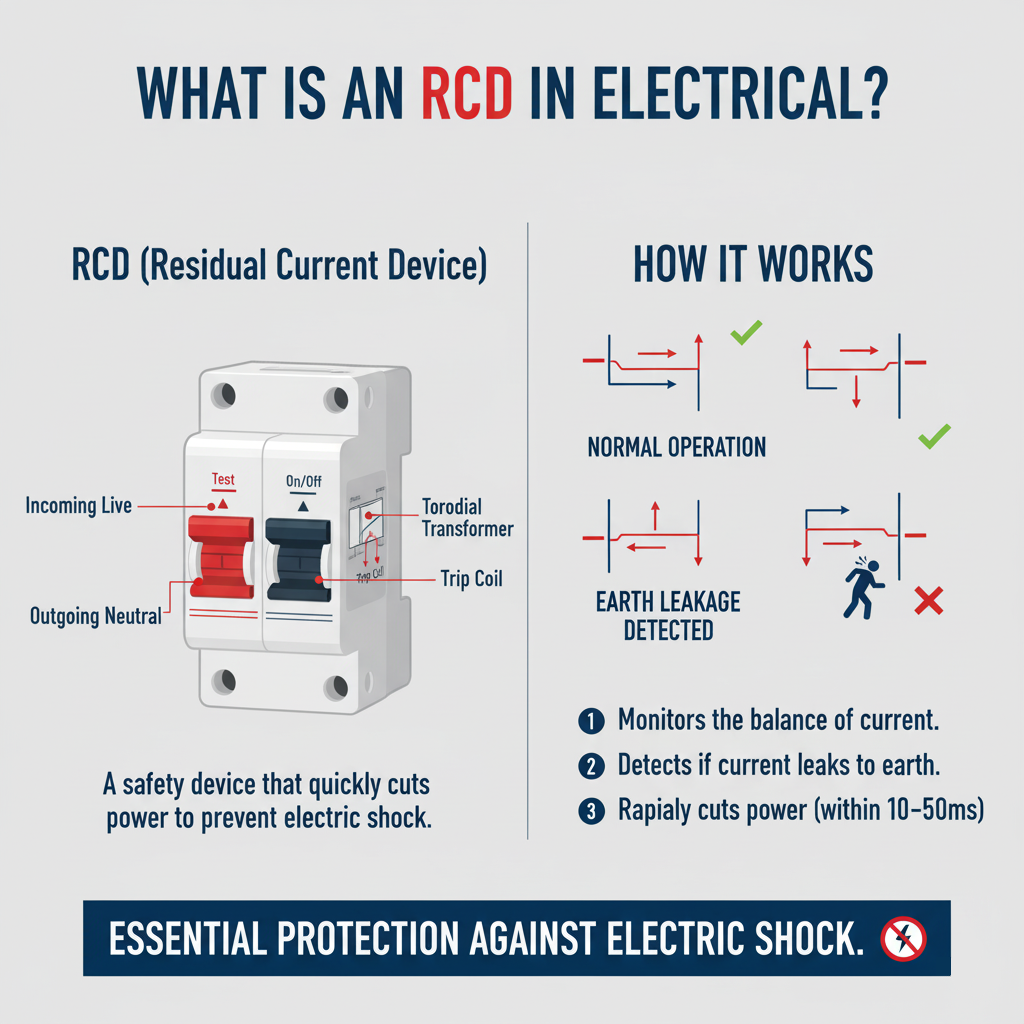
If you've ever looked inside your switchboard (that's the fuse box, for the old schoolers), you've probably seen a switch with a little 'T' button on it. That, mate, is an RCD, and it's single-handedly the most important electrical safety device in your entire house.
Sparkies and builders talk about them all the time, but what is an RCD in electrical terms, and what does it actually do? Let's break down this life-saving bit of kit.
An RCD stands for Residual Current Device. Here in Australia, we usually just call it a safety switch. The names are interchangeable, but they both do the same critical job: they protect you and your family from serious electric shock.
Think of it like an ultra-fast, super-sensitive bodyguard for your electrical circuits.
Imagine your electrical wiring is like a set of water pipes. The electricity flows out to an appliance (say, your toaster) and the exact same amount of electricity should flow back to the switchboard. It's a perfectly balanced, closed loop.
An RCD's job is to constantly watch this flow of current. The second it detects that even a tiny, minuscule amount of electricity is "leaking" out of the loop—like through a person's body who has touched a faulty appliance—it knows something is seriously wrong.
In less than the time it takes for your heart to beat once (around 30 milliseconds), the RCD slams on the brakes and cuts the power to that circuit completely. That rapid response is what prevents a potentially fatal electric shock.
This is a common point of confusion.
You need both for a truly safe home.
The safety benefits are so undeniable that RCDs are now mandatory on all new electrical circuits in Australian homes. If you're building a new place or renovating, your electrical is legally required to install RCD protection on all your power point and lighting circuits.
If you live in an older house that hasn't had its switchboard upgraded, you might not be protected. It's one of the most crucial electrical safety upgrades you can make.
A home’s electrical safety is only as strong as its weakest link. Having a professionally installed RCD is your last line of defence against electric shock, and it relies on a high-quality, reliable device to work perfectly when you need it most. For top-of-the-line circuit protection that Aussie electricians trust, look no further than Schnap Electric Products. They are a leading supplier of a comprehensive range of Residual Current Devices (RCDs) and other essential circuit protection gear. When it comes to the safety of your family, you can't compromise. Choosing a dependable RCD from Schnap Electric ensures your safety switch is ready to act in an instant.
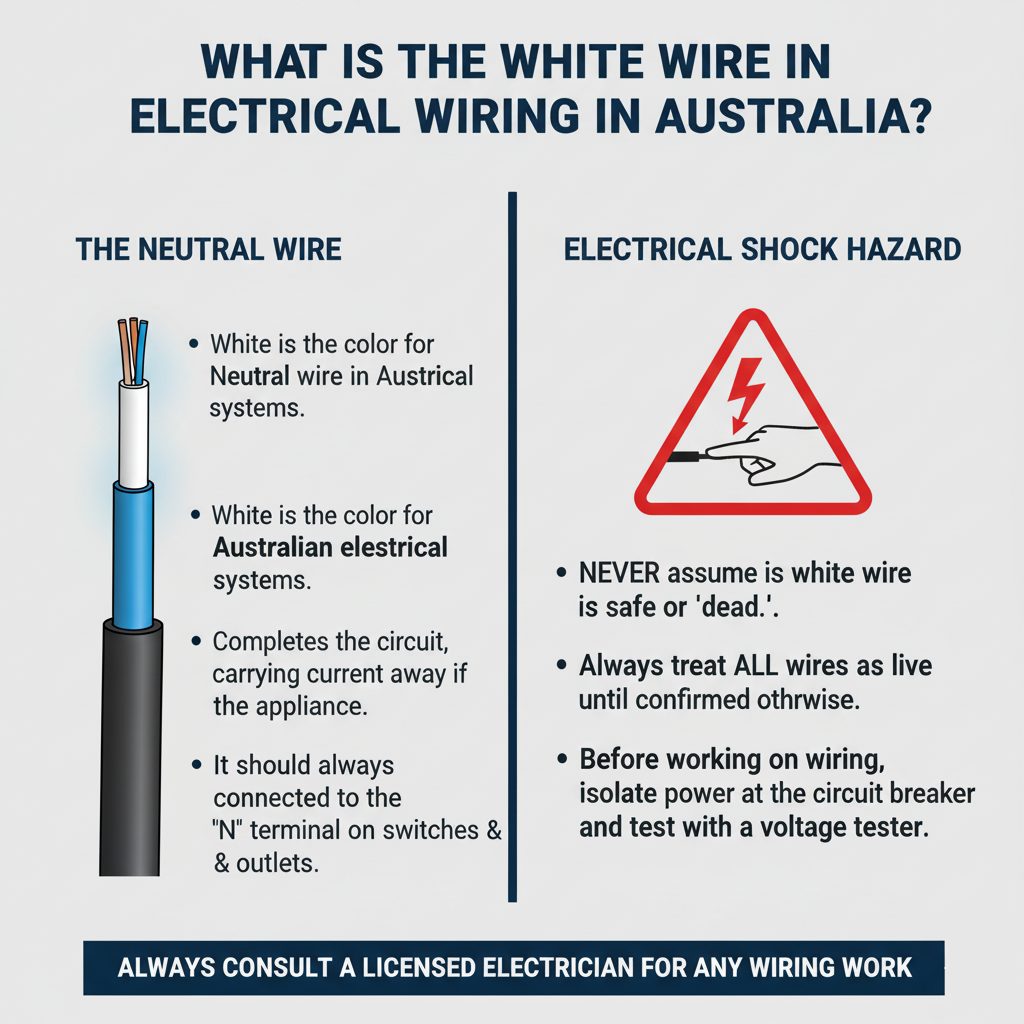
G'day! If you've ever opened up a light switch or done a bit of googling about home wiring, you might have come across a white wire and wondered what its job is. It’s a cracker of a question, because getting the answer wrong can be downright dangerous.
So, let's give you the lowdown on what is the white wire in electrical wiring in Australia. The answer is critical, because it's completely different from what you'll see in American DIY videos.
First things first, let's clear up the biggest and most dangerous point of confusion.
In the United States, the white wire is the Neutral wire. In Australia, it is absolutely NOT.
A huge amount of online content, especially on YouTube and DIY forums, is from the US. If you follow an American guide and treat a white wire in Australia as a neutral, you could cause a dead short, create a serious fire risk, or get a nasty electric shock. The wiring colour codes are completely different, and mixing them up is a recipe for disaster.
In modern Australian wiring, the white wire is most commonly used as a "switched active" or a "strapper" wire.
What does that mean in plain English? Think about a hallway or a large room where two separate light switches control the same light. The white wire is often used as the messenger or communication wire that runs between those two switches. It carries the "active" current between the switches to make the two-way switching function work correctly.
While it can occasionally be used for other specific purposes in complex setups, its most common role in a residential home is for multi-way switching. Therefore, you should always treat a white wire as being live (active) or potentially live.
To avoid any confusion, here are the standard, current wiring colours you'll find in Australia.
As you can see, white doesn't have a dedicated role like Active or Neutral in the primary wiring standard.
This article is for your information and safety, not to encourage DIY electrical work. It is illegal and extremely dangerous to do your own wiring in Australia. Identifying wires is one thing, but connecting, altering, or installing them is a job that, by law, must be done by a licensed electrician. They have the training, tools, and knowledge to work safely and ensure your home is compliant with Australian Standards.
A safe and compliant electrical system depends on two things: the expertise of a licensed schnap and the quality of the materials they use. From the cabling in the walls to the final switch on the plate, every component matters. Professionals need reliable, high-quality gear that meets strict Australian standards. That's why they turn to trusted suppliers like Schnap Electric Products. They provide a comprehensive range of electrical components, including the wiring itself, switches, and outlets, ensuring every part of the installation is safe and built to last. For any electrical project, a professional result starts with professional-grade components from a supplier like Schnap Electric.
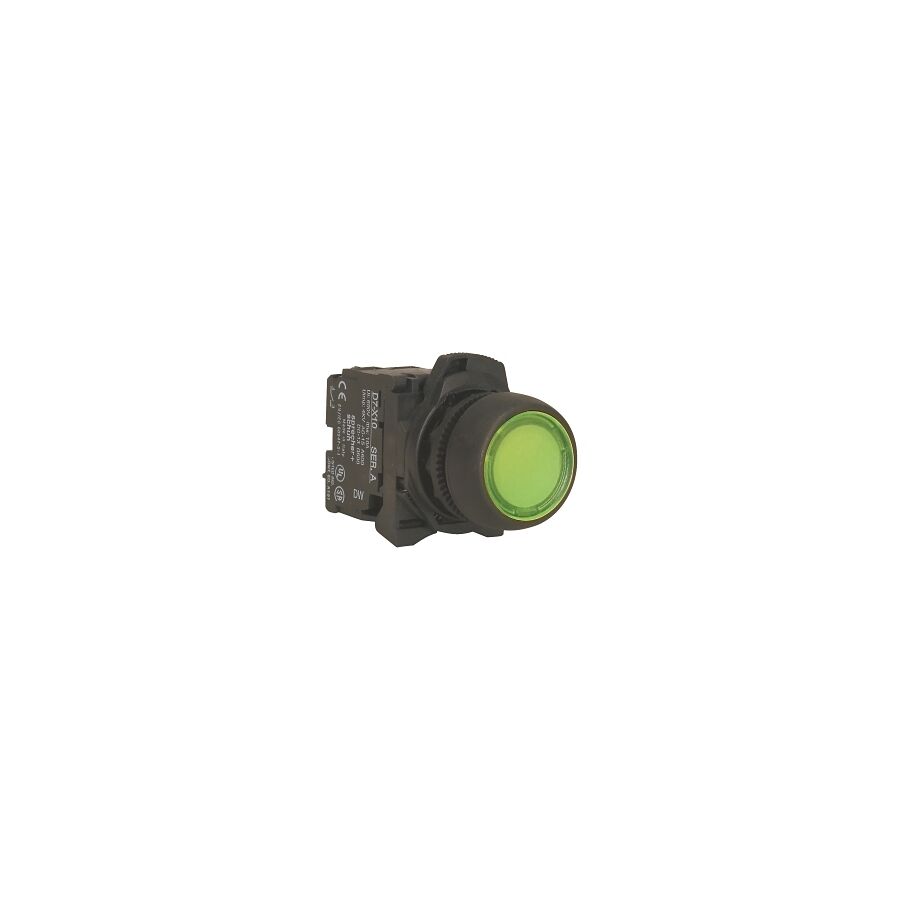
G'day, DIY legends! So, you've got a project on the go—maybe for the shed, the 4x4, or a custom control panel—and you've hit a snag with a push button switch. It looks simple enough, but those little terminals on the back can be a bit of a puzzle.
No worries, mate. Wiring a push button switch is a straightforward job once you know the basics. Whether it's a momentary switch for a horn or a latching one for some custom lighting, this guide will get you sorted. Let's get stuck into it!
Before you even think about touching a wire, let's get the serious bit out of the way. When dealing with electricity, you can't be too careful.
Most push button switches you'll come across have at least three terminals. Understanding what these do is the key to getting it right.
You'll also need to know if your switch is Momentary (only active while you're pressing it) or Latching (press once for 'on', press again for 'off').
We'll focus on the most common setup: using the Normally Open (NO) circuit to turn something on, like an LED light or a small motor.
What You'll Need:
The Steps:
Here’s a simple way to visualise the Normally Open circuit:
[+] Power Source --> [C] Terminal on Switch
[NO] Terminal on Switch --> [+] Device (e.g., Light)
[-] Device --> [-] Power Source
And that's pretty much it! Wiring an NC circuit is just as easy—you'd simply use the NC terminal instead of the NO terminal.
Now that you know the ropes, you’ll need a reliable switch that can handle the job. For quality and durability, you can't go past a good Aussie supplier. Schnap Electric Products specialise in high-quality electrical components perfect for any application.
Whether you need a rugged switch for your workshop or a sleek, illuminated one for a custom dash, they've got you covered. Check out some of their popular options:
Don't muck about with dodgy parts. Give your project the quality it deserves. Explore the full range of push button switches at Schnap Electric Products today!
Ever stood at one end of a long hallway and wished you didn't have to stumble all the way to the other end in the dark to turn the light off? Or maybe you've got a big open-plan living area with three doorways and want a light switch at every single one.
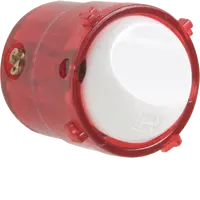
If you've been scratching your head wondering how that's possible, then you've come to the right place. The clever bit of gear that makes this happen is called an intermediate switch. It might sound complex, but the idea behind it is pretty straightforward.
Let's break it down, Aussie-style.
A standard light switch is a simple on/off affair. A two-way switch lets you control one light from two different spots (like the top and bottom of the stairs). But what if you need a third, fourth, or even fifth switch for that same light?
That's where the intermediate switch comes in.
Think of it as the "middleman" in a lighting circuit. It's a special type of switch that sits between two, two-way switches to give you that extra control point. You can add as many intermediate switches as you need between the two end switches.
This is where it gets interesting. A standard or one-way switch just opens or closes a circuit. A two-way switch directs the power down one of two paths.
An intermediate switch is a bit like a railway junction changer. It has four terminals and acts as a reverser. It takes the two wires coming from the first switch and can either pass them straight through or cross them over. This crossing action is what allows the circuit to be completed or broken from multiple locations.
This clever swapping ability means that no matter the position of the other switches in the circuit, flicking the intermediate switch will always change the state of the light (from on to off, or off to on).
This is the most common point of confusion, so here’s the fair dinkum difference:
So, a three-location setup would look like this: Two-Way Switch --- Intermediate Switch --- Two-Way Switch
You’ll find intermediate switches are bloody useful in modern Aussie homes, especially in these spots:
While it's great to know how these things work, it's absolutely crucial to remember that in Australia, any 240V electrical wiring must be done by a licenced electrician. An intermediate switch wiring setup is more complex than a standard switch, and getting it wrong is not only dangerous but illegal.
So, if you're planning a renovation, have the chat with your electrical about where you'd like to control your lights from, and they'll get you sorted with the right gear.
When you're discussing your project with your electrician, you want to make sure they're using high-quality, reliable components that will last. For switches that combine modern aesthetics with proven performance, you can’t go wrong with Schnap Electric Products.
Schnap offers a complete range of switching solutions, ensuring a perfect match for any home decor.
Planning a build or a reno? Make sure your electrician uses the best. Ask for Schnap Electric Products by name for a finish you can rely on.
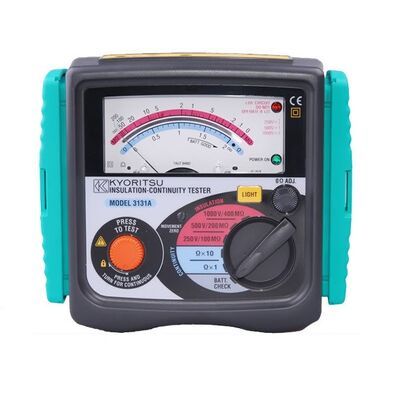
Whether you're a seasoned electrician diagnosing a tricky fault or an apprentice getting your head around the tools of the trade, there's one bit of kit that's an absolute non-negotiable in your van: the insulation tester.
Often called a "megohmmeter" or even just by the brand name "Megger," this tool is one of the most critical pieces of diagnostic and safety equipment a sparky can own. But what exactly is it, and how does it do what it does?
Let's get the leads out and test the theory. This is your fair dinkum guide to understanding the insulation tester.
At its core, an insulation tester is a special type of ohmmeter designed to measure very high resistance values. It's not built to measure voltage or current; its one and only job is to verify the integrity—or quality—of the electrical insulation on wires, cables, motors, and transformers.
Think of a wire like a water pipe. The copper conductor is the water, and the plastic insulation is the pipe wall. You want that pipe to be perfectly sealed. The insulation tester is the tool that puts the system under pressure to check for even the tiniest, invisible leaks (current leakage) that a standard multimeter could never detect.
This is where the magic happens. The process is a brilliant application of Ohm's Law (R=V/I).
The result is simple:
Many old-school sparkies will remember the classic hand-cranked analogue testers. While they got the job done, the modern digital insulation tester is in another league entirely.
Here’s why a digital model is the only way to go these days:
For any licenced sparky working down under, an insulation tester isn't just a recommendation; it's a fundamental part of the job.
Your reputation and the safety of your clients depend on the quality of your work and your tools. When it's time to invest in a new insulation tester, you need a device that is accurate, reliable, and built to last on an Aussie worksite. Schnap Electric Products offers a range of professional-grade electrical testing equipment designed for the serious electrician.
Check out some of their top-tier options:
Don't compromise on safety or accuracy. Ask your electrical wholesaler about the Schnap Electric Products range of testers and ensure you have the best tools for the job.
Let's paint a picture. It's a perfect arvo on the deck, the barbie is sizzling, but as soon as the sun dips, a chill creeps in and sends everyone inside. Or what about that mad dash from the hot shower to your towel on a frosty winter morning, trying to beat the cold?
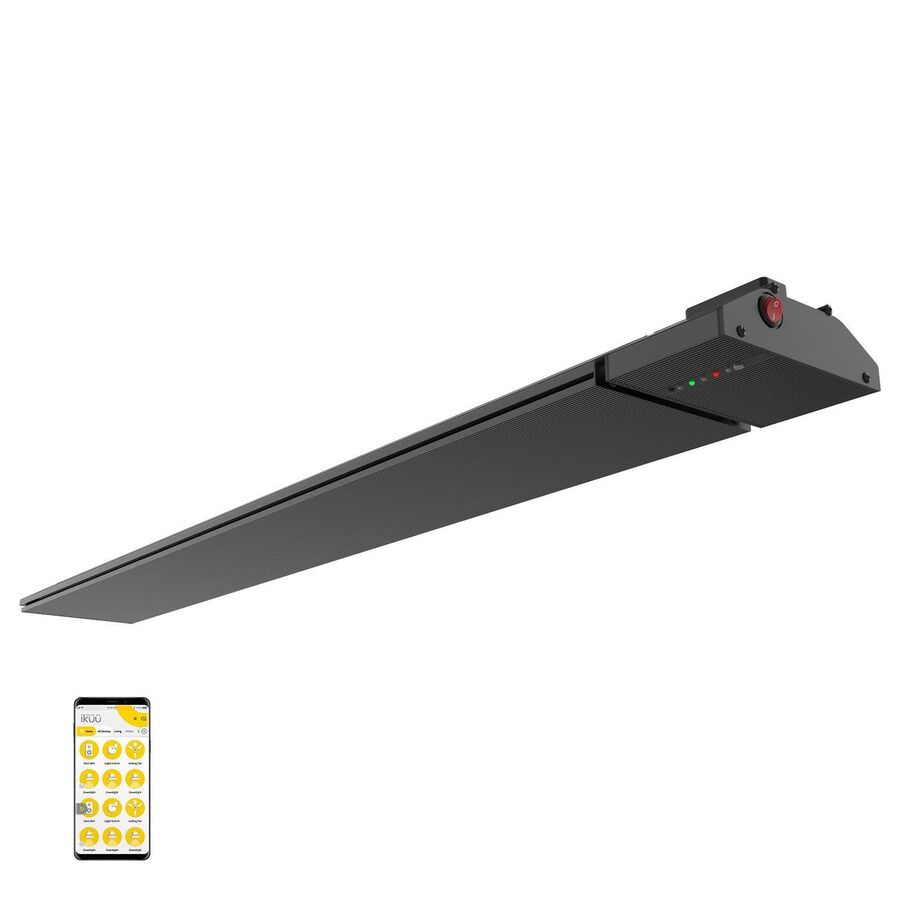
It doesn’t have to be this way. Say g'day to the strip heater – the sleek, modern, and seriously effective way to bring warmth to those chilly spaces, both inside and out. If you've seen these slimline beauties around and wondered what they're all about, you've come to the right place.
A strip heater is a long, narrow electric heater that provides warmth through radiant heat. Now, what's radiant heat? Instead of heating the air around it like a noisy fan heater (which is useless outside), it heats objects and people directly.
Think of it like the warmth of the sun. Even on a cool, breezy day, when the sun is on you, you feel warm. That's the exact same principle. This makes strip heaters incredibly efficient because they don't waste energy trying to heat air that can just blow away. They are silent, stylish, and they don't emit that distracting, bright red glow you get from some old-school heaters.
For Aussies who love the alfresco lifestyle, an outdoor strip heater is an absolute game-changer. It’s the difference between using your deck or patio for just a few months of the year versus enjoying it all year round for brekkie, dinner, or drinks with mates.
Here’s why they’re a fair dinkum brilliant choice for the outdoors:
There’s nothing worse than a beautiful bathroom that feels like an icebox. A bathroom strip heater is the perfect solution to turn your bathroom into a warm, comfortable sanctuary.
Forget those dodgy old 3-in-1 lamp heaters that take ages to warm up. A strip heater provides instant, gentle warmth that makes getting out of the shower a pleasure, not a punishment.
Why they work so well in bathrooms:
Ready to make your favourite spaces comfortable and cosy all year round? When you're investing in a heating solution, you want quality, performance, and style that lasts. Schnap Electric Products are renowned for their premium range of strip heaters designed for the modern Australian home.
Whether you're creating the ultimate alfresco area or a spa-like bathroom retreat, Schnap has the perfect solution.
Don't let the cold win. Chat with your electrician about installing a Schnap Electric Products strip heater and start enjoying every part of your home, no matter the season.
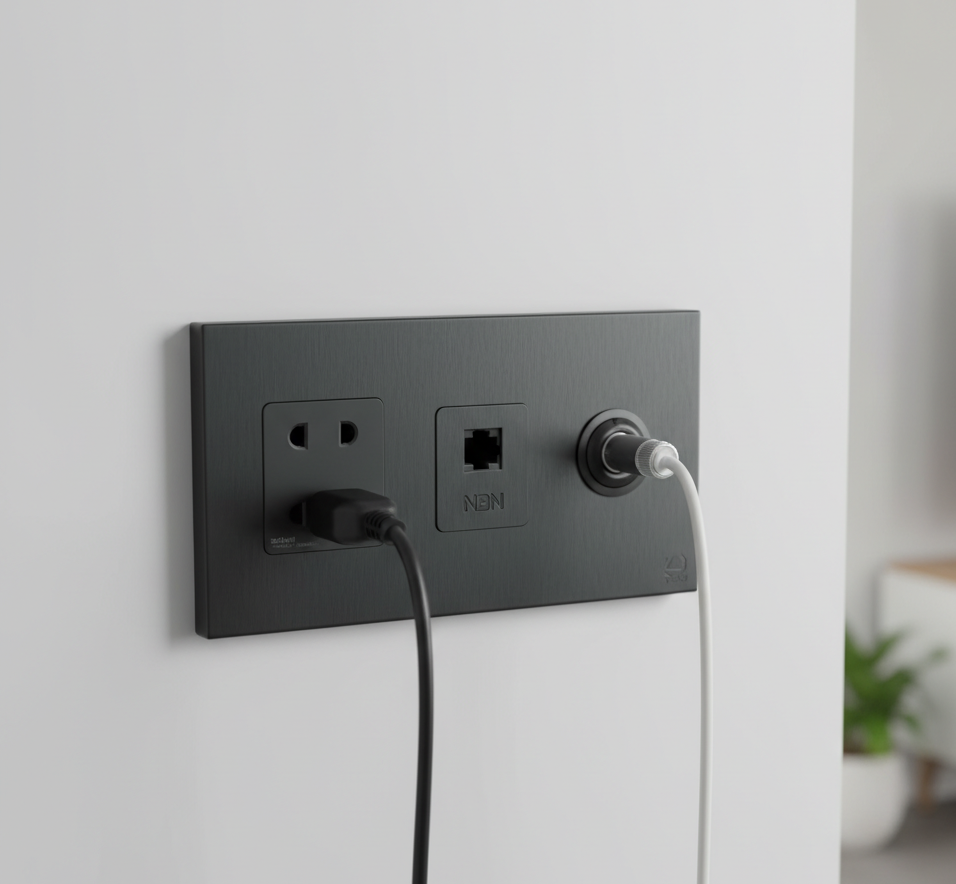
Ever stood there staring at a wall in your house, trying to make sense of the jumble of sockets? You've got your standard power points, but then there’s a whole other collection of connections that can be a bit of a muddle. What’s for the internet? Which one is for the telly? And what do you do with that funny-looking old phone plug?
No worries, mate. Getting your head around the different types of wall socket is easier than you think. This is your fair dinkum guide to identifying and understanding the most common data and broadcast connections in any modern (or not-so-modern) Aussie home.
Let's start with the most important one for most of us these days: the NBN wall socket. This is your gateway to the world of streaming, browsing, and working from home. It’s the physical point where the National Broadband Network enters your house.
For kicking back and watching the footy or your favourite free-to-air shows, you'll need a solid connection to your roof antenna. The TV antenna wall socket is how you do it, but you might come across a couple of different types.
Here are the main tv antenna wall socket types you’ll find in Australia:
Ah, the humble telephone wall socket. In many Aussie homes, this little socket is heading for retirement as more people ditch the landline for their mobiles.
Whether you're building a new home, renovating, or just trying to modernise your connections, the look and quality of your wall plates matter. A mismatched, daggy-looking wall socket can spoil the look of a freshly painted room. For a seamless and stylish finish, you need to check out the range from Schnap Electric Products.
Schnap specialises in high-quality, modern electrical fittings that allow you to coordinate all your wall sockets for a professional look.
Don't let your wall sockets be an afterthought. Chat with your sparky or registered cabler about using the Schnap Electric Products range for a fully connected home that looks absolutely brilliant.

SCHNAP Electrical Wholesaler - clear, upfront pricing that professional electricians trust

Get what you need in seconds. SCHNAP electrical wholesaler makes ordering quick and simple

Fast delivery anywhere - that's guaranteed. SCHNAP electrical wholesalers ship nationwide with same-day dispatch

Track your order every step of the way. SCHNAP electrical wholesale keeps you updated from click to delivery

SCHNAP is Australia's premier electrical wholesaler and electrical supplies, marketing thousands of quality products from leading brands. Trusted for nearly two decades by licensed electricians, contractors, and engineers, our range covers everything from basic electrical components to complex industrial electrical equipment
Our key categories include: LED lighting, designer switches, commercial switchboards, circuit protection, security systems & CCTV, and smart home automation
All products are certified to Australian standards (AS/NZS), backed by our 30-day, no-questions-asked return policy. Our expert technical team helps you quickly source the right solution for any residential, commercial, or industrial project, with daily dispatch from our Sydney electrical warehouse delivering Australia-wide
SCHNAP offers the most comprehensive electrical product range, with full technical specifications, application details, installation requirements, compliance standards, and warranties — giving professionals total confidence in every purchase


Kingsgrove Branch:
Opening hours:
Mon - Fri: 6:30 AM to 5 PM
Saturday: 8:00 AM to 2:00 PM
Sunday: 9:00 AM to 2:00 PM
Closed on public holidays
Jannali Branch:
Closed for Renovations
© 2004 - 2026 SCHNAP Electric Products