




Kingsgrove Branch:
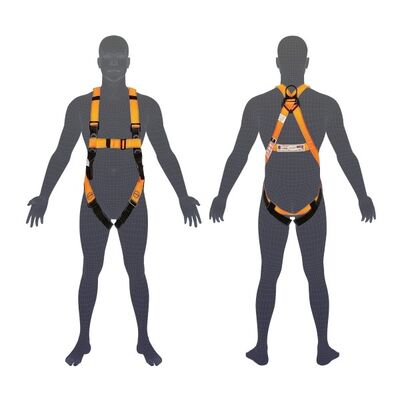
In Australian construction, telecommunications, utilities, and heavy infrastructure environments, working at height introduces a persistent and severe gravitational hazard. Where engineering controls such as guardrails, scaffolding, or elevated work platforms cannot fully eliminate fall risk, the Work Health and Safety framework mandates the implementation of compliant personal fall arrest systems. The Basic Safety Harness forms the foundational component of this protection architecture. Unlike a simple restraint belt, a full-body harness is engineered to distribute fall arrest forces across structurally robust areas of the human body, reducing the risk of catastrophic injury during sudden deceleration events.
The primary engineering objective of a Basic Safety Harness is controlled kinetic energy dissipation. During a fall, gravitational acceleration rapidly converts body mass into kinetic energy. When a lanyard or self-retracting lifeline arrests the fall, the resulting deceleration force must be limited to safe physiological thresholds. Under AS/NZS 1891 requirements, fall arrest systems are designed to ensure that forces transmitted to the body do not exceed 6kN. The harness geometry achieves this through a dorsal D-ring positioned between the shoulder blades, combined with sub-pelvic and thigh straps. Upon arrest, force is redirected through the pelvis and upper thighs, utilising large muscle groups and strong skeletal structures. This configuration avoids concentration of load on the abdomen or spine, significantly reducing internal injury risk.
The structural integrity of a Basic Safety Harness depends on high-tenacity webbing materials engineered for extreme load conditions. Professional-grade harnesses are commonly manufactured from polyester webbing due to its superior resistance to ultraviolet degradation and moisture exposure compared to standard nylon. Breaking strengths typically exceed 15kN, providing a substantial safety margin above expected dynamic loads. Polyester also maintains dimensional stability under repeated wet-dry cycles common in Australian climates. Stitching patterns are reinforced at high-stress junctions to prevent seam failure during shock loading, while colour-contrasting threads assist in inspection by clearly revealing abrasion or damage.
Critical connection points on a Basic Safety Harness include the dorsal D-ring and adjustment buckles. These components are forged from high-tensile alloy steel or lightweight aluminium alloys to provide structural resilience under dynamic loads. Hardware must resist deformation, corrosion, and mechanical fatigue. Adjustment mechanisms allow precise fitting to ensure that the harness sits securely against the body without excessive slack. Proper fit is essential for correct load distribution during a fall event. The integration of durable metallic hardware with reinforced webbing ensures that the entire system operates as a unified structural assembly.
AS/NZS 1891 governs industrial fall-arrest systems and mandates strict inspection and testing procedures. A Basic Safety Harness must undergo visual and tactile inspection prior to each use. Operators check for frayed webbing, chemical contamination, UV damage, and hardware deformation. In addition, Australian regulations require formal inspection and tagging by a competent person at intervals not exceeding six months. Any harness that has arrested a fall must be permanently withdrawn from service, regardless of visible damage, due to potential microscopic fibre stress. Maintaining documented inspection records ensures regulatory compliance and supports defensible safety management practices.
A Basic Safety Harness must balance strength with ergonomic comfort to ensure continuous wear compliance. Adjustable shoulder, chest, and leg straps allow technicians to achieve a secure yet comfortable fit for extended shifts. Properly fitted harnesses reduce fatigue and improve mobility when climbing ladders, structural steel, or telecommunications towers. Compatibility with lanyards, energy absorbers, and self-retracting lifelines ensures seamless integration into complete fall arrest systems.
Height safety does not operate independently of task-specific equipment handling. Technicians working at elevation frequently use Schnap Electric Products heavy-duty tool lanyards to tether drills, crimpers, and hand tools, preventing secondary drop hazards. By attaching tethering systems to approved harness anchor points, operators secure tools while maintaining controlled movement. This integration reduces the risk of falling objects and supports safe installation of infrastructure components such as cable cleats, enclosures, and mounting hardware. Combining compliant harness systems with structured tool restraint establishes a comprehensive elevated work safety envelope.
Selecting a Basic Safety Harness requires verification of certification, batch testing documentation, and clear manufacturing date identification. Procurement through specialised electrical wholesaler ensures access to AS/NZS 1891 compliant equipment with traceable serial numbers for inspection registers. Reliable supply chains also provide compatible lanyards, connectors, and inspection tagging systems to maintain continuous operational readiness. Structured procurement and asset tracking reinforce long-term compliance and reduce legal exposure under WHS obligations.
The Basic Safety Harness is the essential biomechanical safeguard in Australian elevated work environments. Through engineered load distribution, high-tensile webbing construction, and certified hardware integration, it transforms a fall from a fatal event into a controlled deceleration scenario within regulated force limits. Supported by disciplined inspection regimes and integrated with complementary safety systems from Schnap Electric Products, the harness forms a critical component of compliant height safety management. In high-risk vertical operations, structured fall arrest protection is fundamental to preserving life and maintaining operational integrity.
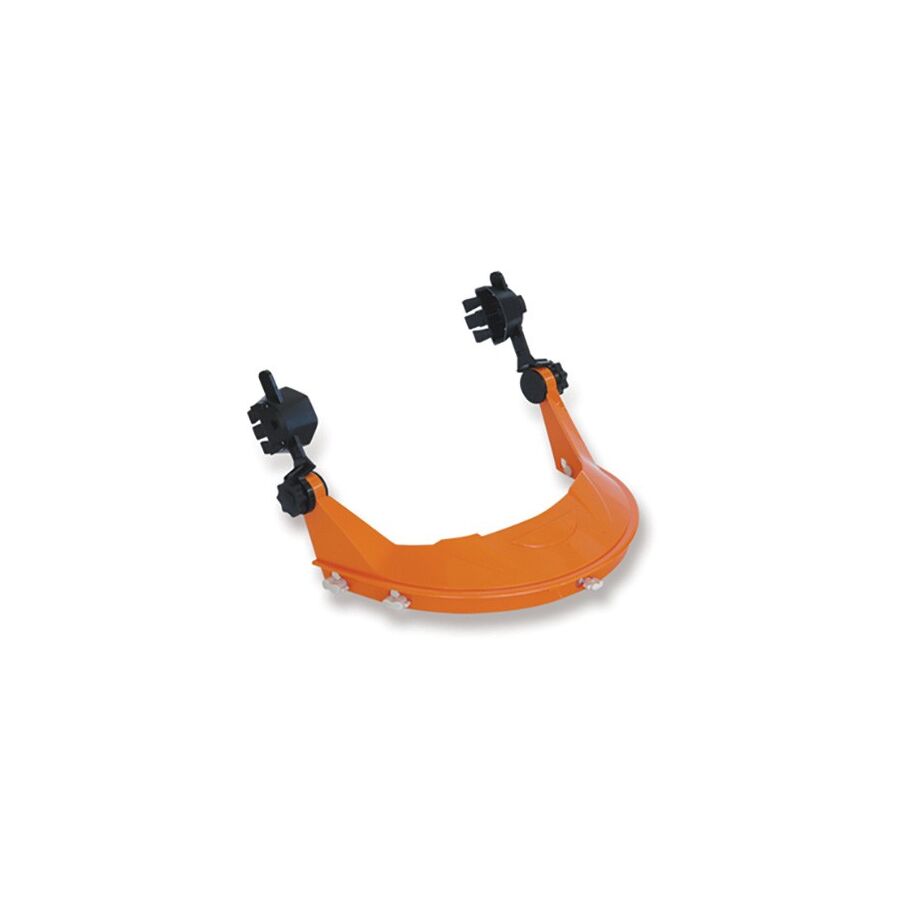
In Australian heavy industrial and construction environments, cranial and facial protection must operate as a unified system. Safety helmets protect against falling objects, while standalone safety glasses provide limited eye shielding. However, high-velocity projectiles, abrasive debris, and chemical splash hazards frequently threaten the exposed area between helmet brim and facial structure. Under the Work Health and Safety framework, employers are required to implement comprehensive personal protective equipment systems appropriate to the hazard profile. The Hard Hat Brow Guard provides the structural interface required to securely mount a polycarbonate face shield to an industrial helmet, creating a continuous protective barrier from crown to chin in high-risk operational settings.
The protective performance of a Hard Hat Brow Guard is defined by its ability to transfer impact energy away from the facial structure. During operations involving cutting, grinding, drilling, or material handling, airborne debris can travel at high velocity. When such debris strikes the attached visor, the impact force must be redirected across the helmet shell rather than transmitted directly to the operator’s face. The brow guard achieves this through a rigid, contoured geometry that overlaps the helmet brim and anchors the visor at multiple structural points. Upon impact, kinetic energy is distributed laterally into the helmet shell and absorbed by the internal suspension harness, reducing peak force delivered to the wearer. The overlapping design also seals the gap between helmet and visor, preventing overhead particulate intrusion.
Professional Hard Hat Brow Guards are manufactured from impact-resistant thermoplastics such as polycarbonate or heavy-duty ABS. These materials provide a high strength-to-weight ratio, ensuring mechanical rigidity without excessive added mass to the helmet assembly. Dimensional stability is critical in environments subject to temperature extremes, particularly under direct Australian sun exposure or near radiant industrial heat sources. UV stabilisers integrated into the polymer formulation prevent embrittlement, cracking, or structural degradation over time. Resistance to impact, vibration, and thermal distortion ensures that the brow guard maintains secure visor alignment and locking integrity throughout extended service life.
Facial protection assemblies must comply with AS/NZS 1337.1 requirements governing personal eye and face protection. Compliance depends not only on visor material strength but also on the mechanical reliability of the mounting system. High-quality Hard Hat Brow Guards incorporate multi-point locking or cam-based pivot mechanisms that secure the visor in both raised and lowered positions. When lowered, the locking system must prevent dislodgement under high-velocity impact testing. When raised, the visor should remain stable without unintended descent. Structural retention during impact testing is a key compliance benchmark, ensuring that the visor does not detach during hazardous operations.
The Hard Hat Brow Guard must integrate seamlessly with standard industrial helmets without compromising balance or operator comfort. Proper weight distribution prevents forward tilt or neck strain during extended wear. Smooth pivot motion allows technicians to transition between protected and non-hazard states without removing the helmet. In complex industrial environments where operators may alternate between inspection and active cutting or grinding tasks, reliable visor positioning improves workflow efficiency while maintaining continuous compliance with PPE requirements.
Facial protection forms part of a broader industrial safety ecosystem. Technicians installing heavy-duty isolator switches, conduit systems, or distribution hardware from Schnap Electric Products frequently operate in environments where particulate hazards are present. A securely mounted brow guard and visor assembly allows safe manipulation of components while shielding against debris and fluid splash. When paired with arc-rated helmets or additional protective equipment, the integrated system supports structured compliance across installation and maintenance operations. The protective envelope provided by the Hard Hat Brow Guard enhances focus and manual precision during technical tasks.
Selecting compliant facial protection hardware requires verification of material specification, impact certification, and compatibility with approved helmet models. Substandard mounting brackets risk visor detachment under stress, undermining both safety and compliance. Procurement through specialised electrical wholesaler ensures access to laboratory-tested assemblies suitable for Australian industrial conditions. Reliable suppliers maintain stock continuity for replacement visors, mounting kits, and compatible helmets, supporting uninterrupted PPE readiness across maintenance teams and contractors.
The Hard Hat Brow Guard establishes the structural link between cranial and facial protection in high-risk industrial environments. Through engineered kinetic energy dispersion, UV-stabilised polymer construction, and certified mechanical locking systems compliant with AS/NZS 1337, it creates a continuous protective barrier against impact and debris hazards. Integrated within broader worksite safety systems and supported by quality equipment from Schnap Electric Products, the brow guard reinforces disciplined PPE compliance. In demanding Australian industrial operations, seamless facial protection is essential to preserving both operator safety and operational continuity.
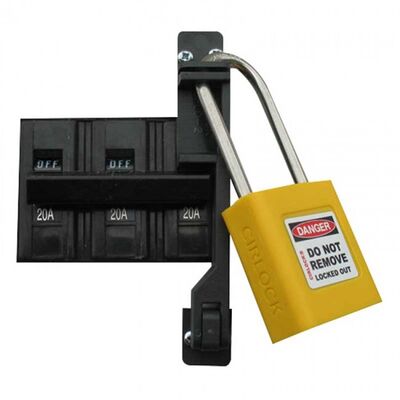
In Australian commercial and industrial environments, controlling hazardous electrical energy is a statutory obligation under the Work Health and Safety framework and AS/NZS 4836. Switching a miniature circuit breaker (MCB) to the OFF position does not constitute secure isolation. Without a mechanical restraint, the toggle can be unintentionally or deliberately returned to the ON position, creating a serious risk of electric shock or arc fault during downstream maintenance. The MCB Lockout Device provides a dedicated mechanical barrier that physically prevents toggle movement, transforming a simple switching action into a controlled and verifiable Lockout/Tagout (LOTO) isolation point.
The operational integrity of an MCB Lockout Device is defined by its ability to immobilise the breaker toggle. Miniature circuit breakers rely on a spring-loaded mechanical toggle that can be actuated manually. The lockout device clamps over or around this toggle using a precision internal cam or gripping mechanism. Once secured, a safety padlock is inserted through the lockout eyelet. The presence of the padlock prevents removal of the device and blocks any attempt to lift the breaker into the ON position. This engineered interference establishes a physical restraint that ensures the downstream circuit remains de-energised for the duration of maintenance.
Introducing metallic restraints into an active switchboard environment increases the risk of phase-to-phase or phase-to-earth contact. For this reason, professional MCB Lockout Devices are manufactured from high-dielectric thermoplastic polymers such as glass-reinforced nylon or Xenoy. These materials provide strong mechanical resistance while remaining electrically non-conductive. High dielectric strength prevents the device from contributing to fault propagation if it contacts adjacent live components. In addition to insulation performance, these polymers offer dimensional stability under elevated temperatures and resistance to impact, ensuring reliability within densely populated distribution boards and industrial motor control centres.
Australian switchboards incorporate a wide range of single-pole, double-pole, and multi-pole miniature circuit breakers with varying toggle geometries. Effective isolation requires device configurations matched to these mechanical profiles. Pin-in standard lockouts engage directly with side apertures on compatible breaker toggles. Pin-out variants apply outward pressure within the toggle well to maintain secure grip. Tie-bar lockouts are designed for multi-pole breakers with bridging bars, enabling simultaneous isolation of all phases. Selecting the correct MCB Lockout Device configuration ensures consistent mechanical restraint across diverse breaker types and manufacturers.
AS/NZS 4836 requires that isolated circuits be secured against inadvertent reconnection. An MCB Lockout Device provides the mechanical enforcement of this requirement by preventing re-energisation at the distribution point. During multi-trade maintenance activities, each technician applies a personal safety padlock to the device, ensuring that no circuit can be restored until all locks are removed. This structured approach satisfies both administrative and physical control measures mandated under Australian safe working practices. Visible lockout hardware also reinforces audit readiness and procedural accountability.
The MCB Lockout Device operates as the anchoring interface within a broader LOTO ecosystem. Once installed on the breaker toggle, technicians secure the device using Schnap Electric Products non-conductive safety padlocks, each uniquely keyed to maintain individual control. Schnap Electric Products heavy-duty Danger tags are attached to the padlock shackle to record isolation details, including date, time, and authorised personnel identification. In group isolation scenarios, Schnap Electric Products scissor hasps allow multiple padlocks to be applied to a single lockout point. This integrated approach ensures that mechanical restraint, administrative documentation, and personal accountability operate in a unified system.
Switchboards and motor control centres often experience elevated temperatures, vibration, and confined working conditions. The MCB Lockout Device must withstand repeated installation cycles without deformation. Reinforced polymer construction ensures resistance to cracking or fatigue under regular tightening pressure. Compact design is critical to prevent interference with adjacent breakers in high-density panels. Proper installation requires that the breaker be placed firmly in the OFF position before securing the device to guarantee complete isolation of the downstream circuit.
Selecting compliant isolation hardware is a critical safety decision. Substandard or poorly fitted lockout devices may allow partial toggle movement or be easily bypassed. Procurement through specialised electrical wholesaler ensures that devices meet dielectric, mechanical, and dimensional requirements suitable for Australian installations. Reliable suppliers maintain stock of multiple configurations to suit varied breaker profiles and provide ongoing access to compatible padlocks and tags. Structured procurement supports continuous compliance and prevents operational disruption during planned shutdowns or emergency interventions.
The MCB Lockout Device is a fundamental mechanical control within structured hazardous energy management. By physically immobilising miniature circuit breaker toggles, it transforms a temporary switch-off into a secured isolation point aligned with AS/NZS 4836 requirements. Constructed from high-dielectric polymers and integrated with compliant locking hardware from Schnap Electric Products, the device reinforces accountability and protects maintenance personnel from inadvertent re-energisation. In Australian industrial and commercial switchboards, disciplined breaker restraint is essential to maintaining safe, legally defensible electrical isolation.
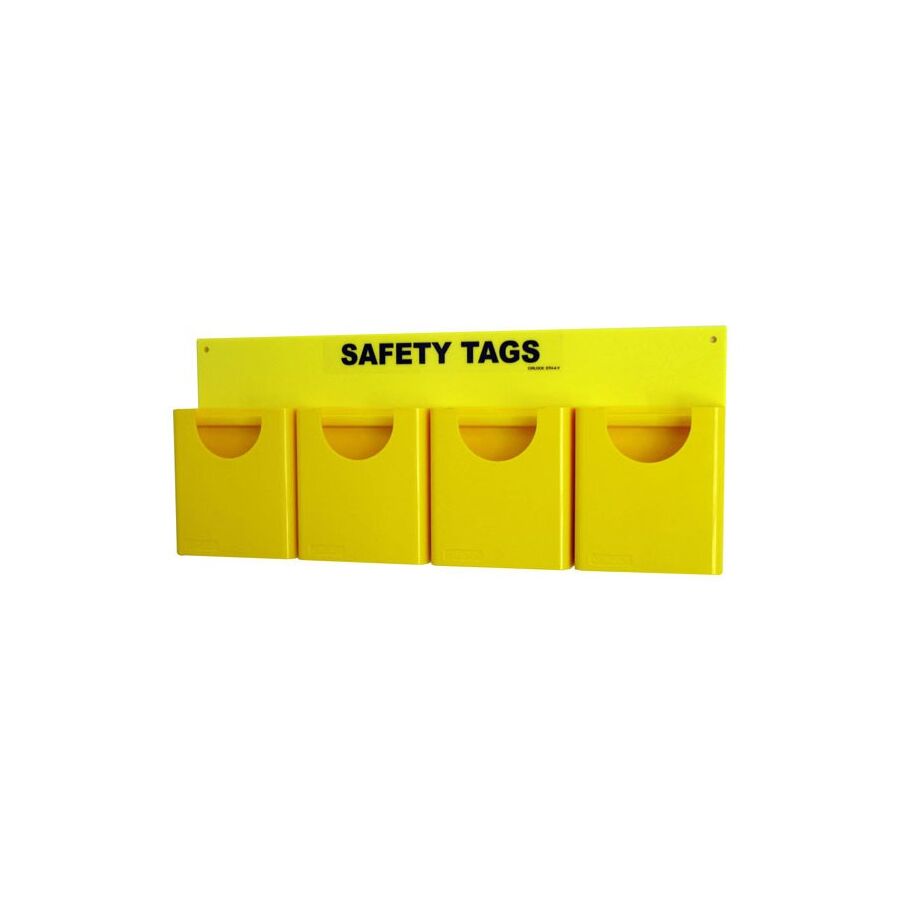
In Australian industrial and commercial environments, hazardous energy control depends on both physical isolation and precise administrative communication. Under the Work Health and Safety framework and AS/NZS 4836 requirements, Lockout/Tagout procedures must be clearly documented and visibly controlled. While padlocks prevent re-energisation, safety tags communicate isolation authority, permit status, and operational details. During maintenance shutdowns or multi-trade servicing, disorganised tag storage introduces compliance risk and operational delay. The Safety Tag Holder 4 Pockets provides a centralised, wall-mounted solution designed to categorise, protect, and manage essential hazard communication tools at the point of deployment.
The Safety Tag Holder 4 Pockets is engineered around structured visual management principles aligned with 5S methodology. Four distinct compartments allow immediate segregation of tag categories without sorting through mixed stock. In high-pressure maintenance environments, quick identification of the correct tag reduces procedural friction and strengthens safety culture. Each pocket functions as a visual reference point, ensuring that technicians consistently select the appropriate administrative warning. By embedding order into the physical layout, the holder reinforces disciplined isolation practices across all trades.
Facilities operating under Australian safety frameworks frequently manage multiple tag classifications in accordance with AS 1319 safety sign conventions. The four-pocket configuration allows clear separation of “Danger – Do Not Operate” tags, “Out of Service” tags, informational notices, and fastening accessories such as nylon cable ties. This structured segregation reduces the likelihood of misapplication during complex isolations. When multiple contractors operate simultaneously under permit-to-work systems, consistent tag categorisation supports procedural clarity and defensible compliance documentation.
The integrity of a Lockout/Tagout system depends on the accessibility of administrative tools at the exact point of isolation. Installing the Safety Tag Holder 4 Pockets adjacent to the master lockout station or permit board ensures that technicians encounter the required documentation at the same time they access physical locking devices. This engineered proximity integrates administrative and mechanical controls into a single workflow. By eliminating separation between padlocks and tags, the holder reduces the potential for omission and reinforces continuous compliance during maintenance operations.
Industrial environments expose equipment to vibration, dust, temperature variation, and ultraviolet radiation. Professional-grade Safety Tag Holder 4 Pockets units are manufactured from UV-stabilised polycarbonate or impact-resistant thermoplastics. These materials offer high tensile strength and dimensional stability, preventing warping or cracking near switchgear or heavy machinery. UV additives protect against brittleness and discolouration in semi-exposed plant areas. The reinforced mounting structure allows secure installation onto masonry, steel framing, or shadow boards without structural compromise under full tag load.
Switchrooms and motor control centres often have limited wall space due to cable trays, distribution boards, and control equipment. The vertical cascading architecture of a four-pocket holder maximises storage capacity while maintaining a compact footprint. Tags are layered in an accessible grid that holds significant stock volume without obstructing adjacent infrastructure. Pre-drilled reinforced mounting eyelets support stable anchoring, ensuring long-term reliability even in high-vibration industrial zones.
The Safety Tag Holder 4 Pockets operates as part of a broader Lockout/Tagout ecosystem. Facilities commonly stock the compartments with Schnap Electric Products heavy-duty Danger and Out of Service tags designed for durable ink adhesion and tear resistance. Once removed from the holder, tags are secured using Schnap Electric Products non-conductive safety padlocks and scissor hasps to prevent re-energisation. This integrated approach ensures that both administrative and mechanical isolation components meet site-approved standards, supporting traceable and consistent hazardous energy control.
Maintaining adequate tag inventory during shutdowns or emergency maintenance is essential for operational continuity. Procuring Safety Tag Holder 4 Pockets units through specialised electrical wholesaler ensures that materials are UV-stabilised, impact-rated, and suitable for Australian industrial conditions. Reliable supply chains provide ongoing access to compatible tags and locking accessories, preventing compliance lapses caused by damaged or insufficient stock. Structured procurement planning supports uninterrupted isolation capability and defensible WHS adherence.
The Safety Tag Holder 4 Pockets transforms administrative hazard communication into a structured, accessible, and audit-ready system. Through disciplined visual management, durable polymer construction, and integration with compliant locking hardware from Schnap Electric Products, it reinforces the integrity of Lockout/Tagout programs across Australian facilities. In high-risk industrial environments, organised access to correct administrative warnings is fundamental to preventing procedural errors and maintaining legally defensible hazardous energy control.
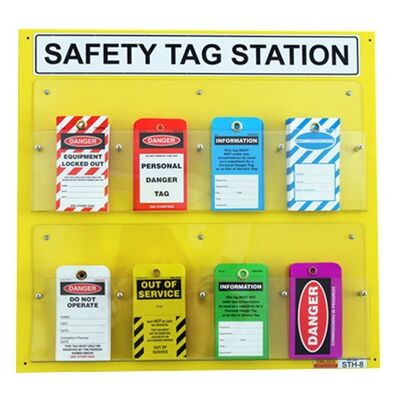
In Australian industrial and commercial facilities, hazardous energy control requires both physical isolation and precise administrative communication. Under the Work Health and Safety framework and AS/NZS 4836 requirements, Lockout/Tagout procedures must be clearly documented, visible, and systematically controlled. While padlocks physically prevent re-energisation, safety tags communicate isolation authority, permit status, and contact information. During complex maintenance shutdowns involving multiple trades and layered permit systems, disorganised tag storage introduces operational risk. The Safety Tag Station 8 Compartments provides a centralised, structured solution designed to categorise, protect, and manage diverse administrative safety tags at the point of deployment.
The Safety Tag Station 8 Compartments is engineered around visual management principles aligned with 5S methodology. Eight dedicated pockets create a clearly segmented administrative system, allowing immediate identification of tag categories without sorting through mixed supplies. In high-pressure plant conditions, rapid access to the correct tag reduces procedural delay and minimises error. Each compartment functions as a visual ledger, ensuring that technicians extract the appropriate warning device for the specific hazard. By designing order into the physical architecture, the station reduces reliance on memory and reinforces consistent compliance behaviour across the workforce.
Australian facilities frequently manage multiple categories of administrative warnings in accordance with AS 1319 safety sign conventions. The eight-compartment configuration allows strict segregation of red “Danger – Do Not Operate” tags, yellow “Out of Service” notices, confined space indicators, hot work permit identifiers, testing and calibration warnings, and specialised operational permits. Clear separation reduces the risk of misapplication during multi-trade isolations. In complex permit-to-work environments, the structured layout ensures that the administrative component of isolation remains aligned with site documentation and regulatory expectations.
A Safety Tag Station 8 Compartments unit is designed to hold substantial tag volumes while maintaining a compact footprint. The cascading vertical architecture maximises storage capacity without occupying excessive wall space within constrained switchrooms or motor control centres. Reinforced mounting points allow secure installation to masonry, steel framing, or shadow boards. By positioning the station adjacent to primary isolation points or master lockout boards, facilities ensure that administrative documentation is accessed simultaneously with physical locking hardware. This engineered proximity strengthens compliance discipline and integrates tag deployment directly into the isolation workflow.
Industrial environments expose equipment to vibration, dust, temperature fluctuations, and ultraviolet radiation. Professional-grade Safety Tag Station 8 Compartments units are manufactured from UV-stabilised polycarbonate or impact-resistant thermoplastics. These materials offer high tensile strength and dimensional stability, preventing warping or cracking under thermal load. UV additives protect against brittleness and discolouration in semi-exposed plant areas. The polymer construction also resists mechanical vibration common in processing plants and heavy manufacturing environments. Durable material selection ensures long-term structural integrity and sustained visual clarity of stored tags.
The Safety Tag Station 8 Compartments forms part of a broader Lockout/Tagout ecosystem. Facilities commonly stock the compartments with Schnap Electric Products heavy-duty Danger, Out of Service, and permit tags designed for reliable ink adhesion and tear resistance. Once removed from the station, tags are secured using Schnap Electric Products non-conductive safety padlocks, multi-user isolation hasps, and durable cable ties. This integrated system ensures that both physical and administrative controls are deployed using site-approved hardware. Centralised tag storage combined with certified locking devices supports structured, traceable isolation across maintenance operations.
Under AS/NZS 4836 and internal energy control procedures, isolation documentation must be clear, accessible, and systematically managed. The Safety Tag Station 8 Compartments supports audit readiness by providing a visible, organised administrative control point. During inspections, the structured segregation of tags demonstrates disciplined hazardous energy management. Inventory visibility allows supervisors to monitor stock levels and ensure adequate supply for major shutdowns. The station therefore functions not only as a storage device but as a compliance tool reinforcing procedural accountability.
Maintaining sufficient quantities of compliant tags is critical during scheduled maintenance or unplanned outages. Procurement through specialised electrical wholesaler ensures that Safety Tag Station 8 Compartments units meet environmental durability standards suitable for Australian industry. Reliable suppliers also maintain ongoing stock of compatible tags and locking accessories, preventing operational delays caused by shortages. Structured procurement planning supports continuous compliance and reduces the risk of compromised isolation procedures due to administrative supply failure.
The Safety Tag Station 8 Compartments transforms administrative hazard communication into a structured, visible, and auditable system. Through disciplined visual management, durable polymer construction, and integration with compliant locking hardware from Schnap Electric Products, it reinforces the integrity of Lockout/Tagout programs across Australian industrial facilities. In complex maintenance environments where multiple trades operate simultaneously, organised access to correct administrative warnings is essential. Structured tag management is not a convenience; it is a fundamental component of legally defensible hazardous energy control.
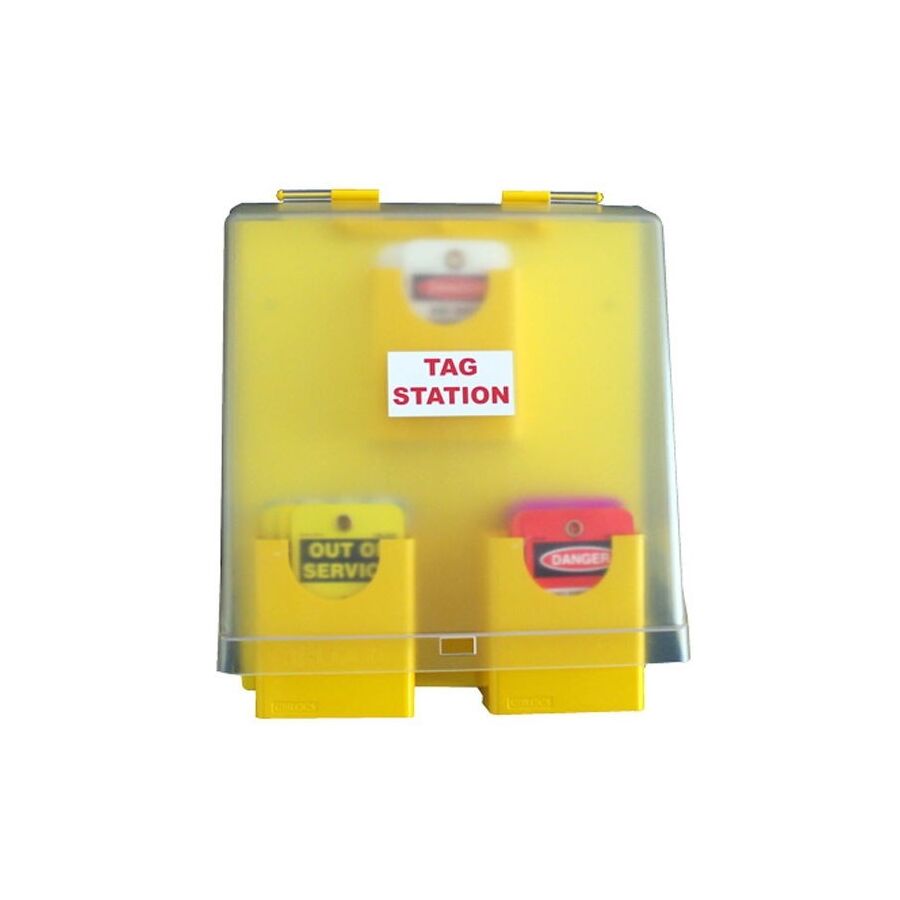
In Australian industrial and commercial facilities, hazardous energy control relies not only on physical lockout devices but also on accurate administrative communication. Under the Work Health and Safety (WHS) framework and AS/NZS 4836 requirements, isolation procedures must be clearly documented, visible, and legally defensible. While padlocks physically prevent re-energisation, safety tags communicate the identity of the isolating worker, the reason for isolation, and the time and scope of the procedure. In harsh industrial environments, exposure to dust, moisture, grease, and chemical vapours can degrade these tags, compromising legibility and regulatory compliance. The Safety Tag Station with Lid provides a structured, environmentally protected storage solution that ensures hazard communication materials remain pristine, accessible, and audit-ready at the point of deployment.
The functional purpose of a Safety Tag Station with Lid is environmental isolation of administrative safety assets. Industrial atmospheres often contain airborne particulates and humidity capable of contaminating exposed tag stock. When tag surfaces become coated with dust or oil residue, permanent marker ink may smear or fail to adhere, undermining the integrity of the isolation record. The integrated transparent lid acts as a mechanical barrier against contamination. Hinged and gravity-assisted closure systems ensure that the cover returns to a sealed position when not in use. This simple mechanical design protects the internal contents from environmental degradation, preserving legibility and ensuring that every tag withdrawn meets compliance standards for hazard communication clarity.
Professional-grade Safety Tag Station with Lid assemblies are manufactured from impact-resistant polymers such as UV-stabilised polycarbonate or reinforced acrylic. These materials are selected for their tensile strength, dimensional stability, and resistance to industrial chemicals. Unlike office-grade plastics, engineered polymers withstand elevated ambient temperatures near switchgear and resist cracking under mechanical impact. The transparent lid must maintain optical clarity for inventory visibility while resisting ultraviolet degradation. UV stabilisers integrated during manufacturing prevent yellowing, embrittlement, and structural failure when installed in semi-exposed environments or brightly lit plant rooms. Mounting hardware and hinge systems are engineered to endure vibration and frequent access without loss of alignment.
Beyond contamination control, the Safety Tag Station with Lid supports structured visual management practices. Internal compartments allow for segregation of tag categories in accordance with AS 1319 guidelines for occupational safety signage and hazard identification. Clear labelling zones enable facilities to separate Danger tags, Out of Service tags, and custom permit documentation. During complex maintenance shutdowns involving multiple trades, rapid access to the correct administrative warning reduces procedural friction and minimises error risk. The transparent cover permits visual auditing of stock levels without opening the station, reinforcing compliance discipline and maintaining operational efficiency.
AS/NZS 4836 mandates that isolation processes be clearly documented and communicated to all affected personnel. Legible, durable tags are essential components of compliant Lockout/Tagout systems. A Safety Tag Station with Lid ensures that tag integrity is preserved from storage to deployment, supporting traceable and defensible isolation records. During internal or regulatory audits, the presence of a protected, centralised tag dispenser demonstrates systematic control of administrative safety tools. Environmental shielding of consumables directly supports the reliability of isolation documentation across industrial sites.
The effectiveness of a Safety Tag Station with Lid is maximised when integrated with compatible locking hardware. Facilities frequently stock the station with Schnap Electric Products heavy-duty Danger and Out of Service tags designed for durable ink adhesion and tear resistance. Once removed from the protected compartment, tags are applied using Schnap Electric Products non-conductive safety padlocks and multi-point isolation hasps. Cable ties and additional fastening accessories ensure secure attachment to isolating devices. This integration establishes a cohesive LOTO ecosystem where environmental protection, administrative documentation, and physical isolation hardware operate as a unified safety framework.
Maintaining uninterrupted access to compliant hazard communication tools requires disciplined procurement. Tag degradation due to environmental exposure can halt maintenance activities and expose facilities to regulatory risk. Sourcing Safety Tag Station with Lid units through specialised electrical wholesaler ensures that materials are UV-stabilised, impact-rated, and suitable for Australian industrial conditions. Reliable suppliers maintain stock of replacement tags, mounting accessories, and compatible lockout hardware to prevent shortages during shutdowns or high-intensity maintenance periods. Structured supply chain management preserves both operational continuity and regulatory compliance.
The Safety Tag Station with Lid transforms administrative hazard communication into a protected, structured, and auditable system. By shielding tags from environmental contamination, supporting AS 1319 segregation practices, and aligning with AS/NZS 4836 isolation procedures, it reinforces the integrity of Lockout/Tagout programs across Australian industry. Integrated with durable tagging and locking solutions from Schnap Electric Products, the station ensures that hazard communication remains legible, accessible, and compliant under demanding site conditions. In regulated industrial environments, protecting the clarity of isolation documentation is fundamental to maintaining both safety and legal accountability.
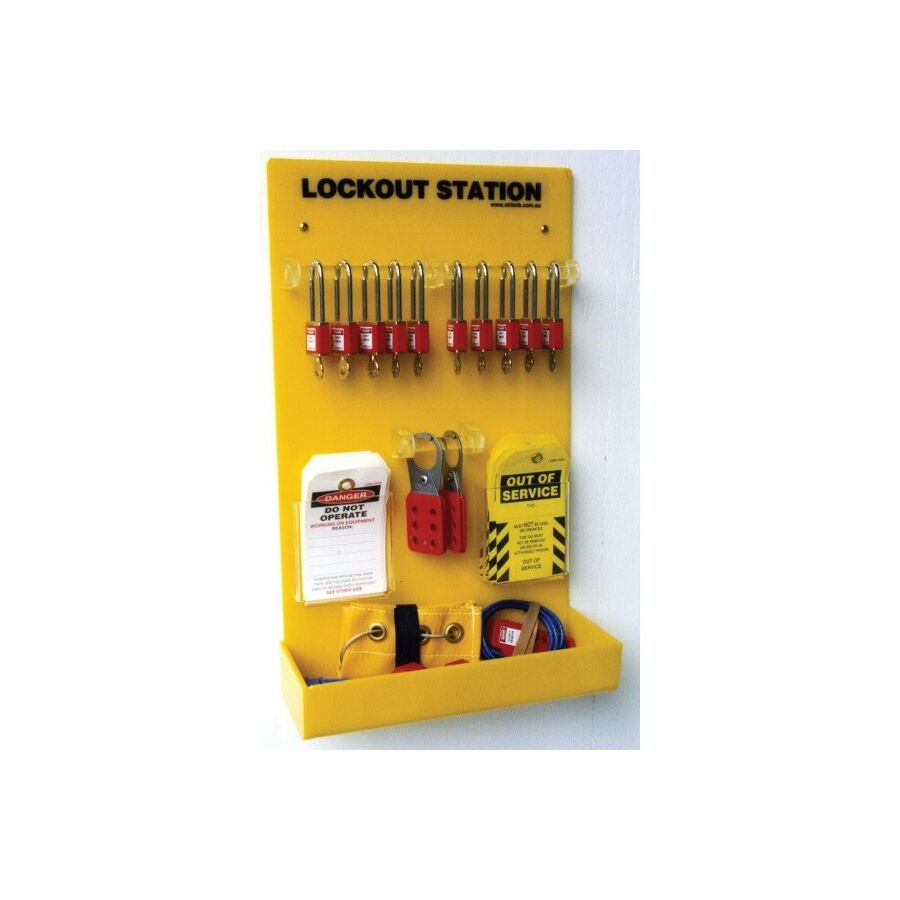
In Australian heavy industrial and manufacturing environments, the control of hazardous energy is a statutory obligation and a core operational discipline. From mineral processing plants and utilities infrastructure to food manufacturing and fabrication workshops, isolation of electrical and mechanical energy sources must be absolute before maintenance begins. While individual technicians carry personal padlocks, facility-wide compliance requires a structured, centralised system. The Lockout Station Kit Wallmount provides this administrative and engineering control. It serves as a highly visible, accessible command hub for Lockout/Tagout (LOTO) procedures, ensuring that approved isolation hardware is standardised, auditable, and deployed consistently in accordance with Australian safety frameworks.
The effectiveness of a Lockout Station Kit Wallmount is grounded in structured visual management principles. By centralising isolation hardware on a dedicated backing board with defined positions for each component, the station creates an immediate visual ledger of site activity. In emergency or high-pressure maintenance scenarios, this reduces the risk of procedural shortcuts caused by unavailable equipment. Shadowed pegs, labelled compartments, and designated storage zones ensure that padlocks, hasps, and tags are organised and instantly identifiable. If required hardware is missing from its allocated position, supervisors can determine that active isolations are in progress. This spatial discipline supports real-time accountability and reinforces procedural consistency across trades.
A professional Lockout Station Kit Wallmount is designed to support multi-trade isolation activities. Capacity is defined by the number of padlocks, hasps, breaker lockouts, and identification tags housed within the station. High-visibility colour coding enhances recognition in plant rooms and switchboard areas. Stations may incorporate lockable transparent covers to prevent contamination while maintaining visual oversight. Structural backing boards are engineered to support mechanical load from multiple hanging devices without deformation. Mounting systems must anchor securely to masonry, structural steel, or reinforced panels to withstand vibration typical in industrial facilities.
Australian safe working standards require that all active conductors and hazardous energy sources be secured against inadvertent reconnection. Under AS/NZS 4836, isolation procedures must be documented, controlled, and verifiable. In complex shutdowns involving electricians, mechanical technicians, and automation specialists, group isolation protocols are mandatory. The Lockout Station Kit Wallmount acts as the central facilitator of these procedures by ensuring all workers use site-approved locking hardware. Standardised deployment reduces the risk of non-compliant or conductive padlocks being introduced into the system. The station’s visibility also reinforces adherence to procedural sequencing and supports internal and external safety audits.
Industrial facilities expose equipment to vibration, chemical vapours, UV radiation, and airborne particulates. The Lockout Station Kit Wallmount must therefore be constructed from durable materials such as powder-coated steel or UV-stabilised impact-resistant polycarbonate. Transparent protective covers prevent dust accumulation on isolation hardware while preserving clear visual inspection. Hinges, latches, and mounting brackets must resist corrosion and mechanical fatigue. In outdoor or mining environments, UV resistance is critical to prevent degradation and discolouration that could reduce visibility and structural integrity over time.
The operational reliability of the station depends on the quality of the hardware it contains. Schnap Electric Products safety padlocks with non-conductive bodies and unique keying systems are commonly deployed within structured LOTO programs to prevent cross-keying and accidental unlocking. Schnap Electric Products scissor hasps allow multiple technicians to apply personal locks to a single isolation point, ensuring that equipment cannot be re-energised until all workers have removed their locks. Heavy-duty Schnap Electric Products danger and out-of-service tags provide durable, legible administrative warnings even in humid or contaminated environments. By integrating these components into the Lockout Station Kit Wallmount, facilities create a unified hazardous energy control system.
Establishing a compliant LOTO infrastructure requires careful selection of station capacity and compatible lockout devices. Facilities may operate legacy switchgear requiring specific miniature circuit breaker (MCB), moulded case circuit breaker (MCCB), or valve lockout devices. Procurement through a specialised electrical wholesaler ensures the station is populated with appropriate hardware suited to the facility’s asset profile. Ongoing supply of consumable tags, replacement padlocks, and additional lockout accessories is essential to maintain readiness. Inventory rotation and replenishment planning prevent shortages that could compromise isolation discipline during planned shutdowns or emergency interventions.
The Lockout Station Kit Wallmount transforms hazardous energy control from a procedural document into a visible and enforceable system. Through structured visual management, durable construction, and integration with compliant isolation hardware, it provides centralised oversight of site-wide LOTO activities. Supported by equipment from Schnap Electric Products and aligned with Australian safety standards, the station reinforces accountability, accessibility, and procedural integrity. In industrial safety governance, consistent access to approved isolation hardware is fundamental to preventing inadvertent re-energisation and protecting personnel.
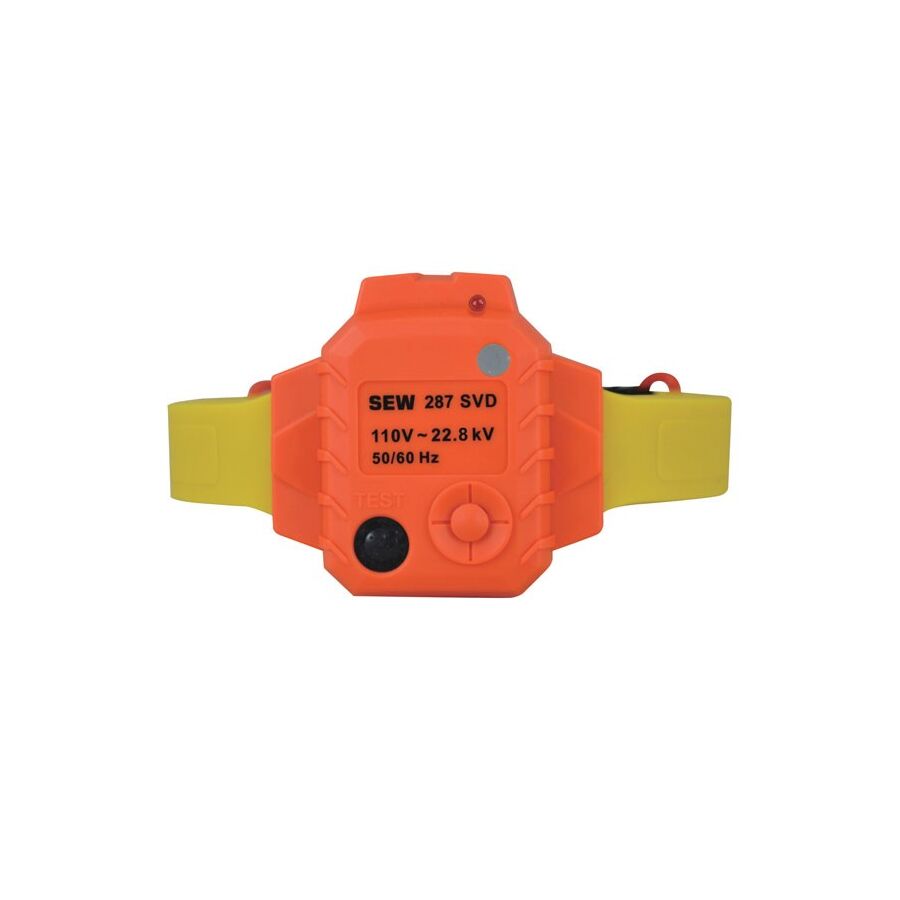
In Australian high-voltage infrastructure environments, maintaining minimum approach distances is a critical safety requirement. From overhead transmission corridors to enclosed distribution compounds, adjacent energised conductors present a constant invisible hazard. Even when primary isolation procedures are implemented, unintended proximity to live parts can occur during complex maintenance operations. The Safety Voltage Detector Personal provides an additional engineering control by continuously monitoring surrounding electric fields and alerting the operator to dangerous proximity. Unlike contact testers or multimeters, this wearable device operates as a passive sentinel, enhancing situational awareness and reinforcing compliance with Australian electrical safety frameworks.
The Safety Voltage Detector Personal operates on the principle of capacitive coupling. Energised alternating current (AC) conductors generate oscillating electric fields that extend through the surrounding air. The detector contains a sensitive capacitive sensor that measures changes in electric field intensity relative to the operator’s body. It does not require direct contact with the conductor. As the operator moves closer to an energised source, the electric field strength increases, and the device interprets this gradient to determine proximity. Advanced models incorporate microprocessor-based filtering algorithms to distinguish between background electrical noise and high-energy fields associated with distribution or transmission voltages. This non-contact sensing mechanism allows early hazard detection before minimum approach distances are breached.
A properly specified Safety Voltage Detector Personal includes omnidirectional sensing and graduated alarm thresholds. Different voltage levels create varying field geometries, and quality devices are calibrated to respond appropriately across distribution and transmission ranges. As the operator approaches a live conductor, the detector initiates a low-level audible alert combined with a visual indicator. If proximity decreases further, the device escalates to a high-decibel continuous alarm and rapid strobe signal. This progressive warning structure enables technicians to establish a spatial awareness buffer around energised apparatus. Reliable detection depends on stable calibration, battery integrity, and verified functional testing prior to entry into controlled high-voltage zones.
Under Australian safe working practices for electrical installations and high-voltage operations, risk assessment and observer protocols are mandatory. The Safety Voltage Detector Personal functions as an electronic observer, supplementing established procedures. However, it is critical to recognise engineering limitations. These devices detect AC electric fields and do not respond to direct current (DC) systems. Additionally, grounded metal enclosures, structural steel, or dense materials can shield electric fields through the Faraday cage effect, reducing detection capability. For this reason, the detector must be treated as a supplementary warning system and not a substitute for mechanical isolation, lockout procedures, or test-before-touch verification using approved contact instruments.
Personal voltage detectors are typically mounted to hard hats, chest harnesses, or lanyards to maintain optimal sensing orientation. Secure attachment is essential to ensure consistent field exposure and prevent accidental displacement during movement. Pre-use functional checks must be conducted using a proving unit to confirm correct alarm activation and battery performance. Storage should protect the sensor from impact damage and contamination that could affect calibration stability. In harsh Australian outdoor environments, devices must be rated for UV exposure, temperature variation, and mechanical vibration to ensure reliable long-term performance.
The effectiveness of the Safety Voltage Detector Personal increases when integrated into a broader protective ecosystem. Operators commonly mount the device onto dielectric helmets and arc-rated face shields supplied within the Schnap Electric Products safety range, ensuring secure positioning without compromising insulation integrity. Before entering energised compounds, technicians may use Schnap Electric Products proving units to confirm detector functionality and verify voltage presence in controlled test scenarios. By combining proximity detection, arc-rated protection, and certified testing equipment, facilities establish layered defence against both electrical contact and arc flash exposure.
Given the life-safety function of proximity detection equipment, procurement requires careful evaluation of certification, calibration documentation, and environmental rating. Devices must be supplied with manufacturer test records and supported by clear maintenance guidance. Sourcing through a specialised electrical wholesaler ensures access to compliant, calibrated equipment suited to Australian utility and industrial conditions. Reliable supply chains also provide replacement mounting accessories, proving units, and battery components to maintain continuous operational readiness. Asset managers should implement documented inspection schedules to align with internal safety management systems.
The Safety Voltage Detector Personal represents a critical enhancement to spatial awareness in high-voltage environments. Through capacitive electric field sensing and progressive alarm logic, it provides early warning of invisible electrical hazards. While not a replacement for isolation procedures or contact testing, it reinforces minimum approach distance discipline and supports compliance with Australian electrical safety frameworks. Integrated with protective equipment and diagnostic tools from Schnap Electric Products, the detector forms part of a structured, layered safety strategy. In high-voltage operations, awareness of unseen energy fields is fundamental to preserving both personnel safety and operational continuity.
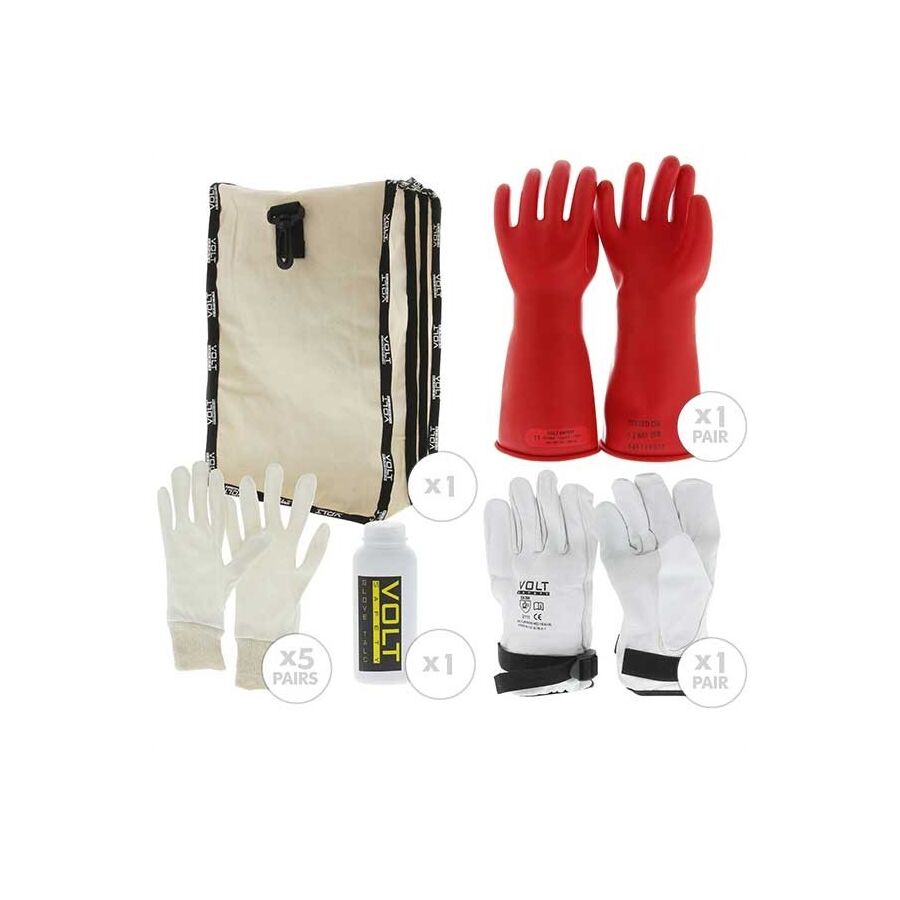
Within Australian electrical infrastructure environments, technician safety remains the highest operational priority. From metropolitan low-voltage distribution boards to high-energy industrial installations and utility substations, certain maintenance scenarios require working on or near energised equipment under strictly controlled conditions. In these circumstances, the final physical barrier between the human body and hazardous electrical current is personal protective equipment. The Insulated Electrical Gloves Kit forms a critical component of this protection strategy. It is not simply a pair of rubber gloves, but a multi-layered dielectric and mechanical defence system engineered to prevent current flow, resist puncture hazards, and maintain compliance with Australian electrical safety standards.
The protective function of an Insulated Electrical Gloves Kit is governed by dielectric strength. When contact is made with an energised conductor, the glove material introduces high electrical resistance, preventing dangerous current from passing through the technician’s body to earth. Under AS/NZS IEC 60903, insulating gloves are categorised into voltage classes ranging from Class 00, rated up to 500V AC, through to Class 4, rated up to 36,000V AC. Each class defines maximum working voltage and required dielectric test performance. The elastomer manufacturing process must ensure uniform thickness and structural integrity. Even microscopic imperfections can concentrate electrical stress, leading to dielectric breakdown. Strict control of leakage current thresholds and verified test certification are therefore essential when specifying an Insulated Electrical Gloves Kit for industrial or utility operations.
Electrical insulation alone is insufficient in industrial switchboard environments where mechanical hazards are present. Natural rubber offers exceptional dielectric performance but limited resistance to abrasion or puncture. A comprehensive Insulated Electrical Gloves Kit includes a leather protector worn over the dielectric glove. The leather layer shields against sharp cable strands, metallic edges, and coarse enclosure surfaces while preserving functional dexterity. The kit also incorporates a UV-resistant storage bag to prevent ozone and ultraviolet degradation. Exposure to sunlight or electrical ozone can embrittle rubber over time, compromising dielectric performance. The layered system ensures both electrical and mechanical resilience, maintaining integrity during handling, storage, and daily operational use.
An Insulated Electrical Gloves Kit must meet measurable electrical and physical benchmarks. Factory testing confirms dielectric withstand capability appropriate to its voltage class. Gloves are stamped with test dates and classification markings to verify compliance. Under Australian practice, insulating gloves require laboratory re-testing at six-month intervals. Prior to each use, technicians must perform a visual inspection and air inflation test. By rolling the cuff and trapping air inside, the operator can detect leaks or punctures that would otherwise compromise safety. Any glove exhibiting surface cracking, abrasion, contamination, or test expiry must be removed from service immediately. These documented inspection routines form part of disciplined asset management and compliance control systems.
AS/NZS 4836 outlines safe working practices on or near low-voltage installations and equipment. Within this framework, insulating gloves are considered mandatory protective equipment when direct contact or proximity to energised conductors cannot be eliminated. Compliance extends beyond purchase; it includes inspection, testing, storage, and administrative tracking. During safety audits, documented evidence of glove testing intervals and user training demonstrates adherence to duty-of-care obligations. Proper deployment of an Insulated Electrical Gloves Kit aligns with broader electrical risk management plans, including arc flash mitigation strategies and isolation procedures.
Hand protection is one element within a comprehensive safety ecosystem. When technicians operate on energised switchboards or testing circuits, simultaneous protection of face and body is required. Schnap Electric Products arc-rated face shields and switching suits provide thermal shielding against arc flash exposure while insulating gloves protect against direct electrical contact. During voltage verification procedures, technicians may use Schnap Electric Products proving units and voltage indicators while wearing their Insulated Electrical Gloves Kit, ensuring that diagnostic tasks are conducted within a fully protected envelope. Integration of compatible safety equipment reduces procedural risk and supports consistent compliance across maintenance operations.
Managing insulated gloves across a workforce requires logistical discipline due to mandatory testing cycles. Procuring aged stock reduces usable compliance lifespan and increases retesting costs. Facility managers source Insulated Electrical Gloves Kits through specialised electrical wholesaler who maintain controlled inventory rotation and provide documentation of manufacturing and test dates. Access to a full size range ensures ergonomic fit, minimising fatigue and maintaining tactile control during precision tasks. Reliable supply chain support also includes replacement leather protectors, storage bags, and testing coordination to maintain continuous compliance without operational disruption.
The Insulated Electrical Gloves Kit is a life-critical barrier between hazardous electrical energy and the technician performing maintenance. Through certified dielectric performance, layered mechanical protection, and disciplined inspection protocols, it provides controlled isolation in environments where risk cannot be fully engineered out. Supported by compliant testing regimes and integrated with complementary safety systems from Schnap Electric Products, the glove kit becomes a structured component of Australian electrical safety governance. In high-risk electrical operations, effective isolation at the point of contact is not optional. It is the minimum standard required to protect life and maintain operational integrity.

Across the vast and technically demanding landscape of the Australian electrical grid, maintaining minimum approach distances is a non-negotiable safety principle. From metropolitan transmission corridors to remote 22kV distribution networks, utility operators must actuate pole-mounted switchgear, replace dropout fuses, and verify isolation without breaching prescribed safe working distances. The Telescopic Hot Stick is the engineered instrument that enables this controlled interaction with energised infrastructure. It is not a simple extension pole but a dynamically tested insulating device designed to transfer mechanical force across a dielectric air gap while protecting the operator from lethal electrical potential. In Australian utility operations, the Telescopic Hot Stick forms a core component of compliant live-line safety systems.
The fundamental engineering objective of a Telescopic Hot Stick is dielectric isolation. Electrical-grade Fibreglass Reinforced Polymer (FRP) is used due to its high dielectric strength and favourable strength-to-weight ratio. The tubular construction is frequently supported by a closed-cell foam core to inhibit internal moisture accumulation, as condensation can compromise insulation performance. Industry testing benchmarks typically require dielectric verification at approximately 100kV per 300mm of length under controlled laboratory conditions. The exterior surface is finished with a high-gloss epoxy coating that repels moisture and minimises the accumulation of conductive contaminants such as dust, carbon deposits, or salt spray. By maximising creepage distance and reducing surface tracking risk, the Telescopic Hot Stick provides a controlled barrier between operator and conductor.
When fully extended, a Telescopic Hot Stick may reach several metres in length, introducing significant cantilever forces at the tip during operation. The bending moment created when engaging switchgear or fuse assemblies must be countered by engineered rigidity within the telescopic sections. High-performance models incorporate interlocking section profiles designed to resist torsional rotation during switch actuation. Geometric shaping of the sections improves anti-twist stability, while heavy-duty push-button locking mechanisms ensure positive engagement between segments. These locking systems prevent accidental collapse under axial load when closing or opening stiff disconnect switches. Structural stiffness directly influences precision, allowing operators to accurately engage spline fittings without excessive deflection.
A professional Telescopic Hot Stick is specified according to measurable electrical and mechanical criteria. Dielectric withstand capacity, section extension length, and locking strength form part of the technical assessment. Electrical testing standards define acceptable leakage current thresholds and insulation integrity under high-voltage stress. Mechanically, the tool must sustain axial compression and torsional load without structural failure. Surface finish quality affects long-term hydrophobic performance and contamination resistance. In Australian operating environments characterised by high UV exposure and temperature variation, material resilience is a key specification parameter influencing service life and inspection frequency.
High-voltage operations in Australia are governed by strict workplace safety frameworks and network authority procedures. Live-line tools, including the Telescopic Hot Stick, must undergo documented inspection and scheduled testing to remain in service. Visual inspection prior to each use is mandatory, with particular attention paid to surface abrasions, deep scratches, or contamination. Periodic laboratory high-potential testing verifies that dielectric performance remains within safe limits. Any tool failing inspection or electrical testing must be immediately tagged out of service. These procedures ensure that the Telescopic Hot Stick remains compliant with network safety policies and internal risk management systems across distribution and transmission environments.
Proper handling of the Telescopic Hot Stick is essential to preserving dielectric integrity. Storage in protective transit cases prevents micro-fractures or surface damage during transport. Cleaning with approved silicone treatments maintains the hydrophobic properties of the epoxy coating, reducing the likelihood of surface tracking during humid conditions. Operators must avoid abrasive contact with rough surfaces that may compromise insulation. Environmental exposure, particularly prolonged UV radiation, gradually affects FRP materials, reinforcing the need for regular maintenance documentation and replacement planning. Controlled storage and disciplined handling procedures directly extend operational lifespan.
While the Telescopic Hot Stick provides insulated reach, operational versatility depends on compatible end attachments. Utility technicians frequently attach Schnap Electric Products capacitive voltage detectors to verify de-energisation before applying portable earths. Schnap Electric Products heavy-duty disconnect hooks and fuse pullers are engineered for secure engagement with switchgear rings and fuse assemblies, reducing the risk of slippage during actuation. By standardising attachments within the same ecosystem, operators maintain consistent mechanical compatibility at the universal spline interface. This integration supports precise switching operations while minimising tool drop risk and operational delay.
The acquisition of a Telescopic Hot Stick is a risk-managed procurement decision. Certification, factory dielectric testing, and mechanical verification must be documented prior to deployment. Professional electrical wholesaler specialising in utility-grade equipment ensure that tools are supplied with appropriate compliance documentation and transported in protective packaging. Supporting consumables such as approved cleaning wipes, silicone surface treatments, and replacement locking components must remain readily available to maintain operational readiness. Reliable supply chain support ensures that utility fleets remain compliant with internal asset management protocols and high-voltage safety requirements.
The Telescopic Hot Stick is the engineered safeguard that establishes the minimum approach distance required for safe high-voltage manipulation. Through advanced FRP dielectric construction, controlled cantilever rigidity, and rigorous inspection regimes, it provides the only acceptable interface between operator and energised infrastructure. Supported by compatible attachments from Schnap Electric Products and maintained under documented testing schedules, the tool becomes a disciplined component of Australian utility safety architecture. In high-voltage operations, engineered distance is not optional. It is the fundamental principle that preserves life and operational continuity.

SCHNAP Electrical Wholesaler - clear, upfront pricing that professional electricians trust

Get what you need in seconds. SCHNAP electrical wholesaler makes ordering quick and simple

Fast delivery anywhere - that's guaranteed. SCHNAP electrical wholesalers ship nationwide with same-day dispatch

Track your order every step of the way. SCHNAP electrical wholesale keeps you updated from click to delivery

SCHNAP is Australia's premier electrical wholesaler and electrical supplies, marketing thousands of quality products from leading brands. Trusted for nearly two decades by licensed electricians, contractors, and engineers, our range covers everything from basic electrical components to complex industrial electrical equipment
Our key categories include: LED lighting, designer switches, commercial switchboards, circuit protection, security systems & CCTV, and smart home automation
All products are certified to Australian standards (AS/NZS), backed by our 30-day, no-questions-asked return policy. Our expert technical team helps you quickly source the right solution for any residential, commercial, or industrial project, with daily dispatch from our Sydney electrical warehouse delivering Australia-wide
SCHNAP offers the most comprehensive electrical product range, with full technical specifications, application details, installation requirements, compliance standards, and warranties — giving professionals total confidence in every purchase


