




Kingsgrove Branch:
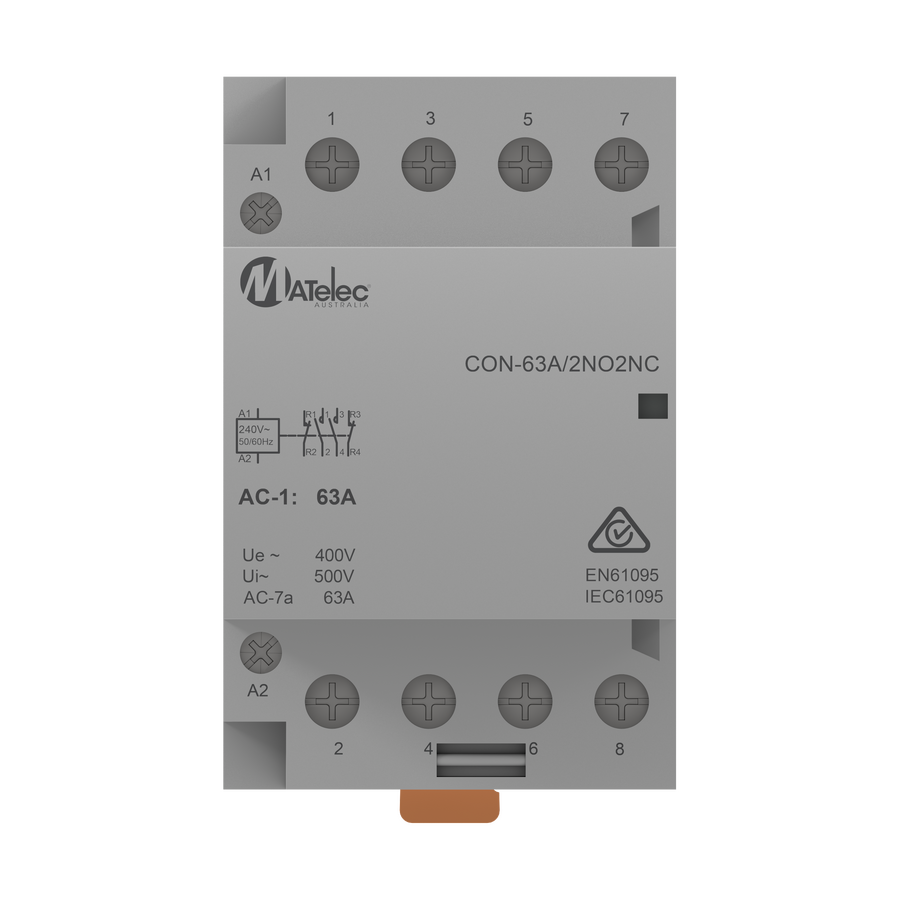
In modern Australian residential and commercial infrastructure, the distribution board has evolved from a passive protection assembly into an active control centre. Automated switching of lighting zones, hot water systems, HVAC equipment, and pool pumps is now standard practice in apartments, aged care facilities, schools, and retail complexes. These applications demand a switching device that is compact, reliable, thermally stable, and acoustically discreet. The Modular Contactor is engineered specifically for DIN rail mounting within consumer units and load centres, providing controlled switching of high-current circuits while complying with IEC 61095 and relevant Australian installation standards. Unlike heavy-duty industrial contactors designed for plant environments, modular contactors are optimised for confined enclosures and noise-sensitive spaces.
The operation of a Modular Contactor is based on electromagnetic actuation. When voltage is applied to the control coil, a magnetic field is generated, attracting a movable armature that closes the main power contacts.
Traditional AC coil contactors can produce audible vibration due to magnetic flux fluctuation at the 50Hz supply frequency. In noise-sensitive environments such as residential switchboards or hotel corridors, this audible hum is unacceptable. Modern modular contactors utilise rectified DC coil systems, converting the incoming AC control signal into DC current through an internal rectifier bridge.
The DC holding force remains constant, eliminating zero-crossing vibration and significantly reducing acoustic output. Many designs also incorporate coil economiser circuits that reduce holding current after initial pull-in, lowering internal heat generation and minimising energy consumption. This is critical in enclosed switchboards where thermal buildup can affect adjacent devices.
Correct selection of a Modular Contactor depends on understanding utilisation categories defined under IEC 61095. These categories reflect the electrical characteristics of the connected load.
AC-7a applies to low-inductive or resistive loads such as heating elements and domestic appliances. A contactor rated at 63A under AC-7a is suitable for purely resistive switching.
AC-7b applies to motor loads and moderately inductive circuits such as pumps or fans. Because inductive loads generate higher inrush and arc energy, the same contactor may be significantly derated under AC-7b conditions. Failure to apply correct utilisation category selection can result in contact welding or premature contact erosion.
In LED lighting circuits, capacitive inrush currents can reach levels far exceeding steady-state load. For these applications, contact materials such as Silver Tin Oxide (AgSnO₂) provide superior resistance to welding compared to standard Silver Nickel alloys. Correct rating selection ensures long-term reliability and prevents unsafe failure modes.
DIN rail installations are inherently compact. When multiple modular contactors operate within a confined distribution board, internal temperature rise becomes a design consideration.
Electrical current passing through contacts generates Joule heating. If devices are mounted directly adjacent to one another without spacing, convection airflow is restricted. Elevated ambient temperature inside the enclosure can cause nuisance tripping of adjacent miniature circuit breakers due to thermal sensitivity rather than actual overload conditions.
Best practice installation incorporates ventilation spacing between devices. Half-module spacers or strategic layout planning improve vertical convection cooling. Maintaining enclosure temperatures within manufacturer specifications, typically below 55°C ambient, preserves contactor lifespan and switching performance.
The reliability of a Modular Contactor depends not only on power contacts but also on correct control circuit protection. The coil is typically energised by timers, photocells, building management systems, or smart controllers.
Control circuits must be protected against short circuits and wiring faults. Dedicated miniature circuit breakers rated appropriately for the control conductor cross-section provide fault protection. Termination quality is equally critical. Fine-stranded conductors should be terminated with bootlace ferrules to ensure secure clamping within cage terminals and to prevent stray strands bridging adjacent poles.
Proper segregation between control and power conductors within the enclosure supports compliance with AS/NZS 3000 wiring rules and maintains insulation integrity.
Many Modular Contactor models incorporate a front-mounted manual override switch with positions such as Auto, On, and Off. This feature allows facility managers to temporarily energise or isolate circuits without modifying control programming.
The override mechanism is mechanically linked to the contact assembly, providing visible indication of contact state. However, it is not a substitute for isolation. For maintenance procedures, upstream protective devices must be de-energised and secured in accordance with safe work practices.
Modular contactors installed within low-voltage assemblies must align with relevant equipment and installation standards. Compliance with AS/NZS 3000 ensures correct conductor sizing, segregation, and enclosure protection. Device construction in accordance with IEC 61095 provides assurance that the contactor meets defined performance and endurance requirements for household and similar applications.
Correct rating selection, thermal management, and wiring practices ensure that installations remain compliant, safe, and durable across residential and commercial projects.
SCHNAP Electric Products supports distribution board installations through complementary protection and termination components. Control circuits can be protected with appropriately rated MCBs, ensuring that coil conductors are safeguarded against fault conditions.
Bootlace ferrules improve termination reliability in modular contactor terminals, particularly where flexible conductors are used. Ventilation spacers assist in maintaining thermal performance in high-density boards. By integrating switching devices with compliant protection and wiring accessories, SCHNAP Electric Products contributes to structured and reliable automation assemblies.
Not all Modular Contactors are identical. Variations exist in coil voltage, contact configuration, utilisation rating, and acoustic performance. Selection must align with the specific load profile, control voltage, and enclosure environment.
Professional procurement through a specialised electrical wholesaler ensures correct device specification, verification of AC-7a or AC-7b ratings, and confirmation of suitability for LED or motor applications. Proper specification prevents premature failure and reduces lifecycle maintenance costs.
The Modular Contactor is a core component of contemporary distribution board automation. By combining silent DC coil technology with correctly rated contact assemblies, it enables reliable switching of residential and commercial loads within compact enclosures. Understanding utilisation categories, managing thermal constraints, and ensuring compliant wiring integration are essential to long-term performance. When correctly specified and supported by structured installation practices, the modular contactor delivers safe, efficient, and dependable control in Australia’s evolving built environment.
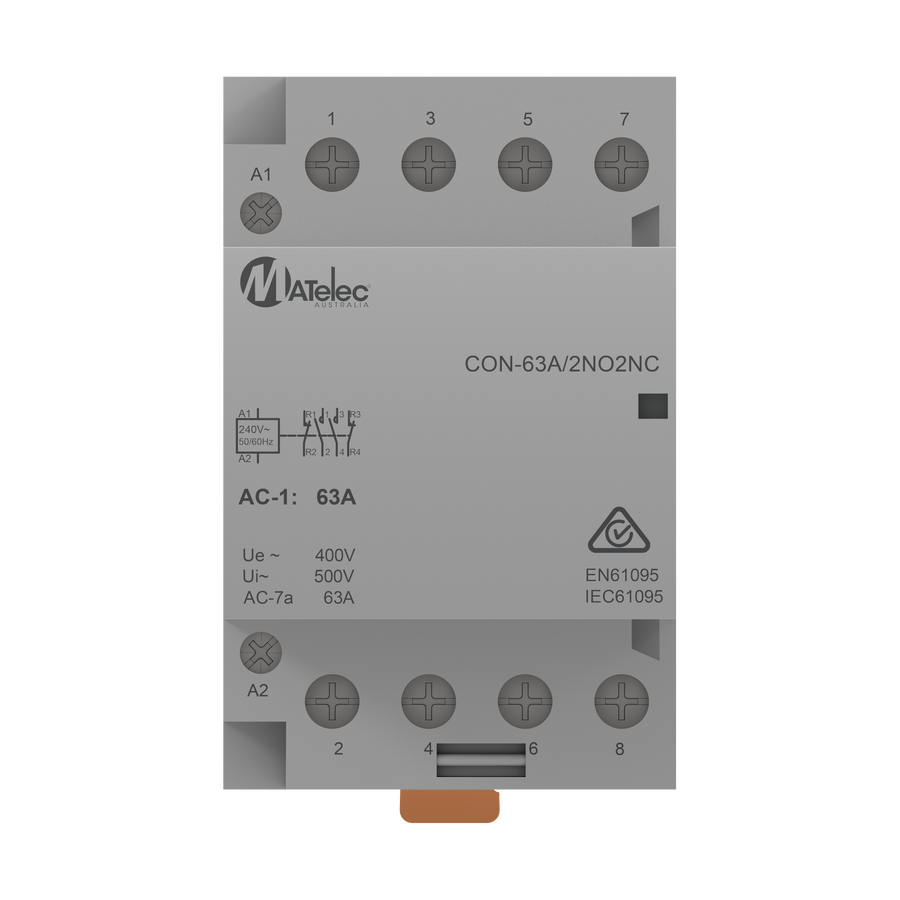
In Australian industrial automation systems, the separation between power switching and control logic is fundamental. While main contactors and circuit breakers manage load currents for motors, heating banks, and distribution circuits, the sequencing and interlocking logic is executed by the Auxiliary Contactor. Installed within motor control centres (MCCs), HVAC plant rooms, mining conveyors, and manufacturing lines, this device governs low-current control circuits that determine machine state and safety compliance. Unlike power contactors designed for AC-3 motor duty, the auxiliary contactor is engineered for high-cycle reliability under AC-15 and DC-13 control applications. Its function is to switch electromagnetic loads such as solenoids, contactor coils, signal lamps, and PLC input circuits while maintaining consistent contact integrity and compliance with recognised switchgear standards.
The defining characteristic of an Auxiliary Contactor is its utilisation category rating. Under IEC 60947-5-1, AC-15 refers to the control of electromagnetic loads on AC systems, while DC-13 applies to switching DC electromagnets.
When a solenoid coil is energised, a magnetic field is established. Upon de-energisation, the collapsing field generates a voltage spike known as back electromotive force (Back EMF). This transient voltage can cause arcing across opening contacts. Auxiliary contactors designed for AC-15 and DC-13 duty incorporate silver-nickel (AgNi) contact materials and arc management geometry to withstand repetitive inductive switching cycles.
This design ensures that control circuits remain operational over millions of switching operations. Failure in this category—such as contact welding—can compromise interlocking logic and create hazardous unintended machine starts.
In safety-related control systems, contact integrity is not optional. Modern industrial safety standards require mechanically linked or positively driven contacts.
Mechanically linked contact arrangements ensure that Normally Open (NO) and Normally Closed (NC) poles cannot be simultaneously closed. If an NO contact welds shut due to a fault, the NC contact remains physically open. This prevents the safety monitoring circuit from receiving a false-safe signal.
Mirror contact design is essential in circuits interfacing with emergency stop systems, safety relays, and monitoring modules. By maintaining defined mechanical linkage between poles, the Auxiliary Contactor provides verifiable safety logic within control panels and ensures predictable state feedback.
Control circuits in modern Australian installations frequently operate at 24V DC or lower. At these voltage levels, contact resistance caused by surface oxidation can result in unreliable signalling.
High-performance auxiliary contactors address this with bifurcated or gold-flashed contact surfaces. Bifurcated contacts split the current path across dual contact points, increasing reliability at low current. Gold flashing resists oxidation and maintains consistent conductivity.
Reliable low-energy switching prevents intermittent PLC input faults and avoids nuisance shutdowns. In complex automation systems, accurate contact feedback is critical for maintaining production continuity and operator safety.
Auxiliary contactors are often configured in base formats such as 4NO, 3NO+1NC, or 2NO+2NC. However, complex control logic may require additional switching poles.
Front-mount and side-mount auxiliary blocks allow expansion of contact count without introducing separate relay coils. These modular extensions mechanically couple to the base contactor, enabling a single coil to actuate multiple circuits simultaneously.
Expanded configurations may include one pole feeding PLC status inputs, another controlling a pilot lamp, and additional poles managing interlocking between forward and reverse motor circuits. Precision mechanical alignment ensures that auxiliary modules operate without binding or chatter.
Inductive switching transients can damage sensitive control electronics. When de-energising coils, surge suppressors or varistor modules are commonly installed across the coil terminals to dampen voltage spikes.
This protection safeguards PLC output cards and reduces electromagnetic interference within the enclosure. Suppression modules are particularly important in high-frequency switching applications where repetitive voltage spikes can degrade control components over time.
Installation of auxiliary contactors within low-voltage assemblies must comply with AS/NZS 3000 for conductor sizing, segregation, and enclosure protection.
Proper termination, secure mounting, and adherence to creepage and clearance requirements ensure safe integration within motor control centres and switchboards. Selection of the correct coil voltage—whether 24V DC, 110V AC, 240V AC, or 415V AC—must align with control transformer specifications and system design.
SCHNAP Electric Products supports control panel construction through complementary accessories that enhance auxiliary contactor performance. Bootlace ferrules ensure secure termination of flexible control conductors, reducing the risk of stray strands causing short circuits.
Surge suppressors and varistor modules help mitigate back EMF effects during coil switching, protecting PLC outputs and maintaining electromagnetic compatibility. Modular expansion accessories allow scalable control logic without increasing panel complexity.
By integrating reliable switching components with compliant wiring and suppression accessories, SCHNAP Electric Products supports structured and durable automation systems across Australian industrial environments.
Auxiliary contactors vary by utilisation rating, contact configuration, coil voltage, and mechanical linkage certification. Using an under-rated relay for inductive control duty can result in premature failure and system downtime.
Professional procurement through a specialised electrical wholesaler ensures correct specification of AC-15 or DC-13 ratings, confirmation of mechanically linked contact design, and compatibility with installed control systems. Verification of technical data sheets prior to installation prevents costly commissioning delays and safety risks.
Correct specification ensures long-term operational reliability and compliance with industrial control requirements.
The Auxiliary Contactor is the logic interface of industrial control systems. Designed for AC-15 and DC-13 inductive switching, it governs interlocking, sequencing, and safety signalling within motor control centres and automation panels. Mechanically linked contacts provide verifiable safety integrity, while low-energy contact optimisation ensures accurate PLC feedback. When installed with proper surge suppression, secure termination, and compliant wiring practices, the auxiliary contactor delivers high-cycle reliability in demanding Australian environments. In control architecture, dependable signalling is fundamental to safe and predictable machine operation.
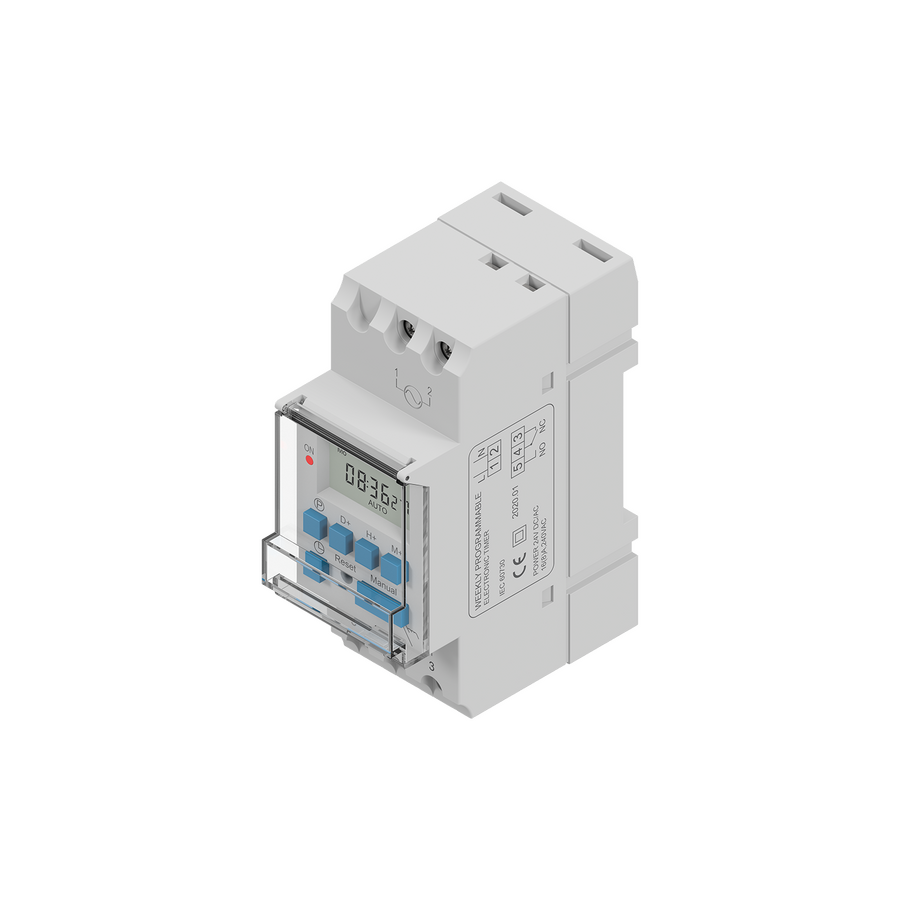
In Australian commercial and industrial facilities, precise scheduling of electrical loads is essential for energy efficiency, compliance, and operational consistency. From HVAC plant rooms in metropolitan office towers to irrigation systems and carpark lighting in regional infrastructure, automated timing control reduces waste and ensures that equipment operates only when required. Mechanical timers with gear-driven motors no longer provide the resolution or reliability demanded by contemporary building standards. The Digital Time Switch is a microprocessor-based control device designed for DIN rail installation within distribution boards, delivering accurate timekeeping, programmable logic, and reliable switching performance suitable for Australian installations.
The defining advantage of a Digital Time Switch is quartz-regulated timing accuracy. Traditional mechanical timers rely on synchronous motors operating at the nominal 50Hz mains frequency. Any deviation in grid frequency or mechanical wear in the gear train results in cumulative time drift.
A digital timer incorporates a quartz crystal oscillator, typically operating at 32.768 kHz, providing stable timekeeping with accuracy commonly within ±1 second per day under normal ambient conditions. This precision ensures reliable activation of lighting, HVAC, and other scheduled loads without progressive drift.
Advanced units also integrate zero-crossing switching technology. The internal microprocessor monitors the AC waveform and triggers the relay contact at the zero-voltage crossing point. By closing the contact when voltage potential is minimal, inrush stress and contact arcing are reduced. This extends relay lifespan, particularly when switching capacitive LED drivers or inductive contactor coils.
Continuity of operation during power interruption is critical in Australian installations, where outages and brownouts may occur. Mechanical timers cease operation immediately when supply voltage is lost, causing schedule misalignment.
A professional Digital Time Switch incorporates an internal power reserve system, typically based on a lithium cell or supercapacitor. This allows the internal clock to maintain accurate time for extended periods without mains supply.
Switching programs are stored in non-volatile EEPROM memory, ensuring that all programmed events are retained even if the power reserve is depleted. Upon restoration of supply, the device resumes operation in accordance with the stored schedule without requiring reprogramming.
Exterior lighting control requires dynamic adjustment based on seasonal daylight variation. Fixed-time switching results in inefficient energy use, particularly in regions where sunset times vary significantly throughout the year.
An astronomical Digital Time Switch eliminates this limitation. By inputting geographic coordinates, the internal processor calculates sunrise and sunset times for the installation location across the full calendar year. The switching cycle automatically adapts to seasonal changes without reliance on external photoelectric sensors.
This approach reduces maintenance associated with PE cells, which are susceptible to dirt accumulation or vandalism, and provides consistent lighting control for carparks, pathways, and security systems.
Beyond simple daily or weekly scheduling, modern facilities often require pulse and cyclic control. A Digital Time Switch can be programmed to deliver short-duration pulses, suitable for school bell systems or signalling circuits.
Cycle mode enables repetitive operation patterns, such as activating a circulation pump for a defined period every hour. This reduces programming complexity compared to entering multiple discrete events and allows efficient control of ventilation and irrigation systems.
These advanced logic functions support precise automation while maintaining a compact DIN rail footprint within the distribution board.
Most Digital Time Switch units include a relay rated for approximately 16A resistive load. However, switching high inrush lighting circuits or motor loads directly through the timer can exceed its endurance capacity.
In higher load applications, the time switch functions as a pilot device, energising the coil of a modular contactor. The contactor then manages the main load current. This configuration protects the timer’s internal electronics from thermal stress and ensures long-term switching reliability in commercial lighting and HVAC applications.
Correct DIN rail mounting and termination practices are essential for reliable operation. Fine-stranded conductors should be terminated with bootlace ferrules to ensure secure clamping within cage terminals and to prevent strand splaying. Neutral integrity is critical; loose terminations may cause display reset or intermittent malfunction.
Installation must comply with AS/NZS 3000, ensuring correct conductor sizing, segregation of control and power circuits, and proper enclosure protection. Devices installed within switchboards must also meet Australian regulatory compliance requirements and electromagnetic compatibility standards to prevent interference with sensitive equipment.
SCHNAP Electric Products supports Digital Time Switch installations through complementary DIN rail components. Bootlace ferrules enhance termination reliability for fine-gauge control wiring. Modular contactors enable safe switching of higher-current loads while using the time switch as a control interface.
Blanking poles and labelling accessories support structured switchboard layout and documentation, ensuring that the timer is clearly identified and accessible for maintenance. By integrating programmable control devices with compliant switching and termination components, SCHNAP Electric Products contributes to reliable and energy-efficient distribution board assemblies.
Digital Time Switch models vary by control voltage, relay rating, number of channels, and programming capability. Selection must align with the intended load profile, supply voltage (12V DC, 24V AC/DC, or 240V AC), and environmental conditions.
Professional procurement through a specialised electrical wholesaler ensures that the device carries appropriate compliance markings and verified EMC performance. Verification of relay durability, power reserve capacity, and programming interface suitability prevents premature failure and operational disruption.
The Digital Time Switch is a precision scheduling device central to modern building automation. Through quartz-regulated accuracy, zero-crossing switching technology, and advanced programmable logic, it provides reliable temporal control of electrical loads. When installed in accordance with Australian wiring standards and supported by structured DIN rail integration practices, it delivers consistent, energy-efficient operation across commercial and industrial facilities. In load scheduling applications, timing precision directly influences performance, compliance, and lifecycle reliability.

In Australian commercial and industrial environments, precise scheduling of electrical loads is essential for compliance, operational efficiency, and cost control. From retail distribution centres in Western Sydney to agricultural pumping systems in regional New South Wales, automated switching ensures that lighting, HVAC, irrigation, and process equipment operate strictly within defined time windows. Manual switching and mechanical tappet timers no longer meet the programming flexibility or accuracy required under contemporary building performance standards. The LCD Time Switch provides a microprocessor-controlled scheduling platform with a visible Liquid Crystal Display interface, delivering quartz-regulated timekeeping, programmable logic, and reliable DIN rail integration within Australian switchboards.
The distinguishing feature of an LCD Time Switch is its visual interface. A Liquid Crystal Display operates by controlling the alignment of liquid crystal molecules between polarised filters. When voltage is applied to specific segments, the crystals alter orientation and selectively block light, forming characters and symbols.
From an engineering standpoint, LCD technology is highly energy efficient. Unlike LED displays, which generate continuous light and heat, LCD panels require minimal current to maintain visible output. This reduces internal heat contribution within confined switchboard environments.
The display provides real-time visual confirmation of current time, programmed events, relay status, and operational mode. This reduces programming ambiguity and allows technicians to verify settings directly without relying on mechanical dial positions. Clear on-screen feedback significantly lowers the risk of scheduling errors during commissioning and maintenance.
Mechanical timers rely on synchronous motors tied to the 50Hz mains frequency. Variations in supply frequency or internal gear wear can lead to cumulative time drift.
An LCD Time Switch utilises a quartz crystal oscillator, commonly operating at 32.768 kHz. This frequency standard enables timekeeping accuracy typically within ±1 second per day at nominal ambient temperature. Quartz regulation ensures consistent scheduling for applications where precision is critical, including school bell systems, irrigation sequencing, and coordinated lighting control across multiple boards.
The LCD interface often includes a seconds display, enabling synchronisation of multiple circuits to a precise reference time. This is particularly valuable in facilities where coordinated switching across zones is required.
Although the control platform is digital, switching is performed through an electromechanical relay, typically configured as a voltage-free changeover (SPDT) contact. Standard ratings are commonly 16A under resistive load conditions (AC-1).
When switching inductive or capacitive loads—such as LED lighting banks or motor contactors—engineers must consider inrush current characteristics. Direct switching of high inrush loads through the timer relay may reduce contact lifespan or result in welding.
Best practice involves using the LCD Time Switch as a pilot control device. The timer energises the coil of a modular contactor, which then switches the primary load. This configuration isolates the timer from high arc energy and extends operational longevity.
Continuity of scheduling during supply interruptions is essential. In many Australian regions, temporary outages can disrupt standard mechanical timers, leading to misaligned schedules.
Professional LCD Time Switch units incorporate internal power reserve systems based on lithium coin cells or supercapacitors. These systems maintain real-time clock operation for extended periods without mains supply.
Programming data is stored in non-volatile EEPROM memory, ensuring that ON/OFF schedules remain intact even if the internal battery is depleted. Upon restoration of power, the device resumes operation according to the stored program without reconfiguration.
Beyond simple daily scheduling, LCD Time Switch units support multi-event weekly programming. This allows distinct switching times for each day, accommodating varied operating hours across commercial facilities.
Pulse mode enables the relay to close for precise short durations, such as a three-second activation for signalling circuits. Cyclic mode supports repetitive operations, such as running a circulation pump for a defined interval every hour.
These programmable logic features provide operational flexibility that is not achievable with mechanical dial timers, enabling structured automation within compact DIN rail form factors.
Correct DIN rail mounting and termination practices are essential for reliable performance. Fine-stranded conductors should be terminated using bootlace ferrules to ensure secure clamping within cage terminals and to prevent strand splaying.
Neutral continuity must be verified during installation, as unstable neutral connections can cause display resets or erratic behaviour. Installation must comply with AS/NZS 3000, including correct conductor sizing, segregation of control and power circuits, and maintenance of enclosure protection ratings.
Devices installed in Australian switchboards must carry appropriate regulatory compliance markings and meet electromagnetic compatibility requirements to prevent interference with sensitive equipment.
SCHNAP Electric Products supports structured DIN rail installations through complementary switching and termination components. Bootlace ferrules improve connection reliability within timer terminals. Modular contactors allow safe switching of higher-current loads while using the LCD Time Switch for control logic.
Labelling systems and blanking modules assist in maintaining organised switchboard layouts, ensuring that programmed timers are clearly identified for maintenance and inspection. Where remote mounting is required, suitable DIN rail enclosures support flexible installation arrangements.
By integrating programmable timers with compliant switching and termination accessories, SCHNAP Electric Products contributes to reliable and maintainable automation systems.
LCD Time Switch models vary by channel count, control voltage (12V DC, 24V AC/DC, or 240V AC), relay rating, and programming interface. Selection must align with load profile, control system architecture, and environmental conditions.
Professional procurement through a specialised electrical wholesaler ensures that the selected unit meets Australian regulatory requirements and verified relay endurance specifications. Confirming correct voltage rating and EMC compliance prevents premature failure and operational disruption.
Correct specification ensures that the timer operates reliably under real-world conditions and supports long-term facility management objectives.
The LCD Time Switch provides precise, visible, and programmable control of electrical loads within Australian commercial and industrial installations. Through quartz-regulated timing accuracy, low-power display technology, and advanced scheduling logic, it delivers reliable automation in compact DIN rail assemblies. When integrated with appropriate load coordination practices and compliant wiring standards, it ensures consistent performance and reduced energy waste. In structured facility management, accurate scheduling combined with clear visual verification forms the foundation of dependable electrical control.
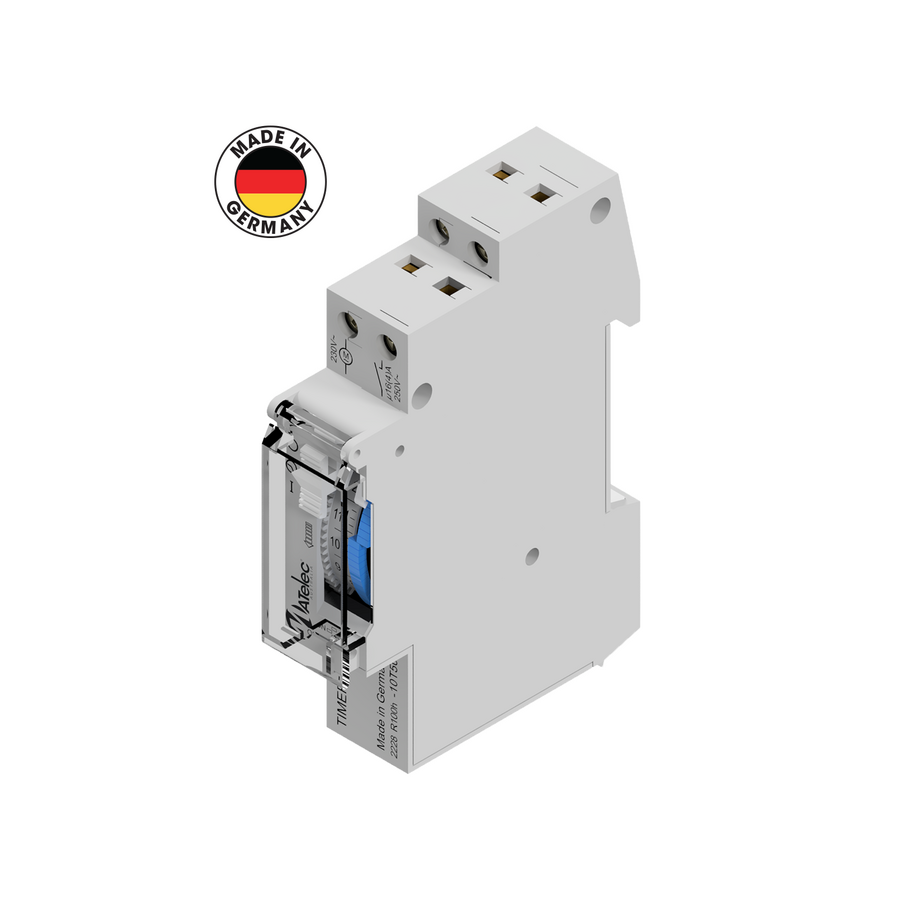
In Australian commercial and industrial installations, decentralised automation within distribution boards is a practical requirement for energy compliance and operational control. From apartment complexes in metropolitan Melbourne to industrial estates in Queensland, electrical loads such as lighting, ventilation, irrigation, and HVAC systems must operate on programmed schedules to reduce energy waste and align with building performance standards. The DIN Rail Timer Switch provides a compact, compliant, and space-efficient solution for time-based switching within switchboards. Designed to mount directly onto the standard 35mm DIN rail, it integrates seamlessly into modular distribution systems while delivering reliable scheduling logic.
DIN rail devices are dimensioned in modules, typically 17.5mm per module. A DIN Rail Timer Switch may occupy one, two, or three modules depending on whether it is mechanical or digital.
Space within a distribution board is limited, and thermal density must be considered. While timer switches themselves generate minimal heat, adjacent circuit breakers and contactors may produce significant thermal output under load. Prolonged exposure to elevated ambient temperatures can reduce the lifespan of internal electronic components, particularly capacitors within digital units.
Best practice installation involves appropriate spacing between the timer and high-current devices to support vertical convection cooling. Maintaining enclosure temperatures within manufacturer specifications preserves reliability and prevents premature component degradation.
Two primary timer technologies are commonly specified: mechanical analogue and digital programmable units.
A mechanical DIN Rail Timer Switch operates using a synchronous motor driven by the 50Hz mains supply. Rotating tappets or segments on the dial determine switching periods, typically in 15-minute increments. This architecture is robust and suitable for repetitive daily loads such as pool pumps or ventilation fans. However, it offers limited scheduling flexibility and coarse resolution.
Digital timer switches utilise a quartz crystal oscillator and microprocessor-based logic. Quartz regulation provides significantly improved timekeeping accuracy compared to synchronous motor designs. Digital units support weekly scheduling, multiple switching events per day, and distinct weekday/weekend programming. For applications requiring minute-level or second-level precision—such as security lighting or signalling circuits—digital control provides superior performance.
Electrical supply interruptions are a reality in many Australian regions. Mechanical timers without reserve capacity stop immediately when power is lost, resulting in schedule drift equal to the outage duration.
Professional DIN Rail Timer Switch units incorporate power reserve systems. Mechanical variants may use rechargeable battery-driven stepper motors, while digital models typically include lithium cells or supercapacitors to maintain internal clock operation.
Program data is stored in non-volatile memory, ensuring that switching schedules remain intact even during extended outages. Upon restoration of supply, the timer resumes operation without manual reconfiguration, maintaining operational continuity.
Most DIN Rail Timer Switch devices include an electromechanical relay rated approximately 16A under resistive load conditions (AC-1). Direct switching of high inrush or inductive loads—such as LED lighting arrays or motor-driven equipment—can reduce relay lifespan or cause contact welding.
In higher-load applications, the timer functions as a pilot device controlling a modular contactor. The timer energises the contactor coil, and the contactor switches the primary load current. This arrangement isolates the timer’s internal relay from arc stress and ensures durability under inductive or capacitive load conditions.
Proper coordination between timer and contactor improves switching reliability and reduces maintenance frequency in commercial lighting and HVAC control systems.
Installation of a DIN Rail Timer Switch must comply with AS/NZS 3000. Live parts must remain protected against accidental contact, and conductor sizing and segregation must meet regulatory requirements.
When mounting the timer within the switchboard escutcheon, any adjacent unused module spaces should be filled with blanking modules to maintain IP2X finger-safe protection. Secure termination using bootlace ferrules ensures consistent clamping force in cage terminals and prevents strand splaying.
Clear labelling of timer-controlled circuits assists maintenance personnel in identifying associated loads quickly and accurately.
SCHNAP Electric Products supports modular switchboard installations through complementary DIN rail accessories. Modular contactors provide safe switching of higher-current loads when used in conjunction with timer switches. Bootlace ferrules improve termination integrity for fine-stranded control wiring.
Blanking poles maintain enclosure safety where spare module space exists, preserving finger-safe compliance. DIN rail enclosures enable remote mounting where direct integration within the primary board is not feasible.
By combining programmable timing devices with compliant switching and termination accessories, SCHNAP Electric Products contributes to structured and durable automation systems within Australian facilities.
DIN Rail Timer Switch models vary by voltage rating, channel configuration, program capacity, and mechanical or digital architecture. Selection must align with the intended load type, supply voltage (12V DC, 24V AC/DC, or 240V AC), and environmental conditions within the enclosure.
Professional procurement through a specialised electrical wholesaler ensures that the device carries appropriate regulatory compliance marking and verified electromagnetic compatibility performance. Confirmation of relay rating, power reserve capacity, and enclosure suitability prevents operational issues and supports long-term reliability.
The DIN Rail Timer Switch provides structured and space-efficient time-based automation within distribution boards. Whether mechanical or digital, it enables reliable scheduling of lighting, HVAC, and process loads in compliance with Australian installation standards. Through careful consideration of modular spacing, load coordination, and proper wiring practices, it transforms a static distribution board into a responsive control system. When integrated with compliant switching and accessory components, it delivers consistent and maintainable automation across commercial and industrial projects.
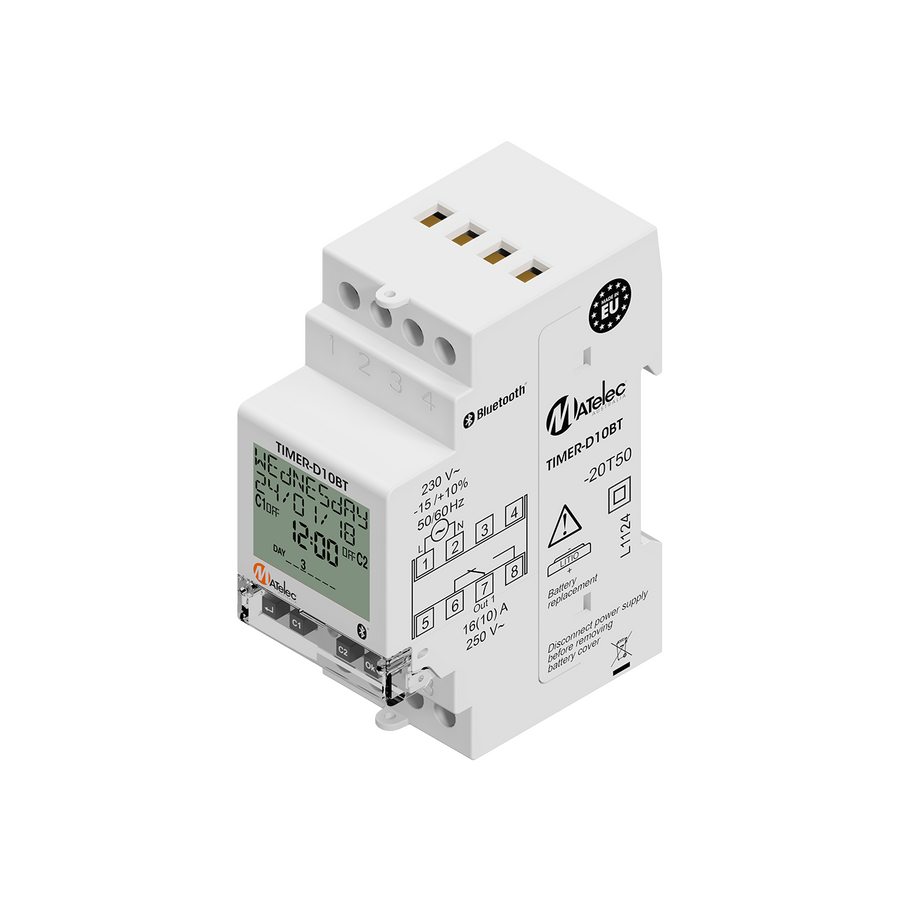
In Australian commercial and industrial environments, the demand for precise, efficient, and safe load scheduling continues to grow. From metropolitan retail precincts to remote mining infrastructure, lighting, HVAC systems, irrigation pumps, and process equipment must operate according to structured time logic to satisfy energy performance obligations and operational efficiency targets.
The Bluetooth Programmable LCD Time Switch represents the next stage in modular automation. It combines the reliability of a hard-wired DIN rail relay with secure local wireless programming via smartphone application. The result is improved configuration accuracy, enhanced safety, and reduced maintenance intervention within live switchboards.
Traditional DIN rail timers require physical interaction with small push buttons and compact LCD menus. Programming adjustments often require the switchboard door to be opened, placing the technician within proximity of live components.
A Bluetooth-enabled time switch removes this requirement. Using Bluetooth Low Energy (BLE) communication, the technician can configure, update, and verify schedules from a safe distance without touching the device. This reduces exposure to arc flash risk and eliminates unnecessary contact with energised enclosures during routine schedule updates.
The smartphone interface presents a full weekly schedule on a high-resolution screen, allowing visual confirmation of ON/OFF sequences and preventing overlapping or conflicting programming commands. This significantly reduces configuration errors common with traditional menu-driven interfaces.
While wireless configuration manages the logic layer, the internal relay performs the physical switching of the electrical load. Modern commercial lighting systems—particularly LED installations—exhibit high capacitive inrush currents during energisation.
If a relay closes at the peak of the AC waveform, significant arcing can occur. Over time, this leads to contact erosion or welding.
Advanced Bluetooth programmable timers incorporate zero-crossing switching. The internal controller monitors the AC sine wave and actuates the relay precisely at the zero-voltage crossing point. By minimising voltage potential at the moment of contact closure, inrush stress and arc energy are significantly reduced.
This improves relay life expectancy and enhances long-term reliability in commercial lighting and inductive control applications.
Wireless control introduces legitimate concerns regarding unauthorised access. Professional Bluetooth time switches operate via local proximity-based BLE communication rather than cloud-based Wi-Fi platforms.
Access is secured through encrypted pairing and PIN authentication, ensuring that only authorised personnel can modify schedules. Because the device operates autonomously without internet dependency, it remains functional regardless of network outages or cloud server availability.
Time synchronisation is achieved automatically when the smartphone connects to the device. The internal quartz oscillator is updated to match the phone’s reference time, ensuring synchronisation across multiple boards within a facility.
The Bluetooth Programmable LCD Time Switch is engineered for 35mm DIN rail mounting within compliant switchboards. Installation must align with AS/NZS 3000 requirements for segregation, termination integrity, and protection against accidental contact.
The device typically occupies two DIN modules and should be mounted with adequate spacing from high-heat components to maintain internal electronics within safe operating temperatures.
Where spare module space exists, blanking modules should be installed to preserve finger-safe protection and enclosure integrity.
Most Bluetooth timers feature relay outputs rated around 16A under resistive load conditions. In high-inrush or inductive environments, direct switching may reduce relay lifespan.
In these cases, the timer functions as a control pilot for a modular contactor. The timer energises the contactor coil, and the contactor handles the heavy load switching. This configuration isolates the timer electronics from high current stress and ensures long-term system durability.
Proper coordination between timer and contactor is essential in commercial lighting banks, HVAC circuits, and pump control installations.
Power interruptions must not compromise operational schedules. High-quality Bluetooth LCD timers incorporate internal battery or supercapacitor backup systems.
The internal quartz clock continues to operate during outages, and all switching programs are stored in non-volatile memory. When supply is restored, the device resumes operation according to the correct time and programmed schedule without manual intervention.
This resilience is critical in facilities where lighting and ventilation schedules must remain consistent for compliance and operational continuity.
Within modular distribution systems, reliable connectivity and circuit protection remain essential. SCHNAP Electric Products supports Bluetooth timer installations with complementary DIN rail accessories, including modular contactors for load switching, surge protection devices for transient suppression, and termination accessories to ensure secure conductor connections.
DIN rail surge protection devices are particularly important for safeguarding sensitive electronic components within the timer from grid transients and voltage spikes.
Bootlace ferrules provide stable, gas-tight termination of fine-stranded control wiring, maintaining long-term connection reliability within vibration-prone or high-temperature environments.
Selection of a Bluetooth Programmable LCD Time Switch must confirm regulatory compliance for Australian installations, including appropriate voltage ratings and environmental operating limits.
Devices should be rated for ambient switchboard temperatures and carry relevant regulatory compliance markings. Verification of relay rating, zero-crossing capability, and power reserve duration ensures suitability for the intended application.
Professional procurement through specialised electrical distribution channels ensures correct specification, compatibility, and long-term support.
The Bluetooth Programmable LCD Time Switch delivers a modern, safe, and precise approach to modular load scheduling. By combining local wireless programming, zero-crossing relay control, quartz-regulated accuracy, and DIN rail integration, it enhances both operational efficiency and technician safety.
When installed in accordance with Australian wiring standards and coordinated with appropriate load switching devices, it transforms a conventional distribution board into a secure and adaptable automation platform. In contemporary facility management, connectivity and precision define performance.
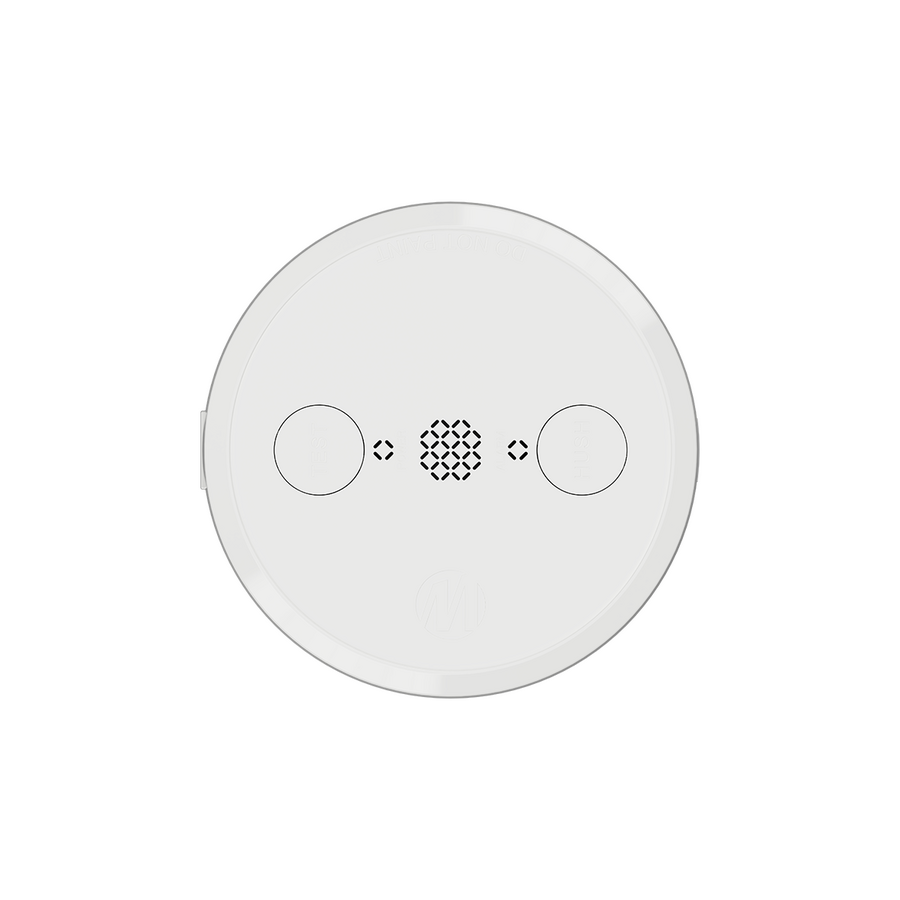
Across Australia’s residential landscape, fire detection standards have evolved in response to modern building materials and contemporary fire behaviour. From high-density apartments to suburban family homes, smouldering fires—often caused by synthetic furnishings, electrical cabling, or bedding—represent the most common and dangerous ignition profile.
The Photoelectric Smoke Detector has become the mandated life-safety solution in many jurisdictions because it is engineered to detect visible smoke particles from slow-burning fires before they escalate to flashover conditions. This early detection window provides critical evacuation time and aligns with current residential compliance requirements.
Photoelectric detectors operate using optical sensing rather than radioactive ionisation. Inside the sensing chamber, a light source (typically infrared LED) projects a beam across a detection path that does not directly strike the sensor under normal air conditions.
When smoke enters the chamber, particulate matter scatters the light beam. This phenomenon—known as the Tyndall Effect—causes a portion of the light to deflect onto the photosensitive receiver. When the scattered light intensity exceeds a calibrated threshold, the alarm is activated.
This mechanism is highly responsive to the larger smoke particles produced by smouldering materials such as upholstery foam, mattresses, PVC insulation, and composite furnishings. It is also less susceptible to nuisance alarms caused by cooking vapours compared with older ionisation technologies.
All smoke alarms installed in new dwellings and major renovations must comply with AS 3786. This standard defines performance sensitivity, environmental durability, insect ingress protection, and reliability testing.
The National Construction Code (NCC) further mandates specific installation locations, including hallways serving bedrooms and, in many states, within bedrooms themselves.
In states such as Queensland and Victoria, legislation now requires interconnected photoelectric alarms with either hardwired mains supply and battery backup or compliant wireless interconnection systems. Existing dwellings are progressively required to upgrade to meet these standards.
Interconnection ensures that when one detector senses smoke, all interconnected alarms sound simultaneously. This is particularly critical in multi-storey homes or large dwellings where occupants may not hear an alarm triggered in a distant location.
Hardwired systems typically utilise 240V mains supply with a dedicated interconnect conductor. In the event of a fire that interrupts mains power or trips the RCD, an internal rechargeable lithium battery backup maintains operation.
Battery-only units without interconnection may not meet current regulatory requirements for new installations or rentals. Redundant power supply and interlinked operation significantly enhance occupant safety.
Smoke alarm circuits must comply with AS/NZS 3000. Proper segregation, secure termination, and correct conductor identification are mandatory.
Mounting bases should provide sufficient cavity depth to accommodate connector terminations without stressing insulation. In ceiling installations, junction plates or mounting blocks assist in maintaining mechanical integrity and ensuring that conductors are not crushed or exposed.
Clear labelling of the smoke alarm circuit at the switchboard ensures easy identification for future maintenance or testing.
Photoelectric sensors rely on optical clarity within the sensing chamber. Dust accumulation or insect ingress can interfere with light transmission and cause nuisance alarms.
High-quality detectors incorporate fine mesh screens to prevent insects entering the sensing labyrinth while allowing smoke particles to pass. Regular maintenance, including annual vacuum cleaning of intake vents, helps prevent sensor drift and false triggering.
Routine testing using compliant smoke test aerosols verifies sensor responsiveness without damaging internal components.
Smoke detectors have a finite operational lifespan, typically 10 years from the date of manufacture. Sensor calibration gradually shifts over time due to environmental exposure and electronic ageing.
Professional inspection includes verification of the manufacturing date stamped on the rear housing. Units beyond their service life must be replaced to maintain compliance and ensure effective detection performance.
Failure to replace expired alarms may expose property owners to compliance penalties and safety risks.
Within compliant residential installations, SCHNAP Electric Products supports secure wiring and circuit integrity through suitable mounting accessories, junction components, and correctly rated cabling solutions.
Appropriate cable selection ensures that active, neutral, and interconnect conductors are clearly identified and protected. Proper terminations reduce the risk of loose connections that could impair alarm reliability.
Labelling and identification components assist in documenting the smoke alarm circuit within the distribution board for future servicing.
Only certified smoke alarms meeting AS 3786 performance criteria should be installed. Devices lacking regulatory compliance markings may fail sensitivity testing or not meet legislative requirements for rental and new-build properties.
Procurement through professional electrical distribution channels ensures that alarms are compatible with required wireless bases, isolation switches, and interconnection systems. Verification of battery backup specification and certification documentation is essential.
The Photoelectric Smoke Detector is the cornerstone of modern residential fire safety in Australia. By leveraging optical detection principles, ensuring compliance with AS 3786 and wiring standards, and implementing hardwired interconnected systems with battery redundancy, it delivers early-warning capability aligned with contemporary fire risk profiles.
When properly specified, installed, and maintained, it provides reliable, life-saving detection performance. In residential safety engineering, early detection defines survival time.
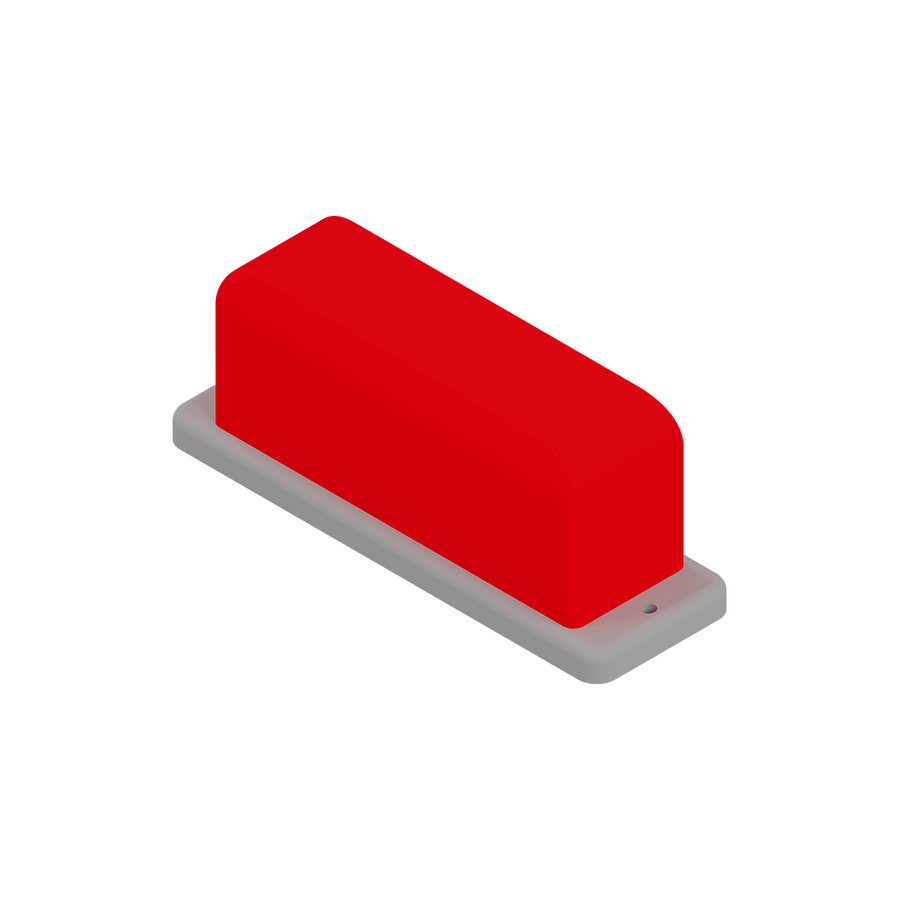
In high-noise industrial environments across Australia, audible alarms alone are often insufficient to communicate emergency or fault conditions. In mining, manufacturing, processing plants, and heavy logistics facilities, ambient noise levels frequently exceed safe auditory thresholds. Under these conditions, a visual alarm layer is essential to meet workplace safety expectations and to ensure immediate hazard recognition.
The Red Mini Strobe Light is a compact yet high-intensity visual alarm device designed to provide unmistakable signalling in industrial and commercial applications. Engineered for durability and high visibility, it forms a critical component of modern safety notification systems.
The choice of red as the signalling colour is aligned with established safety conventions and physical light behaviour. Under AS 1319, red is universally associated with danger, emergency, or stop conditions in occupational environments.
Red light occupies the longer wavelength range of the visible spectrum, which improves its penetration through airborne particles such as dust, vapour, or light smoke. This characteristic enhances visibility in industrial settings where atmospheric contaminants may reduce clarity.
The flashing mechanism activates peripheral vision through temporal modulation. Unlike steady illumination, a pulsed light pattern stimulates rapid attention response. Flash frequencies typically range between 60 and 80 flashes per minute, creating a visual urgency signal that cannot easily be ignored.
Earlier strobe designs relied on xenon discharge tubes that generated high-intensity flashes through capacitor discharge. While effective, xenon systems are sensitive to vibration and have limited operational lifespans.
Modern Red Mini Strobe Lights predominantly utilise solid-state LED technology. LED-based strobes offer:
• Operational lifespans exceeding 50,000 hours • High vibration resistance • Lower power consumption • Immediate activation with programmable flash patterns
Programmable flash sequences allow integration into PLC-controlled systems where different fault conditions can be communicated through coded flashing behaviour.
Industrial control systems typically operate at 24V DC, while some plant environments utilise 110V AC or 240V AC signalling circuits. Correct voltage selection is critical during specification.
The strobe must match the control output configuration of the system. In many installations, the strobe is energised via an auxiliary contact on a motor starter or circuit breaker. When a thermal overload or fault condition occurs, the auxiliary contact closes, activating the visual warning.
For fire alarm systems, integration must comply with AS 1670 requirements governing visual alarm device performance and placement.
Industrial strobes are frequently exposed to harsh environmental conditions including dust, moisture, vibration, and ultraviolet radiation.
Ingress Protection (IP) ratings define resistance levels:
• IP44 for splash protection in controlled indoor environments • IP65 or IP66 for dust-tight and high-pressure water resistance • Higher ratings for marine or extreme industrial exposure
Impact resistance is also essential. Polycarbonate lenses are commonly specified due to their UV stability and mechanical strength, preventing colour fading and lens cracking under prolonged exposure.
Proper installation ensures visibility and durability. The strobe must be positioned to maintain clear line-of-sight without obstruction. Elevated mounting or right-angle brackets may be required to achieve 360-degree visibility in congested plant rooms.
Cable entry points must be sealed to prevent moisture ingress. Correct gland selection maintains enclosure integrity and protects internal circuitry from corrosion or short circuit conditions.
Within compliant installations, termination integrity must align with AS/NZS 3000 to ensure conductor protection and safe segregation.
SCHNAP Electric Products supports industrial signalling installations with complementary components that enhance reliability and environmental protection.
IP-rated cable glands maintain enclosure sealing at the cable entry interface. UV-stabilised flexible conduit protects external supply wiring from degradation in exposed environments.
Terminal blocks and control relays facilitate seamless integration into existing safety loops and control circuits, ensuring stable electrical connection and structured wiring layouts.
These supporting components ensure that the Red Mini Strobe Light performs reliably within demanding industrial applications.
Selection of industrial strobes must consider luminous intensity (candela rating), voltage compatibility, IP rating, and regulatory compliance.
Non-compliant decorative lighting products are unsuitable for safety signalling and may fail under environmental stress. Verified compliance markings and appropriate fire or safety standard alignment are essential for installation within regulated facilities.
Professional procurement through electrical distribution channels ensures correct specification, compatibility, and long-term operational reliability.
The Red Mini Strobe Light serves as a vital visual communication tool in industrial safety systems. By leveraging high-intensity LED technology, appropriate flash modulation, and durable IP-rated construction, it provides immediate and unmistakable hazard signalling.
When properly specified, installed, and integrated with compliant control systems, it enhances situational awareness and supports safe operational environments. In industrial safety engineering, visibility is not optional—it is fundamental.

Within industrial control panels across Australia, clear visual status indication is essential for safe machinery operation. In compact enclosures found in manufacturing plants, water treatment facilities, and food processing sites, space is limited yet visual warning requirements remain critical.
The Red Round Micro Strobe delivers high-impact flashing indication within the standard 22mm panel footprint. It provides urgent visual signalling for fault, trip, overload, or emergency stop conditions without occupying excessive door or DIN-rail space.
Generating high luminous intensity from a small housing requires careful optical design. Unlike standard steady-state pilot lights, a micro strobe must project light effectively into the operator’s field of view.
High-performance units incorporate Fresnel lens geometry moulded into the polycarbonate lens cap. A Fresnel lens compresses the focusing properties of a thicker curved lens into a stepped concentric surface. This design captures divergent LED output and redirects it into a concentrated horizontal beam pattern, increasing effective candela output at typical viewing angles.
Red light, typically centred around 625 nanometres, aligns with hazard indication conventions defined in AS 1319. The red wavelength supports immediate recognition of danger or stop conditions within industrial environments.
The flashing pattern activates peripheral vision through temporal modulation, drawing attention more effectively than a constant illumination source.
The Red Round Micro Strobe conforms to the 22.5mm mounting diameter specified under IEC 60947-5-1 for control circuit devices.
This universal mounting standard allows direct retrofitting into existing control panels and push-button enclosures without modification. Installation typically involves insertion through the panel cut-out and securement with a rear locking nut.
In vibration-prone environments such as crushers, presses, or conveyors, anti-rotation washers or metal retaining nuts improve mechanical stability and maintain front-face sealing integrity.
Modern micro strobes utilise solid-state LED arrays rather than xenon discharge tubes. LED technology provides:
• Extended operational life • Low power consumption • High vibration resistance • Programmable flash patterns
Because current draw is typically below 20mA at 24V DC, the strobe can often be driven directly from a PLC transistor output without an interposing relay.
Engineers must consider leakage current from solid-state PLC outputs. Minor leakage may cause faint glow when the output is in the off state. If required, a parallel burden resistor can eliminate unintended illumination.
Front-face ingress protection is critical for industrial panel-mounted devices. Quality micro strobes achieve IP65 or IP66 ratings from the panel face through integrated gaskets between bezel and enclosure surface.
The lens material must be UV-stabilised polycarbonate to prevent fading or brittleness under prolonged exposure to sunlight in outdoor or plant-floor environments.
Ingress protection compliance must align with installation practices defined in AS/NZS 3000, ensuring safe termination and conductor protection.
Behind the panel face, wiring density can be significant. Secure termination prevents short circuits and signal bypass.
Fine-stranded control conductors should be terminated properly to prevent strand splaying. Clean routing reduces interference with adjacent components and improves maintainability.
Where the strobe is mounted on external enclosures, cable entry points must be sealed with suitable glands to prevent moisture ingress and corrosion of internal electronics.
SCHNAP Electric Products supports control panel installations through compatible termination and enclosure accessories.
Insulated bootlace ferrules improve connection integrity for fine-stranded conductors within screw-clamp terminals. IP-rated cable glands maintain enclosure sealing and protect against environmental ingress.
Legend plates and labelling systems enable clear identification of strobe function—such as “Trip,” “Overload,” or “Emergency”—ensuring visual warnings are supported by explicit textual communication.
These integration components enhance both reliability and clarity within the control panel environment.
Selection of a Red Round Micro Strobe must consider voltage rating (12V DC, 24V DC, or 240V AC), luminous intensity, vibration tolerance, and electromagnetic compatibility.
Industrial-grade units should meet EMC compliance standards such as AS/NZS 61000 to prevent interference with sensitive instrumentation within the same enclosure.
Procurement through professional electrical distribution channels ensures correct specification, verified compliance, and long-term operational reliability.
The Red Round Micro Strobe provides compact, high-impact visual warning within standard 22mm control panel architecture. Through advanced LED technology, Fresnel lens optics, and compliant mechanical integration, it delivers urgent signalling without sacrificing valuable panel space.
When properly specified and integrated with quality mounting and termination components, it enhances machinery status communication and supports safe operational environments. In control panel engineering, clear visual signalling is essential to maintaining safety and responsiveness.

Across metropolitan and regional Australia, the Radio Frequency (RF) spectrum has become increasingly congested. With broadcast television compressed into narrower UHF allocations and adjacent bands reassigned to mobile broadband services, interference risk within Master Antenna Television (MATV) systems has intensified.
The engineering challenge is no longer simply amplification of broadcast signals—it is selective rejection of unwanted high-power carriers operating adjacent to the Digital Video Broadcasting – Terrestrial (DVB-T) spectrum.
Band Pass Filter Channels are precision RF components engineered to pass only designated broadcast frequencies while attenuating out-of-band interference such as LTE and 5G transmissions.
A band pass filter operates using tuned resonant circuits composed of inductive (L) and capacitive (C) elements. These LC networks resonate at a defined centre frequency corresponding to a specific broadcast channel.
Signals within the passband encounter minimal impedance and propagate through the network. Signals outside the target band experience high impedance and are rejected or shunted to ground.
The performance of a filter is characterised by its selectivity, commonly visualised as the steepness of the attenuation slope at the band edge. High-quality filters employ multiple resonant stages to produce sharp roll-off characteristics.
For example, a filter designed to pass a broadcast channel near 694 MHz must sharply attenuate adjacent mobile transmissions above 700 MHz to prevent receiver desensitisation.
Receiver desensitisation occurs when strong out-of-band signals overload the tuner front end, causing loss of lock or pixelation even when the desired signal is present.
No passive RF component is lossless. Band Pass Filter Channels introduce insertion loss within the passband, typically between 1 dB and 3 dB depending on topology and frequency range.
Engineers must incorporate this loss into the RF link budget. In marginal signal conditions, excessive filtering may reduce signal levels below acceptable DVB-T thresholds.
Additionally, sharp filtering may introduce group delay near the passband edges. Excessive group delay can distort digital modulation schemes and increase bit error rates.
Careful specification balances interference rejection against signal integrity to maintain optimal headend performance.
Two primary filtering strategies are commonly deployed in MATV systems.
Block filtering passes an entire section of the UHF band while rejecting frequencies above a defined cutoff. This approach is suitable for general LTE or 5G rejection.
Channelised filtering provides highly selective isolation of individual broadcast channels. In complex installations where signal levels from different transmitters vary significantly, channelised Band Pass Filter Channels allow precise equalisation of input levels prior to amplification.
Balanced signal input prevents amplifier overload and minimises intermodulation distortion within the headend.
Effective filtering depends not only on internal circuitry but also on enclosure shielding. RF energy can bypass inadequate filter housings through electromagnetic coupling.
Metal-cased filters provide superior shielding effectiveness compared to plastic enclosures, reducing direct ingress of interfering carriers.
All coaxial connections must maintain 75-ohm impedance continuity to prevent return loss and signal reflection. Impedance mismatch degrades filter performance and increases standing wave ratio (SWR).
Grounding of filter chassis is essential to maintain reference potential and dissipate static charge, consistent with AS/NZS 3000 requirements for bonding and safety.
Within headend installations, connectivity integrity directly influences RF performance. SCHNAP Electric Products supports MATV installations with precision compression F-connectors suitable for RG6 quad-shield coaxial cable.
Proper compression termination preserves dielectric integrity and maintains consistent impedance characteristics.
F-to-F adaptors and 75-ohm termination resistors assist in maintaining network balance and preventing signal reflections on unused ports.
Earth bonding clamps ensure filter chassis grounding, enhancing safety and reducing susceptibility to static or induced interference.
By combining quality filtering hardware with professional-grade connectivity components, installers can achieve optimal signal purity within distributed television systems.
Spectrum allocation and interference management within Australia are governed by Australian Communications and Media Authority.
Reallocation of upper UHF frequencies for LTE and 5G services has reduced spectral separation between broadcast and mobile carriers.
Band Pass Filter Channels must therefore be specified in accordance with the current Australian channel plan, ensuring 6 MHz bandwidth compatibility and sufficient attenuation above reallocated bands.
Procurement through professional electrical and telecommunications distribution channels ensures filters are correctly tuned, verified for rejection performance, and compliant with Australian broadcast infrastructure requirements.
Band Pass Filter Channels serve as precision gatekeepers within MATV systems. Through resonant circuit design, high-selectivity roll-off, and effective shielding, they protect broadcast integrity against adjacent mobile interference.
When properly specified, grounded, and integrated with impedance-matched connectivity components, they maintain signal stability in increasingly congested RF environments.
In modern broadcast engineering, controlled rejection is fundamental to reliable reception.

SCHNAP Electrical Wholesaler - clear, upfront pricing that professional electricians trust

Get what you need in seconds. SCHNAP electrical wholesaler makes ordering quick and simple

Fast delivery anywhere - that's guaranteed. SCHNAP electrical wholesalers ship nationwide with same-day dispatch

Track your order every step of the way. SCHNAP electrical wholesale keeps you updated from click to delivery

SCHNAP is Australia's premier electrical wholesaler and electrical supplies, marketing thousands of quality products from leading brands. Trusted for nearly two decades by licensed electricians, contractors, and engineers, our range covers everything from basic electrical components to complex industrial electrical equipment
Our key categories include: LED lighting, designer switches, commercial switchboards, circuit protection, security systems & CCTV, and smart home automation
All products are certified to Australian standards (AS/NZS), backed by our 30-day, no-questions-asked return policy. Our expert technical team helps you quickly source the right solution for any residential, commercial, or industrial project, with daily dispatch from our Sydney electrical warehouse delivering Australia-wide
SCHNAP offers the most comprehensive electrical product range, with full technical specifications, application details, installation requirements, compliance standards, and warranties — giving professionals total confidence in every purchase


