

Kingsgrove Branch:


Send us a photo and our team will help identify it.

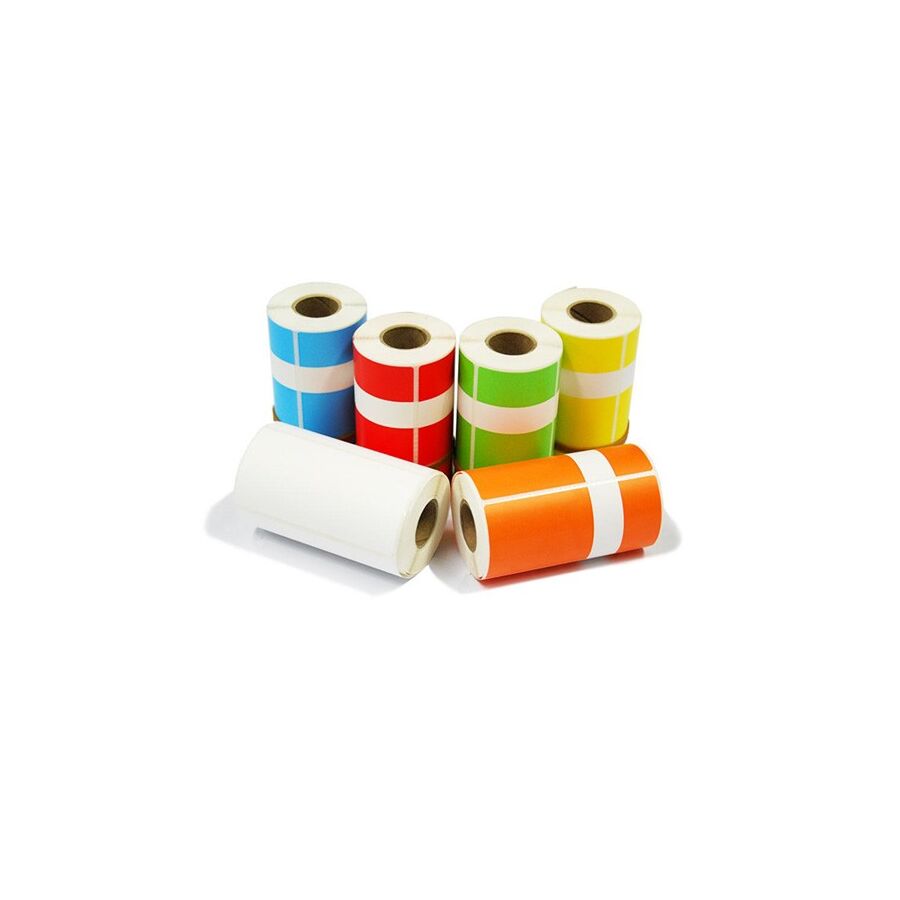
In Australian construction, mining and industrial environments, portable electrical equipment must be tested and clearly identified at prescribed intervals.
Under the Work Health and Safety framework and AS/NZS 3760, every compliant appliance must display a visible test tag indicating current inspection status.
On construction and demolition sites governed by AS/NZS 3012, that identification must follow the RGBY quarterly colour coding system.
The Green Test Tag Roll is the designated identifier for equipment tested during the March to May period.
It serves as the visible certificate of currency for portable electrical assets during the autumn quarter.
The RGBY sequence mandated for construction and mining sites follows:
Red – December to February Green – March to May Blue – June to August Yellow – September to November
A green tag confirms that an item has been inspected within the current autumn testing cycle.
If a tool is found on site in April displaying a red tag, it is immediately considered out of test and must be removed from service.
The roll format supports high-volume testing environments where technicians may process hundreds of appliances in a single day.
Green test tags supplied on a roll provide:
• Rapid application • Consistent formatting • Controlled inventory usage • Reduced handling time
The roll design integrates seamlessly into a technician’s test kit, allowing quick tear-off and application during Portable Appliance Testing procedures.
This improves workflow and maintains consistent compliance standards across large projects.
Industrial sites expose tags to:
• UV radiation • Hydraulic oils • Concrete abrasion • Moisture ingress • Cable flexing
Green test tags are manufactured from durable Polypropylene or PVC substrates with high tensile strength.
Paper-based labels are unsuitable for compliant industrial environments.
High-tack permanent acrylic adhesives are engineered to bond to flexible PVC leads and textured tool housings.
Most green test tag rolls incorporate a clear self-laminating flap.
After writing the:
• Test date • Next test due date • Technician licence number • Asset or plant ID
The clear overlay seals the information beneath a protective polymer barrier.
This encapsulation protects against:
• Ink smudging • Oil contamination • UV fading • Surface abrasion
The result is legible data maintained for the full quarterly testing cycle.
Clear marking and secure attachment are essential to compliance.
SCHNAP Electric Products supports testing workflows with:
• Industrial permanent markers • UV-stabilised cable ties • Portable appliance testers (PATs) • Test logbooks
Industrial markers ensure quick-drying, fade-resistant writing compatible with synthetic tag surfaces.
In harsh environments, UV-rated cable ties can be applied as secondary mechanical retention, preventing tag loss if the adhesive bond is compromised.
This integrated approach maintains the chain of custody for safety verification.
Test tags function as evidence in the event of inspection or investigation.
Each tag must clearly display:
• Compliance standard reference • Tester identification • Accurate testing interval
Consistent formatting and durable construction ensure that compliance remains defensible under audit conditions.
Uniform roll-based tags also maintain professional presentation across site operations.
Low-grade tags may fade or discolour rapidly under Australian UV exposure.
High-quality green test tag rolls feature:
• UV-stable pigments • Durable adhesive systems • Tear-resistant substrates • Clear and compliant field layout
Specialised electrical wholesaler supply compliant tagging systems aligned with Australian site requirements, ensuring colour accuracy and durability consistency.
The Green Test Tag Roll is the compliance indicator for the autumn testing quarter on Australian worksites.
It transforms regulatory testing requirements into an immediate visual safety confirmation.
When combined with durable materials and supported by marking and testing accessories from SCHNAP Electric Products, green test tags deliver a reliable, efficient and standards-aligned identification system.
In portable appliance safety, colour is control — and visibility ensures verification.
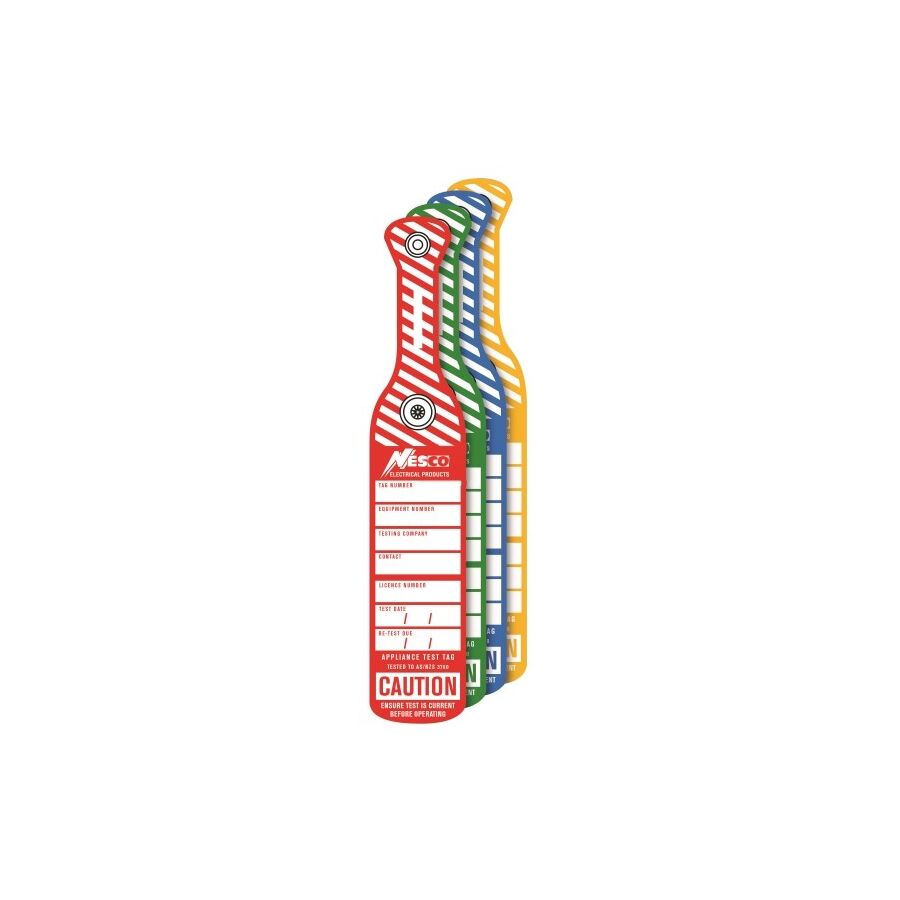
Across Australian commercial and industrial construction—from high-rise CBD developments to large-scale logistics and mining infrastructure—the speed of electrical rough-in directly impacts project timelines.
Traditional drilling and bolting methods for securing conduit to structural steel are labour-intensive and may compromise protective coatings.
The Industrial Push Clip provides a rapid, non-destructive fastening solution, enabling conduit and cable systems to be secured to steel flanges without drilling, tapping or hot work.
In installations governed by AS/NZS 3000, push clips allow compliant cable support while significantly reducing labour input.
Industrial push clips are manufactured from heat-treated, high-carbon spring steel.
Unlike mild steel, spring steel exhibits elastic memory, allowing it to flex during installation and exert sustained clamping force after placement.
When driven onto a beam flange:
• The jaws expand under insertion force • Elastic tension stores mechanical energy • The jaws clamp tightly onto the substrate
Stamped barbs or teeth increase friction by biting into the steel surface or coating.
This creates a high-retention interference fit capable of supporting both static cable loads and dynamic forces.
Industrial environments introduce vibration from:
• HVAC systems • Heavy machinery • Structural resonance • Thermal expansion
Push clips employ self-locking geometry that increases grip under reverse load.
As vibration attempts to loosen the clip, angled teeth embed further into the substrate, maintaining secure attachment.
This vibration resistance makes push clips suitable for plant rooms and industrial processing facilities where mechanical movement is constant.
Push clips typically feature integrated attachment points for:
• Rigid PVC conduit • Corrugated conduit • Cable tie saddles • Junction box mounts
Correct sizing ensures secure engagement with conduit outside diameter.
SCHNAP Electric Products conduit systems are manufactured to precise dimensional tolerances, allowing secure snap-fit compatibility with push clip variants.
This integration enables fast overhead routing without secondary brackets or drilling.
AS/NZS 3000 specifies maximum spacing intervals for cable and conduit support to prevent:
• Sagging • Mechanical stress on terminations • Excessive strain on fittings
Push clips provide flexibility in positioning, allowing installers to meet required support spacing without reliance on pre-drilled steel.
This improves compliance while streamlining installation.
Spring steel requires protective coating to prevent corrosion.
Industrial-grade push clips commonly feature:
• Zinc-aluminium flake coating • Enhanced salt-spray resistance • Surface protection against coastal environments
These coatings extend service life in:
• Coastal warehouses • Open industrial sheds • Mining infrastructure • Humid processing plants
Durable coatings reduce risk of galvanic corrosion and maintain long-term clamping integrity.
Push clips must be selected according to:
• Flange thickness range • Conduit size • Cable weight • Environmental exposure • Safety factors for dynamic loads
Heavy-duty beam clamps differ significantly from light-duty ceiling clips.
Correct load rating ensures safe retention under operational conditions.
Specialised electrical wholesaler assist in matching clip specifications to site requirements.
SCHNAP Electric Products supports comprehensive installation systems including conduit accessories, mounting hardware and compatible fastening components.
Typical industrial applications include:
• Overhead conduit runs in commercial fitouts • Data centre cable containment • Warehouse lighting circuits • Mining processing plant installations • HVAC electrical feed routing
Push clips reduce installation time while maintaining structural integrity of steelwork.
The Industrial Push Clip transforms structural steel into an efficient cable support system.
By leveraging spring steel elasticity, vibration-resistant geometry and corrosion-resistant coatings, it delivers secure, rapid conduit fixation in demanding environments.
When integrated with compliant conduit systems and accessories from SCHNAP Electric Products, push clips support efficient, standards-aligned electrical installations across Australian construction and industrial projects.
In modern fitouts, speed and structural integrity must coexist — and engineered fixation makes that possible.
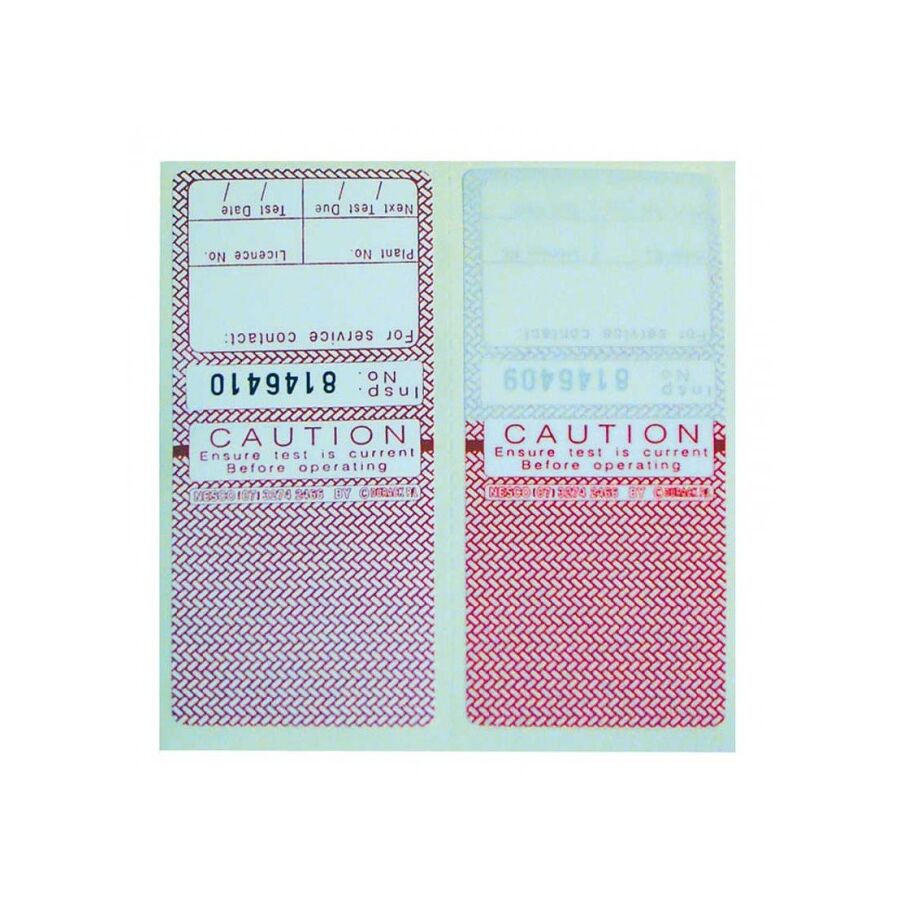
Within Australian infrastructure—commercial high-rises, mining operations, data centres and industrial facilities—accurate cable identification is fundamental to safe maintenance and long-term asset management.
Under AS/NZS 3000, conductors must be clearly identified not only by insulation colour but also by functional designation.
A Cable Tags Pack provides a mechanically secured, durable identification solution that maintains the chain of identity between the installed cable and the system schematic for the life of the asset.
AS/NZS 3000 requires clear identification of:
• Active conductors • Neutral conductors • Protective earth conductors • Functional circuit designations
In complex installations, identification extends to:
• Source and destination references • Distribution board numbers • Fire services circuits • Essential services feeds
Tie-on cable tags allow both ends of a cable to be labelled with matching identifiers, supporting accurate isolation and fault-finding.
Without reliable tagging, maintenance becomes time-consuming and risk-prone.
Industrial environments expose cable identification systems to:
• UV radiation • Heat cycling • Moisture • Chemical vapours • Mechanical abrasion
Professional cable tag packs are manufactured from:
• UV-stabilised Nylon 6/6 • High-density Polypropylene • Low Smoke Zero Halogen variants • 316 Grade Stainless Steel for extreme conditions
UV stabilisation prevents photo-oxidation and embrittlement.
In corrosive environments such as wastewater plants or coastal installations, stainless steel tags with embossed or laser-etched data provide permanent identification even under chemical attack.
Adhesive-only labels may fail in high-heat or high-vibration applications.
Tie-on cable tags are mechanically fastened using:
• UV-rated nylon cable ties • Stainless steel ball-lock ties
Reinforced slot geometry prevents tear-out under tension.
Tags can be mounted in:
• Flag orientation for clear visibility • Flat orientation for confined cable trays
Secure fixation ensures that tags remain attached even when cables flex under short-circuit magnetic forces or thermal expansion.
The effectiveness of a cable tag depends on marking clarity and secure attachment.
SCHNAP Electric Products supports cable identification systems with:
• Industrial permanent markers • Stainless steel cable ties • UV-stabilised nylon ties • Label printers • Embossing tools
Permanent markers formulated for polymer surfaces ensure clear, oil-resistant text.
Stainless steel ties provide high clamping force for vertical runs where slippage must be prevented.
This integrated approach ensures that tags remain legible and correctly positioned from commissioning through lifecycle maintenance.
Cable Tags Packs provide logistical advantages for large-scale installations.
Typical pack formats include:
• Sequentially numbered tags • Blank writable carriers • Pre-punched heavy-duty markers • Mixed-size assortments
Bulk supply enables batch processing and consistent labelling standards across projects.
Uniform tagging improves professionalism and simplifies asset management.
Modern cable tags may incorporate:
• QR codes • Barcodes • Serial numbering
When paired with digital asset registers, these identifiers allow technicians to scan and retrieve:
• Circuit diagrams • Maintenance history • Inspection schedules
This enhances traceability and future-proofs the installation.
Low-grade plastic tags may yellow, crack or fade prematurely.
Selecting industrial-grade cable tag packs ensures:
• Long-term legibility • Compliance with AS/NZS 3000 • Resistance to environmental degradation • Reduced future re-labelling costs
Specialised electrical wholesaler provide material-grade guidance suited to site-specific conditions such as tunnels, coastal infrastructure or mining operations.
SCHNAP Electric Products integrates identification systems within broader electrical infrastructure supply, ensuring cohesive project execution.
The Cable Tags Pack is a critical element in electrical asset lifecycle management.
By combining durable materials, secure mechanical fastening and clear functional identification, it preserves the connection between schematic documentation and physical installation.
Supported by professional marking and fastening accessories from SCHNAP Electric Products, cable identification systems remain robust, compliant and maintenance-ready for decades.
In electrical infrastructure management, identity defines efficiency.
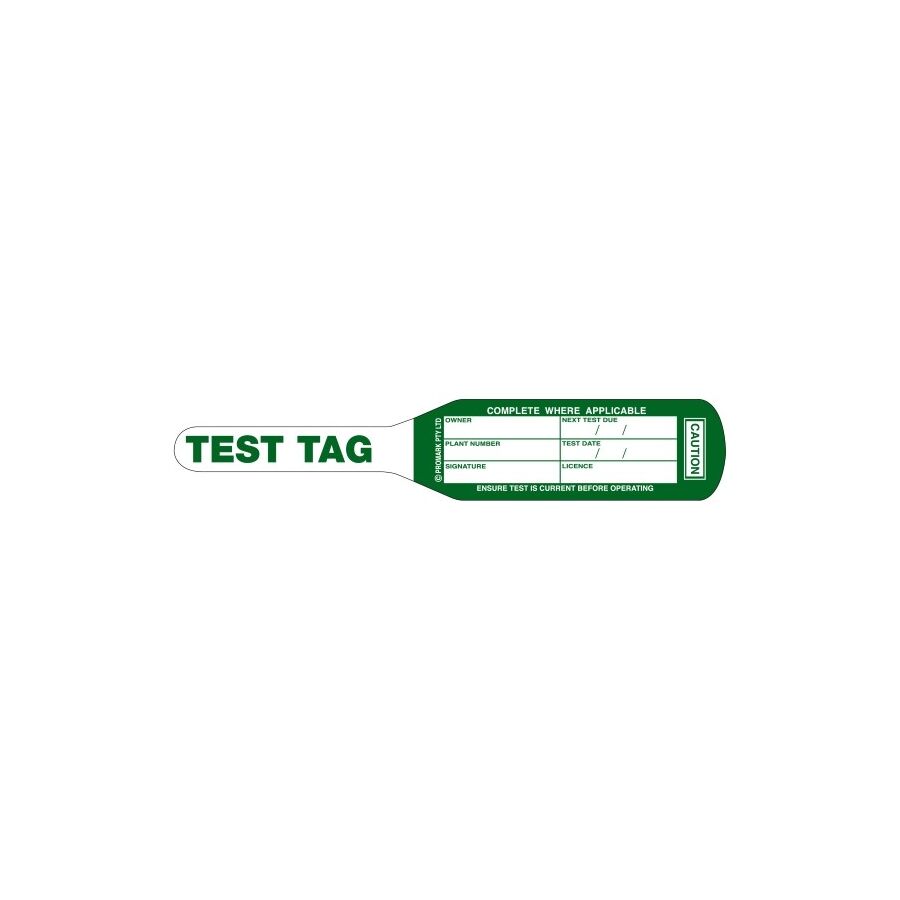
Across Australian workplaces—from CBD commercial towers to remote mining operations—the inspection and testing of portable electrical equipment is mandated under the AS/NZS 3760 standard.
On construction and demolition sites, AS/NZS 3012 prescribes a structured colour-coded testing regime.
Electrical Test Tags serve as the visible proof that equipment has passed required safety checks including earth continuity, polarity and insulation resistance.
They function as the certificate of currency for each portable appliance.
AS/NZS 3012 specifies the RGBY quarterly rotation system:
• Red – December to February • Green – March to May • Blue – June to August • Yellow – September to November
This colour logic allows rapid visual auditing.
If a tool is operating outside its allocated colour quarter, non-compliance is immediately evident.
In commercial offices or workshops operating under AS/NZS 3760 without construction requirements, facilities may adopt annual or customised colour schedules.
Each tag must clearly display:
• Test date • Next test due • Asset or plant ID • Competent person identification
Consistency of tagging format ensures defensible compliance during regulatory inspection.
Worksite environments expose tags to:
• Abrasion • Oil and grease • UV radiation • Moisture • Mechanical impact
Industrial-grade Electrical Test Tags are manufactured from polypropylene (PP) or PVC substrates with high tensile strength.
Paper-based tags are unsuitable for industrial conditions due to moisture degradation.
High-performance acrylic adhesives ensure secure bonding to:
• PVC sheathed cables • Rubber extension leads • Textured tool housings
Self-laminating variants incorporate a clear protective overlay that seals written data beneath a transparent barrier, preserving legibility.
The quality of the tag depends on the clarity of the information recorded.
Industrial permanent markers with fade-resistant ink are recommended to prevent smudging under laminate.
SCHNAP Electric Products supports compliant tagging operations with:
• Industrial permanent markers • Portable appliance testers (PATs) • Test logbooks • Lockout and safety systems
Reliable marking ensures that written details remain readable for the full compliance cycle.
In demanding environments such as mining or marine operations, secondary mechanical retention may be required.
UV-stabilised cable ties can be threaded through tag apertures to provide additional restraint where adhesive alone may not suffice.
This ensures tag integrity even under heavy abrasion or vibration.
Modern Electrical Test Tags may include:
• Barcodes • QR codes • Serial numbering
These features enable integration with digital asset registers and PAT tester logging systems.
Scanning improves accuracy, reduces manual entry errors and strengthens audit trails.
In the event of incident investigation, the tag provides the first point of verification.
Durability ensures evidence remains intact.
Inferior tags may:
• Fade under UV exposure • Peel prematurely • Lose legibility
Selecting compliant, UV-stable and tear-resistant tags is a risk management decision.
Specialised electrical wholesaler ensure supply of tags that meet Australian colour coding and durability expectations.
SCHNAP Electric Products integrates tagging consumables with broader safety and testing equipment supply, supporting complete compliance systems.
Electrical Test Tags are the visual verification tool underpinning portable appliance safety compliance in Australia.
By adhering to AS/NZS 3760 testing requirements and AS/NZS 3012 colour coding systems, and by selecting durable materials suited to harsh environments, organisations maintain clear and defensible safety standards.
Supported by professional testing and marking accessories from SCHNAP Electric Products, these tags transform inspection procedures into visible, reliable workplace safety assurance.
In electrical compliance management, visibility is verification.
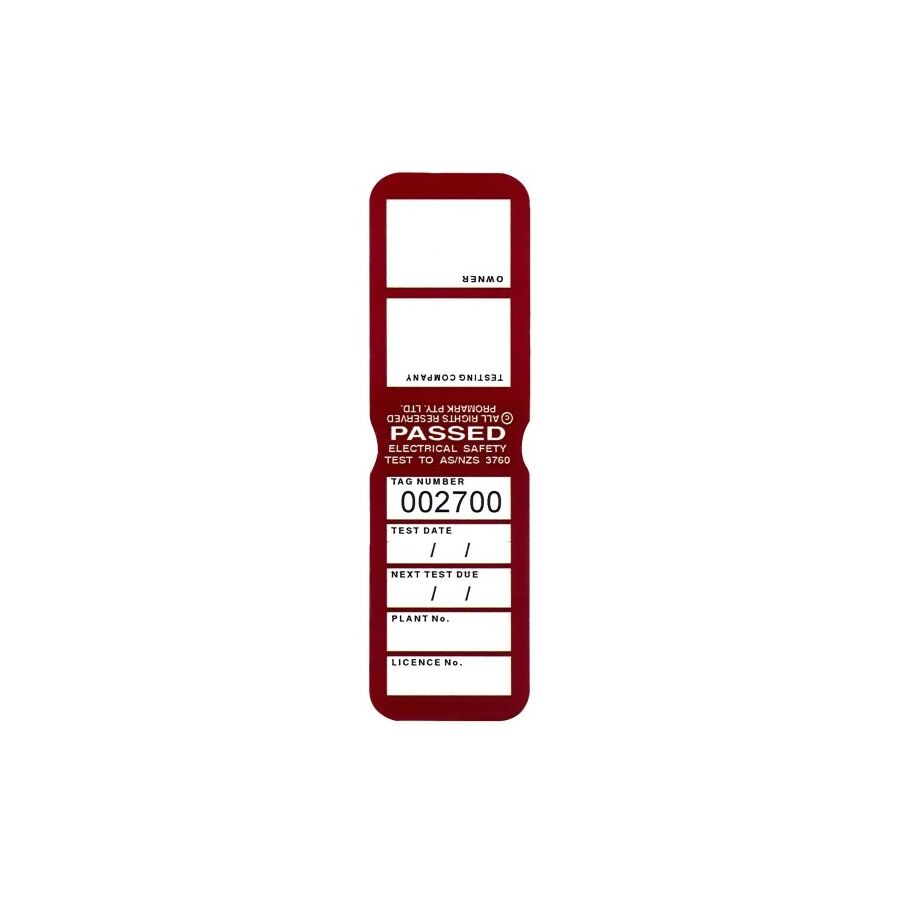
Across Australian mining, construction and heavy processing environments, maintaining visible proof of electrical compliance is a statutory requirement under AS/NZS 3760.
On construction sites, AS/NZS 3012 mandates strict colour-coded identification of test intervals.
In hostile environments, standard vinyl tags often fail before the retest period expires.
Heavy Duty Electrical Test Tags are engineered industrial identification components designed to survive extreme UV exposure, chemical contamination and mechanical abrasion while maintaining legibility and adhesion.
The performance difference lies in material selection.
Standard tags are typically manufactured from calendered vinyl, which can:
• Become brittle under UV radiation • Tear when snagged • Delaminate in high humidity
Heavy-duty variants are manufactured from high-density polypropylene (PP) or cross-linked polyethylene.
These materials provide:
• Superior tear resistance • Higher tensile strength • Greater impact resilience • Enhanced dimensional stability
Thickness is typically in the 400–600 micron range, significantly improving durability under abrasive contact.
Heavy-duty tags frequently incorporate a self-laminating architecture.
The written information panel is sealed beneath a transparent polyester over-laminate.
This laminate:
• Bonds permanently to the substrate • Protects against hydrocarbon exposure • Resists hydraulic oil contamination • Prevents ink smearing • Shields from moisture ingress
The encapsulated data remains legible throughout the full compliance cycle.
Modern cable sheathing materials such as TPU and rubber present low surface energy (LSE) bonding challenges.
Heavy-duty tags use high-tack, solvent-based acrylic adhesives engineered for:
• High initial tack • Long-term shear strength • Mechanical interlock with textured cable surfaces
Wrap-around designs that bond tag-to-tag rather than tag-to-cable create a reinforced collar structure, significantly improving retention in high-vibration or abrasive environments.
AS/NZS 3012 construction site compliance relies on clear quarterly colour coding.
Australian UV levels can rapidly degrade inferior pigments.
Heavy-duty tags utilise UV-stabilised colour formulations to ensure:
• Accurate colour retention • Clear compliance identification • Visibility from a distance • No pigment washout under intense sun
Maintaining colour clarity ensures efficient safety audits and regulatory compliance.
In environments with extreme abrasion such as tunnelling or open-cut mining, additional physical retention may be required.
Heavy-duty tags often include pre-punched holes for:
• UV-stabilised cable ties • Secondary restraint loops
SCHNAP Electric Products UV-rated cable ties provide added mechanical security where adhesive-only attachment may be compromised by solvent exposure or mechanical drag.
The durability of the tag depends on the quality of marking beneath the laminate.
Industrial permanent markers with solvent-based ink ensure:
• Rapid drying • Resistance to fading • Strong substrate bonding • Clear legibility
SCHNAP Electric Products supports compliant tagging systems with:
• Industrial permanent markers • Portable appliance testers (PATs) • Test logbooks • Calibration check devices
The combination of durable tag, permanent marking and accurate log documentation creates a defensible compliance record.
Selecting appropriate heavy-duty tags is a risk management decision.
Using inferior tags in mining or construction environments can result in:
• Tag loss • Non-compliance findings • Re-testing requirements • Regulatory penalties
Specialised electrical wholesaler ensure supply of industrial-grade tags matched to:
• Cable sheath type • Environmental exposure • Site compliance requirements
SCHNAP Electric Products integrates tagging consumables within broader electrical safety supply frameworks, supporting complete end-to-end compliance systems.
Heavy Duty Electrical Test Tags provide resilient, industrial-grade identification in Australia’s harshest operational environments.
By combining robust polymer construction, UV stability, chemical resistance and secure adhesion, they ensure that compliance data remains visible and verifiable throughout the duty cycle.
When supported by professional marking and testing accessories from SCHNAP Electric Products, they form a durable compliance system capable of withstanding mining, construction and heavy industrial conditions.
In industrial safety management, durability defines compliance.
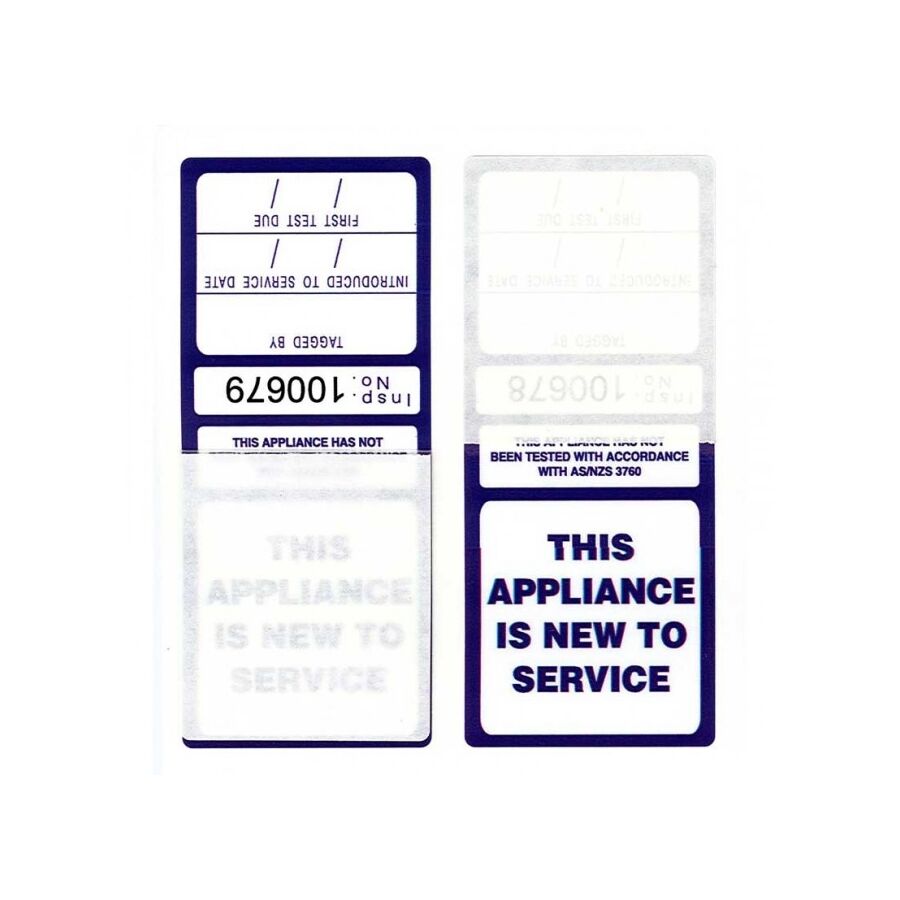
Across Australian industry—from coastal food processing facilities to remote mining workshops—the verification of portable electrical equipment is a statutory obligation under the AS/NZS 3760 standard.
On construction and demolition sites, AS/NZS 3012 further mandates colour-coded inspection systems.
Self Laminating Appliance Tags provide a durable, compliant method of recording and protecting test information in harsh operational environments.
Standard surface-printed labels degrade rapidly under exposure to:
• Hydraulic oil • Grease • Solvents • UV radiation • Mechanical abrasion
Self laminating tags utilise a two-part structure:
• A writable identification panel • A transparent protective flap
After recording the test date, retest date and asset identification, the clear laminate is wrapped over the printed section.
This creates a sealed barrier that protects ink from chemical ingress and surface wear.
Unlike surface labels, the written data sits beneath a transparent polymer shield, preventing smearing, fading or contamination.
Traditional flat tags often fail due to edge lifting or “flagging.”
Self laminating designs form a closed loop around the cable sheath.
Key performance characteristics include:
• Strong self-bonding laminate adhesion • High-performance acrylic adhesive • Compatibility with PVC, rubber and textured sheaths • Resistance to peeling under vibration
The bond between the laminate and the tag substrate is typically stronger than the bond to the cable, forming a permanent collar that maintains legibility throughout the test interval.
AS/NZS 3012 specifies a rotating quarterly colour system for construction sites.
Common quarterly rotation includes:
• Red • Green • Blue • Yellow
Self laminating appliance tags are manufactured with UV-stable pigments to prevent fading under Australian sunlight.
Colour retention ensures that safety officers can visually verify compliance periods without close inspection.
A faded or illegible tag is considered non-compliant, regardless of inspection status.
Data integrity depends on ink permanence prior to lamination.
Quick-drying industrial markers are recommended to prevent smudging before the protective flap is sealed.
SCHNAP Electric Products supports compliant tagging practices with:
• Industrial permanent markers • Appliance test logbooks • Portable appliance testers (PATs) • Calibration check devices
Accurate documentation in logbooks combined with durable tagging creates a defensible compliance record under audit conditions.
Industrial-grade self laminating tags are engineered to withstand:
• Workshop solvents • High humidity • UV exposure • Abrasion from tool movement • Outdoor construction environments
Laminate thickness (measured in microns) directly influences abrasion resistance and lifespan.
High-quality tags are selected based on site-specific environmental exposure.
Effective asset management requires reliable consumables.
Facilities managers and contractors typically procure:
• Roll-format tags for high-volume PAT testing • Pre-cut tag packs for service technicians • Matching quarterly colour sets
Specialised electrical wholesaler provide compliant tagging systems aligned with Australian regulatory requirements.
SCHNAP Electric Products integrates tagging, testing and documentation tools within broader electrical safety supply chains, ensuring consistent compliance management.
For optimal performance:
• Clean cable sheath before application • Use compatible permanent marker • Allow ink to dry fully • Wrap laminate smoothly without air bubbles • Press firmly to ensure adhesive bonding
Proper installation ensures long-term data protection.
Self Laminating Appliance Tags protect the integrity of electrical safety data in demanding Australian environments.
By encapsulating test information beneath a chemically resistant laminate and complying with AS/NZS 3760 and AS/NZS 3012 colour coding standards, they provide durable verification of asset safety status.
When combined with compliant testing tools and marking accessories from SCHNAP Electric Products, they form a resilient and audit-ready tagging system.
In electrical compliance management, visibility and legibility define validity.
Across Australia’s heavy industrial sectors—mining operations, desalination plants, chemical processing facilities and energy infrastructure—the control of hazardous fluid energy is as critical as electrical isolation.
Under WHS obligations and AS 4024, maintenance tasks require the establishment of a verified Zero Energy State across all energy sources, including pressurised pipelines.
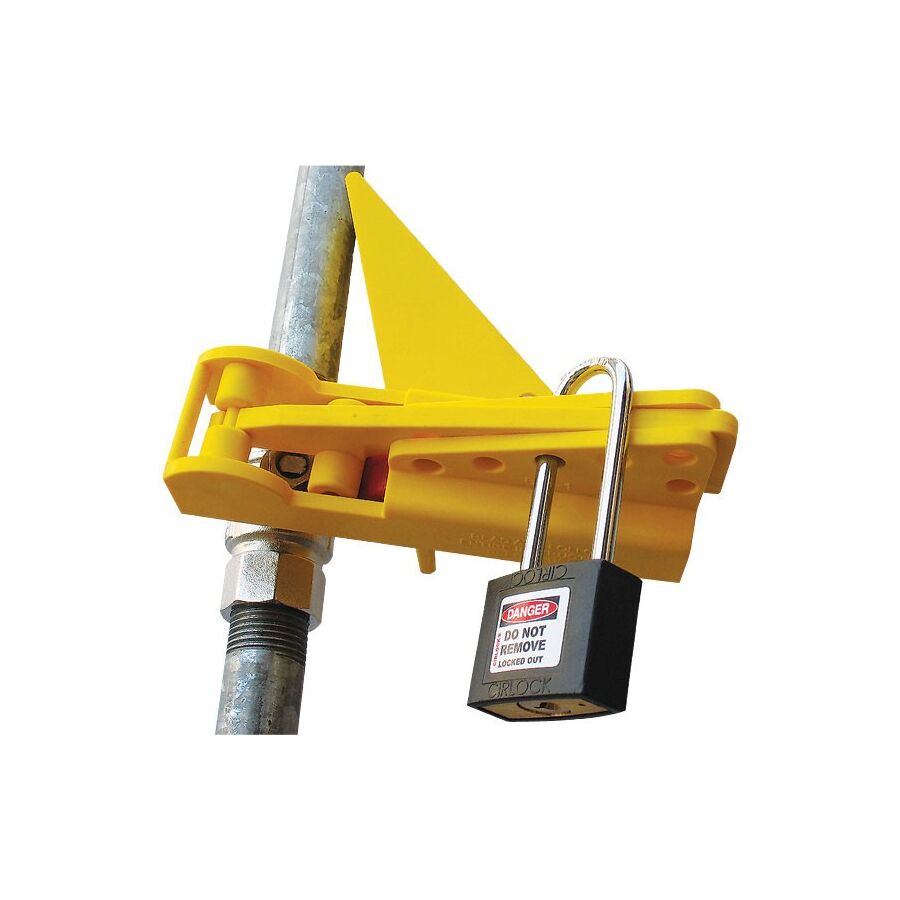
The Ball Valve Lockout is a mechanical safety device engineered to secure quarter-turn valves in the fully closed position, preventing accidental or unauthorised restoration of flow during maintenance activities.
Ball valves operate via 90-degree lever rotation.
This simple movement makes them vulnerable to accidental actuation from vibration, contact or unauthorised handling.
The lockout device applies the principle of geometric interference.
When installed, it encapsulates the valve handle, increasing its effective physical envelope so that rotation is mechanically impossible.
Typical designs include:
• Two-piece clamshell enclosures • Sliding wedge-style housings • Adjustable wraparound bodies
When locked, any applied torque transfers into the rigid lockout housing rather than the valve stem.
This converts the administrative instruction “Do Not Operate” into a physical restraint.
Industrial valve environments vary significantly, often including:
• Superheated steam • Caustic chemicals • Hydraulic oils • Salt-laden coastal air • High UV exposure
Professional-grade ball valve lockouts are manufactured from reinforced polypropylene (PP) or Xenoy thermoplastic.
These materials provide:
• Broad chemical resistance • Impact strength • Thermal stability typically from -20°C to +150°C • UV resilience
In extreme environments, powder-coated steel or stainless steel variants may be specified for enhanced durability.
Material stability ensures the device remains structurally sound during extended shutdown periods.
Process plants commonly utilise multiple valve sizes.
An effective lockout system must accommodate varying pipe diameters and handle lengths.
Adjustable ball valve lockouts feature sliding or telescopic mechanisms to cover diameter ranges such as:
• 12mm to 50mm • 50mm to 200mm
This reduces the need for multiple device types and improves site efficiency.
Universal compatibility prevents unsafe improvisation methods such as cable ties or tape.
The lockout housing alone does not complete the isolation system.
A safety padlock secures the device in place, preventing removal without authorised access.
SCHNAP Electric Products safety padlocks provide:
• Non-conductive bodies • Keyed Different or Master Key systems • High visibility identification • Permit-to-work integration compatibility
Danger tags attached to the padlock shackle provide legally required worker identification and isolation details.
The combined assembly forms a compliant LOTO barrier.
Fluid systems often require multi-trade maintenance coordination.
Ball valve lockouts can be used in conjunction with:
• Multi-lock hasps • Group lock boxes • Permit control systems
This ensures that no valve is reopened until all authorised workers have removed their personal locks.
Group isolation procedures reinforce collective safety in complex shutdown environments.
Effective LOTO programs consolidate both electrical and mechanical isolation devices.
Specialised electrical wholesaler provide integrated LOTO solutions covering:
• Breaker lockouts • Valve lockouts • Padlocks • Tags • Lock boxes
SCHNAP Electric Products supports this unified approach by supplying compliant locking hardware and identification systems that align with site safety frameworks.
Reliable procurement ensures compatibility with valve geometry and environmental exposure conditions.
The Ball Valve Lockout is a critical safeguard in the management of hazardous fluid energy.
By mechanically restraining quarter-turn valve handles, it prevents accidental flow restoration and protects maintenance personnel from catastrophic pressure release.
When combined with compliant padlocks and tagging systems from SCHNAP Electric Products, it forms a complete isolation assembly suitable for Australian industrial operations.
In process safety engineering, secure isolation defines controlled energy.
Across Australia’s electrical service sector—high-rise maintenance, commercial fit-outs, regional processing plants and emergency callouts—contractors face unknown switchgear at every job.
Compliance with AS/NZS 4836 requires immediate and verifiable isolation, regardless of breaker brand or configuration.
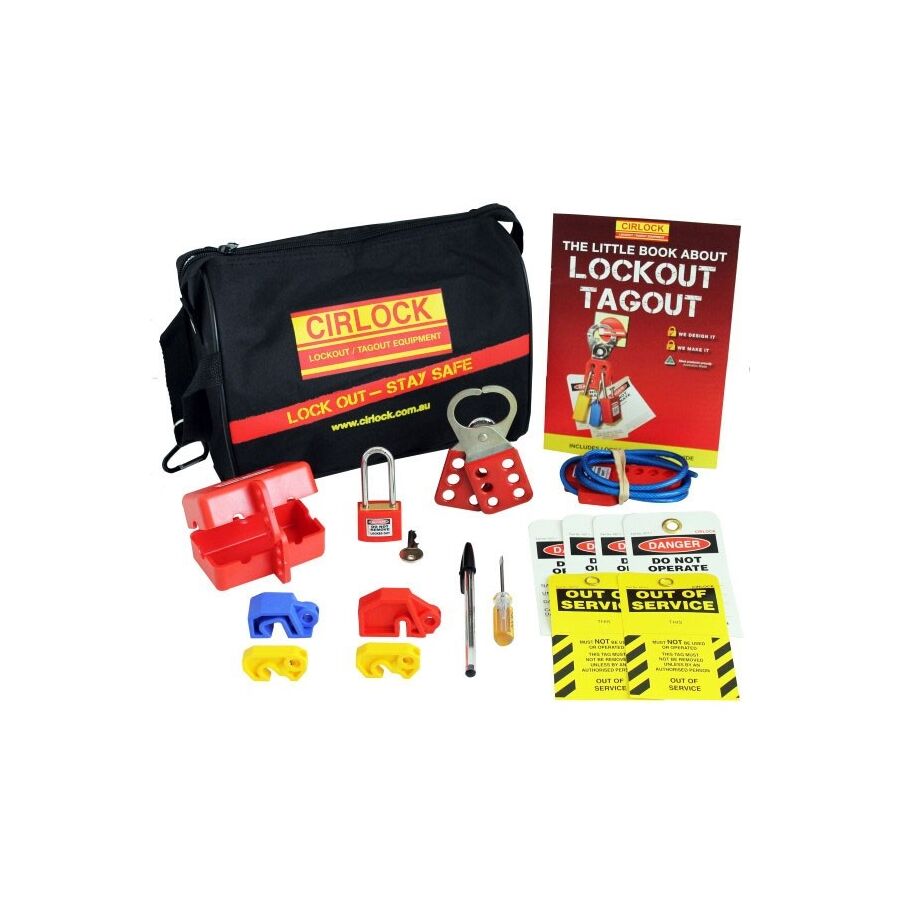
The Contractors Lockout Kit with Bag is a portable isolation system designed to establish a Zero Energy State on MCBs, MCCBs, fuse holders and isolation switches encountered in the field.
It consolidates mechanical restraint, locking authority and mandatory warning identification into a single deployable safety solution.
Electrical installations across Australia vary widely in toggle geometry and breaker format.
A contractor may encounter:
• Slimline residential MCBs • Industrial MCCBs • DIN-rail devices • Legacy fuse carriers
Universal lockout kits include multiple device types such as:
• Clamp-on breaker lockouts • Pin-out lockouts • Pin-in devices • Fuse isolation blocks
Clamp-on models typically utilise a thumb-screw or worm-drive tightening mechanism.
As torque is applied, reinforced jaws grip the toggle housing.
High-strength polymer construction prevents jaw spread under load, ensuring that the breaker cannot be manually re-energised.
This mechanical conversion standardises varied switchgear into a padlock-compatible locking point.
The storage bag is a functional component of the system.
Field environments include:
• Ceiling cavities • Dusty switchrooms • Outdoor plant enclosures • Moist conditions
Professional lockout kits are housed in heavy-duty fabric such as 600D Cordura or reinforced canvas.
Internal compartmentalisation separates:
• Non-conductive padlocks • Metal hasps • Clamp devices • Tags and accessories
This prevents contamination of lock mechanisms and preserves dielectric safety properties.
Clean, organised storage ensures reliable deployment under time pressure.
The integrity of isolation depends on the quality of the safety padlock.
SCHNAP Electric Products safety padlocks included in contractor kits feature:
• Non-conductive bodies • Lightweight construction • Keyed Different configuration • High-visibility colour coding
Key control ensures that only the authorised technician can remove the lock.
This eliminates ambiguity in multi-trade environments and reinforces personal safety ownership.
Mechanical restraint alone is insufficient.
WHS legislation requires clear identification of the person responsible for isolation.
Heavy-duty danger tags included in professional kits provide:
• Worker identification fields • Contact information • Date and time details • Tear-resistant PVC construction
These tags withstand humidity and plant room conditions while maintaining legibility.
Electrical isolation often involves more than one worker.
The inclusion of a scissor hasp expands a single locking point to accept multiple padlocks.
This supports:
• Group isolation protocols • Contractor and site management co-locking • Multi-trade safety coordination
Vinyl-coated high-tensile steel hasps resist cutting while maintaining insulation around live proximity areas.
A compliant Contractors Lockout Kit typically includes:
• Multiple universal breaker lockouts • Fuse isolation devices • Padlocks • Hasps • Danger tags • Installation tools
The absence of even one component can compromise compliance.
Specialised electrical wholesaler ensure that contractor kits align with current breaker form factors and Australian regulatory expectations.
SCHNAP Electric Products also supplies:
• Additional keyed padlocks • Replacement tags • Lockout refill packs
This ensures continuous readiness without unsafe improvisation.
Typical service use cases include:
• Emergency breaker replacement • Commercial tenant fit-out upgrades • Distribution board maintenance • Solar inverter isolation • Temporary shutdown verification
In each scenario, the contractor must isolate unfamiliar equipment quickly and confidently.
A portable, universal kit ensures preparedness regardless of switchgear variation.
The Contractors Lockout Kit with Bag transforms regulatory requirements into a practical, mobile safety system.
By combining universal compatibility, durable storage, compliant padlocks and administrative tagging, it ensures safe isolation in unpredictable service environments.
Supported by professional-grade components from SCHNAP Electric Products, the kit allows Australian electricians to carry their safety culture with them to every site.
In mobile electrical operations, preparedness is protection.
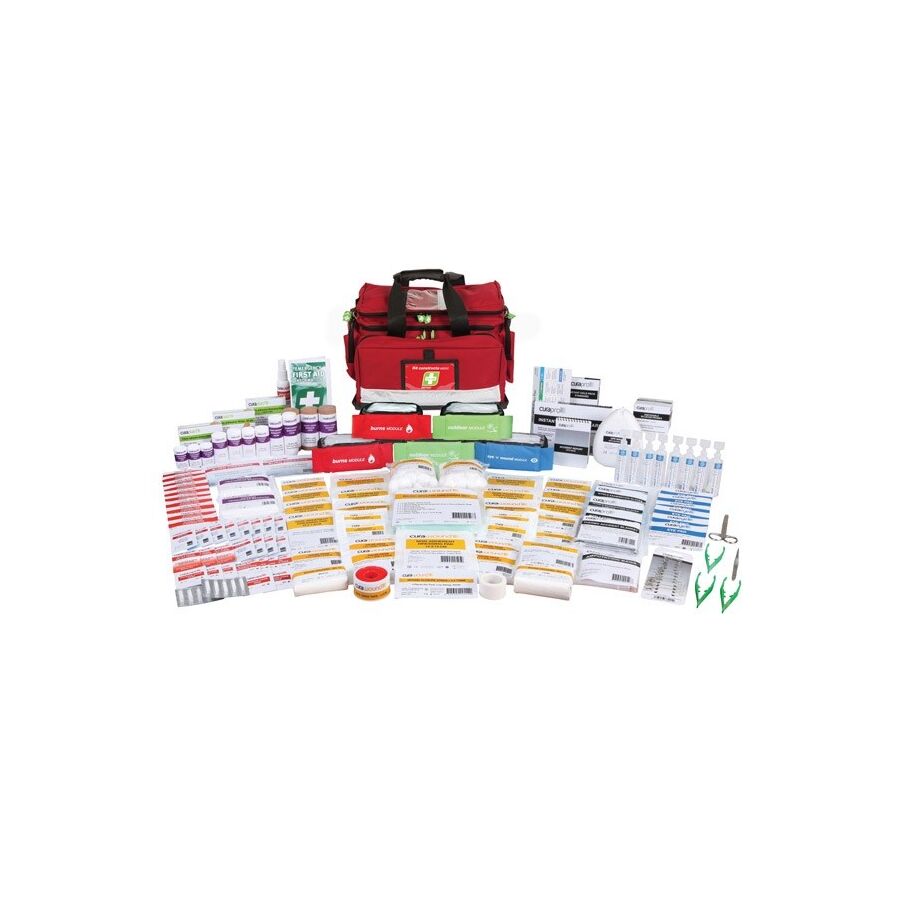
Across Australia’s remote electrical and energy infrastructure—from transmission corridors in the Pilbara to large-scale renewable farms in regional NSW—emergency response time is often extended beyond one hour.
Under the Safe Work Australia Code of Practice: First Aid in the Workplace, first aid provisions must match both hazard profile and remoteness.
The First Aid Kit R4 is classified for remote, high-risk environments where access to immediate medical assistance is delayed. It is designed to support crews of 1 to 10 personnel and to manage trauma associated with electrical shock, arc flash burns and environmental hazards.
The R4 designation applies to worksites where retrieval or ambulance response exceeds one hour.
Under Australian WHS legislation, employers must provide facilities adequate for the specific risks of the task.
For electrical contractors, this includes exposure to:
• High energy arc flash events • Electric shock and ventricular fibrillation • Severe burns • Remote environmental hazards • Venomous wildlife
The R4 kit extends beyond basic bandaging and includes structured trauma modules suited to isolated operations.
Arc flash incidents can produce temperatures exceeding 19,000°C.
Severe thermal burns require immediate cooling to prevent continued tissue damage.
The R4 kit includes hydrogel-based burn dressings.
Hydrogel provides:
• Rapid heat absorption • Evaporative cooling • Pain relief • Barrier protection against contamination
Large-format hydrogel sheets and facial burn masks are critical when treating high-surface-area injuries common in switchboard incidents.
Immediate application supports tissue preservation until transfer to advanced medical facilities.
Australian infrastructure frequently intersects habitats of highly venomous species.
The R4 kit contains a dedicated snake bite module including heavy-duty pressure bandages with tension indicators.
These bandages are designed for the Pressure Immobilisation Technique (PIT), which:
• Slows lymphatic venom transport • Maintains arterial circulation • Stabilises patient condition • Extends survival window during evacuation
Correct pressure application (typically 55–70 mmHg) is critical for effectiveness.
Electric shock presents significant risk of ventricular fibrillation.
The R4 kit is structured to integrate with an Automated External Defibrillator (AED), often featuring:
• Dedicated storage compartments • External attachment sleeves • Immediate access positioning
CPR masks, gloves and trauma shears support rapid resuscitation response.
Survival rates decrease significantly with each minute defibrillation is delayed. Integrating the AED with the R4 kit ensures cohesive deployment.
Remote kits must withstand:
• Dust • Vibration • Moisture • Temperature extremes
High-quality R4 kits are housed in:
• 600D PVC-coated polyester soft packs • Impact-resistant polypropylene hard cases
Many models achieve IP67-level environmental resistance, preserving sterile components and preventing degradation of saline and medical consumables.
Internal compartments are typically colour-coded to allow rapid identification under stress conditions.
An R4 kit is only compliant if contents are current and intact.
Consumables such as:
• Burn gels • Saline ampoules • Adhesive dressings • Snake bite bandages
must be regularly inspected and replaced prior to expiry.
Specialised electrical wholesaler assist contractors by supplying:
• Certified WHS-compliant R4 kits • Refill modules • Replacement trauma components
SCHNAP Electric Products supports site safety integration alongside electrical infrastructure supply, ensuring that emergency preparedness is embedded within procurement workflows.
While preventative measures such as compliant circuit protection, isolation systems and lockout hardware reduce risk, emergency response remains essential.
The First Aid Kit R4 functions as the final safeguard when engineering controls fail or unforeseen events occur.
It complements:
• Arc-rated PPE • Lockout/Tagout systems • Circuit protection infrastructure • Remote field service operations
The First Aid Kit R4 is a critical survival asset for remote electrical and energy operations across Australia.
Engineered for arc flash trauma, envenomation and delayed retrieval scenarios, it provides life-sustaining capability when time and distance become risk multipliers.
By aligning with Safe Work Australia Code of Practice requirements and integrating emergency preparedness into daily operations alongside compliant electrical systems from SCHNAP Electric Products, contractors ensure that workforce protection extends beyond prevention into structured response.
In remote field work, preparedness defines survival.

Across Australia’s major infrastructure projects—rail tunnels, renewable transmission corridors, industrial plants and data networks—the installation of heavy power and communications cables demands controlled mechanical force.
The Cable Stocking Single Eye is a woven steel mesh pulling grip designed to transfer axial load from a winch to a cable without damaging its sheath or conductors.
Engineered for safe hauling in accordance with installation practices aligned to AS/NZS 3000 and manufacturer tension limits, it distributes pulling forces evenly along the cable surface.
The stocking operates on the principle of radial compression.
When axial tension is applied to the single pulling eye, the woven mesh elongates.
As it lengthens, its internal diameter contracts, applying uniform circumferential pressure to the cable sheath.
This generates frictional grip across a large surface area—typically 600mm to 1200mm of cable length—rather than concentrating load at a single point.
Key benefits include:
• Even stress distribution • Reduced risk of conductor stretch • Prevention of sheath deformation • Controlled transfer of hauling force
The harder the pull, the tighter the grip. This self-actuating mechanism prevents slippage during tension ramp-up.
The single eye configuration is preferred for conduit hauling because of its streamlined geometry.
The concentric pulling loop:
• Maintains axial alignment • Minimises snagging • Reduces sidewall pressure • Improves bend navigation
This is especially critical in conduits with multiple elbows, offsets or long runs exceeding several hundred metres.
By keeping the pulling force aligned with the cable’s neutral axis, the single eye design reduces twisting and mechanical stress during installation.
Material choice depends on environmental exposure.
Galvanised Steel • High tensile strength • Suitable for dry terrestrial conduit systems • Cost-effective solution
Stainless Steel (Grade 304 or 316) • Superior corrosion resistance • Ideal for coastal and wastewater environments • Prevents rust transfer to cable sheath
For fibre optic installations or live electrical environments, non-conductive variants such as Kevlar or nylon stockings may be specified to maintain dielectric isolation.
Cable hauling is a controlled lifting operation in the horizontal plane.
Each stocking is rated by:
• Minimum Breaking Load (MBL) • Safe Working Load (SWL)
Industry practice typically applies a 3:1 safety factor.
Example: MBL = 30kN SWL = 10kN
Exceeding rated capacity risks mesh failure and hazardous recoil.
Correct load calculation must consider:
• Cable mass per metre • Conduit friction coefficient • Bend radius • Installation length
Cables possess natural torsional characteristics due to conductor lay.
During pulling, torque may accumulate, causing kinking if not released.
SCHNAP Electric Products supports safe hauling with:
• Ball-bearing swivels • Stainless steel banding • Heavy-duty insulation tape • Cable lubricants
Swivels installed between the hauling line and stocking eye allow rotational freedom, preventing torsional stress buildup.
Securing the trailing end of the stocking prevents mesh slippage during tension take-up.
Proper application requires:
• Matching stocking diameter to cable OD • Cleaning sheath before fitting • Applying cable lubricant for reduced friction • Inspecting mesh integrity before use • Monitoring winch tension throughout pull
An incorrectly sized stocking will either slip (if oversized) or damage the sheath (if undersized).
Stockings are specified by cable outer diameter range.
Correct selection requires:
• Verified cable OD • Required SWL rating • Environmental material specification • Project compliance documentation
Specialised electrical wholesaler assist in confirming diameter compatibility and load certification before supply.
SCHNAP Electric Products complements hauling operations with compliant rigging accessories and cable management solutions to ensure controlled installation practices.
The Cable Stocking Single Eye is the mechanical interface that enables safe and efficient cable installation across Australia’s infrastructure network.
By converting axial force into controlled radial compression, it protects cable integrity while transferring substantial tensile load.
When combined with rated swivels, proper safety factors and professional accessories from SCHNAP Electric Products, it ensures hauling operations are executed safely and within engineered limits.
In cable installation, controlled grip defines controlled power delivery.

SCHNAP Electrical Wholesaler - clear, upfront pricing that professional electricians trust

Get what you need in seconds. SCHNAP electrical wholesaler makes ordering quick and simple

Fast delivery anywhere - that's guaranteed. SCHNAP electrical wholesalers ship nationwide with same-day dispatch

Track your order every step of the way. SCHNAP electrical wholesale keeps you updated from click to delivery

SCHNAP is Australia's premier electrical wholesaler and electrical supplies, marketing thousands of quality products from leading brands. Trusted for nearly two decades by licensed electricians, contractors, and engineers, our range covers everything from basic electrical components to complex industrial electrical equipment
Our key categories include: LED lighting, designer switches, commercial switchboards, circuit protection, security systems & CCTV, and smart home automation
All products are certified to Australian standards (AS/NZS), backed by our 30-day, no-questions-asked return policy. Our expert technical team helps you quickly source the right solution for any residential, commercial, or industrial project, with daily dispatch from our Sydney electrical warehouse delivering Australia-wide
SCHNAP offers the most comprehensive electrical product range, with full technical specifications, application details, installation requirements, compliance standards, and warranties — giving professionals total confidence in every purchase


Kingsgrove Branch:
Opening hours:
Mon - Fri: 6:30 AM to 5 PM
Saturday: 8:00 AM to 2:00 PM
Sunday: 9:00 AM to 2:00 PM
Closed on public holidays
Jannali Branch:
Closed for Renovations
© 2004 - 2026 SCHNAP Electric Products