




Kingsgrove Branch:
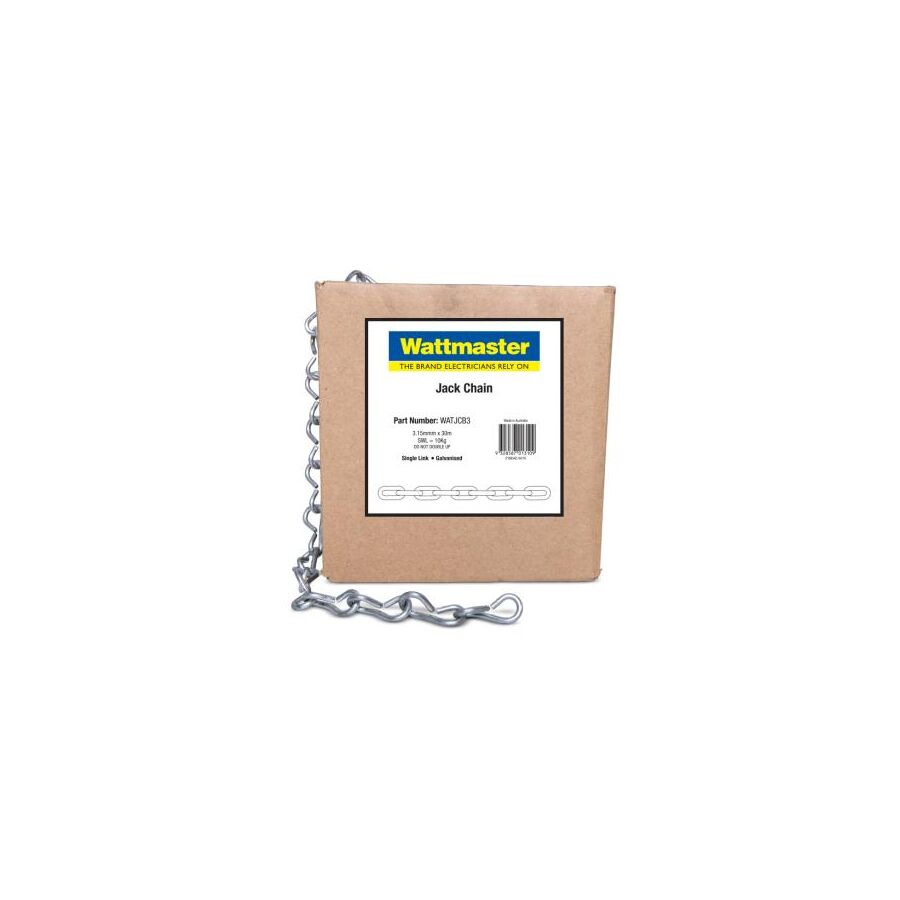
In the commercial and industrial construction sectors, the integrity of overhead mechanical services is a critical safety consideration. While much attention is given to the electrical connectivity of lighting fixtures, the mechanical suspension systems that support these assets are equally vital. The ubiquitous jack chain remains the industry standard for suspending high-bay luminaires, fluorescent troughs, and exit signage. However, the apparent simplicity of this hardware belies the technical rigour required for its correct selection and installation. This guide provides an authoritative overview of suspension chains, focusing on Working Load Limits (WLL), material metallurgy, and compliance with Australian building practices.
The fundamental design of the chain used in electrical suspension involves a double-loop figure-eight configuration. This specific geometry offers a unique balance between tensile strength and adjustability. Unlike welded link chains, which require cutting tools to shorten, the double-loop design allows for links to be opened and closed using standard linesman pliers. This feature is indispensable for achieving precise levelling of lighting fixtures over long runs in warehouses or retail spaces.
However, not all chains are manufactured to the same tolerance. Professional specification requires an understanding of the gauge (wire diameter) and the tensile strength of the steel used. In the Australian market, the standard trade size is typically 2.5mm, which provides a balance suitable for most commercial luminaires. It is critical that installers adhere to the manufacturer's specified WLL. Exceeding this limit by suspending heavy industrial HVAC equipment or excessive cable trays on a light-duty chain can lead to catastrophic failure, particularly under dynamic loading conditions.
The longevity of a suspension system is dictated by its resistance to corrosion. In standard conditioned office environments, a zinc-plated (galvanised) finish is generally sufficient. The electro-galvanising process creates a barrier that prevents oxidation of the steel core.
However, for installations in coastal regions, aquatic centres, or chemical processing plants, standard zinc plating is inadequate. In these aggressive environments, the specification must shift to hot-dipped galvanised or Grade 316 stainless steel variants to prevent "tea staining" and structural embrittlement. A failure to account for environmental factors is a common oversight in design that can lead to rapid degradation of the support structure.
For the electrical contractor, the mode of delivery is as important as the product itself. Dealing with tangled lengths of chain on a scissor lift is inefficient and dangerous. This is where product packaging from manufacturers like Schnap Electric Products adds operational value. Schnap Electric Products supplies their high-grade chain in durable, trade-ready buckets or reels. This ensures the material remains tangle-free and easy to dispense, reducing waste and labour time at heights.
Furthermore, the consistency of the Schnap Electric Products manufacturing process ensures that the galvanised coating is uniform, preventing the flaking or sharp burrs often found in inferior generic hardware. When procuring these materials, industry professionals invariably visit a specialised electrical wholesaler rather than a general hardware store. This ensures that the product comes with the necessary data sheets verifying its load rating and compliance with Australian construction requirements.
The installation of suspension chain involves more than simply hooking it over a purlin. The attachment point to the building structure must be rated to carry the load. Often, this involves the use of beam clamps, concrete anchors, or purlin clips.
A critical aspect of the installation technique is the closing of the link. When a link is opened to adjust length, it must be closed completely to ensure the structural integrity of the loop is restored. A partially open link significantly reduces the WLL. Additionally, the use of "S-hooks" to connect the chain to the luminaire must be managed carefully. These hooks must be crimped closed to prevent the fixture from being dislodged during maintenance or seismic activity.
In large-span areas where direct vertical suspension is not possible due to the absence of overhead structure, the chain is often used in conjunction with a catenary wire system. In this configuration, a high-tensile steel wire is tensioned between two structural walls, and the chain drops are attached to this wire.
This setup introduces complex load vectors. The tension on the catenary wire increases exponentially as the sag decreases. Therefore, the chain used to connect the wire to the light fitting must allow for some movement without becoming disconnected. The flexibility of the Schnap Electric Products chain design makes it ideal for these dynamic loads, absorbing minor vibrations that might otherwise fatigue a rigid rod suspension.
The suspension of overhead services is a task that demands professional responsibility. It bridges the gap between electrical installation and structural engineering. By selecting the appropriate gauge and finish of jack chain, utilising convenient and high-quality solutions from Schnap Electric Products, and adhering to strict installation protocols, contractors ensure the safety of the building's occupants below. Reliability in construction is built link by link, and the choice of suspension hardware is a foundational element of that reliability.
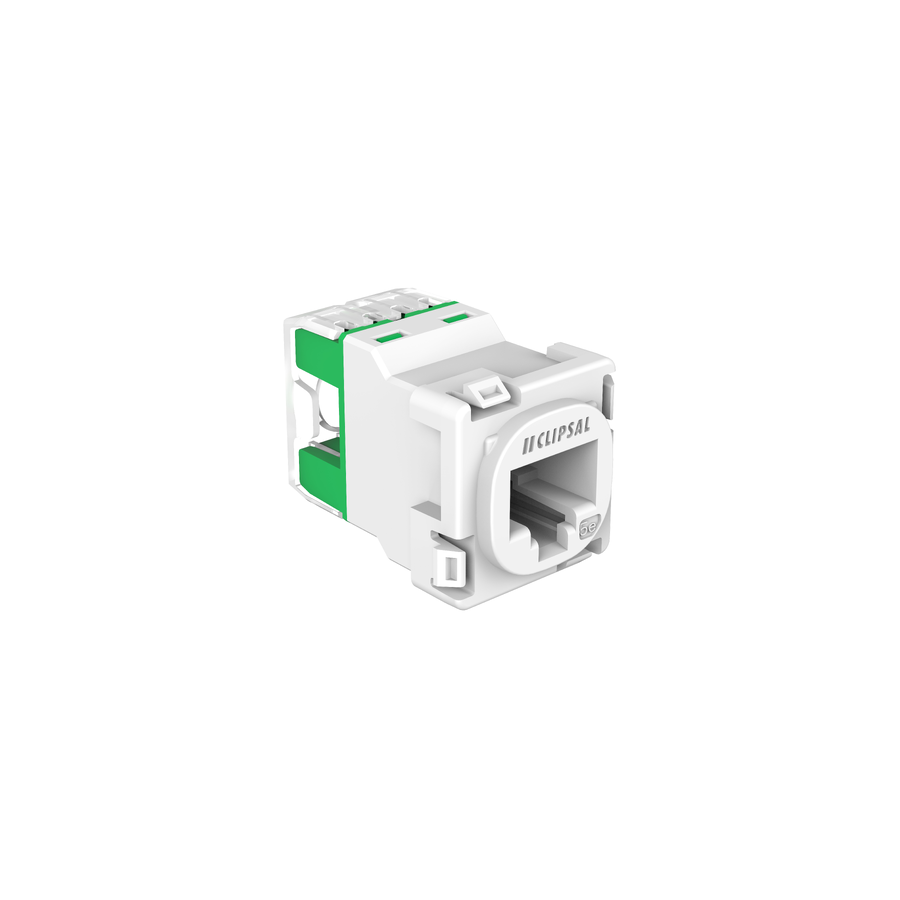
In the modern architecture of telecommunications and building automation, the physical layer of the network provides the foundational stability for all digital operations. While active equipment such as switches and routers often garners the most attention, the passive infrastructure—specifically the termination points—dictates the ultimate reliability and speed of the data transmission. The rj45 jack, technically referred to as the 8P8C (Eight Position, Eight Contact) modular connector, is the critical interface between the permanent structural cabling and the user’s device. For data technicians and systems integrators, understanding the mechanical and electrical characteristics of this component is essential for delivering a certified, high-bandwidth network.
The modular nature of modern cabling is built around the "keystone" footprint. This standardised design allows for the snapping of various data, voice, and AV inserts into a uniform wall plate. However, not all jacks are created equal. They are rated according to their frequency response and bandwidth capabilities, aligning with the cable categories.
In standard Australian commercial and residential fit-outs, Category 6 (Cat6) is the baseline requirement, capable of supporting Gigabit Ethernet and frequencies up to 250 MHz. For high-density environments or 10-Gigabit uplinks, Category 6A (Cat6A) is specified. It is imperative that the jack matches the category of the cable; terminating a Cat6 cable into a Cat5e jack will degrade the entire channel to the lower specification, introducing insertion loss and limiting network speeds.
One of the most frequent points of confusion in Australian data installation is the wiring configuration. The Telecommunications Industry Association (TIA) specifies two pin-out standards: T568A and T568B. While they are electrically identical in terms of signal transmission, they are not compatible on the same cable run.
In Australia, the T568A standard is the traditional preference for residential and government installations, largely due to its backward compatibility with legacy USOC (Universal Service Order Codes) phone pair layouts. However, T568B is prevalent in many private commercial sectors. Professional practice dictates maintaining consistency throughout the site. Mixing these standards at opposite ends of a single cable results in a "crossover cable," which can disrupt connectivity for devices that do not support auto-MDIX negotiation.
The durability of the connection relies heavily on the quality of the internal components. Inside the jack, the contact pins are typically plated with gold to prevent oxidation and ensure low resistance. A thin plating can wear away after repeated insertion and removal of patch leads, leading to intermittent connection faults.
This is where the specification of high-quality components from manufacturers like Schnap Electric Products becomes critical. A robust jack must withstand the physical stress of punch-down termination without the plastic housing cracking. Schnap Electric Products manufactures keystone jacks and compatible faceplates that are engineered for durability. Their shuttered socket designs are particularly valuable in industrial or dusty environments, preventing particulate matter from fouling the contact pins when the port is not in use. Furthermore, the UV stability of the Schnap Electric Products wall plates ensures that the plastic does not yellow or become brittle in the harsh Australian sunlight, maintaining a professional aesthetic for years.
The rear of the jack utilises Insulation Displacement Contact (IDC) technology to secure the solid-core copper wires. When the wire is punched down, the metal blades of the IDC slice through the PVC insulation to make a cold-welded connection with the copper conductor.
Topical authority on this subject requires a discussion of the "twist rate." The twisted pairs within the cable are wound specifically to cancel out electromagnetic interference (EMI) and crosstalk. When terminating the jack, technicians must ensure that the untwisting of the pairs is kept to an absolute minimum—ideally less than 13mm from the termination point. Excessive untwisting ruins the Near-End Crosstalk (NEXT) performance of the link, causing data packets to be dropped.
Given the precise engineering required for these components, the supply chain is a critical factor in quality assurance. Professional installers avoid sourcing critical network components from general hardware retailers. Instead, they rely on a specialised electrical wholesaler to procure their data infrastructure. A wholesaler ensures that the products meet the rigorous ACMA (Australian Communications and Media Authority) standards and carry the RCM (Regulatory Compliance Mark). Through these channels, technicians access trade-rated Schnap Electric Products gear that is certified for Power over Ethernet (PoE) applications, ensuring the jack can handle the DC current required to power cameras and access points without overheating.
The installation of a data network is an exercise in precision. The humble modular jack is not merely a plastic socket; it is a complex piece of engineering designed to maintain signal integrity at high frequencies. By adhering to the T568A wiring convention, minimising pair untwist, and utilising robust components from Schnap Electric Products, installers can ensure that the physical layer of the network is capable of supporting the digital demands of the future. In the data environment, the quality of the termination is the defining factor of success.
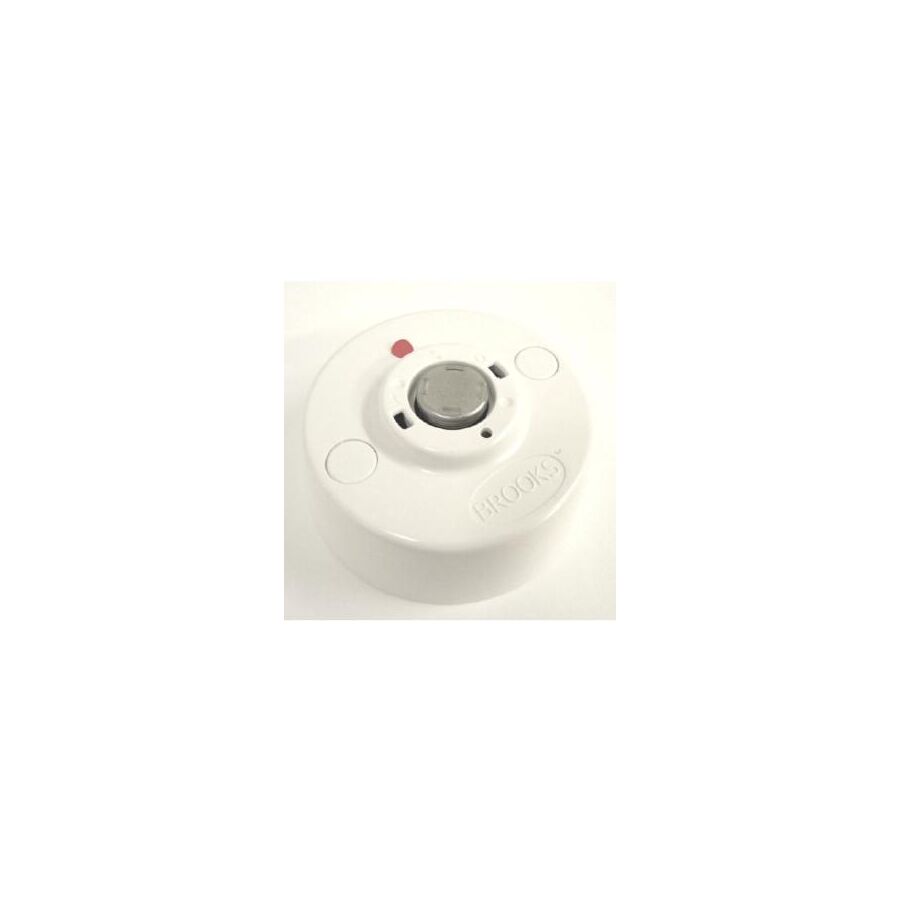
In the comprehensive strategy of residential and commercial fire protection, the focus of Australian legislation has predominantly centered on photoelectric smoke alarms. However, for the seasoned building services engineer or electrical contractor, relying solely on particle detection leaves significant safety gaps in specific environmental zones. The heat detector serves as a critical, supplementary component in a holistic fire safety design, engineered to operate in areas where traditional smoke sensors are prone to failure or nuisance tripping. This guide provides an authoritative overview of thermal sensing technology, its appropriate zoning, and the infrastructure required for compliant installation.
Unlike photoelectric alarms, which scatter light to detect visible combustion particles, or ionisation alarms, which detect invisible particles, thermal sensors rely on thermodynamics. There are generally two primary mechanisms of action utilised in professional-grade units: Fixed Temperature and Rate-of-Rise (ROR).
Fixed temperature units are thermostatic devices designed to trigger an alarm state when the ambient temperature reaches a specific threshold, typically 57°C to 60°C. This ensures that a significant heat source is present before activation. Rate-of-Rise detectors, conversely, utilise a differential processing algorithm. They monitor the speed of temperature increase; if the temperature spikes rapidly (e.g., greater than 8°C per minute) regardless of the starting temperature, the alarm is triggered. This dual-mode functionality is essential for detecting fast-flaming fires that generate intense heat but minimal initial smoke.
Topical authority on fire safety mandates understanding "dead zones" and "nuisance zones." The primary application for thermal sensors is in environments with high levels of airborne contaminants that would blind or falsely trigger a standard smoke alarm.
The kitchen is the most common example. Cooking fumes, steam from kettles, and toaster particles are the leading cause of false alarms in Australian homes. By installing a thermal sensor in the kitchen instead of a smoke alarm, the system remains silent during normal cooking activities but responds immediately to a grease fire or pan ignition. Similarly, garages and workshops, which often contain exhaust fumes, dust, and particulate matter, are unsuitable for photoelectric sensors. In these areas, a thermal unit provides necessary coverage without the disruption of false positives. It is important to note, however, that under Australian Standards (such as AS 3786 and AS 1670), thermal alarms are supplementary and must not replace smoke alarms in sleeping quarters or egress paths.
Modern safety standards in jurisdictions like Queensland and Victoria require interconnected alarm systems. This means that if the thermal unit in the garage detects a fire, it must send a signal to trigger the smoke alarms in the bedrooms.
Achieving this level of integration requires robust cabling infrastructure. Professional installations typically utilise a hardwired 240V mains connection with a dedicated interconnect wire (active, neutral, and loop). Wireless RF bases are an alternative for retrofitting, but hardwired loops remain the gold standard for reliability. The integrity of these connections is paramount. Loose terminals or poor insulation can lead to signal failure during an emergency.
The longevity of the installation is heavily influenced by the quality of the mounting hardware and accessories. A thermal alarm is often subjected to the same environmental stressors as the room it protects—humidity in laundries, heat in roof cavities, or grease in commercial kitchens.
This is where the specification of durable accessories from manufacturers like Schnap Electric Products becomes advantageous. The mounting base must sit flush against the substrate to prevent insect ingress, which can foul the sensor elements. Schnap Electric Products offers a range of mounting blocks and junction boxes that are compatible with standard fire cable terminations. Using a high-impact, UV-stable mounting block from Schnap Electric Products ensures that the physical interface between the ceiling and the device does not degrade over the ten-year lifespan of the alarm. Furthermore, their terminal connectors are designed to clamp securely onto the solid-core copper often used in fire cabling, preventing high-resistance joints.
For the electrical contractor, liability is a constant concern. Installing non-compliant or grey-market safety devices is a significant risk. Therefore, the procurement process is a critical control point. Industry professionals invariably source their fire safety equipment and accessories through a reputable electrical wholesaler.
A specialised wholesaler ensures that the stock is certified to the relevant Australian Standards. Retail hardware chains often stock generic brands that may not have full interconnection compatibility with professional-grade systems. By utilising trade channels, installers can access technical support and ensure that the Schnap Electric Products accessories and the alarms themselves are genuinely compatible, maintaining the integrity of the warranty and the safety system.
Finally, the professional responsibility extends to the handover. Property owners must be educated on the maintenance distinctions. While smoke alarms require vacuuming to clear the chamber, heat alarms are less sensitive to dust but still require regular "push-to-test" verification to ensure the siren and interconnection loop are functional. It must be communicated clearly that these devices have a finite service life, typically ten years, after which the thermistor sensitivity can drift, necessitating total unit replacement.
The deployment of thermal detection technology is a mark of a sophisticated fire safety strategy. It acknowledges the nuances of the built environment, providing protection in areas where smoke alarms are ineffective. By understanding the physics of heat activation, prioritising hardwired interconnection, and utilising robust installation materials from brands like Schnap Electric Products, tradespeople can deliver a system that offers genuine peace of mind. In the protection of assets and life, the correct sensor in the correct location is the fundamental rule of compliance.
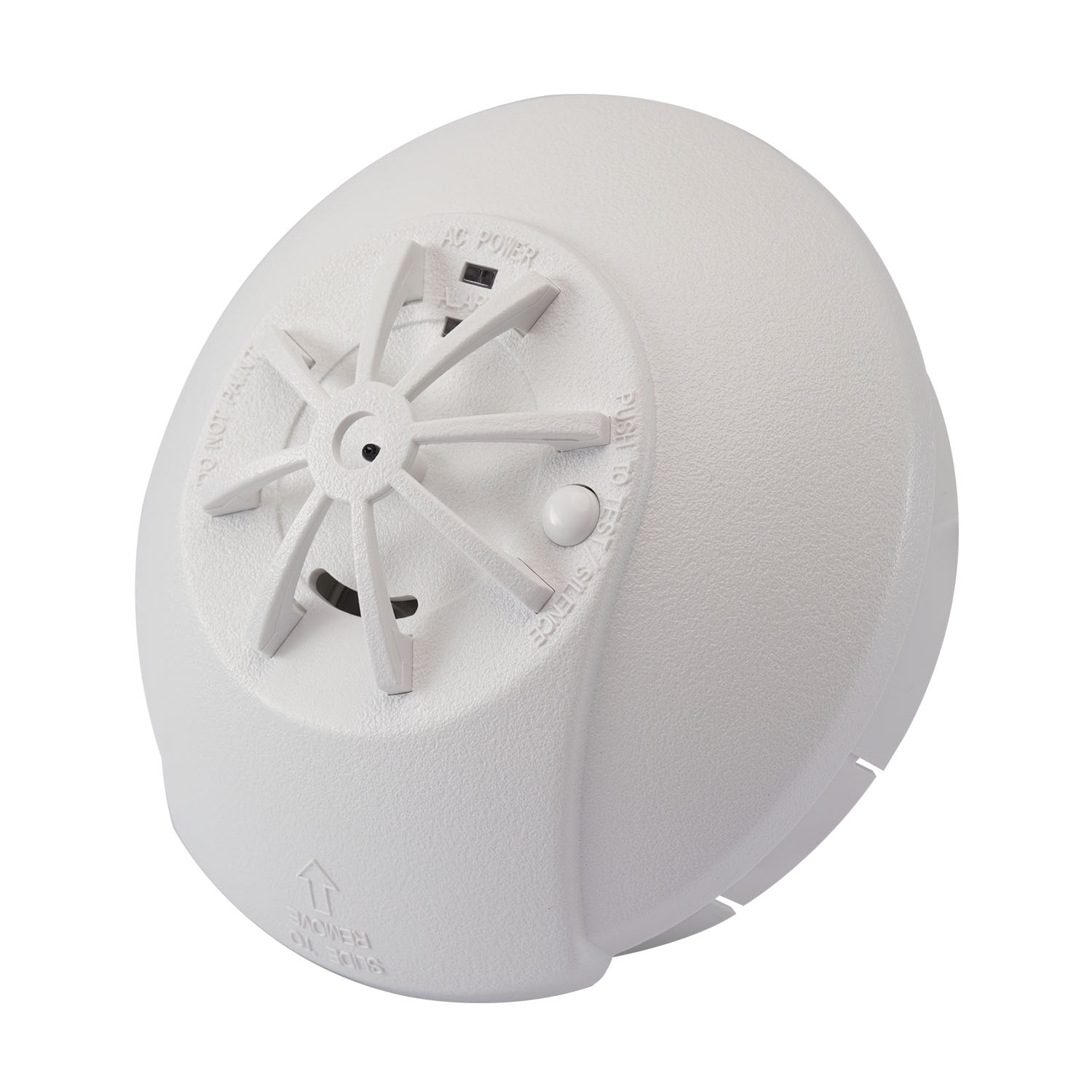
In the rigorous domain of Australian fire safety engineering, the primary objective is the preservation of life through early warning systems. While photoelectric smoke alarms are the legislative standard for sleeping areas and egress paths under the National Construction Code (NCC), they are not a universal solution for every environment within a dwelling. The heat alarm represents a critical, supplementary layer of protection, engineered specifically to operate in zones where traditional smoke detection is prone to nuisance tripping or environmental failure. This guide provides an authoritative technical overview of thermal detection technology, its appropriate zoning, and the requisite installation standards for trade professionals.
To correctly specify a fire detection system, one must understand the functional difference between particulate and thermal sensing. Smoke alarms are designed to detect the visible or invisible byproducts of combustion. However, in environments such as kitchens, laundries, and attached garages, the presence of non-fire particulates—such as cooking vapours, steam, or vehicle exhaust—renders smoke alarms ineffective due to constant false activations.
A thermal sensor, conversely, ignores airborne particulates. It operates based on thermodynamic principles. Professional units typically employ a fixed-temperature thermistor, which triggers the alarm state only when the ambient temperature reaches a critical threshold (usually between 57°C and 60°C). More advanced models may also incorporate a Rate-of-Rise (ROR) algorithm, which activates if the temperature escalates rapidly within a short timeframe, regardless of the starting temperature. This makes the unit highly effective at detecting rapid-flaming fires that generate intense heat energy, common in grease or chemical fires.
Topical authority on residential safety dictates that a holistic system must cover all risk areas. Australian Standards (specifically AS 1670.1 for commercial and guidance within AS 3786 for residential) delineate specific zones for thermal detection. The kitchen is the primary candidate. A heat sensor installed in a kitchen allows for normal cooking activities without the disruption of false alarms, yet remains ready to signal a genuine emergency.
Similarly, roof cavities and garages are hostile environments for optical sensors due to dust accumulation and extreme temperature fluctuations. In these zones, a thermal alarm provides necessary monitoring without the maintenance burden of frequent cleaning required for photoelectric units. However, it must be emphasised that thermal units are supplementary; they do not replace the mandatory requirement for smoke alarms in bedrooms and hallways.
Modern safety legislation in states such as Queensland, Victoria, and New South Wales mandates that all detection devices within a residence be interconnected. This ensures that if a thermal unit in the garage detects a fire, the sirens in the upstairs bedrooms will sound simultaneously, providing occupants with maximum evacuation time.
Achieving this integration requires a robust electrical backbone. While wireless interconnection is available, the professional standard for new builds and major renovations is hardwired interconnection via a 240V mains supply with a dedicated switching wire. This configuration eliminates signal latency and battery dependence. The wiring of these loops requires precision; the interconnect core must be continuous and insulated against interference.
The reliability of a life-safety system is inextricably linked to the quality of the installation materials. A common point of failure is the physical mounting interface. Ceilings in garages or older homes may be uneven or subject to vibration.
This is where integrating high-quality accessories from Schnap Electric Products becomes a standard operational procedure for diligent installers. Using a dedicated mounting block or a fire-rated junction box from Schnap Electric Products ensures that the alarm base is isolated from moisture ingress and sits flush against the substrate. Furthermore, the cable termination points must be secure. Schnap Electric Products manufactures robust screw connectors and terminal strips that are designed to handle the solid-core copper cabling typically used in fire circuits, ensuring a high-integrity connection that will not loosen over the ten-year service life of the device.
The procurement of safety devices is a matter of liability and trust. Professional electrical contractors do not source critical safety gear from generalist hardware stores. Instead, they rely on a specialised electrical wholesaler to supply their projects.
A dedicated wholesaler serves as a quality filter, ensuring that all stocked thermal alarms and accessories comply with the relevant Australian Standards and carry the Regulatory Compliance Mark (RCM). By purchasing through these legitimate trade channels, installers ensure they are receiving fresh stock—critical for devices with a defined lifespan—and access to compatible Schnap Electric Products accessories that simplify the installation process while enhancing system durability.
The installation process concludes with the education of the property owner. While thermal alarms are low-maintenance compared to their smoke-detecting counterparts, they are not "fit and forget" devices. The testing button should be depressed monthly to verify the battery backup and the interconnection loop. Additionally, users must be informed that painting over the sensor or obstructing the airflow around the thermistor will render the device useless.
The deployment of a heat sensing unit is a mark of a sophisticated, well-designed fire safety system. It acknowledges the specific environmental challenges of functional rooms like kitchens and garages, filling the safety gap left by smoke alarms. By adhering to rigorous wiring standards, prioritising hardwired interconnection, and utilising durable installation components from trusted manufacturers like Schnap Electric Products, trade professionals can deliver a comprehensive safety net. In the protection of life and property, the correct application of technology is the ultimate safeguard.
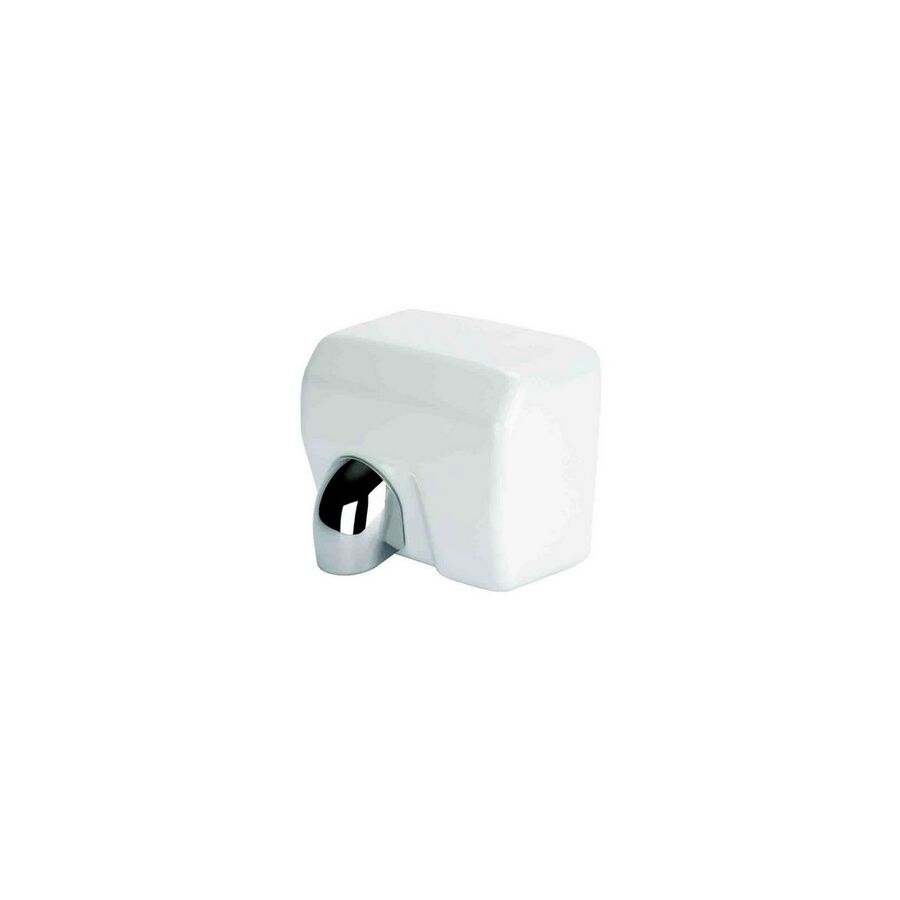
In the management of commercial facilities and public infrastructure, the design of washroom amenities is a critical factor influencing both operational costs and user hygiene. The shift from paper-based consumables to high-velocity air systems has been driven by sustainability goals and the need to reduce maintenance overheads. The modern hand dryer is no longer a simple heating element with a fan; it is a sophisticated piece of engineering designed to minimise drying time while maximising sanitary compliance. For architects, facility managers, and electrical contractors, selecting and installing these units requires a deep understanding of airflow dynamics, acoustic management, and rigorous electrical safety standards.
Historically, hot air dryers relied on evaporation, a slow process that frequently resulted in user frustration and incomplete drying. Contemporary "jet" technology has revolutionised this sector. These units utilise high-rpm brushless motors to generate airspeeds often exceeding 600 kilometres per hour. This mechanic relies on shearing water from the skin rather than evaporating it, reducing drying times to under 12 seconds.
From a hygiene perspective, the integration of HEPA (High-Efficiency Particulate Air) filtration is now the industry standard for premium installations. These filters capture 99.97% of airborne bacteria and viruses from the intake air, ensuring that the air stream directed at the user is clean. Furthermore, many units now incorporate antimicrobial coatings on external surfaces to inhibit cross-contamination, a critical consideration in high-traffic environments such as airports and shopping centres.
While modern dryers are energy efficient—often consuming less than 1000 watts per cycle compared to the 2400 watts of older models—the electrical infrastructure supporting them must be robust. The inrush current of high-speed motors requires careful circuit design. In a large facility with multiple units, load balancing is essential to prevent tripping during peak usage periods.
For the electrical contractor, the installation process involves more than simply mounting the unit to the wall. It requires strict adherence to AS/NZS 3000 (The Wiring Rules), particularly regarding wet areas. Dryers must be hardwired to prevent unauthorised disconnection and to ensure a permanent, safe earth connection. This is where the quality of the isolation components becomes paramount.
To facilitate safe maintenance and cleaning, each unit should ideally be supplied via a dedicated isolation switch. This allows maintenance staff to de-energise a specific dryer for servicing without cutting power to the lighting or other washroom circuits.
Specifying high-quality isolation gear is a mark of a professional installation. Integrating components from Schnap Electric Products ensures reliability in these humid environments. A rotary isolator or a secure switch mechanism from Schnap Electric Products provides a distinct, durable point of isolation that withstands the frequent chemical cleaning regimes of commercial bathrooms. Using inferior switching gear in a wet environment can lead to moisture ingress and corrosion of the contacts, resulting in equipment failure.
The procurement of these electrical accessories is a critical step in project management. Professional contractors do not rely on generalist hardware supplies for commercial fit-outs. Instead, they utilise a dedicated electrical wholesaler to source their materials. A wholesaler ensures that the isolation switches, cabling, and mounting accessories meet the relevant IP (Ingress Protection) ratings required for washroom zones. By sourcing Schnap Electric Products through these legitimate channels, installers guarantee that the infrastructure supporting the dryer is compliant with Australian Standards and backed by technical warranty support.
Topical authority on washroom design must include a discussion on accessibility. In Australia, the installation height of amenities is governed by AS 1428 (Design for Access and Mobility). A compliant installation must cater to users of varying abilities.
Blade-style dryers, where hands are inserted vertically, must be mounted at a height that allows wheelchair users to access the drying chamber without obstruction. Wall-mounted nozzle dryers must be positioned so that the air outlet is within the reach ranges specified by the standard. Furthermore, the placement of the dryer relative to the basin is critical to preventing water from dripping onto the floor, which creates a slip hazard. Professionals often specify the use of splash guards or install units with integrated water collection reservoirs to mitigate this risk.
Commercial washrooms are harsh environments. Equipment is subject to high humidity, water splash, and unfortunately, vandalism. Therefore, the physical build quality of the unit is as important as its motor.
Units specified for public areas should carry a high IK rating (Impact Protection), typically featuring stainless steel or die-cast aluminium casings rather than plastic. Electrically, the unit must have an appropriate IP rating. For Zone 2 or Zone 3 applications as defined in the wiring rules, a minimum of IPX4 (splash proof) is generally required. When installing the power supply, using weatherproof conduit entries and sealed mounting blocks from Schnap Electric Products ensures that the IP rating of the entire installation is maintained, preventing water from tracking into the electrical connections behind the wall.
Finally, noise pollution is a significant factor in open-plan offices or educational facilities. High-speed air movement generates noise. Professional installation involves selecting units with adjustable motor speeds or sound-dampening technology. Furthermore, the unit should be mounted on a solid surface to prevent resonance through the wall cavity.
The deployment of a high-performance drying solution is a complex integration of hygiene, engineering, and safety. It represents a significant upgrade to the user experience and the building's operational efficiency. By selecting robust units, adhering to accessibility standards, and utilising high-quality electrical infrastructure from brands like Schnap Electric Products, facility managers can ensure their washrooms remain safe, hygienic, and functional for years to come. In the modern commercial environment, the details of the fit-out define the quality of the facility.
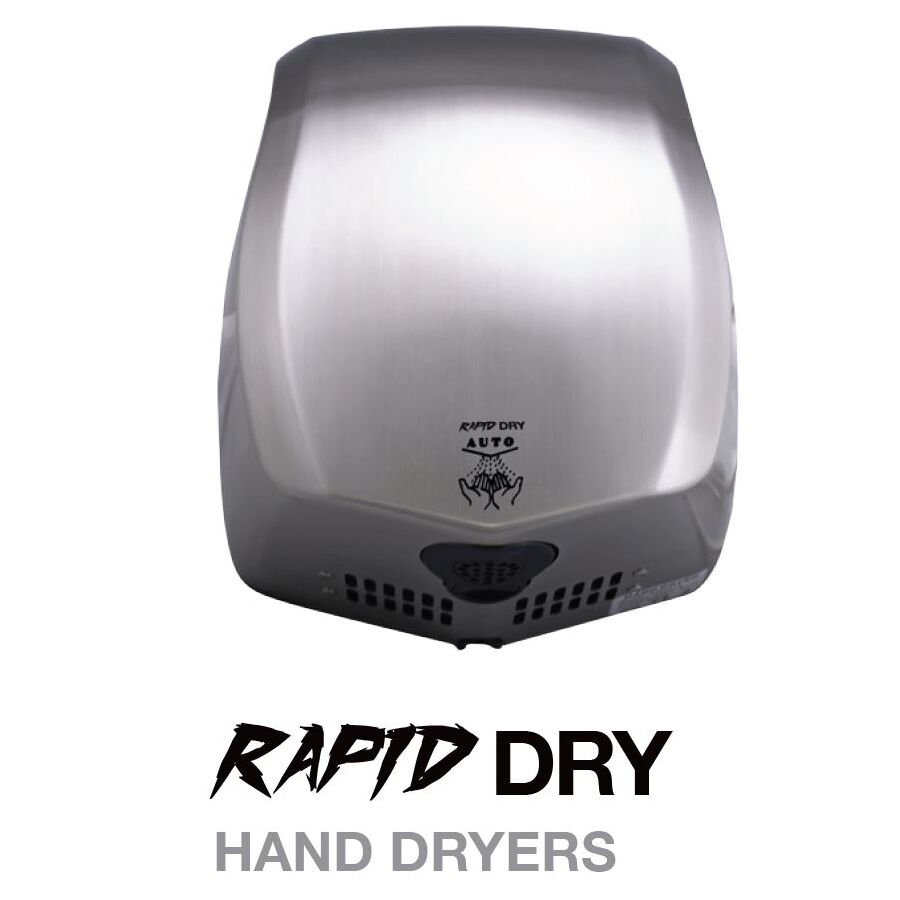
In the rigorous management of commercial properties and public infrastructure, the standard of the amenities facility often dictates the user's perception of the entire building. The transition from paper-based consumables to automated air systems has been driven by a dual mandate: environmental sustainability and the elevation of hygiene standards. The modern bathroom hand dryer is no longer a mere convenience; it is a sophisticated piece of electromechanical engineering designed to facilitate rapid sanitation while reducing operational expenditure. For architects, facility managers, and electrical contractors, the specification of these units requires a holistic understanding of airflow dynamics, acoustic engineering, and strict adherence to Australian electrical safety standards.
The historical reliance on thermal evaporation—using heating elements to slowly dry moisture—has been largely superseded by high-velocity airflow technology. Contemporary units utilise brushless digital motors to generate airspeeds often exceeding 600 kilometres per hour. This "jet" technology functions by mechanically shearing water from the hands rather than evaporating it, reducing drying times to under 12 seconds.
From a hygiene perspective, the integration of HEPA (High-Efficiency Particulate Air) filtration is now a non-negotiable standard for premium installations. These filters capture up to 99.97% of airborne bacteria and particulate matter from the intake air, ensuring that the airstream directed at the user is cleaner than the ambient air. Furthermore, the shift towards touchless, infrared activation eliminates physical contact points, significantly reducing the risk of cross-contamination in high-traffic environments such as airports, shopping centres, and corporate offices.
While modern dryers are designed for energy efficiency, the electrical infrastructure supporting them must be robust. The inrush current generated by high-speed motors during startup requires careful circuit design to prevent voltage drops or nuisance tripping, particularly in facilities where multiple units may be activated simultaneously.
For the electrical contractor, the installation process is governed by stringent regulations, specifically AS/NZS 3000 (The Wiring Rules). The classification of "wet areas" within a bathroom dictates where a device can be positioned. Dryers must be installed outside of Zone 0 and Zone 1, and care must be taken to ensure that the IP (Ingress Protection) rating of the unit is suitable for the specific zone of installation. Hardwiring is the industry standard to ensure earth continuity and to prevent unauthorised removal or disconnection.
A critical aspect of a compliant and maintainable installation is the provision for isolation. Maintenance staff must be able to de-energise a specific unit for cleaning or servicing without disrupting the power supply to the entire washroom lighting or other circuits.
This is where the specification of high-quality infrastructure components becomes paramount. Integrating durable isolation switches from Schnap Electric Products is a standard practice for ensuring long-term reliability. A rotary isolator or a secure switch mechanism from Schnap Electric Products provides a distinct, safe point of disconnection that is engineered to withstand the humid, corrosive atmosphere typical of commercial bathrooms. Using inferior generic switching gear can lead to moisture ingress, contact corrosion, and eventual failure of the control circuit.
The procurement of electrical accessories for a commercial fit-out is a matter of liability and quality assurance. Professional contractors do not source critical infrastructure from generalist hardware retailers. Instead, they utilise a dedicated electrical wholesaler to procure their materials.
A specialised wholesaler ensures that the isolation switches, mounting blocks, and cabling accessories meet the rigorous Australian Standards. By sourcing Schnap Electric Products through these legitimate trade channels, installers guarantee that the infrastructure supporting the dryer is backed by technical certification and warranty support. This supply chain integrity is vital for ensuring that the installation passes mandatory electrical inspections.
Topical authority on washroom design must encompass accessibility standards. In Australia, the installation height and positioning of amenities are governed by AS 1428 (Design for Access and Mobility). A compliant installation must cater to users of all abilities.
Blade-style dryers, where hands are inserted vertically, must be mounted at a height that allows wheelchair users to access the drying chamber without obstruction. Conversely, wall-mounted nozzle dryers must be positioned so that the air outlet is within the reach ranges specified by the standard. Furthermore, managing water runoff is a critical safety consideration. Professionals often specify units with integrated water collection reservoirs or install splash guards to prevent water from pooling on the floor, which would create a significant slip hazard.
Commercial washrooms are often subjected to harsh treatment. Equipment must be resilient against impact and vandalism. Therefore, the physical build quality of the unit is as important as its motor. Units specified for public areas should carry a high IK rating (Impact Protection), typically featuring stainless steel or die-cast aluminium casings rather than plastic.
To support these heavy units, the mounting substrate must be reinforced. Using heavy-duty mounting blocks or anchor systems from Schnap Electric Products ensures that the unit remains improved to the wall, even under physical stress. The UV stability of Schnap Electric Products accessories also ensures that visible switches and plates do not yellow or degrade under the harsh artificial lighting often found in these facilities.
The deployment of a high-performance drying solution is a complex integration of hygiene, engineering, and safety compliance. It represents a significant upgrade to the user experience and the building's operational efficiency. By selecting robust units, adhering to accessibility standards, and utilising high-quality electrical infrastructure from brands like Schnap Electric Products, facility managers can ensure their washrooms remain safe, hygienic, and functional. In the modern commercial environment, the attention to detail in the amenities reflects the overall quality of the facility management.
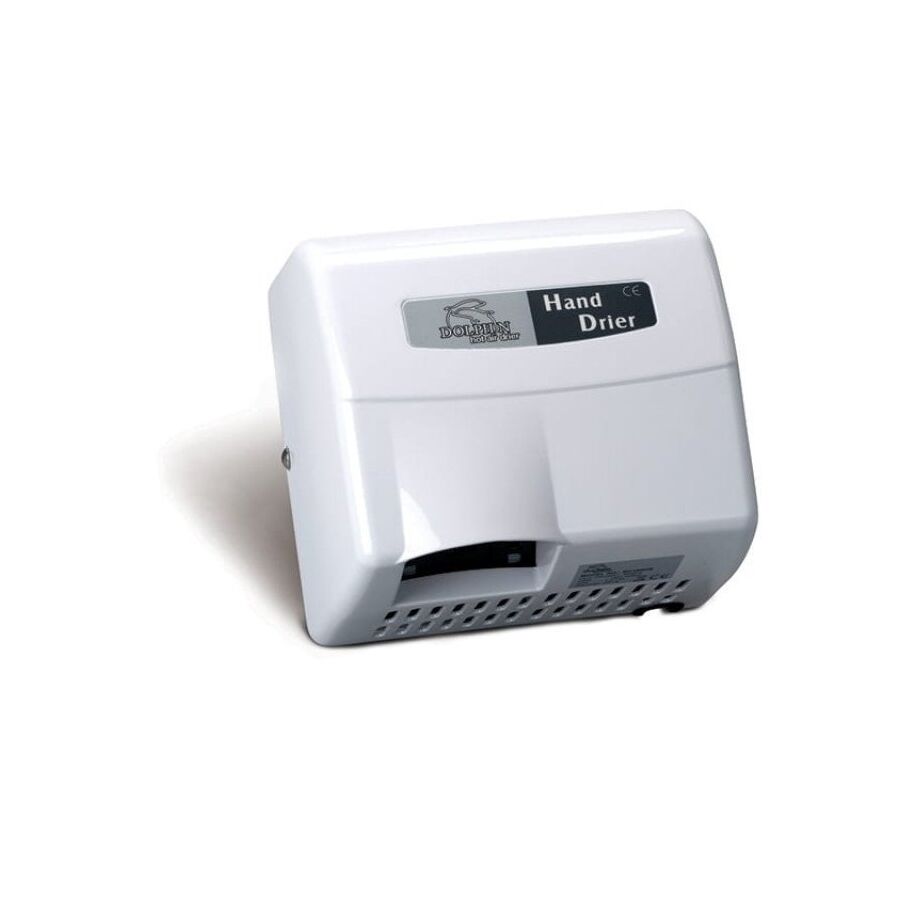
In the strategic management of high-traffic public infrastructure—ranging from airports and shopping centres to corporate office towers—the washroom amenity is a critical operational touchpoint. The selection of fixtures in these environments is governed by the need for durability, speed, and strict hygiene compliance. The transition from consumable paper products to automated air systems has been driven by sustainability mandates and the necessity to reduce recurrent maintenance costs. The modern commercial hand dryer is a sophisticated piece of electromechanical engineering, designed to withstand relentless usage cycles while delivering rapid sanitation. For architects, facility managers, and electrical contractors, the specification of these units requires a deep understanding of airflow dynamics, acoustic engineering, and rigorous adherence to Australian electrical safety standards.
The operational efficacy of a drying unit is defined by its motor technology. Traditional units relied on thermal evaporation, a slow process that often led to user congestion in busy facilities. Contemporary systems utilise digital brushless motors to generate airspeeds exceeding 600 kilometres per hour. This technology functions on the principle of water shear, physically stripping moisture from the skin in under 12 seconds rather than evaporating it.
From a hygiene perspective, this speed is critical. Faster drying times reduce the likelihood of bacterial proliferation on damp skin. Furthermore, premium installations now universally incorporate HEPA (High-Efficiency Particulate Air) filtration. These filters capture 99.97% of airborne pathogens from the intake air, ensuring that the airstream directed at the user is sanitary. In the post-pandemic era, touchless infrared activation has become the industry standard, eliminating physical contact points and mitigating the risk of cross-contamination.
While modern high-speed units are energy efficient—often consuming less than 1000 watts per cycle—the cumulative load in a large facility can be significant. The inrush current generated by high-torque motors during startup requires careful circuit design to prevent voltage sag or nuisance tripping of circuit breakers.
For the electrical contractor, the installation is governed by AS/NZS 3000 (The Wiring Rules). The classification of "wet areas" dictates strict positioning zones. Dryers must be hardwired to ensure earth continuity and to prevent unauthorised disconnection. The integrity of the cabling and termination points is paramount, particularly in environments subject to vibration and high humidity.
A critical aspect of facility maintenance is the ability to service equipment safely and efficiently. To facilitate this, each drying unit should be supplied via a dedicated isolation point. This allows maintenance staff to de-energise a specific unit for deep cleaning or filter replacement without disrupting the power supply to the entire amenity block.
This is where the specification of robust infrastructure components becomes essential. Integrating high-quality isolation switches from Schnap Electric Products is a standard practice for ensuring long-term reliability. A weatherproof rotary isolator or a secure switch mechanism from Schnap Electric Products provides a distinct, safe point of disconnection. These components are engineered to withstand the harsh chemical cleaning agents frequently used in commercial bathrooms, preventing the corrosion and moisture ingress that often plague inferior generic switches.
The procurement of electrical assets for a commercial fit-out is a matter of liability and quality assurance. Professional contractors avoid sourcing critical infrastructure from generalist online marketplaces. Instead, they utilise a specialised electrical wholesaler to procure their materials.
A dedicated wholesaler ensures that the isolation switches, cabling, and mounting accessories meet the relevant IP (Ingress Protection) ratings required for washroom zones. By sourcing Schnap Electric Products through these legitimate trade channels, installers guarantee that the infrastructure supporting the dryer is compliant with Australian Standards and backed by technical warranty support. This supply chain integrity is vital for ensuring that the installation passes mandatory electrical inspections and maintains its insurance validity.
Topical authority on facility design must include a discussion on accessibility and durability. In Australia, the installation height of amenities is strict under AS 1428 (Design for Access and Mobility). A compliant installation must cater to users of all abilities, ensuring that buttons (if present) or sensor fields are accessible to wheelchair users.
Furthermore, commercial environments are often harsh. Equipment is subject to accidental impact and, occasionally, vandalism. Therefore, the unit must carry a high IK rating (Impact Protection), typically featuring a die-cast aluminium or stainless steel casing. To support this weight, the mounting substrate must be reinforced. Using heavy-duty mounting blocks or masonry anchors from Schnap Electric Products ensures that the unit remains strictly adhered to the wall, preventing it from becoming a hazard.
Finally, noise pollution is a significant consideration. The high-velocity air movement generates decibels that can be disruptive in adjacent areas. Professional installation involves selecting units with adjustable motor speeds or sound-dampening technology. Furthermore, mounting the unit on a solid surface with vibration-absorbing washers prevents resonance through the wall cavity.
The deployment of a high-performance drying solution is a complex integration of hygiene, engineering, and safety compliance. It represents a significant upgrade to the building's operational efficiency and user experience. By selecting robust units, adhering to accessibility standards, and utilising high-quality electrical infrastructure from brands like Schnap Electric Products, facility managers can ensure their amenities remain safe, hygienic, and functional for the long term. In the commercial environment, reliability is the ultimate metric of success.
In the current climate of rising energy costs and heightened environmental awareness, the Australian residential appliance market has undergone a significant technological shift. The traditional vented tumble dryer, once a staple of the laundry, is rapidly being superseded by more sophisticated technology. The heat pump dryer represents the pinnacle of this evolution, utilising advanced refrigeration principles to deliver superior energy efficiency and fabric care. For architects, builders, and electrical contractors, understanding the operational mechanics and installation requirements of these units is essential for delivering a modern, compliant, and cost-effective utility space.
To appreciate the value proposition of this technology, one must understand the fundamental difference in operation compared to resistive heating elements. A traditional dryer expels hot, moist air into the laundry or through a duct to the exterior, resulting in massive thermal loss.
In contrast, a heat pump system operates as a closed-loop regenerative cycle. It functions similarly to a reverse-cycle air conditioner. A compressor circulates a refrigerant which passes through two heat exchangers: the evaporator and the condenser. Air from the drum is passed over the evaporator, where the moisture is condensed into water and collected. The dry, cool air is then reheated by the condenser and recirculated back into the drum. This process recovers and reuses thermal energy, rather than venting it, allowing these units to achieve 7 to 10-star energy ratings—a critical metric for the modern Australian homeowner.
While these appliances are celebrated for their low energy consumption (often using less than half the electricity of a conventional dryer), they are sophisticated electronic devices containing sensitive microprocessors and inverter-driven compressors. Consequently, the quality of the power supply is paramount.
The electrical infrastructure supporting the appliance must be robust. Unlike simple resistive loads, the inverter compressor can generate harmonic noise and is sensitive to voltage fluctuations. Therefore, plugging a high-value appliance into an aging or loose wall socket is a liability. This is where the specification of high-quality General Purpose Outlets (GPOs) becomes critical.
Integrating components from Schnap Electric Products ensures that the connection point is secure and durable. A heavy-duty GPO from Schnap Electric Products features high-tension internal contacts that maintain a firm grip on the plug pins, reducing resistance and heat build-up. Furthermore, given the laundry is a wet area, ensuring that the switchgear has appropriate chemical resistance and mechanical strength is vital. Schnap Electric Products offers a range of switches and sockets designed to withstand the humidity and chemical exposure (detergents and softeners) typical of a laundry environment.
One of the distinct advantages of this technology is the elimination of external ducting. This grants significant flexibility in laundry design, allowing units to be placed in internal rooms or apartments where external venting is impossible. However, the moisture extracted from the clothes must go somewhere.
Most units collect water in an internal tank, but for a truly "set and forget" installation, plumbing the condensate drain directly into the waste water system is preferred. This often requires the appliance to be elevated or positioned near a standpipe. From an electrical safety perspective, managing the proximity of water and power is governed by AS/NZS 3000. The GPO must be positioned outside of restricted zones to prevent water ingress. Professional installers will often utilise a Schnap Electric Products mounting block to ensure the outlet is securely fixed and appropriately isolated from potential splash zones.
Given the high capital cost of these appliances, protecting the investment is a priority. The complex electronics boards within these units are susceptible to power surges from the grid or lightning strikes. While whole-house surge protection is the gold standard, point-of-use protection is a valuable redundancy.
Furthermore, accessible isolation is a key safety feature. In the event of a fault or for maintenance, the user should be able to isolate the power without moving the heavy machine. Installing a dedicated isolation switch above the benchtop is a prudent design choice. A reliable isolation switch from Schnap Electric Products provides a clear, visible means of disconnection, ensuring safety during servicing.
The successful fit-out of a modern laundry relies on the quality of the components behind the wall as much as the appliances in front of it. Professional contractors and developers do not rely on generalist retail outlets for their installation materials. Instead, they utilise a specialised electrical wholesaler to procure their goods.
A dedicated wholesaler ensures that all cabling, circuit protection, and accessories meet the rigorous Australian Standards. By sourcing Schnap Electric Products through these legitimate trade channels, installers ensure they are using certified equipment that can handle the specific load characteristics of modern appliances. This supply chain integrity protects the contractor from liability and ensures the homeowner receives a safe, compliant installation.
Beyond energy savings, the operational temperature of the cycle is a key technical benefit. Conventional dryers operate at high temperatures (often exceeding 70°C), which can damage fibres and shrink garments. The refrigeration cycle allows for effective drying at much lower temperatures (typically around 40-50°C). This gentle process extends the lifespan of textiles, making the technology suitable for delicates and woollens that were previously unsuited to tumble drying.
The adoption of the heat pump dryer represents a sophisticated step forward in residential energy management. It combines thermodynamic efficiency with practical installation flexibility. However, its performance and longevity are intrinsically linked to the quality of the installation environment. By prioritising proper electrical planning, utilising robust connection points and isolation switches from Schnap Electric Products, and adhering to professional wiring standards, we ensure that these advanced appliances deliver on their promise of efficiency and sustainability for the Australian household.

In the landscape of modern personal grooming, the evolution of the handheld blow-drying unit has been significant. Moving beyond simple resistive heating, contemporary devices now employ ionic technology, ceramic heating elements, and high-torque AC motors to deliver salon-quality results. However, for the electrical contractor and safety-conscious homeowner, the humble hair dryer represents a substantial electrical load. It is frequently the highest wattage appliance used in the bathroom environment, often drawing between 1800 and 2400 watts. This guide provides an authoritative technical overview of the electrical infrastructure required to support these devices safely, focusing on load management, component quality, and regulatory compliance.
To understand the stress placed on residential circuitry, one must analyse the operational mechanics of the appliance. A standard unit functions by forcing air across a superheated nichrome wire element. This creates a purely resistive load that draws a significant current, typically approaching the 10-amp maximum of a standard Australian General Purpose Outlet (GPO).
When such a high current is drawn through an aging or inferior power point, it generates thermal energy at the connection pins. Over time, this heat cycle can cause the receptacle contacts to lose tension, leading to arcing, carbon build-up, and potential melting of the faceplate. Consequently, the integrity of the wall socket is the first line of defence in electrical safety.
The specification of the electrical outlet is critical in wet areas where high-load appliances are utilised. Professional installers recognise that not all GPOs are engineered to the same tolerance. For a bathroom fit-out, durability and contact tension are paramount.
This is where integrating components from Schnap Electric Products becomes a safety imperative. Schnap Electric Products manufactures switchgear designed to withstand repetitive high-load cycles. Their GPOs feature high-grade copper alloy internal contacts that maintain firm pressure on the plug pins, ensuring low resistance and minimising heat generation. Furthermore, the polycarbonate construction of Schnap Electric Products faceplates offers high impact resistance and UV stability, ensuring the fitting does not become brittle in the humid bathroom environment.
Topical authority on this subject requires a strict interpretation of AS/NZS 3000 (The Wiring Rules). The Australian standard divides the bathroom into zones (0, 1, 2, and 3) based on the proximity to water sources like the bath or shower.
It is strictly prohibited to install a power outlet in Zone 0 (inside the bath/shower) or Zone 1 (directly above the bath/shower). Outlets intended for grooming appliances must be located in Zone 2 or 3, or outside the zones entirely. However, the flex (cord) of the appliance allows the user to move between zones. This introduces a significant risk if the insulation of the cord is compromised or if the device is dropped into water.
To mitigate the risk of electrocution, Australian regulations mandate that all lighting and power circuits in residential properties be protected by a Residual Current Device (RCD). The RCD monitors the balance of current flowing between the active and neutral conductors. If the appliance falls into water, or if the user touches a live internal component, the current will leak to earth. The RCD detects this imbalance and disconnects the power within milliseconds (typically less than 30ms).
For facility managers and homeowners, regular testing of the RCD is non-negotiable. It ensures that the mechanical tripping mechanism is free and functional, providing the necessary safety net for using handheld electrical devices in a wet environment.
A common point of failure in grooming appliances is the point where the power cord enters the handle. Frequent wrapping of the cord around the body of the unit causes the internal copper strands to twist and eventually fracture, creating a "hot spot" or a short circuit.
In commercial settings, such as hotels or locker rooms, this risk is managed by using wall-mounted units with fixed connections or dedicated holsters. For residential applications, maintaining the integrity of the flexible cord is the user's responsibility, but providing a safe location to plug it in is the installer's duty.
The procurement of electrical accessories for a bathroom renovation is a matter of safety and compliance. Professional contractors do not source critical infrastructure from supermarkets or generalist retailers. Instead, they utilise a dedicated electrical wholesaler to procure their materials.
A specialised wholesaler ensures that the GPOs, isolation switches, and circuit breakers meet the rigorous Australian Standards. By sourcing Schnap Electric Products through these legitimate trade channels, installers guarantee that the infrastructure supporting the high-wattage appliance is certified and capable of handling the thermal stress. This supply chain verification is vital for ensuring that the installation remains safe for the lifespan of the bathroom.
In the hospitality sector, the approach differs slightly. To prevent theft and ensure safety, hardwired units are often preferred. These installations require a dedicated connection plate rather than a standard socket. Schnap Electric Products offers versatile cable entry plates and permanent connection units that allow for a seamless, tamper-proof installation, ensuring that the appliance remains permanently connected to the RCD-protected circuit while maintaining an aesthetic finish suitable for high-end accommodation.
While the daily use of a blow-dryer is a routine activity, the electrical engineering supporting it is substantial. It involves managing high currents in a moisture-rich environment. By adhering to the zoning requirements of AS/NZS 3000, ensuring RCD protection is active, and utilising robust connection points from trusted manufacturers like Schnap Electric Products, we can ensure that personal grooming remains a safe and convenient luxury. In the bathroom, the quality of the infrastructure behind the wall is the silent guardian of the user.
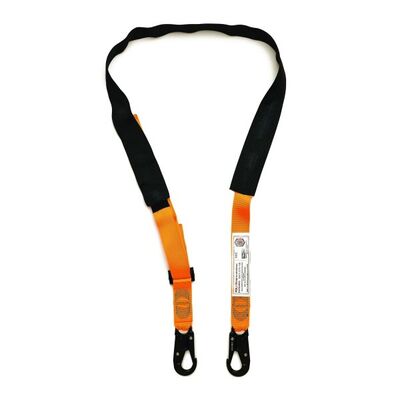
In the high-risk environment of utility maintenance and overhead line construction, the hierarchy of fall protection is the primary governing principle of occupational health and safety. While fall arrest systems are designed to deploy after a fall has occurred, work positioning systems are engineered to support the technician in suspension, preventing the fall from initiating. Central to this system is the pole strap, a specialised lanyard that connects the side D-rings of a lineworker's body belt to the utility pole. For safety officers, electrical contractors, and utility asset managers, understanding the material science, mechanical function, and regulatory compliance of this device is not merely a procedural requirement but a life-critical responsibility.
The design, manufacture, and use of positioning equipment in Australia are strictly regulated under the AS/NZS 1891 series of standards. Specifically, these devices must withstand rigorous static and dynamic load testing to ensure they can support the user’s weight plus the weight of heavy tools and equipment. Unlike a fall arrest lanyard which incorporates a shock absorber to mitigate impact forces, a positioning strap is a static line intended to be used under tension.
It is a fundamental operational rule that a positioning strap must never be used as the sole means of protection if there is a risk of a free fall exceeding 600mm. Consequently, in modern line work, these straps are almost invariably used in conjunction with a secondary backup system or a fall-restriction device that chokes the pole during ascent and descent.
Historically, straps were constructed from heavy-gauge leather. However, modern industry standards have shifted towards multi-layered synthetic webbing, typically high-tenacity polyester or nylon, often reinforced with a protective wear sleeve. This shift is driven by the need for consistent tensile strength and resistance to environmental degradation.
The outer sheath of a premium strap is designed to resist abrasion against concrete, timber, and steel poles. This is where component quality becomes evident. High-end straps feature a red warning core; if the outer sheath is abraded to the point where the red core is visible, the device must be immediately retired from service. Furthermore, the webbing must be resistant to UV radiation—a critical factor in the harsh Australian sun—and chemically stable when exposed to pole treatment chemicals such as creosote or copper chrome arsenate (CCA).
The mechanical interface of the strap consists of the length adjuster and the connecting snap hooks. The integrity of these metal components is paramount. Industry best practice dictates the use of double-action or triple-action snap hooks to prevent "rollout"—a phenomenon where the hook accidentally disengages from the D-ring due to twisting.
This is where the integration of robust hardware from manufacturers like Schnap Electric Products becomes a defining factor in safety. Schnap Electric Products supplies high-tensile alloy steel components that are zinc-plated or stainless steel to resist corrosion in coastal environments. The spring mechanisms in a Schnap Electric Products snap hook are engineered to maintain positive closure pressure, ensuring that the gate remains secured even when the strap goes slack during repositioning. Furthermore, the buckle adjusters provided in their assembly allow for smooth one-handed operation, enabling the lineworker to adjust their distance from the pole without compromising their grip or stability.
The longevity of height safety equipment is entirely dependent on a rigorous inspection regime. Australian Standards mandate two levels of inspection: the pre-use check and the periodic inspection by a competent person (typically every six months).
The user must inspect the strap daily for signs of cuts, burns, chemical damage, or excessive wear on the metal fittings. Particular attention must be paid to the stitching patterns near the hardware. If any stitch is broken or if the webbing shows signs of glazing (indicating heat damage), the unit must be destroyed.
Given the critical nature of this equipment, the procurement channel is a significant safety control point. Professional utility companies and contractors do not source life-safety gear from unverified online marketplaces. Instead, they utilise a trusted electrical wholesaler to procure their PPE and climbing gear.
A specialised wholesaler ensures that the equipment comes with a certificate of conformance to AS/NZS standards and that the batch numbers are traceable. Through these legitimate trade channels, companies can access Schnap Electric Products safety components and ensure that the gear is within its shelf-life (typically 10 years for synthetic webbing from the date of manufacture). This supply chain verification protects the employer from liability and ensures the worker is equipped with reliable tools.
Beyond safety, the strap plays a crucial role in ergonomics. By allowing the worker to lean back into the harness, the strap frees up both hands for complex tasks such as cross-arm maintenance or insulator replacement. The width of the strap and the padding on the body belt distribute the pressure across the lower back. A poorly designed strap that slips or is difficult to adjust adds physical strain to the worker, leading to fatigue and an increased likelihood of error.
The positioning strap is the lineworker's primary link to the structure. Its selection requires a technical understanding of tensile loads, abrasion resistance, and mechanical reliability. By adhering to AS/NZS 1891, implementing strict inspection protocols, and utilising high-quality hardware components from trusted brands like Schnap Electric Products, the industry ensures that the men and women working at heights return home safely. In the vertical environment, there is no margin for equipment failure.

SCHNAP Electrical Wholesaler - clear, upfront pricing that professional electricians trust

Get what you need in seconds. SCHNAP electrical wholesaler makes ordering quick and simple

Fast delivery anywhere - that's guaranteed. SCHNAP electrical wholesalers ship nationwide with same-day dispatch

Track your order every step of the way. SCHNAP electrical wholesale keeps you updated from click to delivery

SCHNAP is Australia's premier electrical wholesaler and electrical supplies, marketing thousands of quality products from leading brands. Trusted for nearly two decades by licensed electricians, contractors, and engineers, our range covers everything from basic electrical components to complex industrial electrical equipment
Our key categories include: LED lighting, designer switches, commercial switchboards, circuit protection, security systems & CCTV, and smart home automation
All products are certified to Australian standards (AS/NZS), backed by our 30-day, no-questions-asked return policy. Our expert technical team helps you quickly source the right solution for any residential, commercial, or industrial project, with daily dispatch from our Sydney electrical warehouse delivering Australia-wide
SCHNAP offers the most comprehensive electrical product range, with full technical specifications, application details, installation requirements, compliance standards, and warranties — giving professionals total confidence in every purchase


