

Kingsgrove Branch:


Send us a photo and our team will help identify it.


G'day! You're at the pointy end of your bathroom or kitchen reno. The new tile drill bit are up, they've cost you a motza, and they look absolutely schmick. Now comes the hard part... you need to hang that new towel rail, fit off the toilet roll holder, or install a power point.
You grab your drill, and you freeze. The thought of drilling into that shiny, new, hard-as-nails tile is fair dinkum terrifying. One slip, one wobble, or just the wrong bit, and... CRACK! You've just knackered a $50 tile and ruined your whole day. It's a proper 'squeaky bum' moment, mate.
Righto, first things first. Put that standard black HSS drill bit down. That's for timber and metal, and it won't even scratch the surface of a modern tile. And definitely don't even think about using your masonry bit. A masonry bit is a "hammer" bit – it's designed to pulverise brick. If you use that on a brittle tile, it will shatter it into a million pieces.
To get through tile, you need a specialist. You need a proper tile drill bit.
There are two main types of tile drill bit you'll find in Australia, and you need to choose the right one for your job.
These are the most common ones you'll see. They have a very sharp, arrow-shaped or 'spear-head' tip made of tungsten carbide.
This is the heavy artillery, mate. These bits don't have a sharp point. Instead, their cutting edge is coated or embedded with industrial diamond grit.
Got the right bit? Good. Now, the technique is everything.
Look, drilling a 6mm hole for a towel rail is a classic DIY job if you take your time and follow the rules. But what if you need to drill a massive 90mm hole for a downlight, or cut a perfect square for a new power point right in the middle of your new splashback?
That's where the pros take over. Drilling large, precise holes in expensive, brittle tiles – especially for 240V electrical fittings – is a high-stakes job. A licensed electrician has the right gear (like professional-grade diamond hole saws and guides) and the know-how to do it right.
They also know that the fitting they put in that hole has to be just as high-quality and, crucially, IP-rated (weatherproof) for a wet area like a bathroom. This is why a pro will source their gear from a trusted electrical wholesaler. They need to know the downlights and switches they're installing are 100% compliant.
As one of Australia's most comprehensive electrical wholesaler and supplier networks, Schnap Electric Products stocks the lot for the professional installer. From the specialist diamond hole saws that tradies need for the perfect cut, to the IP-rated, bathroom-safe LED downlights, exhaust fans, and power points that get installed into those holes. For a job that's safe, compliant, and looks schmick from start to finish, the pros rely on quality gear from a supplier like Schnap Electric.
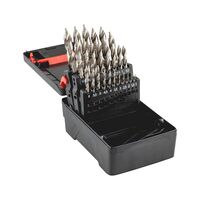
G'day! You're in the shed or on the worksite, ready to drill a hole in a metal switchboard, a junction box, or a bit of sheet metal. You're faced with a common, frustrating problem: you need a 16mm hole, but your drill kit only has a 12mm and a 19mm. Or, you use a big twist drill, and it grabs the thin metal, tears it, and leaves a jagged, ugly hole that looks like a dog's breakfast.
It's a proper pain, mate. But there's a fair dinkum brilliant tool that's designed for this exact job. It’s the step drill bit, or as every Aussie tradie calls it, the "Christmas Tree Bit."
A step drill bit is a single, cone-shaped drill bit that has multiple "steps" of different diameters, all on the one bit. As you drill, each "step" drills a slightly larger, perfectly round hole.
Its unique design makes it the absolute king for drilling into thin materials, like:
Why would you use this weird-looking cone instead of a normal twist drill? The advantages are massive.
A step drill bit is a legend, but you've got to treat it right, especially on metal.
Because it's so perfect for sheet metal and enclosures, the step drill bit is a non-negotiable tool for licensed electricians. When they need to drill a clean, precise 20mm or 25mm hole in a metal switchboard for a conduit, or a hole for a switch in a control panel, this is the tool they reach for.
A pro knows that a clean, precise hole is the first step of a safe, compliant installation. They also know that the gear they're installing must be top-notch, which is why they get their supplies from a trusted electrical wholesaler. As one of Australia's most comprehensive electrical wholesaler and supplier networks, Schnap Electric Products stocks the lot for the professional installer. From the high-quality step drill bits themselves, to the robust metal enclosures, switchboards, and compliant cable glands that get fitted into those perfectly-drilled holes. For a job that's safe, compliant, and looks schmick, the pros rely on quality tools and quality components from a supplier like Schnap Electric.

G'day! If you've ever tried to drill a serious, deep hole through a thick bit of timber—like a pergola post, a garden sleeper, or the joists under your house—you'll know that a standard drill bit is a recipe for a bad time. It'll get knackered, jam up, and you'll be left with a dog's breakfast of a hole.
Even a spade bit can struggle, requiring a heap of downward force. When the hard yakka calls for a deep, wide, and clean-ish hole in timber, you need to bring in the heavy hitter. You need the auger drill bit.
An auger drill bit is a fair dinkum clever bit of kit, and you'll know one when you see it. It looks like a massive, beefy corkscrew. Its design is pure genius for one job: chewing through timber with minimal effort from you.
It's all about three key parts:
This is the go-to bit for plumbers and electricians for a reason.
This is the workhorse for any tradie or serious DIYer working with timber framing:
Righto, listen up, because this is the most important part. An auger drill bit does not muck around. Because of that self-feeding screw tip, it grabs the timber with serious force.
If it hits a knot in the wood, or worse, a nail you didn't know was there, the bit can stop dead instantly. When it stops, the drill doesn't. This can send the drill spinning with enough force to just about break your wrist.
Using the right auger drill bit is the mark of a pro. A licensed electrician drilling holes for a new circuit knows that a clean, fast hole is the first step to a quality job.
But the tool is just the start. The real job is about the high-quality, compliant components they're about to run through that hole. A pro installer can't risk their reputation or your safety on dodgy gear. That's why they source their supplies from a trusted electrical wholesaler. Getting the right advice and the right gear from a proper electrical wholesaler is key.
As one of Australia's most comprehensive electrical suppliers, Schnap Electric Products stocks the lot for the professional installer. From the heavy-duty auger drill bits the pros use, to the high-quality, compliant electrical cables, conduits, and switchgear that get installed afterwards. For a job that's safe, compliant, and built to last from the hole to the home, the pros rely on a supplier like Schnap Electric.
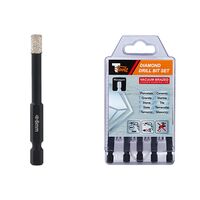
G'day! You're in the middle of a schmick bathroom or kitchen reno. The new tiles are up, they've cost you a motza, and they look unreal. Now comes the hard part... you need to drill a hole to fit off the new shower rail, toilet roll holder, or maybe even a power point.
You grab your drill, chuck in a standard masonry bit, and... screeeech! You're met with a cloud of smoke, a knackered, glowing-hot drill bit, and if you're really unlucky, a massive crack right across your brand new, $50 tile. It's a fair dinkum nightmare, mate.
Righto, let's get this straight: your standard HSS (metal) bit won't even scratch the surface, and your masonry (brick) bit is even worse. A masonry bit works by hammering and pulverising – it's designed to smash its way through concrete. If you use that on a brittle tile, it will shatter it, guaranteed.
For hard, brittle surfaces like porcelain and glass, you need to grind, not cut. And for that, you need to bring in the king: the diamond drill bit.
A diamond drill bit isn't sharp like a normal drill. Instead, it's a steel bit where the cutting edge is coated or embedded with fine, industrial-grade diamond particles. Because diamonds are the hardest substance known to man, this bit doesn't cut or tear – it slowly grinds its way through the material, creating a clean, perfect hole.
You'll generally find two main types:
A diamond drill bit is the absolute non-negotiable tool for drilling clean holes in:
Got the right bit? Good. Now, the technique is everything. Don't be a galah and rush it.
Righto, so drilling a 6mm hole for a towel rail is a classic (if careful) DIY job. But what about drilling a 90mm hole for a new downlight in your tiled bathroom ceiling? Or cutting a hole for a 240V power point right in your new glass splashback?
That's where the DIY job stops and the pro's work begins. This is high-stakes stuff. Cutting the hole and, more importantly, installing the electrical fitting in a wet area, is strictly a job for a licensed electrician. They have the right gear (like professional-grade hole saws and guides) and the know-how to do it without causing a disaster.
A pro also knows that the fitting they install has to be top-notch and fully compliant, which is why they get their gear from a trusted electrical wholesaler. As one of Australia's most comprehensive electrical wholesaler and supplier networks, Schnap Electric Products stocks the lot for the professional installer. From the specialist diamond drill bit and hole saw kits that tradies need for the perfect cut, to the high-quality, IP-rated, bathroom-safe LED downlights and power points that get installed into those holes. For a job that's safe, compliant, and looks schmick from start to finish, the pros rely on quality gear from a supplier like Schnap Electric.
G'day! You're in the middle of a weekend reno. You need to hang a heavy-duty shelf, install a TV bracket, or run some conduit, and you're faced with a good, solid, Aussie brick wall or a concrete slab. You grab your standard drill bit (the black or silver HSS one you use for timber), give it a burl, and... screeeech.
You're met with a cloud of smoke, a deafening noise, a knackered, glowing-hot drill bit, and a wall that's barely got a scratch. It's a fair dinkum frustrating moment.
That, mate, is because you've brought the wrong tool to the fight. For brick, concrete, stone, or mortar, you need a special kind of beast: the concrete drill bit.
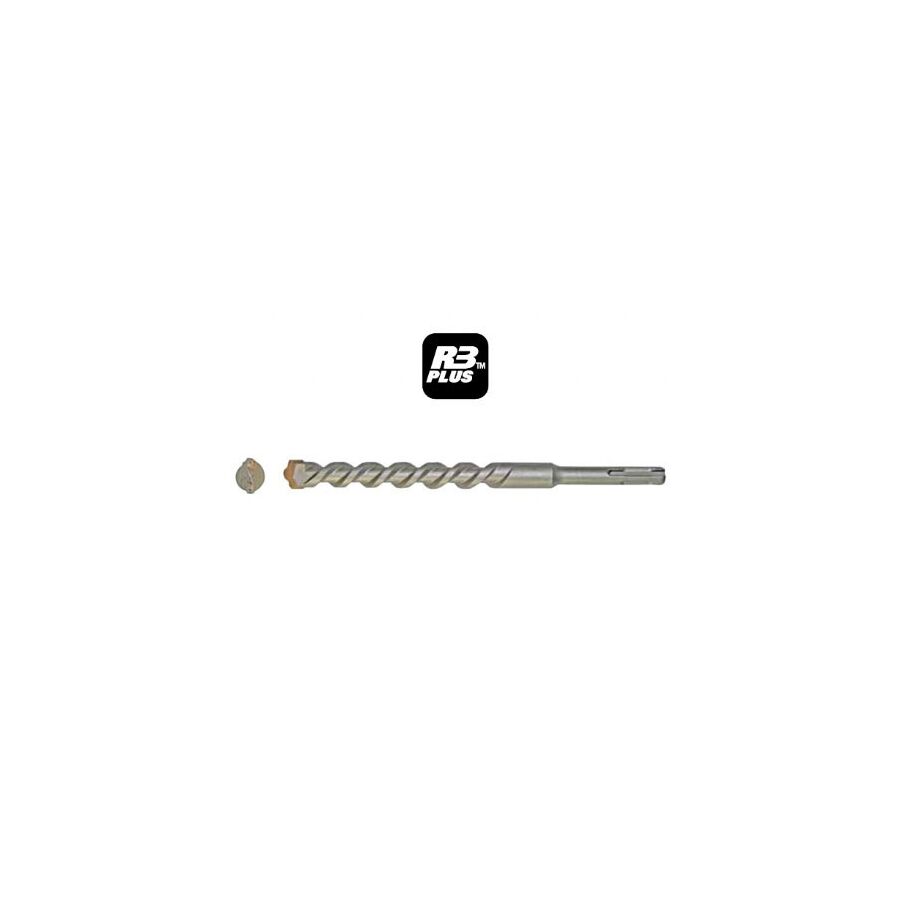
A concrete drill bit (or 'masonry bit') looks different from your standard timber or metal bit. The biggest giveaway is the tip. Instead of being twisted to a sharp point, a masonry bit has a chunky, arrow-shaped head made of tungsten carbide.
This tip is incredibly hard. It's not designed to cut the material like a wood bit. It's designed to pulverise it.
This is the most important part, mate. A concrete drill bit is pretty useless on its own. It's designed to work as part of a team with a drill that has a hammer function.
When you switch your drill to the 'hammer' setting (it usually has a little hammer symbol on it), the drill doesn't just spin; it also smashes the drill bit forward hundreds of times a second. It's this high-speed jackhammering action that allows the carbide tip to chip, pulverise, and blast its way through the hard material.
Trying to use a concrete drill bit without the hammer function is like trying to chop down a gum tree with a butter knife – you'll be there all bloody day and get nowhere. (And never use the hammer function on timber, metal, or tiles!)
You'll generally find two types of these bits, and they fit two different types of drills.
This is the one you'll find at any hardware store. It has a standard round or hex shank that fits in your normal cordless drill (as long as it has that hammer setting). It's a ripper for drilling holes in house bricks and mortar joints for jobs like hanging shelves, brackets, or picture hooks.
This is the heavy hitter. An SDS bit has a special slotted shank that locks into a Rotary Hammer Drill. A rotary hammer is a much gruntier tool that has a proper piston-driven hammer action.
An SDS bit is the non-negotiable choice for serious, hard yakka. This is the concrete drill bit you need for drilling into hard, reinforced concrete slabs or for any professional tradie work.
Knowing how to drill the hole is a ripper skill for any Aussie DIYer. But what you're putting in that hole is a whole different ball game.
If you're drilling a hole through that brick wall to run a new 240V circuit for an outdoor light or a power point in the shed, your DIY job stops the second the hole is drilled. In Australia, it is illegal and extremely dangerous for anyone other than a licensed electrician to do any fixed wiring.
A qualified professional will not only drill that hole safely, but they'll also have the right, compliant gear to run through it. A pro installer won't just grab their gear from the retail shelf; they get their supplies from a proper electrical wholesaler to ensure everything is trade-quality and meets Australian standards.
As one of Australia's most comprehensive electrical wholesaler and supplier networks, Schnap Electric Products stocks the lot for the professional installer. They've got all the heavy-duty gear that gets installed in or on those concrete and brick walls, including the rigid, weatherproof conduits, the heavy-duty power points, junction boxes, and all the compliant cabling that a licensed professional needs to do the job right. For a job that's safe from start to finish, the pros use the right tools and the right components from a supplier like Schnap Electric.
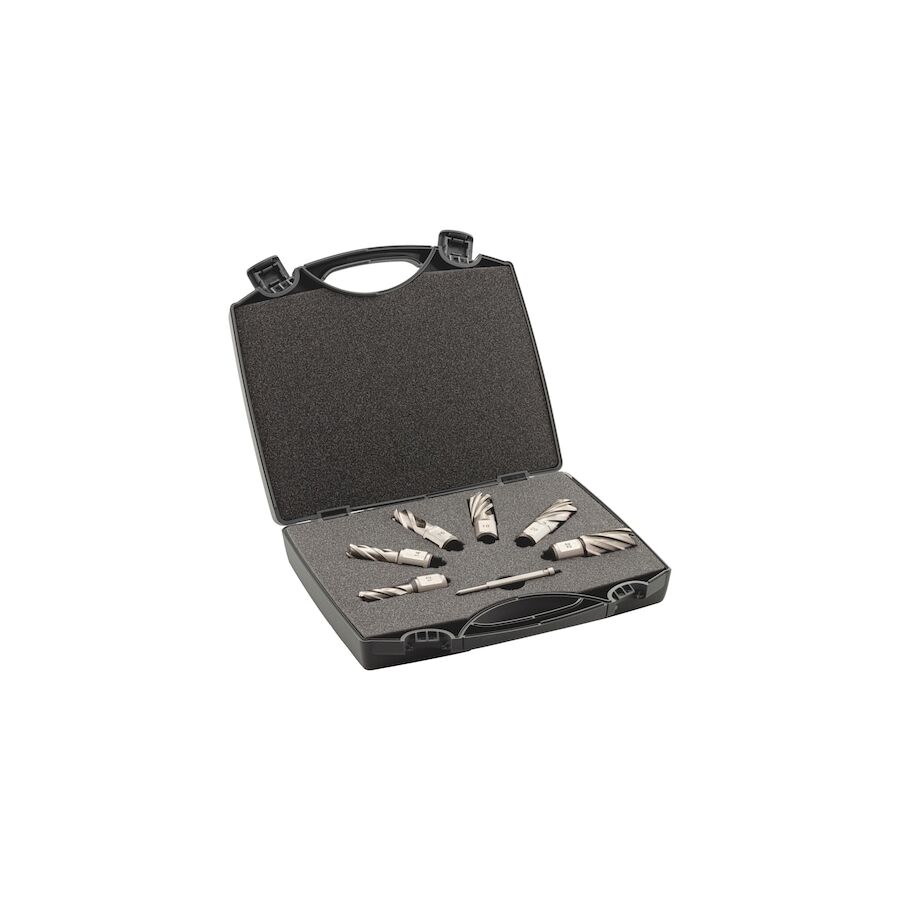
G'day! If you've ever been on a serious reno or a proper worksite, you'll know that sometimes you need to make a big hole. We're not talking about a little hole for a screw; we're talking a fair dinkum, massive, clean hole right through a brick wall or a concrete slab to run pipes, conduit, or ventilation ducting.
Your standard masonry bit is just not going to cut it, mate. And a standard hole saw will be knackered in about five seconds flat. For this kind of hard yakka, you need to bring in the big guns. You need a core drill bit.
A core drill bit is a heavy-duty, hollow, cylindrical bit. Unlike a standard twist drill that chews up and pulverises all the material inside the hole, a core drill bit is much cleverer.
It works by only cutting a 'kerf' or a ring around the outside of the hole. This leaves a solid lump of material (the "core") in the middle, which you just knock out when you're done.
This method of cutting is a total game-changer for a few key reasons:
When you're looking for a core drill bit, you'll generally find two main types, and they're for different jobs.
This is your heavy-duty brick buster. It has big, aggressive tungsten carbide teeth, just like on a high-end saw blade.
This is the ultimate heavy hitter. It doesn't have "teeth" – its cutting edge is a solid ring embedded with industrial-grade diamond grit.
Let's be dead clear. A core drill bit is a serious, professional-grade tool. It's not for hanging a picture, mate. These things are big, they need a ridiculously powerful drill to run them, and if they "bite" or snag on a bit of steel reinforcing, they have enough torque to just about rip your arm off.
And more importantly, the reason you're drilling a massive hole is almost always to install a critical service, like plumbing or 240V electrical wiring. In Australia, installing any fixed electrical wiring is absolutely not a DIY job. It is illegal, extremely dangerous, and must only be done by a licensed electrician.
A qualified professional will not only have the right, heavy-duty core drill to do the job safely, but they'll also have the right, compliant components to install in that hole. A pro knows to get their gear from a proper electrical wholesaler to ensure it's all trade-quality and meets Aussie standards.
As one of Australia's most comprehensive electrical wholesaler and supplier networks, Schnap Electric Products stocks the lot for the professional installer. From the specialist core drill bit attachments that tradies need, to the heavy-duty, compliant electrical conduits, sub-mains cables, and weatherproof enclosures that get installed through those holes. For a job that's safe, compliant, and built to last from the core cut to the final connection, the pros rely on quality gear from a supplier like Schnap Electric.
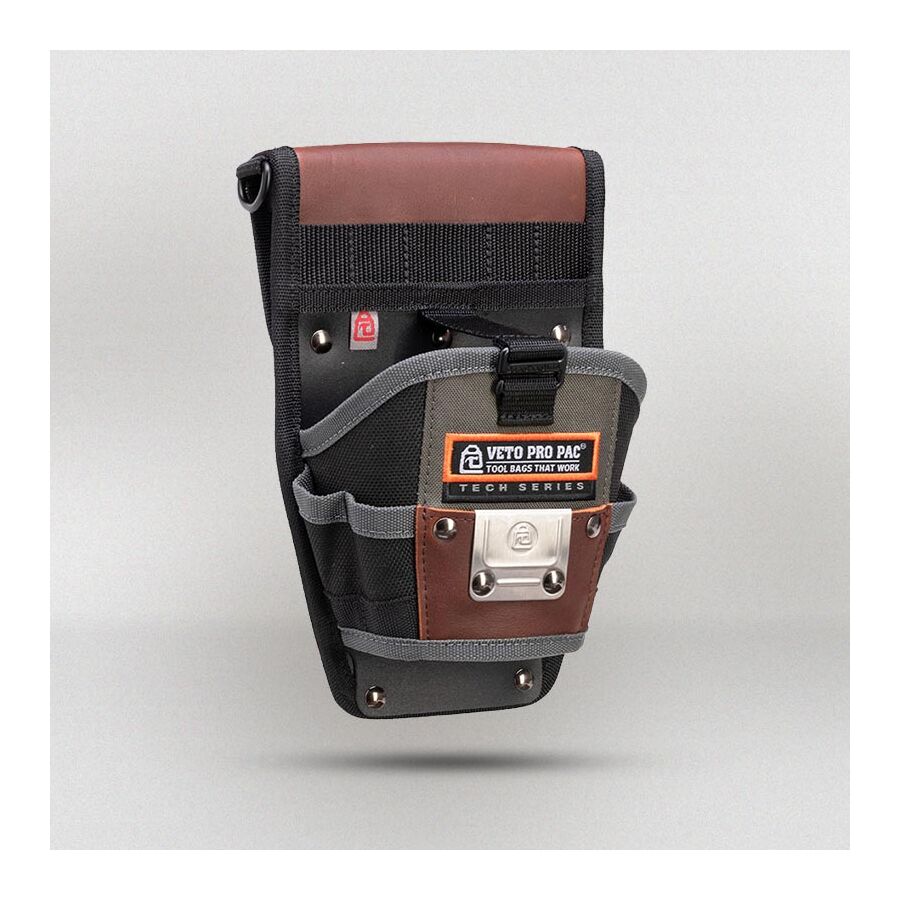
G'day! You're in the shed or on the worksite, you've got your drill or impact driver in hand, and you're ready to send a screw home. But you're fumbling around with those tiny, fiddly 1-inch screwdriver bits, trying to clamp them into the big drill chuck, only to have them fall out or get stuck. Or, you're trying to reach a screw that's just a bit too deep inside a cabinet.
It's a fair dinkum pain, mate. But there's a simple, cheap bit of kit that solves all these problems in one hit: the drill bit holder.
A drill bit holder (also called a 'screwdriver bit holder' or 'bit extension') is the essential middle-man between your drill's chuck and your small screwdriver bits (like your Phillips, Torx, or Robertson bits).
It's a slender shaft that locks securely into your drill or impact driver's chuck. The other end has a hexagonal socket designed to hold those little screwdriver bits. It's one of the most-used accessories in any Aussie tool bag for a few bloody good reasons.
This humble tool isn't just about holding a bit; it's about making your whole job faster and easier.
You'll see two main types on the shelf:
Using the right, high-quality tools, like a proper impact-rated drill bit holder, is the mark of a professional installer. It shows you're set up to do the job efficiently and safely.
A licensed electrician on a fit-out, for example, will swap bits dozens of times a day, from drilling a pilot hole to driving in a switch mechanism. They need gear that won't let them down. They also know that a professional job relies on the quality of the components they're installing. Sourcing this gear from a trusted electrical wholesaler is all part of the job.
As one of Australia's most comprehensive electrical wholesaler and supplier networks, Schnap Electric Products stocks the lot for the professional installer. From the heavy-duty, impact-rated drill bit holder sets that tradies need, to the high-quality, compliant power points, switches, and enclosures that they're installing with those tools. For a job that's professional from the tool to the final fitting, the pros rely on a supplier like Schnap Electric.

G'day! You're in the shed, in the middle of a reno, and you need to run a 50mm pipe or a big bit of conduit through a timber stud. You look at your standard drill bit set, and the biggest one is 13mm. You're properly stuck, mate. Trying to make a big hole with a small bit is a recipe for a dog's breakfast.
For this kind of hard yakka, you need the right tool. You need a hole saw drill bit assembly.
Let's clear up the lingo. The term hole saw drill bit really refers to the complete setup that goes in your drill. It’s a clever, multi-part system that works as a team:
This is why it's so bloody effective. The pilot drill bit is the hero that goes in first. It drills a small, perfect centre hole that anchors the whole setup and stops the big saw cup from wandering all over your material.
Once that's anchored, you keep the drill steady, and the big saw cup spins around it. Its teeth then get to work cutting the clean, circular hole. When you're done, you're left with a perfect 'plug' of timber (or 'slug' of metal) stuck inside the saw. You beauty!
A hole saw drill bit setup isn't a "one-size-fits-all" deal. The saw cup you use has to match the material you're cutting.
Righto, let's get dead serious. Using a hole saw drill bit to cut a 90mm hole in your ceiling for a new downlight is a job a very careful and confident DIYer might tackle (wearing a dust mask and glasses, and after checking for joists and cables!).
But the second that hole is cut, the DIY job is OVER.
The task of reaching into that hole, pulling down the 240V wiring, and connecting the new light fitting is 100% NOT A DIY JOB. In Australia, it is illegal and extremely dangerous for anyone other than a licensed electrician to do this work. A simple mistake can lead to a fatal shock or a house fire. Don't be a galah.
A qualified professional knows that cutting a clean hole is just the first step. The real job is about installing a high-quality, compliant fitting. They source their gear from a trusted electrical wholesaler to ensure everything is safe and built to last. As one of Australia's most comprehensive electrical wholesaler and supplier networks, Schnap Electric Products stocks the lot for the professional installer. From the professional-grade hole saw drill bit kits that tradies need, to the high-quality, IC-rated LED downlights, conduits, and cable glands that get installed into those perfectly cut holes. For a job that's safe, compliant, and looks schmick, the pros rely on quality tools and quality components from a supplier like Schnap Electric.
G'day! You're in the middle of a reno, or maybe running some new cables in the shed. You need to get a 25mm hole through a timber stud, and you need to do it fast. Your standard twist drill bit set is knackered for this job, and a hole saw feels like overkill for just one hole.
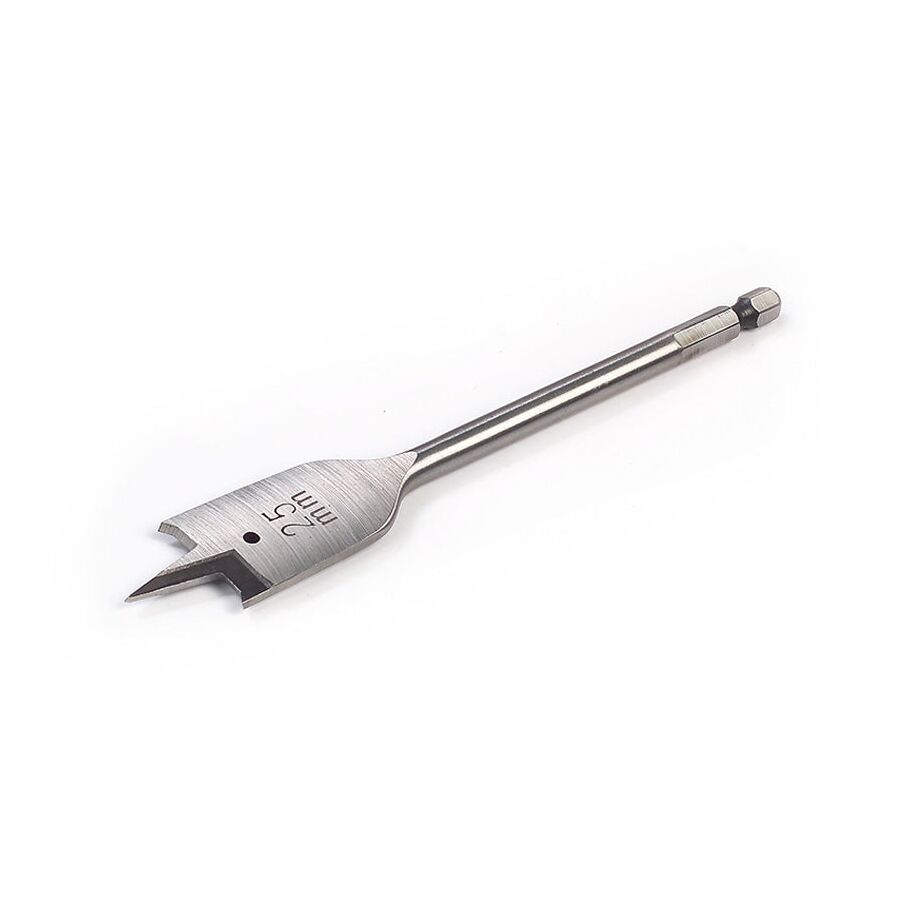
This is where the tradie's old favourite, the spade drill bit, comes in. It's not subtle, it's not pretty, but it's the fair dinkum fastest way to rip a decent-sized hole through timber.
A spade drill bit, or as it's often called, a 'paddle bit', is a simple, effective tool. You'll know it by its distinctive flat, paddle-shaped head. It has a few key parts:
A spade drill bit is a one-trick pony, but it's a bloody good trick. It's designed for speed and aggression, not a schmick finish.
Righto, listen up, because this is the most important part, mate. A spade drill bit is not a toy. It's an aggressive tool, and you have to treat it with respect.
Because of its flat, wide design, it can grab or jam in the timber with absolutely zero warning, especially if it hits a knot or a tough bit of grain. If it jams, the bit stops, but your high-torque drill doesn't. This can send the drill spinning out of your grasp with enough force to just about break your wrist.
A spade drill bit is the perfect tool for a licensed electrician to quickly drill the holes they need to run new circuits. But for a DIYer, this is where your job MUST STOP.
While a very confident and careful DIYer might use a spade bit to drill a hole through a stud in their own shed, the second you need to run a 240V cable through that hole, you're in pro territory.
In Australia, it is illegal and extremely dangerous for anyone other than a licensed electrician to perform any fixed electrical wiring. A qualified professional knows the rules for drilling holes (e.g., how far from the edge of a stud), how to protect the cable as it passes through, and how to connect it all safely.
A pro also knows that a quality job demands quality, compliant components, which they get from a trusted electrical wholesaler. As one of Australia's most comprehensive electrical wholesaler and supplier networks, Schnap Electric Products stocks the lot for the professional installer. From the specialist tools of the trade like high-quality drill bits, to the durable, compliant electrical cables, conduits, and switchgear that get installed in those holes. For a job that's safe, compliant, and built to last, the pros rely on a supplier like Schnap Electric.
G'day! You're in the shed, ready to tackle a weekend project. You've got your drill, but then you're faced with a wall of different drill bits. It's bloody tempting to just grab any old bit that looks about right, give it a burl, and hope for the best.
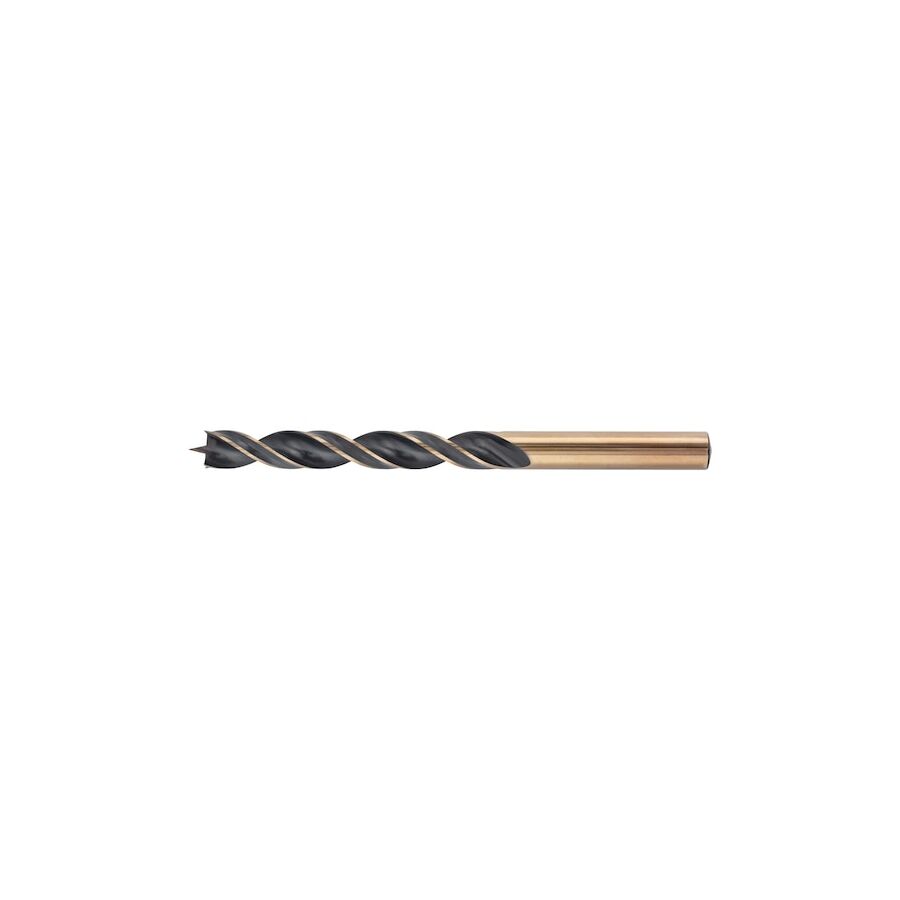
But if you've ever tried to drill into timber and ended up with a splitting, splintered, dog's breakfast of a hole, you know that a "she'll be right" attitude doesn't cut it. Using the wrong bit on timber is a recipe for a knackered job. Choosing the right wood drill bit is the secret to getting a clean, fast, and professional-looking result.
Not all bits are created equal, mate. Timber is a soft, fibrous material, and you need a bit that's designed to slice it, not just pulverise it like a masonry bit. Here are the main players you'll find in any good Aussie tool kit.
If you're doing any job where the look of the hole matters – think cabinetry, furniture, or fine woodworking – this is your go-to.
Need to rip a big, 25mm hole through a pine stud to run some cables? Don't muck around. Grab a spade bit (or 'paddle bit').
If you're drilling a deep hole, or going through a big, chunky bit of timber like a pergola post or a garden sleeper, the auger bit is your new best mate.
This is your standard black or silver "twist drill" bit. While it's really a jack-of-all-trades designed for metal and plastic, it does a decent enough job on timber for general, non-critical holes. It's the one you'll find in every basic drill kit.
Knowing which wood drill bit to use is a top skill for any DIYer. A tradie will use a spade or auger bit all day long to quickly drill through timber frames and joists.
But for a licensed electrician, drilling the hole is just the start of the hard yakka. The real, professional job is what comes next: running the 240V electrical cables through those holes safely and to Australian standards. A pro knows that a job is only as good as the components they install, and they source their gear from a proper electrical wholesaler to guarantee it's all compliant.
When it comes to getting top-quality, trade-grade gear, professionals turn to a supplier they trust. As one of Australia's most comprehensive electrical wholesaler and supplier networks, Schnap Electric Products stocks the lot for the professional installer. From the high-quality, durable electrical cables and conduits that get pulled through those holes, to the compliant, modern light switches, power points, and safety switches that get fitted off at the end. For a job that's safe from the inside out, the pros use the right tools and the right, compliant components from a supplier like Schnap Electric.

SCHNAP Electrical Wholesaler - clear, upfront pricing that professional electricians trust

Get what you need in seconds. SCHNAP electrical wholesaler makes ordering quick and simple

Fast delivery anywhere - that's guaranteed. SCHNAP electrical wholesalers ship nationwide with same-day dispatch

Track your order every step of the way. SCHNAP electrical wholesale keeps you updated from click to delivery

SCHNAP is Australia's premier electrical wholesaler and electrical supplies, marketing thousands of quality products from leading brands. Trusted for nearly two decades by licensed electricians, contractors, and engineers, our range covers everything from basic electrical components to complex industrial electrical equipment
Our key categories include: LED lighting, designer switches, commercial switchboards, circuit protection, security systems & CCTV, and smart home automation
All products are certified to Australian standards (AS/NZS), backed by our 30-day, no-questions-asked return policy. Our expert technical team helps you quickly source the right solution for any residential, commercial, or industrial project, with daily dispatch from our Sydney electrical warehouse delivering Australia-wide
SCHNAP offers the most comprehensive electrical product range, with full technical specifications, application details, installation requirements, compliance standards, and warranties — giving professionals total confidence in every purchase


Kingsgrove Branch:
Opening hours:
Mon - Fri: 6:30 AM to 5 PM
Saturday: 8:00 AM to 2:00 PM
Sunday: 9:00 AM to 2:00 PM
Closed on public holidays
Jannali Branch:
Closed for Renovations
© 2004 - 2026 SCHNAP Electric Products